The art of home economics and culinary self-sufficiency has seen a significant resurgence in recent years, driven by rising grocery costs, a desire for cleaner ingredients, and an increased interest in homesteading skills. Among the simplest yet most rewarding kitchen projects is the creation of homemade spice blends. Crafting your own celery salt, a staple seasoning in American kitchens most famously recognized as a key ingredient in Chicago-style hot dogs and Caesar cocktails, offers home cooks an economical and highly customizable alternative to commercially manufactured products. By utilizing basic pantry staples or garden harvests, consumers can produce premium spice blends for a fraction of the retail cost, transforming pennies worth of raw ingredients into a gourmet pantry essential.
Economic and Dietary Customization
Commercial spice blends are frequently marked up significantly to account for packaging, transportation, and brand overhead. In contrast, producing celery salt at home costs mere pennies per batch. Beyond mere frugality, the do-it-yourself (DIY) approach grants the cook absolute autonomy over the quality, origin, and nutritional profile of the ingredients.
Standard grocery store celery salt typically consists of a uniform mixture of table salt and ground celery seed, often combined with anti-caking agents or trace additives to prevent moisture clumping. By shifting production to the home kitchen, culinary enthusiasts can elevate a basic condiment into a gourmet product. Standard refined table salt can be easily replaced with artisanal alternatives such as coarse sea salt, flaky Maldon salt, rich pink Himalayan salt, or robust smoked sea salts that impart a depth of flavor unattainable in mass-produced equivalents.
Furthermore, the formulation can be seamlessly adapted to accommodate specific dietary restrictions and health requirements. For individuals managing hypertension, cardiovascular disease, or adhering to strict low-sodium diets, the foundational salt can be entirely omitted or substituted. Health-conscious cooks frequently utilize sodium-free herbal seasoning blends, such as Herbamare, to achieve the savory, aromatic profile of traditional celery salt without any of the sodium content. This adaptability ensures that flavorful enhancements remain accessible to individuals who must otherwise strictly monitor their electrolyte intake.

Sourcing and Preparing the Celery Component
The distinct, herbaceous flavor profile of celery salt relies entirely on the quality of its botanical components. Home cooks generally choose between two primary methods for the celery base, depending on their available kitchen equipment and gardening practices.
The first and most accessible method involves utilizing freshly ground celery seeds. Celery seeds carry an intense, concentrated earthy flavor that punches above its weight class. A brief pass through a clean spice grinder or a manual mortar and pestle reduces the seeds into a fine powder, instantly releasing their volatile aromatic oils.
The second, more advanced method appeals to food preservationists and home gardeners who utilize food dehydrators. Individuals who process surplus garden harvests into homemade celery powder can substitute this dehydrated vegetable matter directly into the seasoning blend. Utilizing dehydrated celery leaves and stalks yields a nuanced, rounded flavor that mirrors the fresh vegetable rather than just the pungency of the seed. This closed-loop approach to kitchen management also serves as an effective mechanism for reducing food waste, allowing cooks to repurpose nutrient-dense celery tops that might otherwise be discarded during meal preparation.
Step-by-Step Production Methodology
Creating a custom batch of celery salt requires minimal equipment and time, making it an ideal weekend kitchen project for culinary beginners and seasoned chefs alike.
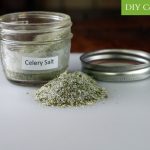
A standard foundational recipe yields approximately 5 tablespoons, or 75 grams, of finished seasoning mix, though precise yields may vary slightly depending on the specific density of the salt and the grind consistency of the botanical components.

To streamline the workflow, many culinary instructors recommend combining and mixing the ingredients directly inside the airtight glass jar designated for long-term storage. This minimizes the number of dishes required and prevents the loss of volatile aromatic compounds that can adhere to mixing bowls.
Standard Proportions and Preparation Steps:
- Select the Base: Choose your preferred salt variety (standard, smoked, or sodium-free substitute) to match your dietary goals and flavor preferences.
- Prepare the Botanicals: Measure equal or balanced parts of finely ground celery seed or homemade celery powder.
- Blend: Combine the salt and the celery component in a clean, dry glass container.
- Agitate: Seal the jar tightly and shake vigorously for 30 to 60 seconds to ensure even distribution throughout the mix.
- Store: Keep the finished product in a cool, dark, and dry pantry environment to preserve potency and prevent moisture absorption.
Historical Context and Culinary Applications
Celery salt has a long-standing history in Western cuisine, dating back to the late 19th and early 20th centuries when manufactured spices began appearing widely on grocery shelves. Botanically, cultivated celery (Apium graveolens) has been utilized for medicinal and culinary purposes for millennia, but the distillation of its potent seeds into a shelf-stable seasoning revolutionized quick-service flavor enhancement.
In contemporary cooking, celery salt is indispensable across a variety of culinary traditions. It serves as the defining characteristic of a genuine Chicago-style hot dog, where it provides a necessary herbal counterweight to the rich beef frankfurter, yellow mustard, and pickled peppers. Beyond street food, it is a critical component in the brining of poultry, the seasoning of potato salads, coleslaws, and egg dishes, and the rimming of glassware for savory cocktails such as the Bloody Mary and the Michelada.
Because homemade versions lack commercial anti-caking agents, users may occasionally notice minor clumping if exposed to high humidity. A simple shake of the storage jar prior to use easily remedies this natural occurrence, ensuring smooth dispensing without compromising the integrity of the spice.
Broader Economic and Nutritional Implications
The trend toward DIY pantry staples reflects a broader cultural shift toward mindful consumption. As global supply chains face periodic fluctuations and consumers become increasingly critical of ultra-processed foods, mastering foundational home preservation and seasoning techniques offers a tangible sense of self-reliance.
From an economic standpoint, replacing store-bought specialty spices with homemade alternatives yields cumulative savings over time, particularly for households that frequently entertain or cook from scratch. Nutritionally, the elimination of chemical preservatives, artificial anti-caking agents, and excessive sodium promotes cleaner eating habits without sacrificing gastronomic enjoyment. By understanding the mechanics behind simple spice blends, home cooks reclaim control over their pantries, proving that elevated, gourmet flavors do not require a luxury price tag.