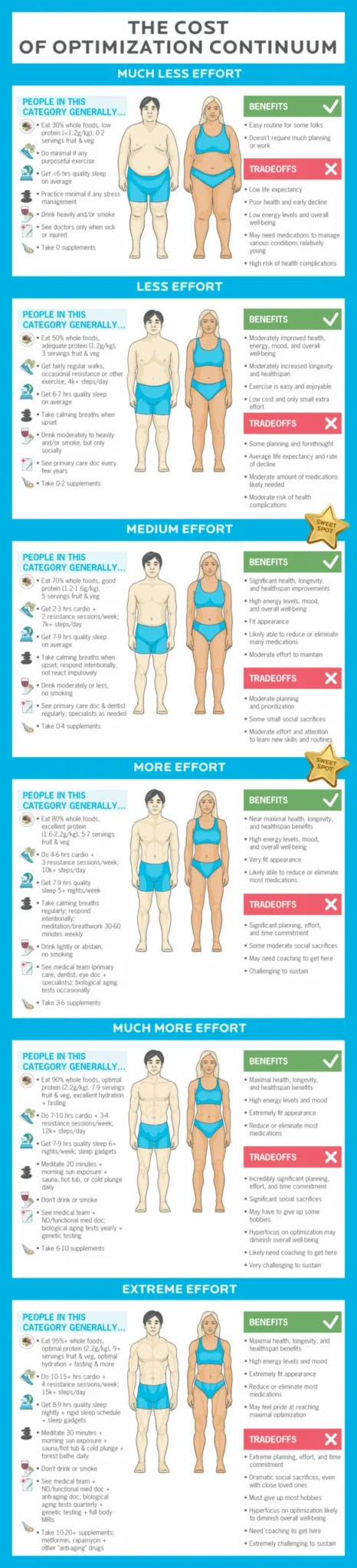

The pursuit of extended health and longevity has captivated humanity for centuries, but in the modern era, this quest has taken on unprecedented urgency and sophistication. A pervasive sentiment among individuals is the desire to "know I’m doing absolutely everything I can to preserve my health for as long as possible," aiming not just to maintain good shape but to outlive peers and age expectancies, remaining fit, lean, and youthful well into their 90s, 100s, and beyond. This aspiration, while compelling, often confronts a significant hurdle: the common longevity advice disseminated today frequently demands an extraordinary commitment of effort, time, money, and complexity.

This burgeoning "longevity industry", fueled by influential figures like popular podcasters Dr. Peter Attia, Dr. Andrew Huberman, Dr. Rhonda Patrick, and biohacker Bryan Johnson, has brought the movement outsized attention. While the appeal of a longer, healthier life is undeniable, coupled with the comforting sense of control derived from meticulously designing a "perfect" health plan, the practicality of such rigorous protocols is often questioned. For health and nutrition experts, particularly those with extensive experience coaching hundreds of thousands of individuals through the realities of daily life, the concept of "optimal" is rarely realistic, and crucially, it is often not even necessary.
The Power of Foundational Health: Beyond the "Optimal" Illusion

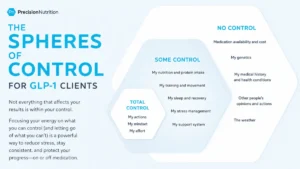
A core insight emerging from practical experience and growing scientific understanding is that making modest, relatively consistent efforts towards health and well-being will likely yield superior results compared to following an intense, highly "optimized" protocol. This perspective challenges the prevailing notion that achieving significant health gains requires complex, cutting-edge strategies. Instead, a focus on foundational health behaviors, executed with consistency, proves to be remarkably effective.
To understand this better, it’s essential to deconstruct common myths surrounding health optimization and longevity:

Myth 1: The "Basics" Aren’t Enough for Superior Health
A widespread belief suggests that achieving exceptional health and extending lifespan beyond the average requires an arsenal of advanced, "cutting-edge" strategies. However, health experts consistently affirm that the fundamental tenets of well-being – regular exercise, a nutrient-rich diet, adequate sleep, stress management, and social connection – are remarkably potent. The true challenge lies not in their efficacy, but in consistent adherence. Data indicates that a significant majority of the population fails to consistently implement these relatively simple behaviors. For instance, only a fraction of Americans meet the recommendations for daily fruit and vegetable intake, adequate sleep, or combined aerobic and resistance exercise. The primary barrier to living longer, healthier lives is often not the absence of advanced biohacks, but the inconsistent application of proven, accessible habits. Individuals who genuinely commit to a well-rounded set of health-promoting behaviors with 80-90 percent consistency are often already operating near peak optimization.

Myth 2: More Effort Always Translates to More Benefits
The intuition that if some effort is good, more must be better, often falls short in the realm of health and fitness. A "law of diminishing returns" applies: initial efforts yield substantial benefits, but as these efforts intensify, the additional gains become progressively smaller. Furthermore, over-optimization can introduce counterproductive elements, leading to increased complexity, stress, burnout, and a potential reduction in overall life enjoyment. While some dedication is crucial, exceeding a certain threshold can detract from a balanced, fulfilling life, raising the question of what value prolonged life holds if it is perpetually constrained by an arduous health regimen.

Myth 3: Cutting-Edge Strategies Deliver Significant, Proven Benefits
The allure of novel supplements, experimental therapies, and advanced biohacking techniques is strong, promising shortcuts or enhanced outcomes. Yet, the scientific evidence supporting many of these "cutting-edge" strategies remains nascent. Much of the research is conducted on animal models (e.g., mice), is observational, theoretical, or tested on very small human cohorts for short durations. Many fringe methods and supplements promoted by influencers lack robust scientific validation and, in some cases, may even pose safety risks. Experts advise prioritizing foundational health behaviors with established track records before investing in unproven or potentially hazardous experimental approaches.

Myth 4: Health is an All-or-Nothing Endeavor
The intimidating scope of "optimizing" health can lead to a sense of overwhelm, causing some individuals to abandon efforts entirely. This "all or nothing" mentality overlooks the power of incremental progress. Data from long-term coaching programs demonstrates that even clients who practiced basic health habits less than half the time still achieved measurable results, including significant weight loss and improvements in girth measurements. This underscores that perfection is not a prerequisite for progress; consistent, even if imperfect, engagement with health-promoting behaviors delivers tangible benefits, making great health accessible to a broader population.

The Seven Pillars of Sustainable Longevity
To effectively manage healthspan and lifespan, attention should be directed towards these foundational behaviors, focusing on their "sweet spot" of effort versus reward:

-
Exercise Regularly: Physical activity is universally recognized as critical. Studies, including those involving Harvard alumni, consistently show that any amount of physical activity reduces the risk of all-cause mortality, independent of other health factors. Significant risk declines are observed with moderate activity levels, with diminishing returns for extremely high volumes. The World Health Organization (WHO) recommends at least 150-300 minutes of moderate-intensity aerobic activity or 75-150 minutes of vigorous-intensity aerobic activity per week, coupled with muscle-strengthening activities twice a week. Despite these clear guidelines, less than a quarter of adults meet both aerobic and resistance exercise recommendations. While more exercise is generally beneficial, excessive training (overtraining) can lead to hormonal imbalances, sleep disturbances, injuries, and potentially detrimental cardiac remodeling, illustrating the "U-shaped curve" of benefits.
-
Eat a Nourishing, Nutrient-Rich Diet: A healthy diet, while often overcomplicated, rests on three key pillars:

- Prioritize Whole and Minimally-Processed Foods: These foods are naturally rich in fiber, healthy fats, vitamins, minerals, and phytochemicals, and are less calorie-dense than ultra-processed foods (UPFs). Diets rich in whole foods are linked to lower rates of depression, heart disease, type 2 diabetes, and cancer. Conversely, UPFs are associated with numerous harmful effects, including increased risk of obesity, cardiovascular disease, and all-cause mortality. While complete avoidance of processed foods may be impractical, aiming for 70-80% of dietary intake from whole or minimally-processed foods offers substantial health improvements. Most Americans currently derive over half their calories from UPFs.
- Consume Five Servings of Fruits and Vegetables Daily: This recommendation, often reiterated, is supported by extensive research. A meta-analysis of over 1.8 million people found that five servings a day were associated with a 13% lower risk of death from any cause, with benefits plateauing beyond this intake. Varying colors of produce ensures a diverse intake of beneficial phytochemicals. However, only about 10% of Americans achieve this daily intake.
- Ensure Adequate Protein Intake: Protein is crucial for maintaining muscle mass, especially as we age, combating sarcopenia, frailty, and supporting metabolic health. While plant-based protein is linked to reduced disease risk, lean animal proteins like fish and poultry are also beneficial. Current USDA recommendations for protein (0.8 g/kg body weight) are often considered a minimum, with 1.2-1.6 g/kg recommended for most adults, particularly older individuals and those engaged in resistance training, to maximize muscle health and satiety. Many adults, especially older demographics, fall short of these ideal protein intakes.
-
Get Adequate Sleep: Quality sleep is a cornerstone of health, impacting longevity, cardiovascular health, and cognitive function. Studies show men who sleep adequately live nearly five years longer, and women two and a half years longer, than those who don’t. A decrease of just one hour from the ideal 7 hours of sleep can significantly increase the risk of cardiovascular disease and type 2 diabetes. For older adults, less than 6 hours of sleep per night correlates with a higher risk of dementia. Sleep experts recommend 7 to 9 hours of sleep per night for most adults, a target missed by about a third of the US population. While insufficient sleep is detrimental, excessive sleep (over 9 hours) is also associated with increased health risks, though this correlation may be due to underlying health issues rather than direct causation.
-
Manage Stress Effectively: Chronic, unmanaged stress profoundly impacts nearly every physiological system, increasing heart rate, blood pressure, and inflammation, thereby elevating the risk of cardiovascular disease, mental health disorders, and susceptibility to illness. Stress, however, is a normal and often beneficial part of life, motivating and engaging us. The goal is not to eliminate stress but to develop robust coping mechanisms and recovery strategies. Simple practices like self-compassion, a growth mindset, and basic self-regulation skills (e.g., deep breathing, journaling, spending time in nature) can significantly mitigate its negative effects. Many individuals, however, report feeling overwhelmed by stress and lack effective management strategies, highlighting a critical gap in public health. The optimal level of stress management is proportional to life’s demands, aiming for a "sweet spot" where one feels energized and engaged, rather than bored or overwhelmed.

-
Stay Socially Connected: Social connection is a powerful, yet often overlooked, determinant of health and longevity. Strong social and emotional support is associated with improved well-being and a 50% increased likelihood of survival. The Harvard Study of Adult Development, one of the longest-running studies on human well-being, identified strong relationships as the primary predictor of both life satisfaction and longevity, surpassing factors like wealth or IQ. Conversely, social isolation and loneliness pose significant health risks, comparable to smoking 15 cigarettes a day, increasing the risk of heart disease, stroke, type 2 diabetes, depression, and dementia. Despite its importance, about one in three adults report feeling lonely. Research suggests having three to five close friends with whom one regularly interacts provides the most social benefit.
-
Minimize Known Harms (No Smoking, Limit Alcohol): Avoiding demonstrably harmful behaviors is a fundamental aspect of long-term health.

- Don’t Smoke: Tobacco use remains a leading cause of premature death globally, responsible for over 8 million deaths annually. It is a major risk factor for coronary heart disease, stroke, emphysema, and various cancers, accounting for a quarter of all cancer deaths worldwide. Despite known risks, smoking prevalence, while declining, remains significant in many populations.
- Limit Alcohol: The scientific consensus increasingly points to alcohol having negative health implications, particularly with regular, heavy use. Alcohol plays a causal role in over 200 diseases, including liver disease, heart conditions, at least seven types of cancer, and neurological disorders. For individuals aged 15-49, alcohol is a leading risk factor for death. US guidelines recommend moderate intake (up to one drink per day for women, two for men), but many people exceed these limits, often underestimating their consumption. While complete abstinence is deemed "safest" by some health organizations, small, infrequent doses are unlikely to have significant health impacts. The critical message is that heavy drinking exponentially increases health risks, necessitating informed and intentional decisions about consumption.
-
Practice Basic Preventive Health Measures: Beyond daily habits, consistent engagement with basic preventive healthcare and safety practices is crucial. This includes regular medical check-ups, appropriate vaccinations, recommended health screenings (e.g., mammograms, colonoscopies), maintaining good oral hygiene, wearing safety gear (seatbelts, helmets), and practicing sun protection. These "boring" but vital measures prevent disease, detect conditions early, and mitigate injury risks. For example, while seatbelt usage is high, flossing rates are low, and helmet use among cyclists remains suboptimal. Addressing hearing loss, a modifiable risk factor for dementia, through measures like the "60/60 rule" for headphones and ear protection in noisy environments, also falls under this category. It is acknowledged that socio-economic factors and social determinants of health can create significant barriers for many in accessing or consistently practicing these preventive behaviors.
The True Cost of Extreme Optimization

While the foundational behaviors offer substantial benefits, pushing for "extreme optimization" entails significant tradeoffs. An "optimizer" lifestyle demands exponentially more time and financial investment—often three to four times that of a "healthy" person focused on the basics. This includes extensive supplement regimens, specialized diagnostic tests (e.g., advanced blood panels, genetic sequencing, full-body MRIs), and costly therapies (e.g., cryotherapy, hyperbaric oxygen therapy, stem cell treatments). Such a demanding regimen can easily add tens of thousands of dollars annually and consume countless hours each week, for marginal, often unproven, additional benefits.
Moreover, an excessive focus on physical optimization can negatively impact overall well-being and quality of life. The relentless pursuit of perfection can lead to mental health challenges such as disordered eating (e.g., orthorexia), anxiety, and social isolation, as the rigid demands of the regimen interfere with social engagements, spontaneity, and enjoyment. The concept of "deep health" emphasizes that physical health is just one component alongside social, emotional, mental, existential, and environmental well-being. Sacrificing these other domains for purely physical optimization can lead to a less fulfilling life. Ultimately, the goal is not merely to prolong existence, but to enrich it, finding a balance where health practices enhance, rather than detract from, the joy and meaning derived from living.

Making Informed Decisions for a Healthier, Happier Life
Navigating the landscape of health and longevity advice requires clarity and intentionality:

- Clarify Your Goals: Reflect on what truly matters for your life. What kind of life do you envision? How does maximizing healthspan and lifespan align with your other priorities, values, and aspirations?
- Consider the Tradeoffs: Realistically assess the time, money, and effort you are willing and able to invest. What are you prepared to compromise, and what aspects of your life are non-negotiable?
- Prioritize the Basics: Before exploring advanced strategies, ensure consistent adherence to the foundational health behaviors. For most people, improving consistency in these areas will deliver the most significant and sustainable results.
- Filter the Noise: Be discerning about information from social media and popular culture. Remember that personal health decisions should be aligned with your individual circumstances and values, rather than dictated by external, often unproven, trends.
Ultimately, sustainable health and a long, enjoyable life are built upon accessible, consistent habits rather than extreme, costly "optimization." The power to make informed choices that truly work for you lies in understanding the evidence, assessing your own priorities, and tuning out the overwhelming noise of the longevity industry.
References
Click here to view the information sources referenced in this article.