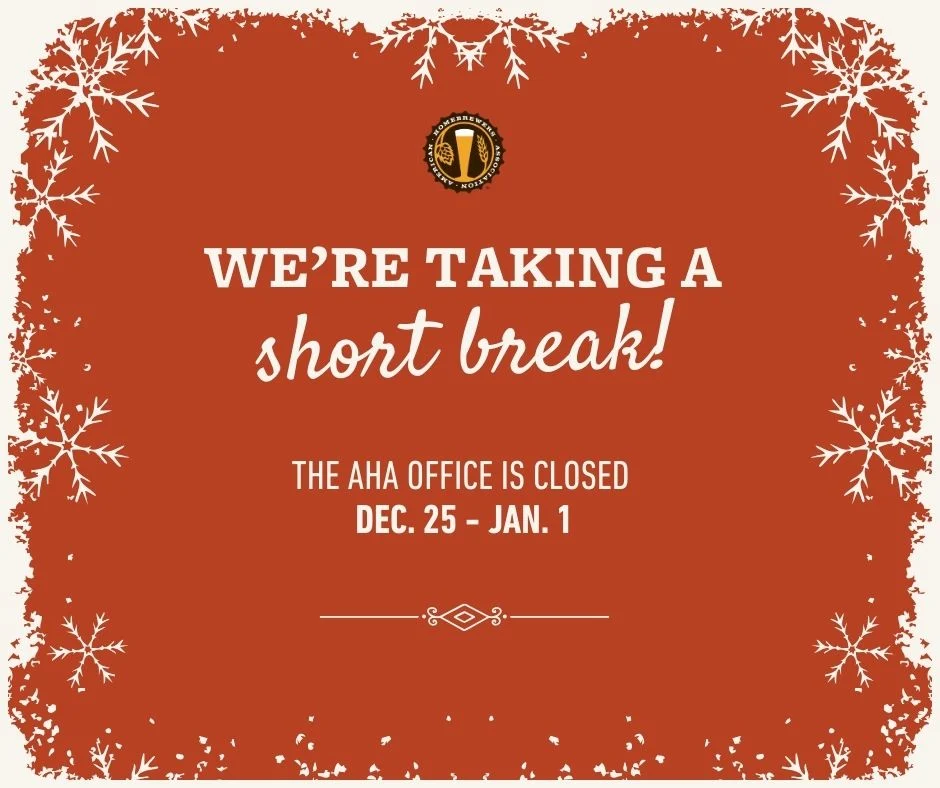

The American Homebrewers Association (AHA), the primary advocacy and educational organization for amateur brewers in the United States, has officially announced a temporary suspension of its administrative operations for the 2025 holiday season. According to a formal statement released by the Boulder-based organization, the association will be closed from December 25, 2025, through January 1, 2026. This week-long hiatus is designed to allow staff members a period of rest and recuperation following a year of significant activity within the craft fermentation sector. While the association’s physical offices and direct member support channels will be offline during this period, the organization’s extensive digital infrastructure, including its recipe database and educational archives, will remain accessible to the public and its tens of thousands of members worldwide.
Institutional Background and the Role of the American Homebrewers Association
To understand the impact of this operational pause, it is necessary to examine the foundational role the American Homebrewers Association plays in the global beer landscape. Founded in 1978 by Charlie Papazian in Boulder, Colorado, the AHA was established at a time when homebrewing was still technically illegal under federal law in the United States. The organization was instrumental in the passage of the Cranston Act, which was signed into law by President Jimmy Carter later that year, effectively legalizing homebrewing at the federal level and sparking the modern craft beer revolution.
Today, the AHA operates as a division of the Brewers Association (BA), the trade group representing small and independent American craft brewers. The AHA serves more than 37,000 members, providing them with a suite of resources that includes Zymurgy magazine, access to the National Homebrew Competition, and the AHA Member Deals program, which offers discounts at over 2,000 breweries and homebrew supply shops across the country. The year-end closure represents a standard practice for the organization, aligning its schedule with its parent body, the Brewers Association, to ensure a cohesive administrative reset before the start of the new fiscal and calendar year.
Chronology of the 2025 Brewing Year
The decision to close for the final week of December 2025 follows a particularly dense calendar for the AHA and its community. To contextualize this year-end break, one must look at the milestones achieved by the association over the past twelve months:
- January–March 2025: The year began with a focused legislative push in several U.S. states to modernize homebrew transport laws, allowing hobbyists to move their creations more easily to competitions and club meetings without fear of legal reprisal.
- May 2025: The AHA celebrated "Big Brew for National Homebrew Day." This annual event, held on the first Saturday of May, saw thousands of brewers globally brewing the same recipes simultaneously. In 2025, participation reached record levels, signaling a resurgence in home fermentation interest following a period of post-pandemic stabilization.
- June 2025: The National Homebrewers Conference, popularly known as Homebrew Con, took place. This event served as the backdrop for the final round of the National Homebrew Competition (NHC), the world’s largest amateur brewing contest. The 2025 competition saw a diverse array of entries, with a notable increase in the "Historical Beer" and "Non-Alcoholic" categories.
- September–October 2025: The AHA maintained a significant presence at the Great American Beer Festival (GABF) in Denver. During this period, the association focused on the "Pro-Am" competition, where homebrewers team up with professional breweries to scale up their award-winning recipes for commercial distribution.
- November–December 2025: The association launched its annual membership drive and holiday gift campaign, a critical period for revenue generation that supports the organization’s advocacy work throughout the following year.
Supporting Data: The Economic and Social Impact of Homebrewing
The importance of the AHA’s work, and by extension the significance of its year-end hiatus, is underscored by data regarding the homebrewing community. Industry surveys conducted by the Brewers Association indicate that there are approximately 1.1 million homebrewers in the United States. These individuals are responsible for producing roughly 1.4 million barrels of beer annually, representing about 1% of the total beer production in the country.
Furthermore, homebrewing remains the primary "incubator" for the professional craft beer industry. Research suggests that over 90% of professional craft brewers began their careers as homebrewers. In 2025, the craft beer industry contributed over $76 billion to the U.S. economy and supported more than 490,000 jobs. By supporting the AHA, the Brewers Association ensures a steady pipeline of talent and innovation for the commercial sector. The year-end closure is a minor but necessary pause in the maintenance of this vital economic engine.
Operational Details of the Closure
During the period between December 25 and January 1, several specific functions of the AHA will be affected:
- Member Support: Telephone and email support for membership inquiries, password resets, and subscription issues will be suspended. Inquiries sent during this time will be queued for response starting January 2, 2026.
- Shipping and Fulfillment: The AHA store, which sells merchandise, books, and brewing equipment, will pause shipping operations. Orders placed during the final week of the year will be processed in the order they were received once staff returns.
- Digital Content: While no new articles or videos will be posted to the AHA website during the hiatus, the "AHA Forum" will remain active. This community-moderated space allows brewers to troubleshoot fermentation issues and share recipes independently of official staff oversight.
- Zymurgy Magazine: The digital archives of Zymurgy will remain fully accessible to active members, providing a resource for those who use the holiday break to engage in "marathon" brewing sessions.
Official Responses and Member Sentiment
While the AHA has not issued a press release beyond its social media and website notifications, the response from the brewing community has been largely positive. On various digital platforms, members have expressed support for the staff’s well-being, noting that the "unplugged" period reflects the community-oriented and relaxed nature of the hobby itself.
"The AHA staff works tirelessly during the National Homebrew Competition and Homebrew Con," noted one long-time member on a popular brewing forum. "A week of downtime is a small price to pay for the advocacy they provide in Washington and at the state level throughout the rest of the year."
Industry analysts suggest that such closures are becoming standard for non-profit trade associations as they seek to combat employee burnout and improve retention in a competitive labor market. By announcing the closure well in advance, the AHA has allowed its members to prepare, ensuring that any necessary supplies or information were gathered before the December 25 deadline.
Broader Impact and Implications for the 2026 Outlook
The AHA’s return on January 2, 2026, will mark the beginning of a pivotal year for the association. Several key trends are expected to dominate the homebrewing landscape in the coming year, requiring the full attention of the refreshed AHA team.
First, the rise of "smart brewing" technology continues to lower the barrier to entry for new hobbyists. Automated brewing systems that control temperature and timing via smartphone apps are becoming more affordable, and the AHA is expected to expand its educational content to address this segment of the market.
Second, sustainability remains a top priority. As water scarcity and climate change impact hop and barley yields, the AHA is likely to increase its focus on "green brewing" practices. This includes educating members on water reclamation techniques and the use of drought-resistant grain varieties.
Third, the legal landscape for homebrewing continues to evolve. While legal in all 50 states, nuances regarding the service of homebrew in public spaces and the sale of ingredients remain points of contention. The AHA’s legislative committee will likely use the early months of 2026 to lobby for further deregulation in states with restrictive transport or "sampling" laws.
Conclusion
The American Homebrewers Association’s year-end closure is more than a simple holiday break; it is a strategic pause for an organization that serves as the backbone of a vibrant and economically significant subculture. As the team in Boulder takes this time to recharge, the millions of homebrewers across the country will continue to practice their craft, fueled by the resources and advocacy the AHA has provided for nearly half a century. When the association resumes operations in January 2026, it will do so with a clear mandate to continue fostering the growth of fermentation science and hobbyist camaraderie in an ever-changing beverage industry. For now, the message to the community remains clear: "Wishing you a safe, happy holiday season and plenty of good beer."