
The modern dietary landscape is rife with debate, and few topics ignite as much fervent discussion as the role of vegetable and seed oils. From viral social media posts on platforms like TikTok to prominent positions on bestseller lists, these ubiquitous cooking fats, often interchangeably referred to as "seed oils," have become a focal point of intense scrutiny. The conversation is not new; the merits and demerits of vegetable oils have been debated since their initial introduction to the consumer market. However, a recent resurgence in criticism, heavily fueled by dietary movements such as the carnivore diet, has amplified claims that label these oils as "toxic sludge," "motor oil," "the hateful eight," and even "the biggest cause of chronic disease that nobody knows about."
The prevailing anti-vegetable oil narrative typically posits a stark dichotomy: animal fats, integral to human diets for millennia, are presented as natural and healthy, while vegetable fats are framed as a relatively recent, industrially-driven invention. Critics argue that these oils were introduced by profit-seeking corporations aiming to monetize cheap-to-grow crops, often at the expense of public health. This perspective frequently draws parallels to the historical missteps with margarine, which was once championed as a healthier alternative to butter but later revealed to contain harmful trans fats. Consequently, some argue that today’s vegetable oils are not merely equivalent to margarine in their flawed marketing but are, in fact, "worse" than butter, linking their consumption to a disturbing array of health issues including obesity, anxiety, depression, and ulcerative colitis.
Conversely, a substantial body of experts and mainstream nutritional organizations maintain that many vegetable oils are not only harmless but can be health-promoting, particularly when replacing saturated fats. This scientific consensus often underscores the beneficial fatty acid profiles of certain vegetable oils. The stark contrast between these viewpoints leaves the public grappling with a fundamental question: who is correct? As is often the case in complex nutritional science, the truth is far too nuanced to be encapsulated within a viral meme or a soundbite. This article aims to disentangle the robust scientific evidence from the prevailing pseudoscience, empowering readers to make informed dietary decisions regarding the oils they choose to consume.
Understanding the Terminology: What Are Vegetable and Seed Oils?
The terms "vegetable oil" and "seed oil" are frequently used interchangeably, yet a precise understanding of their origins is crucial. Vegetable oils are derived from various parts of plants, with "seed oils" specifically referring to those extracted from seeds. Common examples found in grocery store aisles include soybean oil, corn oil, sunflower oil, safflower oil, cottonseed oil, grapeseed oil, and rice bran oil. These are distinct from oils derived from the fleshy fruit of plants, such as olive oil, avocado oil, palm oil, or coconut oil, which possess different fatty acid compositions and processing methods. The distinction is important because much of the current debate specifically targets the group of oils derived from seeds, particularly those high in polyunsaturated fatty acids.
The Industrial Journey: How Vegetable Oils Are Processed
The processing methods employed for different oils significantly impact their final nutritional profiles. Oils like extra virgin olive oil and avocado oil are typically derived from naturally fatty fruits and can be extracted using relatively simple mechanical means, such as pressing. An olive, for instance, contains enough oil that rudimentary extraction is possible even at home.
In contrast, most seed oils originate from plants with a comparatively low fat content. A cup of green olives contains approximately 20 grams of fat, whereas a cup of corn has only about 2 grams. This low yield necessitates an extensive, multi-step industrial process to efficiently extract and purify the oil. This process typically involves:
- Crushing and Flaking: Seeds are crushed and flaked to rupture cell walls and increase surface area.
- Solvent Extraction: A chemical solvent, most commonly hexane, is used to dissolve the oil from the flaked seeds, significantly increasing extraction efficiency compared to mechanical pressing alone.
- Degumming: Phospholipids and gums are removed to prevent cloudiness and improve shelf life.
- Neutralization: Free fatty acids, which can cause rancidity, are removed by treating the oil with an alkali, often sodium hydroxide.
- Bleaching: Activated clays are used to absorb pigments and impurities, resulting in a lighter, more uniform color.
- Deodorization: The oil is subjected to high-temperature vacuum distillation to remove volatile compounds that can impart undesirable flavors and aromas. This step is crucial for creating a neutral-tasting and smelling oil suitable for a wide range of food applications.
During this intensive processing, many beneficial health-promoting compounds, such as polyphenols, tocopherols (a form of vitamin E), and other stabilizing antioxidants naturally present in the raw seeds, are significantly reduced or entirely lost. Critically, the high heat and chemical treatments can also induce the transformation of small amounts of unsaturated fats into trans fatty acids. While distinct from the partially hydrogenated oils largely banned by the FDA in 2018 due to their high trans fat content, these industrially formed trans fats are still recognized as detrimental to cardiovascular health. It’s also worth noting that similar transformations can occur when vegetable oils are repeatedly heated to high temperatures, such as in commercial deep fryers, further increasing their trans fat content over time.
While labeling these industrially processed oils as "toxic" might be an exaggeration, the scientific consensus firmly advises minimizing trans fat intake. The FDA’s ban on added trans fats in processed foods underscores the recognized health risks associated with these compounds.
Navigating Dietary Recommendations: A Spectrum of Fats
Leading nutritional organizations and experts advocate for a nuanced approach to dietary fats, categorizing them based on their fatty acid profiles and processing levels. Generally, fats are grouped into those to "eat more" of, "eat some" of, and "eat less" of.
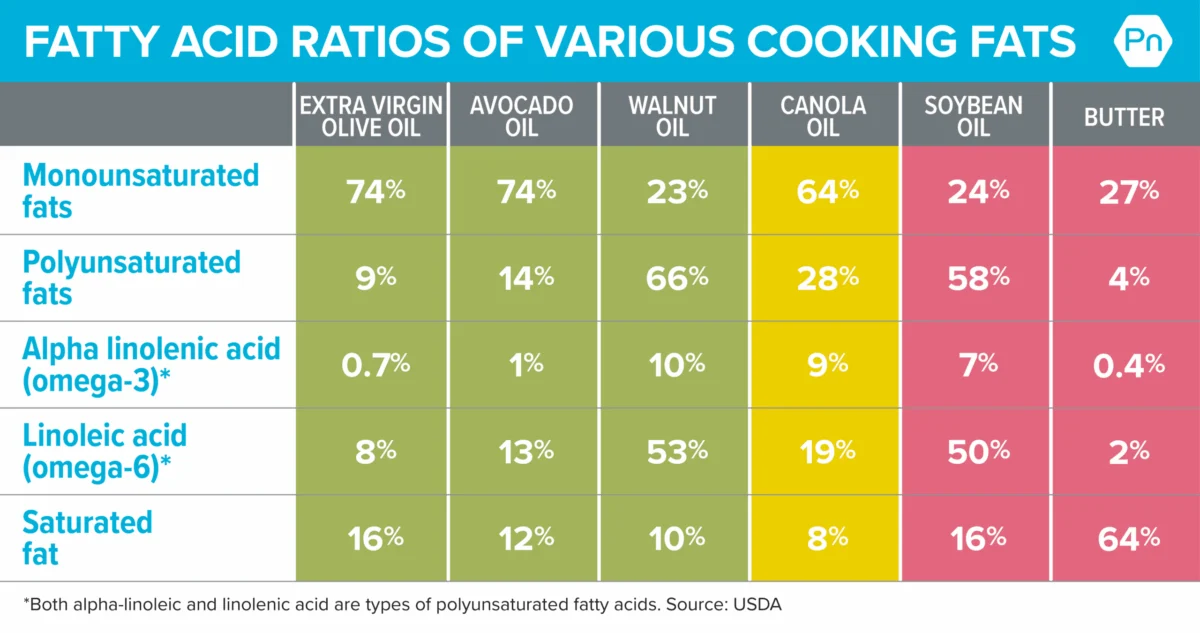
- "Eat More" Category: This category typically includes extra virgin olive oil, avocado oil, and walnut oil. These oils are rich in heart-healthy monounsaturated fatty acids (MUFAs) and/or beneficial polyunsaturated fatty acids (PUFAs), and are minimally processed, retaining valuable antioxidants and phytochemicals.
- "Eat Some" Category: This moderate consumption category often includes expeller-pressed canola oil and high-oleic sunflower and safflower oils. These are considered generally neutral or potentially beneficial when consumed in reasonable amounts as part of a balanced diet. They offer a good balance of MUFAs and PUFAs, and expeller-pressing minimizes the harsh chemical processing.
- "Eat Less" Category: This category encompasses most other refined vegetable oils (e.g., soybean, corn, conventional sunflower, safflower, cottonseed) as well as butter and other saturated fats. The rationale for limiting refined vegetable oils often stems from their higher omega-6 content, lower antioxidant profile due to processing, and potential for trans fat formation. Saturated fats, while not universally "bad," are recommended in moderation due to their impact on cholesterol levels.
This tiered approach often sparks debate. Some argue that cold-pressed canola oil deserves a spot alongside olive oil in the "eat more" category due to its omega-3 content, while others insist that all vegetable oils should be in the "eat less" column, elevating butter’s status. Understanding the scientific basis for these recommendations requires a deeper look into specific oil comparisons.
Head-to-Head: A Scientific Showdown of Cooking Oils

Extra Virgin Olive Oil (EVOO) vs. Expeller-Pressed Canola Oil
These two oils represent some of the less refined options in their respective categories. EVOO is produced by grinding and mechanically pressing olives without heat or chemical solvents, preserving its distinctive flavor and nutrient profile. Similarly, expeller-pressed canola oil is extracted from rapeseed through mechanical pressing, avoiding harsh chemicals and excessive heat.
-
The Case for Extra Virgin Olive Oil (EVOO): EVOO stands out for its high concentration of monounsaturated fatty acids (MUFAs), particularly oleic acid, which is known for its cardiovascular benefits. Beyond its fatty acid composition, EVOO retains a rich array of polyphenols and other bioactive compounds from the olive fruit. These natural antioxidants and anti-inflammatory agents contribute significantly to EVOO’s health-promoting properties. Extensive research, particularly from Mediterranean populations where olive oil consumption is high, consistently links EVOO to a reduced risk of numerous chronic diseases. For example, a large study involving over 22,000 adults in Southern Italy found that those consuming more than two tablespoons of olive oil daily had a 20% lower mortality risk over 13 years compared to those consuming less than one tablespoon. Other studies have associated EVOO consumption with reduced risks of heart disease, stroke, type 2 diabetes, metabolic syndrome, certain cancers, and cognitive decline, as well as favorable effects on LDL cholesterol, especially when replacing saturated fats. Concerns about EVOO’s relatively low smoke point (350-410°F) have largely been debunked by recent research, which demonstrates that its high polyphenol content and MUFA stability make it remarkably resistant to oxidative degradation even at high cooking temperatures. One study showed EVOO remained more stable than canola oil when heated to 464°F and held at 356°F for several hours.
-
The Case for Expeller-Pressed Canola Oil: Canola oil, a product of a Canadian-developed hybrid rapeseed plant, is one of the most affordable cooking oils. Among vegetable oils, it boasts a favorable fatty acid profile, rich in MUFAs and alpha-linolenic acid (ALA), a plant-based omega-3 fatty acid. It also contains phytosterols, plant compounds that can help lower blood cholesterol, particularly when canola oil replaces saturated fats like butter.
-
The Winner: Extra Virgin Olive Oil. The overwhelming body of scientific evidence supporting EVOO’s health benefits, coupled with its superior fatty acid profile and rich antioxidant content, makes it the clear frontrunner. Avocado oil shares a similar favorable profile and is also highly recommended. However, expeller-pressed canola oil remains a valuable, budget-friendly option. Its neutral flavor also makes it a versatile choice for baking, where EVOO’s distinct taste might be undesirable. When used in moderation, expeller-pressed canola oil is considered health-neutral or even somewhat beneficial.
Expeller-Pressed Canola Oil vs. Refined Canola Oil
This comparison highlights the critical impact of processing methods.
-
Expeller-Pressed Canola Oil: As discussed, this method uses mechanical pressure without chemical solvents or high heat, helping to preserve beneficial compounds like ALA and phytosterols.
-
Refined Canola Oil: Conventional refining processes remove some of the protective ALA and can introduce small amounts of unhealthy trans fatty acids. This results in an oil with a proportionally lower omega-3 content and a higher omega-6 content.
-
The Winner: Expeller-Pressed Canola Oil. While the margin is not vast, expeller-pressed canola oil is preferable due to its less aggressive processing, which better preserves its nutritional integrity and minimizes the formation of undesirable compounds. Canola oil’s initial fatty acid profile is generally less controversial than that of oils like soybean oil, which contains higher levels of omega-6 and less MUFA.
The Omega-6 Fatty Acid Debate: Inflammatory or Misunderstood?
A central tenet of the anti-seed oil movement is the assertion that omega-6 fatty acids, abundant in many vegetable oils, are inherently "inflammatory." The argument often highlights the disproportionate ratio of omega-6 to omega-3 fats in the typical Western diet, which can be as high as 16-20:1. Theoretically, this imbalance could promote chronic inflammation, contributing to conditions like diabetes and obesity. Historically, recommendations to balance this ratio (ideally between 1:1 and 4:1) were widespread.
However, contemporary nutritional science offers a more nuanced perspective. The simple equation "omega-6 = inflammation" has largely been debunked. Research shows that while certain omega-6 metabolites can be pro-inflammatory, others are anti-inflammatory, and the overall context of the diet is paramount. For example, whole foods naturally rich in omega-6 fats, such as nuts and seeds, are consistently associated with a range of health benefits, including reduced blood cholesterol and inflammation. A 2019 Harvard Health article declared "No need to avoid healthy omega-6 fats," citing a study in the American Heart Association journal Circulation that found omega-6 consumption was associated with a reduced risk of stroke, heart disease, and early death.
The crucial distinction lies between omega-6 fats consumed in whole foods and those found in highly refined oils. Nuts and seeds come packaged with fiber, protein, vitamins, minerals, and polyphenols, forming a complex food matrix that modulates their effects. Refined oils, conversely, are essentially pure fat, stripped of these protective compounds and more susceptible to oxidation, which can indeed contribute to inflammatory processes. Therefore, the issue is not solely the presence of omega-6 fats but rather their source and how they are processed and consumed within the broader diet.
Refined Vegetable Oil vs. Butter: The Battle of the Fats

This particular matchup often generates the most heated exchanges in dietary discussions.
-
The Case for Butter: Proponents of butter argue that saturated fats have been unfairly demonized, pointing to the detrimental consequences of replacing butter with trans-fat-laden margarine in the 1980s and 90s. Some also contend that the evidence for significantly reducing saturated fat intake is weaker than often portrayed. However, the scientific consensus, supported by numerous studies, indicates that excessive saturated fat consumption (typically above 10% of total calories) can elevate LDL ("bad") cholesterol levels and increase the risk of heart disease. Replacing just 5% of dietary saturated fat with monounsaturated fats can reduce heart disease risk by 15%, and replacing it with polyunsaturated fats can reduce risk by 10%. While not all saturated fats affect cholesterol equally, butter is relatively low in the protective milk fat globule membrane (MFGM) found in other dairy products like milk and cheese, and thus tends to raise blood cholesterol more. The U.S. Dietary Guidelines recommend limiting saturated fat to less than 10% of daily calories; a single tablespoon of butter contains 7 grams of saturated fat, roughly one-third of the daily limit for a 2,000-calorie diet. Thus, moderation is key.
-
The Case for Refined Vegetable Oils (and the Ultra-Processed Food Connection): Polyunsaturated fats, by their chemical nature, are more susceptible to oxidation than saturated or monounsaturated fats. During the refining process, the removal of natural antioxidants makes these oils even more prone to oxidative damage. The theory is that this oxidation, when consumed, could contribute to inflammation within the body. Some studies suggest a correlation between diets high in polyunsaturated fats from refined vegetable oils and increased markers of oxidative stress and inflammation.
However, for most individuals, the primary source of refined vegetable oils is not home cooking with a lightly-coated pan. Instead, it is the pervasive presence of these oils in ultra-processed foods. These foods, from packaged snacks and baked goods to frozen meals and sugary drinks, undergo extensive industrial processing, which often involves repeated heating and exposure of the oils to oxygen, further promoting oxidation and the formation of harmful compounds like advanced glycation end products (AGEs). Beyond the oils themselves, ultra-processed foods are typically laden with added sugars, sodium, and artificial ingredients, while being deficient in beneficial nutrients like fiber, vitamins, minerals, and phytonutrients. They are also designed to be hyper-palatable, calorie-dense, and highly rewarding, making them difficult to consume in moderation and contributing significantly to overconsumption and obesity. Numerous large-scale reviews, including one involving nearly 10 million people, have linked ultra-processed food consumption to a higher risk of premature death and a multitude of chronic health problems, including cardiovascular disease, metabolic syndrome, type 2 diabetes, certain cancers, depression, and irritable bowel syndrome.
Therefore, reducing the intake of refined vegetable oils largely translates to reducing the consumption of ultra-processed foods. Limiting these foods to about 20% of one’s diet, while prioritizing whole, minimally-processed foods for the remaining 80%, naturally lowers refined vegetable oil intake to a safer level. Furthermore, consuming refined vegetable oils in the context of a diet rich in colorful plants, fiber, and antioxidants may help mitigate concerns about oxidation.
-
The Winner: A Draw. Both refined vegetable oils and butter should be consumed in moderation, and neither is inherently health-promoting in large quantities. Refined vegetable oils are high in polyunsaturated fats and often stripped of protective compounds, with some concerns about omega-6 balance and trans fat formation during processing. Butter, while less processed than refined seed oils, is high in saturated fat which, in excess, can negatively impact cholesterol. The decision between them often comes down to context and overall dietary pattern.
Recommendations for a Balanced Approach to Dietary Fats
Navigating the complex world of dietary fats doesn’t require extreme restriction but rather informed choices and a focus on overall dietary quality.
-
Prioritize Minimally-Processed Whole Foods: The most effective strategy is to obtain the majority of your fats from whole, unprocessed or minimally processed foods. Sources like avocados, olives, nuts, seeds (e.g., flaxseeds, chia seeds, walnuts), and fatty fish (e.g., salmon) provide healthy monounsaturated and omega-3 fats, along with a synergistic array of fiber, protein, vitamins, minerals, and antioxidants. These whole food matrices offer benefits far beyond isolated fatty acids. When evaluating packaged foods, consider: Is it close to its natural state? Does it have a short ingredient list with recognizable items? Is it rich in fiber? If the answer is "no" to most of these, it’s likely highly processed and should be consumed sparingly.
-
Choose High-Quality Cooking Oils Strategically:
- "Eat More" Options: Extra virgin olive oil, cold-pressed avocado oil, and walnut oil are excellent choices for their beneficial fatty acid profiles and rich antioxidant content. EVOO and avocado oil are versatile for cooking and dressings, while walnut oil, being less heat-stable, is best reserved for dressings and finishing. While these oils can be more expensive, their health benefits justify the investment if budget allows.
- "Eat Some" Options: Expeller-pressed canola oil, high-oleic sunflower oil, and high-oleic safflower oil are good, more budget-friendly alternatives. Their higher monounsaturated fat content and cleaner processing methods make them suitable for moderate use in cooking and baking, providing a healthier alternative to highly refined oils and excessive saturated fats.
-
Limit Deep-Fried Foods: Regardless of the type of oil used, deep-fried foods should be categorized in the "eat less" section. The high temperatures and repeated heating involved in deep frying can degrade any oil, increasing the formation of harmful compounds, including trans fats and oxidized lipids.
-
Emphasize Food Over Oils for Fat Intake: While a moderate intake of high-quality oils (one to three servings per day) is reasonable, the bulk of your fat intake should come from whole foods. Whole food fats are more nutrient-dense and less calorically concentrated than isolated oils, providing satiety and a broader spectrum of health benefits.
The debate around vegetable and seed oils is a microcosm of broader challenges in nutrition science communication. Simplified narratives, often amplified by social media, frequently overshadow the complex, nuanced reality. Ultimately, a balanced, whole-foods-centric dietary pattern, mindful of the types and processing of fats consumed, remains the most robust strategy for promoting long-term health and well-being.