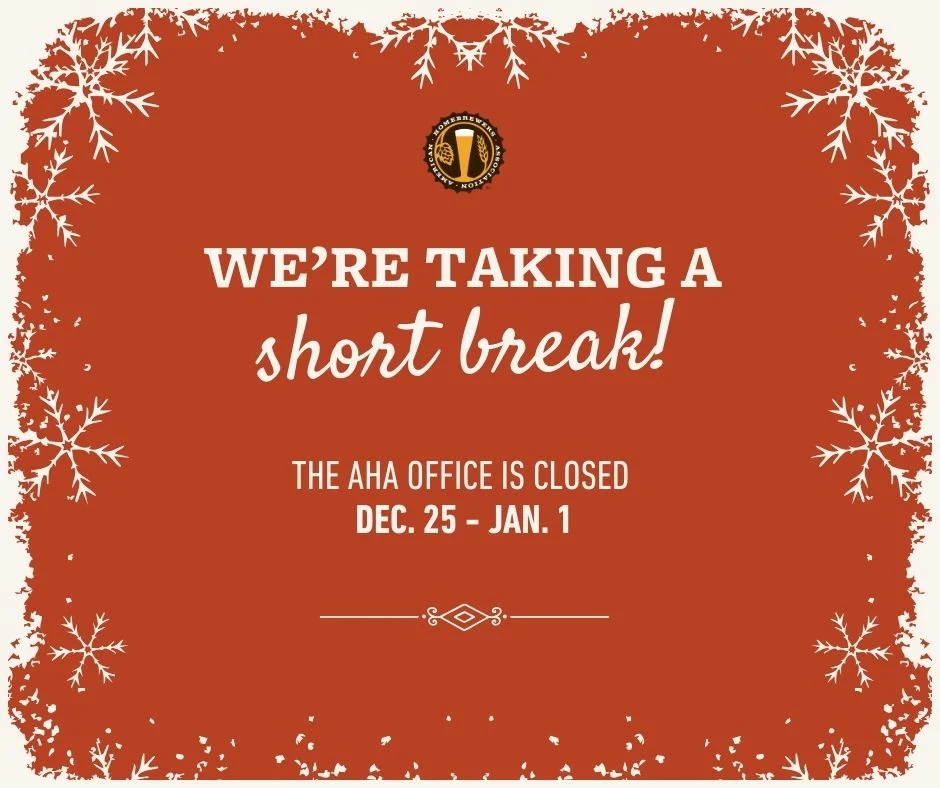

The American Homebrewers Association (AHA), the primary advocacy and educational body for amateur brewers in the United States, has officially announced its year-end operational schedule, confirming a full administrative closure from December 25, 2025, through January 1, 2026. This planned hiatus is designed to allow the organization’s professional staff to observe the holiday season and return in the new year with a renewed focus on content production, membership services, and industry advocacy. While the organization’s digital resources and community forums will remain accessible to the public, active moderation and administrative support will resume on January 2, 2026.
This announcement comes at a pivotal time for the homebrewing community, which has seen a resurgence in DIY fermentation and craft beverage production over the last several years. The decision to pause operations reflects a broader trend among non-profit organizations and trade associations to prioritize employee well-being and strategic planning during the final week of the calendar year. By closing its offices during this period, the AHA aims to consolidate its internal resources for a robust rollout of educational programming and competitive events scheduled for the 2026 fiscal year.
Operational Schedule and Continuity of Services
The closure period, beginning on Christmas Day and extending through New Year’s Day, represents a total of eight calendar days during which the AHA headquarters in Boulder, Colorado, will be inactive. During this timeframe, the organization has indicated that its primary communication channels, including direct email support and social media engagement, will be paused. However, the AHA’s extensive digital library—which includes thousands of recipes, technical brewing articles, and legislative tracking tools—will remain live for its global membership base.
For the estimated tens of thousands of active members, the closure serves as a scheduled maintenance period for the community. The AHA has encouraged its members to utilize the "Homebrewers Association" mobile app and the online "Zymurgy" magazine archives for their holiday brewing needs. Many hobbyists traditionally use the final week of December to engage in "big brew" sessions, taking advantage of personal time off to craft complex styles such as Imperial Stouts, Barleywines, and traditional Winter Warmers.
Historical Context of the American Homebrewers Association
To understand the significance of the AHA’s role in the modern beverage landscape, one must look back to its founding in 1978. Established by Charlie Papazian in Boulder, Colorado, the AHA was created at a time when homebrewing was still federally prohibited in the United States. It was not until the passage of H.R. 1337 in 1978, signed by President Jimmy Carter, that homebrewing was legalized at the federal level, though state-level prohibitions lingered for decades.
Since its inception, the AHA has evolved from a small group of enthusiasts into a powerhouse division of the Brewers Association (BA). The organization was instrumental in the legalization of homebrewing in all 50 states, a milestone finally achieved in 2013 when Alabama and Mississippi passed their respective bills. Today, the AHA represents a diverse demographic of brewers ranging from casual kitchen-counter hobbyists to those utilizing professional-grade pilot systems. The year-end closure is a rare pause for an organization that manages the world’s largest beer competition and coordinates massive educational conferences like Homebrew Con.
The State of the Homebrewing Industry in 2025
As the AHA enters its holiday hiatus, the homebrewing industry is experiencing a period of technological and demographic shifts. Data from the mid-2020s indicates that while the total number of homebrewers has stabilized, the sophistication of the average home brewery has increased significantly. The integration of automated brewing systems, AI-assisted recipe formulation, and precise temperature-controlled fermentation has lowered the barrier to entry while raising the quality of the final product.
Market analysis suggests that the homebrewing supply sector remains a vital component of the broader $100 billion craft beer economy. While retail trends have shifted toward e-commerce, local homebrew supply shops (LHBS) continue to serve as essential community hubs. The AHA’s announcement emphasizes a commitment to "more great homebrewing content" in 2026, which industry experts anticipate will focus on sustainable brewing practices, the use of climate-resilient hop varieties, and the growing popularity of non-alcoholic homebrewing.
Economic Impact and Seasonal Trends
The holiday season is historically the most active period for the homebrewing supply chain. According to retail data, the fourth quarter accounts for a significant portion of annual sales for brewing equipment and ingredient kits. As individuals seek unique gifts and winter activities, the influx of new brewers into the hobby typically peaks in late December.
The AHA’s decision to recharge during this window follows the completion of several high-intensity autumn events, including the Great American Beer Festival (GABF) and various regional competitions. By 2025, the economic footprint of homebrewing in the United States is estimated to contribute over $1.2 billion to the economy through equipment sales, ingredient purchases, and membership fees. The organization’s ability to support this economy depends heavily on the health and productivity of its staff, making the year-end break a strategic necessity for long-term operational sustainability.
Community Reactions and Social Engagement
While the AHA’s announcement was formal, the reaction from the brewing community has been overwhelmingly positive. On social media platforms and brewing forums, members have expressed support for the staff’s "refresh and recharge" period. This sentiment reflects the tight-knit, community-oriented nature of the hobby, where the lines between professional advocates and amateur enthusiasts often blur.
Inferred reactions from industry partners, such as major maltsters and hop growers, suggest a shared understanding of the need for a seasonal reset. Many auxiliary businesses in the craft beer world follow similar holiday schedules, creating a synchronized lull in the industry that allows for comprehensive system updates and inventory management before the spring brewing season begins.
Implications for the 2026 Brewing Calendar
Looking ahead to 2026, the American Homebrewers Association has signaled a robust agenda. Key events on the horizon include:
- The National Homebrew Competition (NHC): The world’s largest international homebrew competition will begin its preliminary rounds in early spring. The holiday closure allows the AHA team to finalize the logistical frameworks for judging centers across the country.
- Legislative Advocacy: The AHA continues to work on "Homebrewers Rights" at the state level, specifically focusing on the ability of hobbyists to share their creations at organized events and competitions without facing undue regulatory hurdles.
- Educational Expansion: With the promise of new content, the AHA is expected to expand its video tutorials and interactive brewing seminars, catering to a younger generation of brewers who prioritize digital-first learning.
- Sustainability Initiatives: In response to global environmental trends, the 2026 content strategy is rumored to include a major focus on water conservation in the brewing process and the upcycling of spent grains.
Organizational Wellness and Strategic Planning
The professional journalistic perspective on this closure highlights a growing movement toward "rest as a strategy" within high-output organizations. The American Homebrewers Association operates in a high-pressure environment, balancing the needs of its members with the rigorous standards of its parent organization, the Brewers Association. The holiday shutdown is more than a simple vacation; it is a management tool used to prevent burnout and ensure that the team can meet the high expectations of its sophisticated membership base.
By announcing the closure well in advance, the AHA has demonstrated effective crisis and expectation management. This transparency ensures that members who may have pending membership renewals or technical inquiries are not left wondering about the lack of response. It also sets a standard for other hobbyist organizations, proving that even in a 24/7 digital world, a structured pause can lead to better long-term outcomes.
Conclusion and Summary of Facts
The American Homebrewers Association will remain closed from December 25, 2025, to January 1, 2026. This period of rest is intended to prepare the organization for a demanding 2026 schedule that will likely include the National Homebrew Competition, Homebrew Con, and a new suite of digital educational tools. As the homebrewing hobby continues to evolve alongside technological advancements and shifting market dynamics, the AHA remains a central pillar of the community.
The organization’s message to its members—wishing them a safe holiday season and "plenty of good beer"—underscores the cultural significance of the craft. Brewing is not merely a technical process but a social and celebratory act. As the AHA team steps away to celebrate their own traditions, the millions of homebrewers across the globe will continue to mash, boil, and ferment, fueled by the resources and advocacy provided by the association throughout the rest of the year. Operations will officially resume on January 2, 2026, marking the beginning of a new chapter in the storied history of American amateur brewing.