
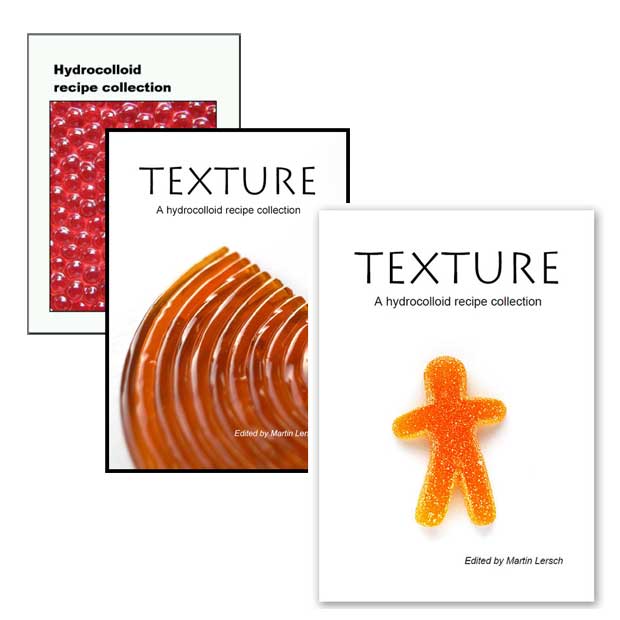
After a six-year hiatus since its last major revision, "Texture – A hydrocolloid recipe collection," a seminal resource in the realm of modern gastronomy and food science, is slated for an incremental yet significant update. The forthcoming Version 3.1 promises to refine existing content, incorporate invaluable community feedback, and broaden its scope to include a wider array of gelling agents and naturally occurring textured foods. This collaborative endeavor, championed by the pioneering Khymos.org platform, underscores the dynamic and evolving nature of culinary science and the enduring commitment to accessible, cutting-edge knowledge.
A Pillar of Modern Gastronomy Undergoes Refinement
"Texture – A hydrocolloid recipe collection" has long stood as a cornerstone for chefs, food scientists, and enthusiastic home cooks delving into the intricate world of molecular gastronomy and modernist cuisine. Launched by Martin Lersch through his influential Khymos.org website, the collection serves as a practical, open-access compendium detailing the properties and applications of various hydrocolloids—substances that manipulate the texture, viscosity, and stability of food. From creating delicate foams and robust gels to achieving precise emulsifications, hydrocolloids have revolutionized how food is prepared and experienced. The impending Version 3.1 is not intended as a wholesale overhaul but rather a meticulous "ironing out of wrinkles," focusing on accuracy, clarity, and the integration of new insights gathered over half a decade. This iterative approach ensures the resource remains current and reliable in a rapidly advancing field.
The announcement highlights a deep appreciation for the community that has contributed to "Texture’s" success. Feedback, ranging from the identification of typos and errors to the submission of successful recipe applications and illustrative photographs, has been instrumental in shaping this upcoming revision. Martin Lersch, the driving force behind Khymos.org, has historically fostered an environment of shared knowledge, making this collaborative model central to the resource’s development. The call for further contributions, particularly high-quality photographs and reports on recipe functionality, reinforces the participatory spirit that has allowed "Texture" to evolve into a globally recognized authority. Photos, in particular, are lauded as critical indicators of a recipe’s success and reproducibility, offering visual proof of concept that is invaluable for users.
The Enduring Legacy of ‘Texture’: A Chronology of Innovation
The journey of "Texture" began over a decade ago, coinciding with and significantly contributing to the burgeoning interest in molecular gastronomy.
-
Version 1.0 (2007): The initial release laid the groundwork for what would become an indispensable guide. At a time when information on hydrocolloids and their culinary applications was fragmented and often confined to academic journals or expensive professional workshops, "Texture v1.0" provided a groundbreaking, freely accessible compilation. It introduced a wide audience to ingredients like agar-agar, gellan gum, and xanthan gum, explaining their functions and offering practical recipes. This inaugural version quickly gained traction among forward-thinking chefs and food enthusiasts eager to experiment with new textures and techniques.
-
Version 2.0 (2008): Building on the success of its predecessor, "Texture v2.0" arrived just a year later, reflecting the rapid pace of discovery and experimentation in the field. This update likely expanded the collection of hydrocolloids covered, refined existing recipes based on early user feedback, and perhaps introduced more advanced techniques or ingredient combinations. The swift follow-up demonstrated the dynamic nature of the project and Lersch’s commitment to continuous improvement.
-
Version 3.0 (2014): The most recent major update, Version 3.0, represented a significant maturation of the resource. By this point, molecular gastronomy had moved beyond its initial novelty phase, becoming more integrated into mainstream fine dining and even home cooking. Version 3.0 would have incorporated years of accumulated knowledge, refined scientific explanations, and a broader collection of tested recipes. Its publication solidified "Texture’s" reputation as the go-to reference for practical applications of food hydrocolloids. The comprehensive nature of this version set a high bar, making the subsequent six-year gap between updates a period of quiet but continuous data gathering and preparation.
-
Version 3.1 (Upcoming): The forthcoming Version 3.1, expected to be released in late 2020 or early 2021, represents a synthesis of the lessons learned and contributions received since 2014. While an "incremental revision," its significance lies in ensuring the enduring accuracy, relevance, and comprehensiveness of a resource that has become a touchstone for culinary innovation. The decision to pursue an incremental update rather than a full version jump indicates a focus on precision and refinement, responding directly to user needs and emerging trends without disrupting the established framework.
This chronology illustrates "Texture’s" evolution from a pioneering effort to a mature, community-driven encyclopedia of food science. Each iteration has reflected the state of culinary innovation, consistently aiming to demystify complex scientific principles and make them accessible to a broad audience.
Deconstructing the Version 3.1 Enhancements
The planned updates for Version 3.1 are multifaceted, addressing both the depth and breadth of the collection. They fall into several key areas, each designed to enhance the utility and completeness of the resource.
The Collaborative Core: Community Feedback and Visual Validation
A central tenet of Khymos.org’s approach has always been the open exchange of knowledge. For Version 3.1, this collaborative spirit is more vital than ever. The call for user feedback extends beyond simple error reporting to actively soliciting insights into recipe functionality. If a recipe proved unsuccessful, Lersch encourages users to report these instances, providing crucial data for refinement or removal. This rigorous, peer-reviewed approach ensures the collection’s reliability, a critical factor for experimental cooking where precision is paramount.
Moreover, the emphasis on photographic submissions is a key strategy for validating recipes. A picture accompanying a recipe serves as tangible evidence of its successful execution, offering visual guidance and inspiration to other users. This is particularly important for techniques involving hydrocolloids, where subtle variations in preparation can lead to vastly different textures. The visual component helps bridge the gap between theoretical instructions and practical outcomes, making the recipes more accessible and less intimidating. The detailed instructions for photo submission, previously outlined on the Khymos.org blog and within "Texture" itself, underscore the structured approach to integrating community input.
Expanding the Hydrocolloid Spectrum: Underrepresented and Missing Ingredients
One of the most exciting aspects of the Version 3.1 update is the concerted effort to broaden the collection’s coverage of hydrocolloids.
-
Addressing Underrepresentation: Several important hydrocolloids have been identified as "underrepresented," meaning their diverse applications are not fully explored within the current collection. These include:
- Guar Gum: Derived from guar beans, it’s a powerful thickener and stabilizer, often used in dairy products, dressings, and baked goods. Its cold-water solubility and synergistic effects with other gums make it highly versatile.
- Gum Arabic: An exudate from acacia trees, known for its emulsifying, stabilizing, and film-forming properties. It’s crucial in confectionery, beverages, and flavor encapsulation.
- Konjac: Extracted from the konjac plant, it forms elastic, heat-stable gels, widely used in Asian cuisine for noodles, jellies, and vegan seafood alternatives. Its unique texture profile is distinct from many other gelling agents.
- Locust Bean Gum (Carob Gum): Sourced from the carob tree, it’s a thickener and stabilizer, often used in ice creams, sauces, and dairy products. It exhibits strong synergistic gelling properties with xanthan gum and kappa-carrageenan.
- Tara Gum: Similar to locust bean and guar gum, tara gum is derived from the tara plant. It acts as a thickener and stabilizer, offering properties intermediate between guar and locust bean gum, making it valuable in various food systems.
The call for recipes highlighting the "range of foods each of these hydrocolloids can be used for" indicates a desire to showcase their full potential, moving beyond their most common applications. This will involve exploring novel culinary uses and precise textural manipulations that these ingredients enable.
-
Identifying Missing Hydrocolloids: The update also seeks to identify "accidentally missing" hydrocolloids, particularly those that are rare, novel, or have recently gained prominence. This proactive search ensures that "Texture" remains a cutting-edge resource, reflecting the latest advancements in food science. It encourages users to share knowledge about lesser-known or newly developed gelling and thickening agents.
Conversely, the article clarifies that some omissions are intentional, specifically proprietary products like Ultra-Tex and Pure Cote (both modified starches) and Trisol (a wheat fiber). The rationale for excluding these likely stems from their proprietary nature, which often means their exact compositions or optimal usage parameters are not publicly disclosed, making them unsuitable for an open-access, foundational recipe collection focused on fundamental ingredients. This distinction reinforces the academic and educational integrity of "Texture," prioritizing widely understood and accessible compounds.
Embracing Natural Gelling Mechanisms: Beyond Traditional Hydrocolloids
Perhaps one of the most intriguing additions planned for Version 3.1 is the expansion of the "non-hydrocolloid recipes" category. This section delves into examples of gels and foams from regional cuisines worldwide that achieve their unique textures without the addition of commercial hydrocolloids. Instead, they rely on inherent gelling or foaming mechanisms present in the ingredients themselves. This inclusion broadens the definition of "texture" beyond laboratory-derived solutions, celebrating traditional culinary wisdom.
Examples already listed for this category include:
- Junket: A dairy dessert coagulated by rennet, an enzyme traditionally sourced from calves’ stomachs, demonstrating enzymatic gelling.
- Cuajada: A Spanish fresh cheese or curdled milk dessert, also often made using rennet, showcasing a similar enzymatic coagulation.
- Ginger Milk Custard: A Chinese dessert where the proteolytic enzymes in fresh ginger juice curdle hot milk, forming a delicate custard.
- Aiyu Jelly: A Taiwanese dessert made from the seeds of the aiyu fig, which release pectin-like gelling agents when rubbed in water.
- Grass Jelly: A popular East Asian dessert made from the Platostoma palustre plant, whose leaves contain polysaccharides that form a dark, gelatinous substance.
- Gelled Seafood Sauce: Many traditional seafood sauces, especially those rich in collagen from bones or shells, will naturally gel upon cooling.
- Tofu: The classic soy product, formed by coagulating soy milk using agents like nigari (magnesium chloride) or gypsum (calcium sulfate), which cause the proteins to gel.
- Hominy: Nixtamalized corn, which can develop a unique texture and gelling properties due to changes in its starch structure during processing.
The request for community help in identifying more such examples highlights the global and diverse nature of natural texturizers. This category serves as a bridge between scientific understanding and traditional culinary practices, revealing the universal principles of texture creation.
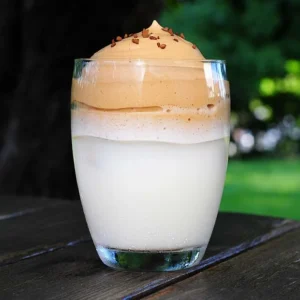
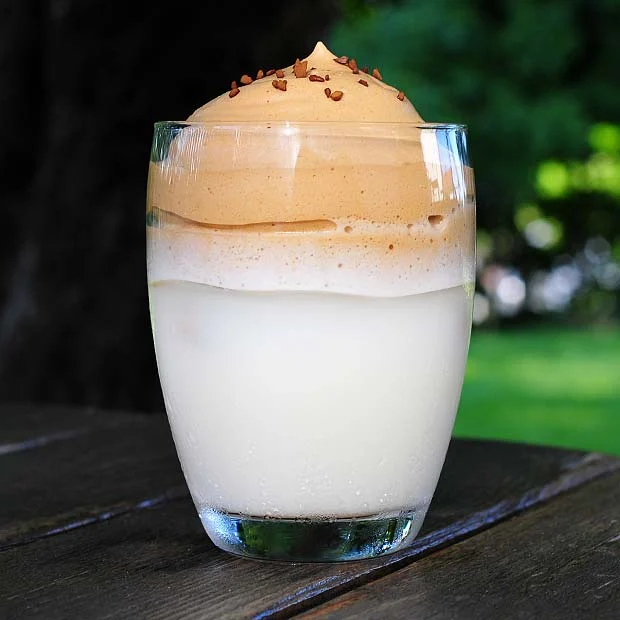
A particularly timely inclusion is the Dalgona coffee foam, which achieved viral status globally in early 2020. This foam, created by whipping instant coffee, sugar, and hot water, owes its stable, airy texture to the proteins in the coffee acting as emulsifiers and stabilizers, trapping air and forming a robust foam. Its popularity underscores how simple ingredients can achieve complex textures, aligning perfectly with the spirit of this expanded category. Its inclusion also demonstrates the resource’s responsiveness to contemporary culinary phenomena.
The Broader Impact: Democratizing Food Science and Culinary Innovation
The continuous evolution of "Texture – A hydrocolloid recipe collection" by Khymos.org carries significant implications for the broader culinary and scientific communities.
Firstly, it reinforces the democratization of food science. By providing a free, comprehensive, and continuously updated resource, Khymos.org removes financial and intellectual barriers that might otherwise prevent chefs, students, and home cooks from exploring advanced culinary techniques. This open-access model fosters a wider understanding and application of scientific principles in the kitchen, bridging the gap between laboratory and stovetop.
Secondly, "Texture" acts as a catalyst for innovation. With a reliable guide to the properties and applications of various texturizers, culinary professionals are empowered to experiment with greater confidence. They can create novel dishes, improve existing recipes, and push the boundaries of flavor and presentation. The inclusion of underrepresented hydrocolloids and traditional gelling mechanisms specifically encourages a broader, more global perspective on texture, potentially inspiring fusions of techniques and flavors.
Thirdly, the community-driven aspect cultivates a culture of shared learning and collective intelligence. By actively soliciting feedback, photographs, and new recipe ideas, Martin Lersch ensures that "Texture" remains a living document, constantly enriched by the practical experiences of its users worldwide. This collaborative peer-review system enhances the accuracy and practical relevance of the information, making it a truly robust and reliable reference.
Finally, the project contributes to the ongoing professionalization of culinary arts. Understanding the science behind ingredients and techniques is increasingly vital for chefs. Resources like "Texture" provide the foundational knowledge necessary for informed decision-making, moving beyond rote memorization to a deeper comprehension of food chemistry and physics. This scientific rigor elevates culinary practice and encourages a more analytical approach to recipe development.
A Call to Action: Shaping the Future of Culinary Knowledge
The impending Version 3.1 update for "Texture – A hydrocolloid recipe collection" represents not just a revision of a document, but a reaffirmation of a commitment to advancing culinary knowledge through collaboration and open access. Martin Lersch’s ongoing dedication to this project, evident in his meticulous integration of community input, ensures that "Texture" remains at the forefront of modern gastronomic education.
The call for contributions is clear and direct:
- Share Recipes and Insights: Particularly for the underrepresented hydrocolloids (guar gum, gum arabic, konjac, locust bean gum, tara gum), new and innovative recipes are highly sought.
- Provide Visual Evidence: High-quality photographs of successful recipe outcomes are invaluable for validating instructions and inspiring other users.
- Report Issues: Details on recipes that did not work as expected are crucial for identifying potential errors or areas for clarification.
- Suggest New Inclusions: Identification of rare or novel hydrocolloids, as well as additional examples of natural, non-hydrocolloid gels and foams from regional cuisines, will further enrich the collection.
Submissions can be made via the comments section on Khymos.org or directly to [email protected], ensuring multiple avenues for participation. This active engagement from the global culinary community will directly shape the content and utility of Version 3.1, making it a truly collective achievement.
Conclusion: A Continuously Evolving Resource
"Texture – A hydrocolloid recipe collection" stands as a testament to the power of open-source knowledge and collaborative effort in the culinary world. From its humble beginnings in 2007 to its upcoming Version 3.1, it has consistently provided an invaluable service to anyone interested in the scientific underpinnings of food texture. The imminent update, while incremental, signifies a renewed commitment to accuracy, comprehensiveness, and community engagement. By embracing both established hydrocolloids and traditional gelling techniques, and by integrating the collective wisdom of chefs and food enthusiasts worldwide, Khymos.org ensures that "Texture" will continue to be an essential, living resource, driving innovation and demystifying the art and science of food for years to come.