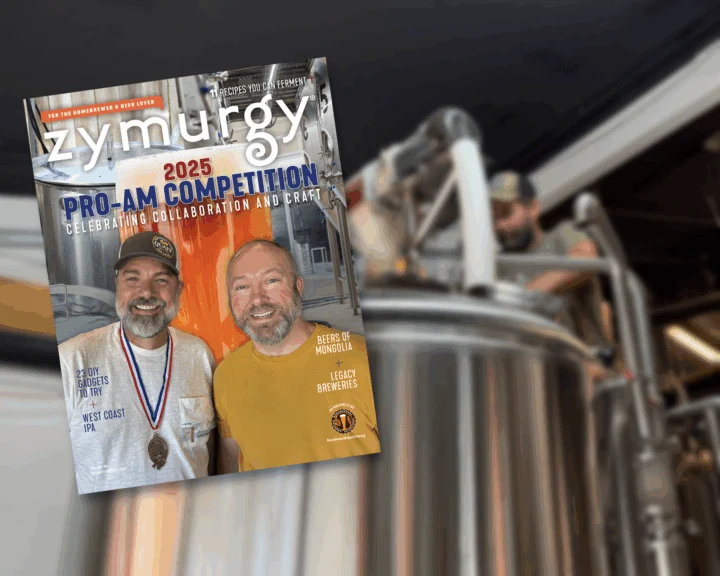

The American Homebrewers Association (AHA) has officially released the January/February 2026 edition of Zymurgy, its flagship publication dedicated to the art and science of home fermentation. As the first issue of the calendar year, the publication serves as a comprehensive review of the previous year’s competitive achievements while setting the technical agenda for the homebrewing community in the coming months. The latest installment features an in-depth analysis of the 2025 Great American Beer Festival (GABF) Pro-Am Competition medalists, a retrospective on the enduring legacy of foundational American breweries, and a deep dive into the stylistic shifts defining the West Coast India Pale Ale (IPA). Additionally, the issue explores the burgeoning craft beer landscape in Mongolia and provides technical reviews of the latest brewing hardware, supplemented by eleven curated recipes for various skill levels.
The GABF Pro-Am Competition: Bridging the Gap Between Amateur and Professional
A primary focus of the January/February 2026 issue is the celebration of the Pro-Am Competition winners, a category at the Great American Beer Festival that remains one of the most prestigious honors for non-professional brewers. The Pro-Am competition is unique in the global brewing circuit; it requires AHA members to partner with professional breweries to scale up their award-winning homebrew recipes for commercial production.
To qualify, a homebrewer’s recipe must typically have won a medal at an AHA-sanctioned competition. The partnership provides a rare opportunity for amateurs to see their formulations brewed on professional systems—often ranging from 10-barrel to 50-barrel capacities—and served to the public on a national stage. The 2025 winners, detailed in this issue, represent a diverse array of styles, proving that the technical proficiency of homebrewers continues to rival that of professional cellar masters.
Industry analysts note that the Pro-Am category serves as a critical "talent scout" mechanism for the craft beer industry. Historically, a significant percentage of professional head brewers in the United States began their careers as homebrewers and AHA members. By highlighting these winners, Zymurgy provides a roadmap for aspiring professionals, detailing the specific adjustments required when transitioning a five-gallon kitchen recipe to a large-scale commercial brewhouse.
The Evolution of the West Coast IPA: From Bitterness to Balance
The editorial team, led by Editor-in-Chief Dave Carpenter, devotes a significant portion of the new issue to the "Evolution of the West Coast IPA." This retrospective is particularly timely as the style has undergone a massive transformation since its inception in the 1990s. Originally characterized by aggressive bitterness and high alcohol content, the West Coast IPA was the flagship of the "hop wars" era.
However, as documented in the issue, the style has pivoted in response to the "Hazy" or New England IPA (NEIPA) revolution. The 2026 perspective on the West Coast IPA highlights a return to clarity and "crispness" but with a modern hop profile that favors tropical and stone fruit aromas over the resinous, pine-heavy notes of the past. The article examines how modern techniques—such as "dip hopping," biotransformation during active fermentation, and the use of cryogenically processed hop pellets—have allowed brewers to achieve intense aromatic saturation without the palate-fatiguing bitterness of twenty years ago.
This stylistic evolution is supported by technical data regarding water chemistry. The issue provides insights into how homebrewers can manipulate sulfate-to-chloride ratios to achieve the "snap" associated with modern West Coast iterations. This focus on "The New West Coast" reflects a broader industry trend where drinkers are increasingly seeking "clear" beers that offer the aromatic complexity of hazies with a more refreshing, dry finish.

Legacy Breweries and the Preservation of Craft Culture
In an era of rapid industry consolidation and shifting consumer preferences, Zymurgy also turns its attention to "Legacy Breweries." These are the institutions that survived the initial craft boom of the 1980s and 90s and continue to influence the market today. The feature explores how these breweries maintain relevance in a market saturated with thousands of newer competitors.
The analysis suggests that legacy breweries act as the "standard-bearers" for stylistic BJCP (Beer Judge Certification Program) guidelines. While newer breweries may focus on "hype" styles and adjunct-heavy pastry stouts, legacy institutions often prioritize consistency, shelf stability, and traditional brewing methods. By studying these breweries, Zymurgy encourages homebrewers to master the fundamentals of fermentation science—such as yeast health and oxygen management—which are the hallmarks of these long-standing operations.
Global Frontiers: The Rise of Brewing in Mongolia
One of the more unexpected highlights of the January/February 2026 issue is a feature on brewing in Mongolia. This international reportage continues Zymurgy’s tradition of exploring global fermentation cultures. Traditionally known for airag (fermented mare’s milk), Mongolia has seen a rapid expansion in its grain-based craft beer scene, particularly in the capital, Ulaanbaatar.
The article details the logistical challenges faced by Mongolian brewers, including the sourcing of malt and hops in a landlocked nation with extreme temperature fluctuations. It also touches upon the cultural synthesis occurring in the region, where local ingredients are being integrated into traditional European and American styles. This global perspective serves to remind the AHA membership that the "craft revolution" is a worldwide phenomenon, transcending Western markets and adapting to diverse agricultural and social landscapes.
Technical Innovations and Gadgetry for the 2026 Homebrewer
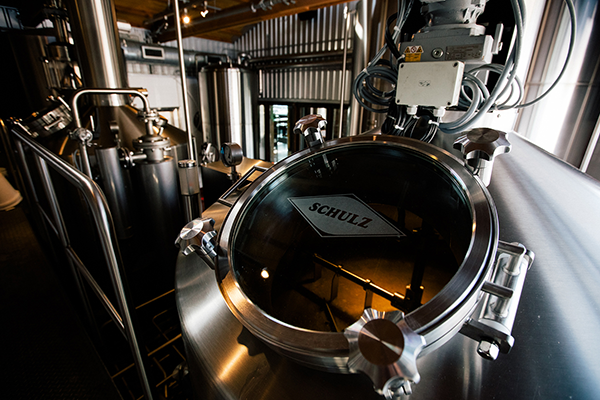
For the technically minded, the issue includes a comprehensive review of new brewing gadgets. The homebrewing hardware market has shifted significantly toward automation and electric brewing in recent years. The January/February issue examines the latest generation of "All-In-One" (AIO) electric brewing systems, which have lowered the barrier to entry for high-precision brewing.
The reviews focus on:
- Precision Temperature Control: How new PID (Proportional-Integral-Derivative) controllers allow for more accurate step-mashing.
- Integrated Fermentation Monitoring: The rise of Wi-Fi-enabled hydrometers that provide real-time gravity and temperature data to a brewer’s smartphone.
- Water Filtration Systems: New compact reverse osmosis (RO) units designed specifically for small-batch brewers.
These technological advancements are framed not just as conveniences, but as tools for improving beer quality and repeatability. As Dave Carpenter notes in his editorial communications, the "geeking out" on language and beer is a core component of the hobby, and these tools provide the data necessary for that deep-level engagement.
Educational Resources and Curated Recipes
At its core, Zymurgy remains an educational resource. The current issue includes eleven recipes, ranging from the award-winning Pro-Am formulations to historically accurate recreations of legacy beers. These recipes are "validated," meaning they have been tested to ensure they are reproducible on home systems.
The inclusion of these recipes is a vital part of the AHA’s mission. By providing high-quality, peer-reviewed formulations, the association helps prevent the "brewing fatigue" that can occur when novices struggle with unreliable internet recipes. The recipes in this issue specifically highlight the use of new hop varieties and yeast strains that have entered the market in late 2025, allowing members to stay at the cutting edge of brewing trends.
Editorial Leadership and the Vision of Dave Carpenter
The direction of the magazine continues under the stewardship of Editor-in-Chief Dave Carpenter. Having brewed his first batch in 2009, Carpenter brings nearly two decades of experience in both the practice of brewing and the craft of beer journalism. His background in linguistics and his passion for the outdoors inform the magazine’s tone—balancing technical rigor with an approachable, lifestyle-oriented narrative.
Under Carpenter’s leadership, Zymurgy has expanded its digital presence, offering members an online preview and a searchable database of past issues. This "digital-first" approach ensures that the decades of knowledge stored in the Zymurgy archives remain accessible to a new generation of brewers who may prefer tablets and smartphones over traditional print media.
Broader Implications for the Craft Beer Industry
The release of the January/February 2026 issue comes at a pivotal time for the beer industry. While overall beer consumption has seen fluctuations, the "enthusiast" segment—represented by AHA members—remains a stable and influential demographic. Homebrewers are often the primary "influencers" in their local communities, driving trends and supporting local taprooms.
The focus on the Pro-Am winners and legacy breweries suggests a "return to roots" for the industry. After years of experimental and often polarizing styles, there appears to be a renewed interest in the technical mastery required to brew a clean, balanced, and stylistically accurate beer. By championing these values, Zymurgy and the American Homebrewers Association continue to act as the intellectual backbone of the craft beer movement.
As the year 2026 begins, this issue serves as a reminder that homebrewing is more than just a hobby; it is a sophisticated discipline that bridges history, science, and international culture. Whether it is a brewer in a garage in Oregon or a startup in Ulaanbaatar, the principles of quality fermentation remain the same, and Zymurgy continues to be the primary source for documenting that journey.