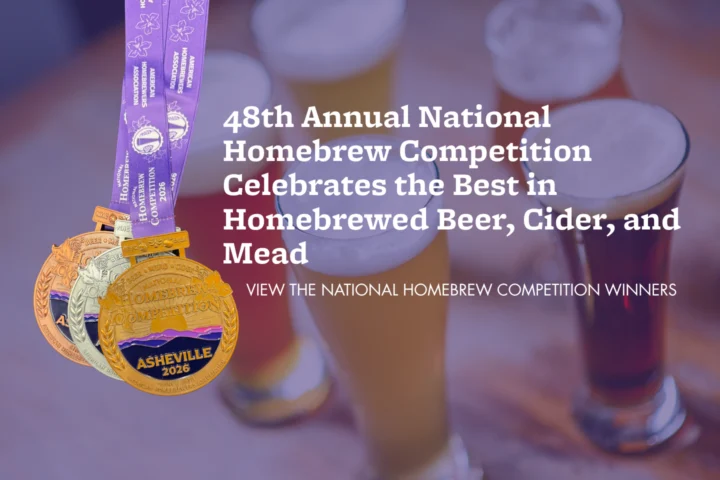

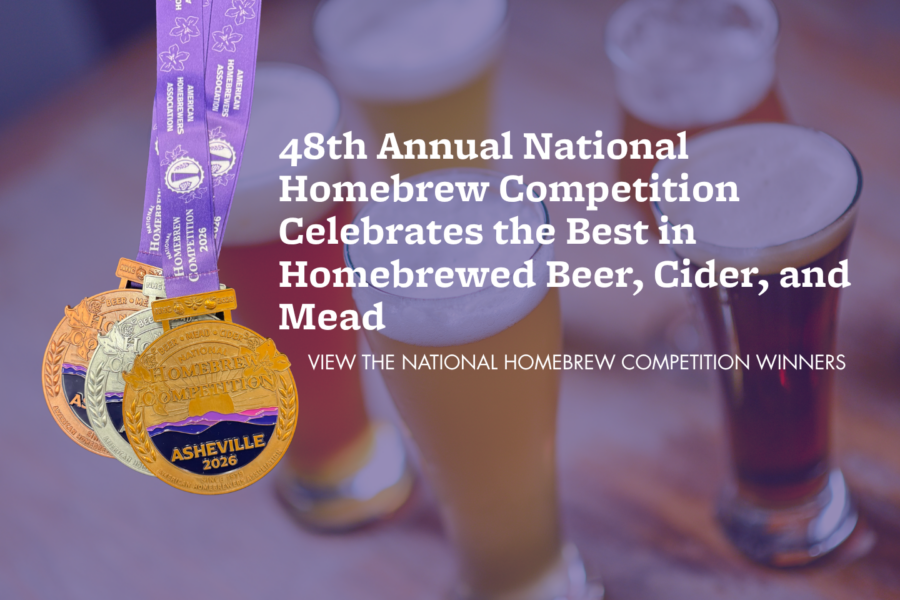
The craft beverage landscape gathered in the Blue Ridge Mountains this June as the American Homebrewers Association (AHA) hosted its flagship event, culminating in the announcement of the winners of the 2026 National Homebrew Competition (NHC). Held during the vibrant Homebrew Con in Asheville, North Carolina, the ceremony marked another milestone for the world’s largest and longest-running international homebrewing contest. Across a meticulous evaluation process that spanned nine regional judging sites and a rigorous final round, a total of 120 medals were distributed across 40 distinct categories, honoring excellence in homebrewed beer, mead, and cider.
The 2026 iteration of the competition drew staggering participation, reflecting the enduring health and passion of the global amateur brewing community. Organizers recorded 3,575 entries submitted by 1,054 dedicated AHA members hailing from 46 states, Washington, D.C., and seven different countries. This massive volume of submissions underscores the immense logistical scope of the event, which requires precise coordination among regional organizers, certified judges, and an army of volunteers to ensure that every entry is evaluated under optimal conditions.
A Rich History of Amateur Brewing Excellence
To understand the weight of an NHC medal, one must look back nearly half a century. Established in 1979 in Boulder, Colorado, the American Homebrewers Association set out to legitimize and elevate a hobby that was, at the time, operating in a legal gray area following federal prohibition repeal loopholes. That inaugural competition featured a modest 34 entries. Over the decades, as the craft beer revolution transformed the American palate and commercial brewing landscape, the NHC grew in lockstep.
To date, the competition has evaluated more than 170,000 entries. It has served as an incubator for countless commercial craft brewers, professional brewmasters, and commercial cidermakers who honed their recipes on kitchen stoves and in garage setups before taking their talents to the commercial market. Winning an NHC gold, silver, or bronze is widely considered the ultimate validation for an amateur brewer, serving as a testament to technical precision, recipe formulation, and sensory acuity.
The Rigorous Judging Timeline and Geography
The path to the podium in Asheville is arduous. The competition process begins months in advance with First Round judging, which for the 2026 competition was distributed across nine major metropolitan hubs: San Diego, California; Chicago, Illinois; Indianapolis, Indiana; Kansas City, Missouri; Longmont, Colorado; Philadelphia, Pennsylvania; San Francisco, California; Seattle, Washington; and Tampa, Florida.
At these regional sites, elite judges—many of them certified through the Beer Judge Certification Program (BJCP)—evaluated thousands of bottles and cans, scoring them against strict style guidelines. The top-tier entries advanced to the Final Round, which took place June 17 through June 18 in Asheville, North Carolina. There, a elite panel of master judges deliberated to determine the ultimate medalists and major award winners, culminating in the grand reveal at the Homebrew Con awards ceremony on June 20.
Most-Entered Style Categories Highlight Diverse Palates
An analysis of the 2026 submission data reveals fascinating insights into current homebrewing trends and consumer preferences. While homebrewers experiment with everything from wild ales to historic herb and spice beers, traditional and complex styles dominated the volume metrics.
Leading the pack as the most-entered style category of 2026 was Dark European Lager (Table 7), drawing a remarkable 152 entries. This category, which includes demanding styles like Schwarzbier, Dunkel, and Doppelbock, requires exceptional mastery of fermentation control and clean malt expression, as any flaw is easily detectable in the finished product.
Closely following in second place was Pale European Beer (Table 2) with 137 entries, showcasing the community’s persistent dedication to crafting pristine Pilsners, Helles, and Festbiers. Rounding out the top three was Strong Belgian Ale (Table 26) with 123 entries. This style category challenges brewers to harness complex yeast esters and high alcohol tolerances without producing hot or unbalanced flavor profiles. These figures demonstrate that while extreme pastry stouts and heavily hopped IPAs often capture commercial headlines, the amateur community maintains a deep reverence for foundational, technically challenging brewing traditions.
Major Awards and Recognition of Craftsmanship
Beyond category medals, the competition highlighted the pinnacle of amateur brewing achievement through its major awards. These honors evaluate broader brewing prowess, consistency across multiple styles, and extraordinary dedication to the craft of mead and cidermaking.
Reflecting on the overarching quality of this year’s event, Charlie Harr, Chair of the National Homebrew Competition, shared his perspective on the state of the hobby.
"Every year, I continue to be impressed by the rising quality of entries in the National Homebrew Competition," Harr said. "The creativity, technical skill, and care that homebrewers, meadmakers, and cidermakers bring to this competition is remarkable. Earning a medal at the NHC is an incredible achievement, but every entrant should be proud to have brewed and shared their work on this stage."
Harr emphasized that the prestige of the competition is deeply intertwined with the collaborative spirit of its participants.
"This competition is the most prestigious in homebrewing, and it is made stronger by the community behind it: the entrants who push the hobby forward, the judges who lend their expertise, and the volunteers who make the competition happen. That shared passion is what makes the AHA and NHC so special," he added.
Community Pillars: Annual Recognition Awards
The American Homebrewers Association also used the Asheville stage to honor the institutions and individuals who form the backbone of the homebrewing ecosystem. Through its Annual Recognition Awards, the organization spotlighted entities that go above and beyond to foster education, supply necessary equipment, and advocate for the legal rights of homebrewers.
The Homebrew Shop of the Year Award was presented to a standout supply store that has demonstrated exceptional customer service, educational outreach, and community leadership. Local homebrew shops serve as the physical community centers for the hobby, providing raw ingredients, expert advice, and troubleshooting assistance to brewers of all skill levels.
Additionally, the American Homebrewers Association Advocacy Award recognized vital contributions to the legislative and regulatory front. Advocacy remains a core mission for the AHA, particularly in defending and expanding homebrewing legalization across all 50 states—a legislative battle that the organization has successfully fought for decades, resulting in legal homebrewing in all states following Mississippi and Alabama policy modernizations in recent years.
Logistics and Community Collaboration
Executing a competition of this magnitude is a massive operational feat that relies heavily on institutional partnerships and volunteerism. The 2026 NHC was bolstered by broad community support, including crucial assistance from the Beer Judge Certification Program (BJCP), which ensures standardized, high-level sensory evaluation across all rounds.
Local logistics in North Carolina played a vital role in the final round’s success. The Renaissance Hotel served as an accommodating backdrop for the high-profile awards ceremony, while Hi-Wire Brewing stepped in to receive and manage the delicate final round entries, showcasing the supportive and collaborative relationship between the commercial craft brewing industry and the homebrewing community.
Broader Impact and Economic Implications
The success of the 2026 National Homebrew Competition highlights the enduring cultural and economic relevance of homebrewing. While homebrewing is fundamentally a hobby centered on passion, creativity, and community, its impact on the broader beverage sector is profound.
Historically, the homebrewing community has served as the R&D department for the multi-billion-dollar craft beer industry. Innovations in hop utilization, yeast propagation, and recipe design frequently originate in residential garages before commercializing into market-leading trends. Furthermore, homebrewers represent some of the most educated, discerning consumers in the beverage market, driving demand for high-end agricultural products, specialized equipment, and premium local craft beverages.
As the American Homebrewers Association looks toward its future, the 2026 NHC serves as proof that the art of making beer, mead, and cider at home is as vibrant, technically proficient, and passionate as ever. Complete lists of winners, historical archives, and membership details can be accessed directly through the official resources provided by the American Homebrewers Association.