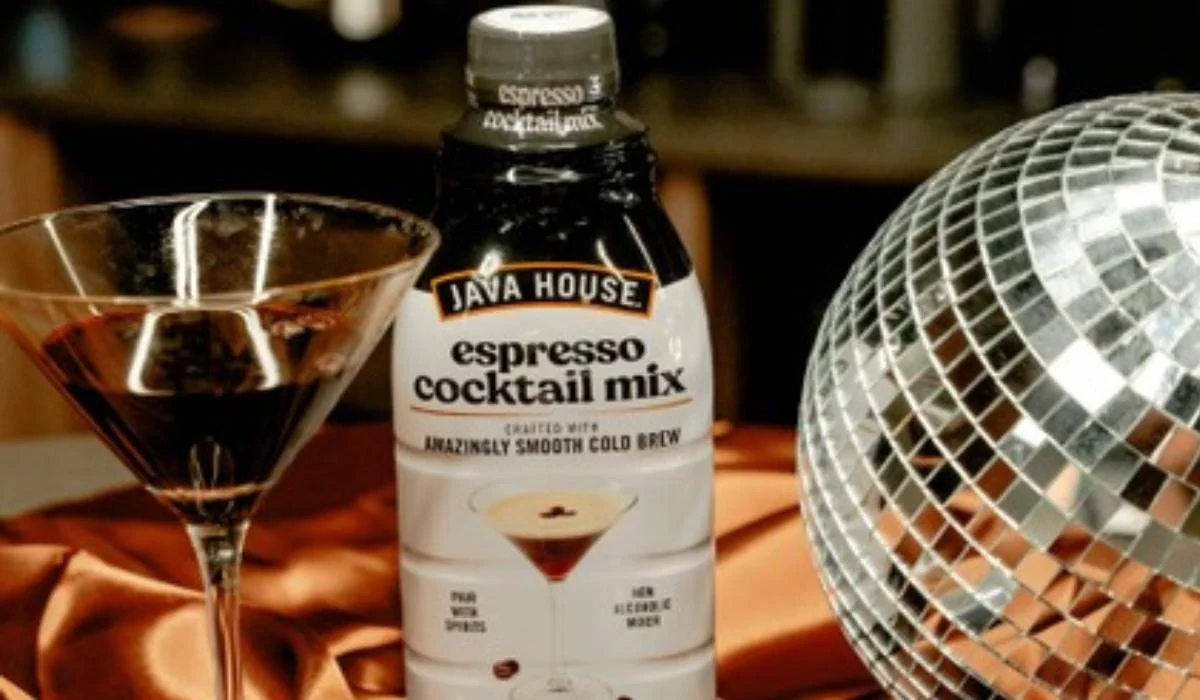

The hospitality industry is witnessing a significant shift in beverage programs as Java House, a leader in cold brew coffee innovation, officially introduced its Espresso Martini Mix on July 17, 2026. This new product is designed to address the increasing operational pressures on bartenders while satisfying the consumer appetite for the Espresso Martini, which has been identified by Datassential as the fastest-growing cocktail in the United States as of May 2026. By utilizing a premium, pre-made mix derived from smooth cold brew coffee, Java House aims to streamline the preparation process for high-volume bars, restaurants, and hospitality venues, ensuring consistency and speed without compromising the quality of the final serve.
The launch comes at a time when the "Espresso Martini Renaissance" has reached a fever pitch. Once a staple of the late 1980s and early 1990s London bar scene, the cocktail has seen a massive resurgence across North American markets over the last five years. However, for many operators, the drink presents a logistical challenge: traditional preparation requires pulling fresh espresso shots, which can be time-consuming, inconsistent in temperature, and taxing on equipment during peak service hours. The Java House Espresso Martini Mix seeks to eliminate these pain points by offering a shelf-stable, high-quality liquid base that is ready to be shaken with ice and the spirit of choice, typically vodka.
The Evolution of the Espresso Martini and Market Trends
According to data released by Datassential in May 2026, the Espresso Martini has outperformed every other major cocktail category in terms of menu growth and consumer interest. This trend is driven by several converging factors, including the global "caffeine culture," the rise of sophisticated brunch menus, and a nostalgic turn toward 90s-era "martini" culture. For many consumers, the appeal lies in the dual effect of the beverage—providing both the social relaxation of alcohol and the functional energy of caffeine.
Market analysis indicates that the demand for coffee-based cocktails is no longer restricted to late-night lounge environments. Instead, these drinks are increasingly ordered during "golden hour" happy hours and as a dessert alternative following dinner service. This expanded window of consumption has forced operators to reconsider how they manage their coffee supplies. While craft cocktail bars may have the luxury of pulling artisanal espresso for every order, the broader full-service restaurant (FSR) and quick-service restaurant (QSR) sectors require more efficient solutions to maintain profit margins and service standards.
Technical Innovation: The Role of Cold Brew Coffee
The centerpiece of the Java House Espresso Martini Mix is its reliance on cold brew coffee rather than traditional espresso. In the beverage industry, cold brew has gained a reputation for a flavor profile that is significantly less acidic and bitter than hot-brewed coffee. By steeping coffee grounds in cold water for extended periods—often 12 to 24 hours—the resulting concentrate retains a natural sweetness and a chocolatey, nutty depth that complements the sugars and spirits found in a cocktail.
From a mixology perspective, using cold brew as a base for an Espresso Martini provides a distinct advantage in temperature control. Traditional espresso is hot when pulled; when added to a shaker with ice, it causes rapid dilution and can often result in a "watered-down" flavor if not handled with extreme precision. The Java House mix is designed to be used cold or at room temperature, allowing for a more controlled dilution process and a denser, more stable foam—the signature "crema" that consumers expect from a premium Espresso Martini.
Addressing the Labor Crisis and Operational Efficiency
The hospitality sector continues to grapple with labor shortages and the need for simplified workflows. Preparing a traditional Espresso Martini is labor-intensive, involving multiple steps: grinding beans, tamping, pulling the shot, and cleaning the portafilter, all before the actual mixing of the drink begins. In a high-volume setting, this can lead to "bottlenecks" at the bar, increasing wait times for customers and putting undue stress on staff.
Java House’s entry into the mixer market is a direct response to these operational hurdles. By providing a pre-measured, high-quality mix, the brand allows bartenders to execute a complex-tasting drink in a fraction of the time. This "speed of service" is a critical metric for profitability. When a bartender can serve three drinks in the time it previously took to serve one, the venue’s throughput increases, leading to higher nightly revenues. Furthermore, the use of a standardized mix ensures that a customer receives the same flavor profile regardless of which bartender is on shift or how busy the venue is, fostering brand loyalty and repeat business.

Strategic Impact on the Bottom Line
Beyond labor savings, the Java House Espresso Martini Mix offers significant advantages in waste reduction and inventory management. Fresh espresso has a very short shelf life; once a shot is pulled, its flavor begins to degrade within minutes as it oxidizes and cools. This often leads to wasted product if shots are pulled in anticipation of orders that do not materialize. Conversely, the Java House mix is shelf-stable and portion-controlled, allowing operators to use only what is needed for each order.
Financial analysts in the food and beverage sector note that mixers like these represent a "premiumization" of the supply chain. While the cost per ounce of a pre-made mix may be higher than raw coffee beans, the "total cost of ownership"—factoring in labor, equipment maintenance for espresso machines, and waste—often favors the pre-made solution for large-scale operations. Heartland Food Products Group, the parent company of Java House, has positioned the product as a tool for "Heartland Away From Home," targeting professional kitchens and bars that need to scale their beverage programs rapidly.
Industry Reactions and the Broader Beverage Landscape
The announcement of the Espresso Martini Mix has been met with interest from across the industry. While some purists in the craft cocktail community may remain committed to traditional espresso, the broader market—including stadium concessions, hotel bars, and national restaurant chains—sees the product as a necessary evolution.
The launch is part of a larger trend of "convenience-driven craft" that is sweeping the industry. Other recent developments in the foodservice sector, such as Red Gold’s launch of spicy jalapeño ketchup packets and various brands’ moves into "swicy" (sweet and spicy) flavors, indicate that operators are looking for ways to provide complex, on-trend flavors through easy-to-deploy formats. As the Espresso Martini continues its dominance, the ability to serve it quickly and consistently will likely become a baseline requirement for any competitive beverage program.
Timeline and Availability
Following the official announcement on July 17, 2026, Java House has initiated an aggressive sampling program to encourage adoption among foodservice professionals. Operators are currently being invited to request free samples through the "Heartland Away From Home" portal to test the product in their specific environments.
The rollout is expected to hit major national distributors by late summer, perfectly timed for the high-demand periods of late Q3 and the holiday season in Q4, when cocktail consumption typically spikes. Java House has indicated that while the initial focus is on the North American market, there is potential for international expansion given the global nature of the coffee cocktail trend.
Conclusion: The Future of the High-Volume Bar
The introduction of the Java House Espresso Martini Mix marks a pivotal moment in the professionalization of cocktail mixers. By combining the artisanal appeal of cold brew with the logistical requirements of modern hospitality, Java House is bridging the gap between quality and efficiency. As the data from Datassential suggests, the Espresso Martini is not a passing fad but a sustained consumer preference.
For the modern restaurateur, the choice is clear: adapt to the high demand for complex cocktails with smarter, faster solutions or risk falling behind in a highly competitive market. With this new offering, Java House is betting that the future of the bar is one where the bartender is freed from the grind of the espresso machine, allowing them to focus on the art of hospitality and the speed of service that today’s consumers demand. The success of this product will likely pave the way for further innovations in the "ready-to-mix" category, as the industry continues to seek a balance between the craft of the cocktail and the reality of the commercial kitchen.