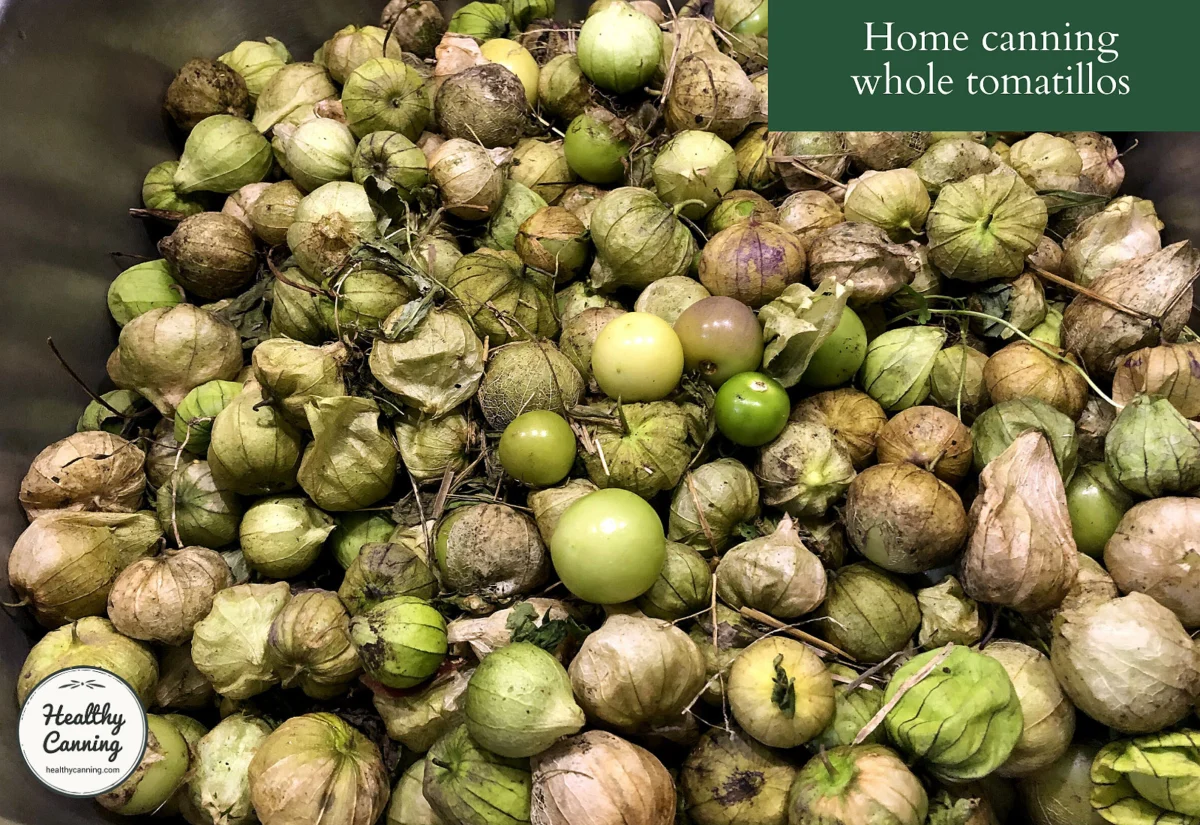

The home preservation of tomatillos (Physalis philadelphica) represents a significant intersection of traditional culinary practice and rigorous modern food safety standards. While often mistaken for green tomatoes, tomatillos are a distinct fruit encased in a papery husk, offering a unique tartness and high pectin content that makes them a staple of Latin American cuisine. To ensure long-term shelf stability and consumer safety, the United States Department of Agriculture (USDA) has established specific, science-based procedures for canning whole, plain tomatillos. These protocols address the fruit’s physical properties, its natural acidity levels, and the thermal requirements necessary to eliminate potential pathogens such as Clostridium botulinum. By following these standardized methods, home preservers can maintain the nutritional integrity and flavor profile of the fruit for year-round use in cooked salsas, hot sauces, and meat accompaniments.
The Science of Tomatillo Preservation and Acidity
A critical factor in any canning operation is the pH level of the food product. The USDA’s Center for Food Safety and Applied Nutrition identifies the approximate pH of tomatillos at 3.83. In the context of food science, any food with a pH below 4.6 is considered high-acid, which theoretically allows for processing in a boiling water bath. Despite the tomatillo’s naturally high acidity—which is often greater than that of green tomatoes—the USDA mandates the addition of supplemental acidifiers during the canning process. This requirement serves as a safety buffer to account for variations in fruit ripeness, soil conditions, and the density of the pack within the jar.

The mandatory acidification process involves adding either bottled lemon juice, bottled lime juice, or USP-grade citric acid directly to each jar before processing. For a one-litre (quart) jar, the requirement is two tablespoons of bottled lemon or lime juice, or one-half teaspoon of citric acid. For half-litre (pint) jars, these amounts are halved. It is important to note that bottled juices are required over fresh-squeezed varieties because bottled products have a standardized, guaranteed acidity level necessary for consistent preservation results. While lime juice provides a flavor profile traditional to Mexican cuisine, lemon juice is often preferred for its more neutral impact on the final product.
Quantity Estimation and Preparation Chronology
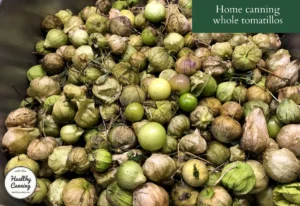
Successful home canning begins with the selection of high-quality produce and an accurate estimation of yields. On average, home preservers should expect to use approximately one kilogram of fresh tomatillos to fill a one-litre jar, or roughly two pounds per US quart jar. The preparation of the fruit differs significantly from the process used for standard tomatoes. Most notably, tomatillos are not peeled. The skin is integral to the structure of the preserved fruit and contains much of the characteristic flavor.
The preparation chronology begins with the removal of the dry, papery husks. Once husked, the fruit often exhibits a sticky, resinous coating on the skin. This is a natural occurrence and must be thoroughly washed off with cool water. After cleaning, the tomatillos are subjected to a brief pre-cooking phase. The USDA procedure requires the fruit to be simmered in boiling water for two to three minutes. This step serves multiple purposes: it softens the fruit to allow for a tighter pack in the jar, removes excess air from the plant tissues, and ensures the fruit is hot when it enters the processing phase, which is vital for achieving a proper vacuum seal.
Technical Processing Methods: Water Bath and Steam Canning
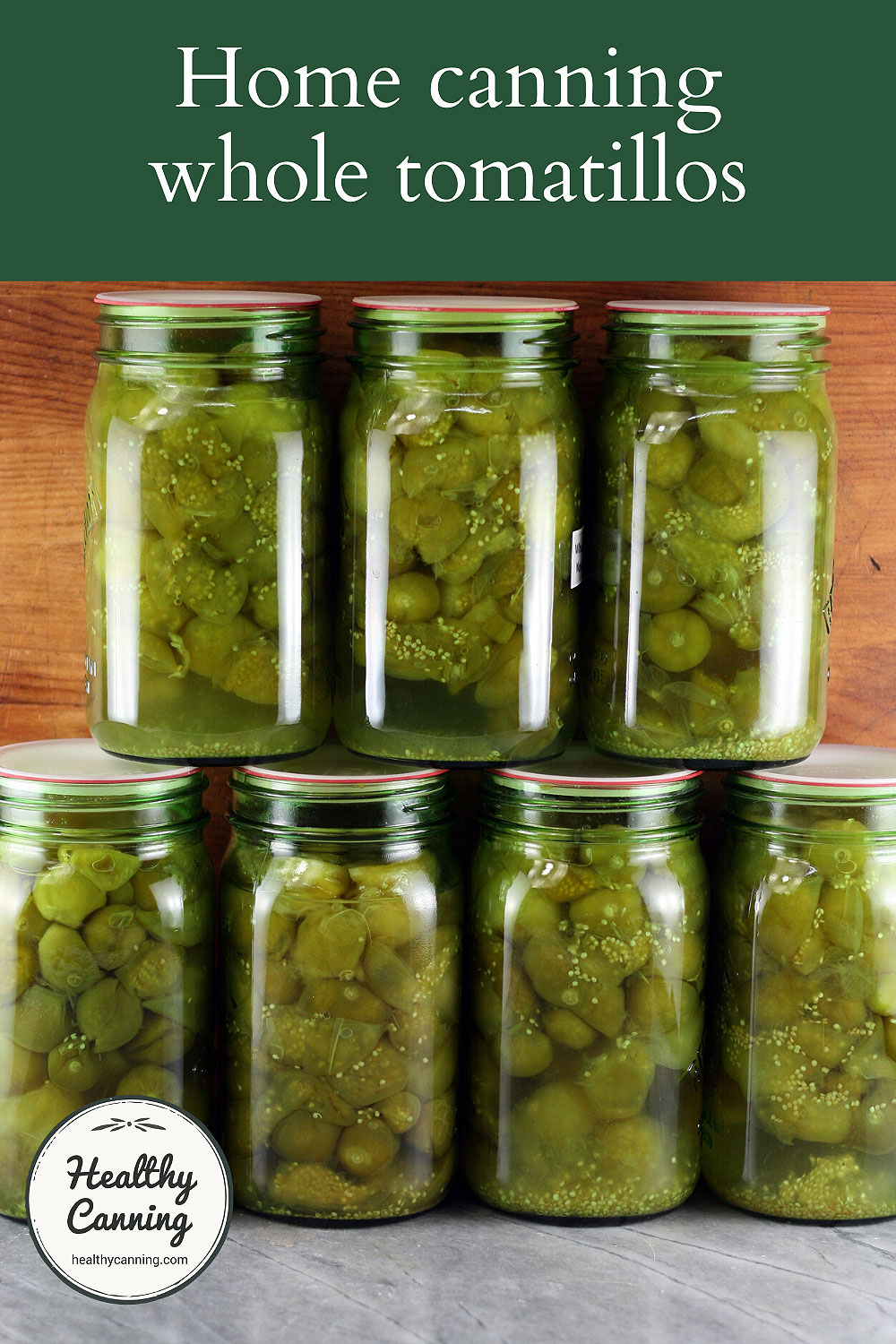
For those utilizing atmospheric canning methods, both water bath and steam canning are approved for whole tomatillos. These methods rely on the combination of the fruit’s acidity and the heat of boiling water (100°C or 212°C at sea level) to render the product shelf-stable. The jars must be packed with a headspace of two centimeters (approximately 1/2 inch) to allow for the expansion of the food and the creation of a vacuum during cooling.
The processing times are strictly defined based on jar size. For half-litre (pint) jars, the processing time is 40 minutes. For one-litre (quart) jars, the time increases to 45 minutes. These times must be adjusted for altitude, as the boiling point of water decreases as elevation increases. Failure to adjust for altitude can result in under-processing and subsequent spoilage.
Steam canning has emerged as a popular, water-efficient alternative to traditional water bath canning. Research conducted by the University of Wisconsin-Madison, and subsequently adopted by the National Center for Home Food Preservation (NCHFP), confirms that atmospheric steam canners are safe for high-acid foods if the processing time does not exceed 45 minutes. Because the maximum processing time for tomatillos is exactly 45 minutes at sea level, steam canning is a viable option. However, if altitude adjustments push the required processing time beyond 45 minutes, steam canning is not recommended, as the canner may run out of water before the cycle is complete.

Pressure Canning Specifications and Time Efficiency
While tomatillos are high-acid fruits, the USDA also provides a pressure canning process. Pressure canning is often mistakenly thought to be necessary only for low-acid vegetables and meats, but it can be used for tomatillos to significantly reduce the total processing time. However, the USDA emphasizes that even when pressure canning, the addition of acid remains mandatory. The pressure canning protocol for tomatillos was designed to save time, not to replace the safety margin provided by acidification.
Using a weighted-gauge pressure canner, the processing times are remarkably brief compared to water bath methods. At altitudes between 0 and 300 meters (0-1000 feet), tomatillos can be processed at 5 pounds of pressure for 15 minutes, or at 10 pounds of pressure for 10 minutes. At higher altitudes, the pressure must be increased (for example, to 10 pounds or 15 pounds respectively) to maintain the necessary internal temperature. This method is particularly advantageous for large-scale preservation, as it reduces the energy consumption and time spent in the kitchen.
Nutritional Profile and Dietary Impact
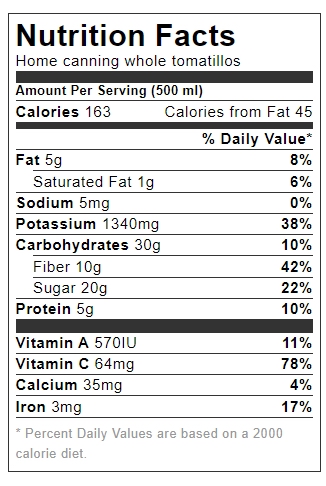
Plain canned tomatillos are an excellent addition to a health-conscious pantry. A half-litre (pint) serving of home-canned tomatillos, processed without added salt, contains approximately 163 calories. The fruit is naturally low in sodium (5 mg per serving) and fat (5 g), while being a significant source of dietary fiber (10 g) and potassium (1340 mg).
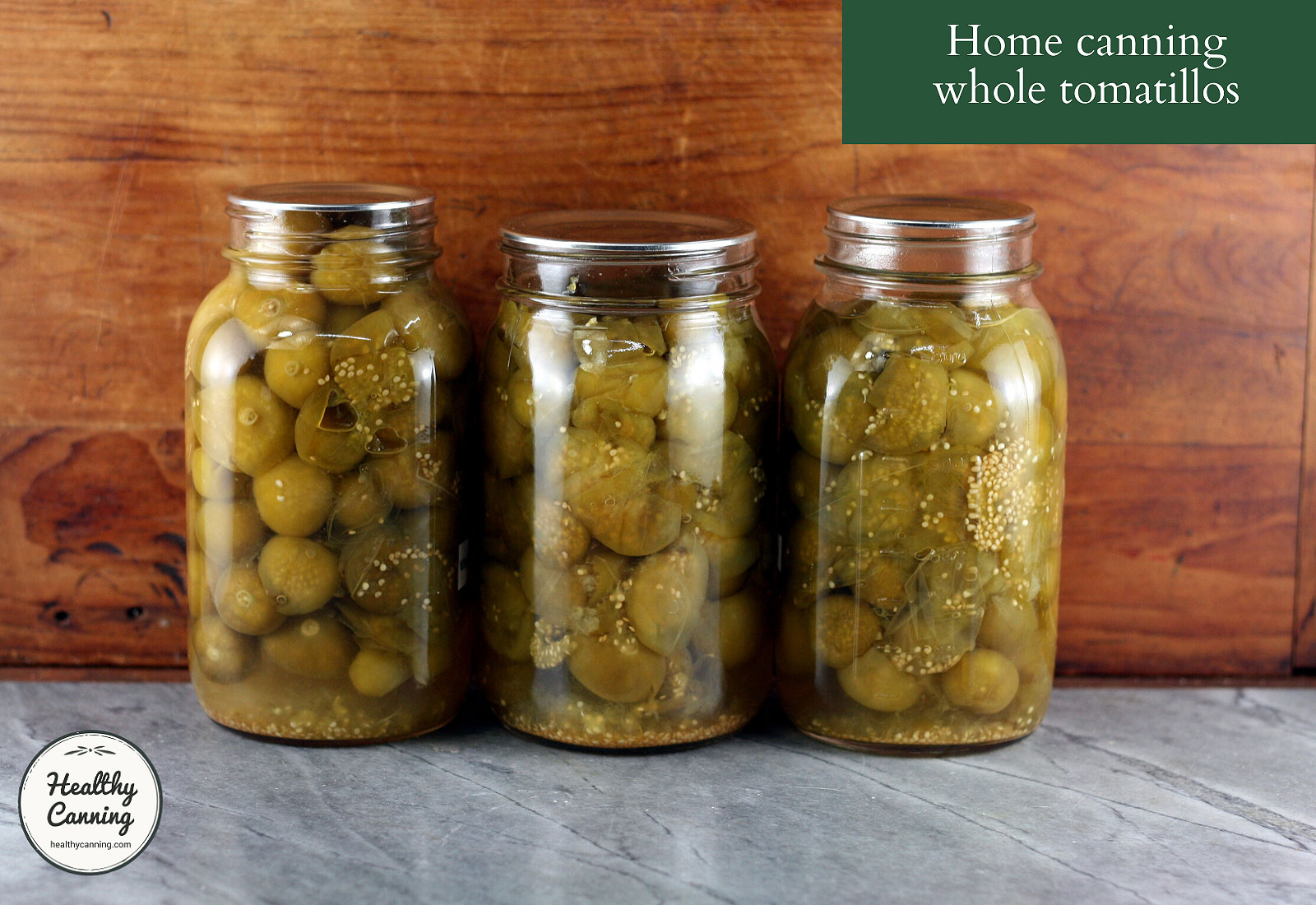
From a micronutrient perspective, tomatillos contribute substantially to the daily recommended intake of Vitamin C (64 mg) and Vitamin A (570 IU). Because the canning process involves heat, some water-soluble vitamins may be slightly reduced, but the overall nutritional density remains high. The option to omit salt entirely during the canning process—since salt is used only for seasoning and plays no role in the preservation safety of this specific recipe—makes this an ideal staple for individuals monitoring their cardiovascular health or sodium intake.
Expert Perspectives and Culinary Applications
The utility of plain canned tomatillos is widely recognized by culinary experts. Because the canning process essentially cooks the fruit, they are best suited for recipes that require a softened or pureed texture. Martha Rose Shulman, a noted food columnist for The New York Times, suggests that canned tomatillos are a perfect substitute for fresh ones in cooked applications. She notes that an 11-ounce can (approximately 325 ml) can replace one pound of fresh fruit. Since the canned variety has already been simmered, users can skip the initial softening or broiling steps often found in fresh tomatillo recipes.
Similarly, the "Joy of Cooking" highlights the versatility of the preserved fruit, noting that they serve as an excellent condiment for grilled poultry, fish, and shellfish. The preserved fruit can be easily transformed into a classic Salsa Verde by blending the jar’s contents with onions, cilantro, and peppers, or integrated into complex sauces like mole verde. The high pectin content of the tomatillo ensures that these sauces have a desirable, thick consistency without the need for additional thickening agents.
Broader Implications for Food Security and Home Preservation
The standardization of tomatillo canning procedures reflects a broader trend toward food self-sufficiency and the preservation of cultural foodways. By providing accessible, scientifically validated methods for preserving specialty crops, the USDA supports local agriculture and reduces food waste during peak harvest seasons.
As global food supply chains face ongoing volatility, the ability to safely preserve nutrient-dense produce at home contributes to household food security. The tomatillo, with its robust growth habits and high yield, is an ideal candidate for home gardeners. Following the USDA-prescribed methods for water bath, steam, or pressure canning ensures that this vibrant, acidic fruit can be enjoyed safely and nutritiously long after the harvest season has ended. The rigorous nature of these guidelines—balancing pH levels, thermal processing, and altitude adjustments—serves as the foundation for a safe and sustainable home food gallery.