
Paris, France – Dr. Hervé This, co-founder of the revolutionary field of molecular gastronomy, has publicly released a comprehensive summary documenting two decades of groundbreaking research from the monthly molecular gastronomy seminars held in Paris. This significant compilation, made available in both French and English, serves as an invaluable resource, distilling twenty years of systematic experimentation and scientific inquiry into the culinary arts. Dr. This has explicitly encouraged widespread distribution of these findings, underscoring their potential to inspire both seasoned chefs and inquisitive chemists, while also igniting fresh avenues for scientific projects and laboratory exercises.
The newly released documents, accessible via digital platforms, offer concise summaries of the extensive investigations undertaken by Dr. This and his collaborators. While the English translation provides a direct overview, Dr. This himself notes that the original French edition may offer greater nuance for those seeking a deeper understanding of the technical specifics. Crucially, these brief summaries are complemented by an expansive archive of detailed documentation from every seminar, available exclusively in French, providing an unparalleled repository of experimental conditions, methodologies, and comprehensive results. This collection represents a monumental effort in systematically questioning, testing, and documenting the myriad phenomena observed in the kitchen, challenging long-held culinary traditions with rigorous scientific scrutiny.
The Genesis of Molecular Gastronomy: A Scientific Revolution in the Kitchen
The term "molecular gastronomy" itself was coined over two decades ago by Dr. Hervé This, a physical chemist at AgroParisTech and INRA (now INRAE), in collaboration with the late Professor Nicholas Kurti, a Hungarian-born physicist at the University of Oxford. Their pioneering vision sought to establish a scientific discipline dedicated to studying the physical and chemical transformations that occur during cooking and eating. Before their formalization of the field, culinary practices were largely based on tradition, intuition, and anecdotal evidence. This new approach aimed to dissect these practices, understand the underlying scientific principles, and thereby innovate and optimize cooking techniques.
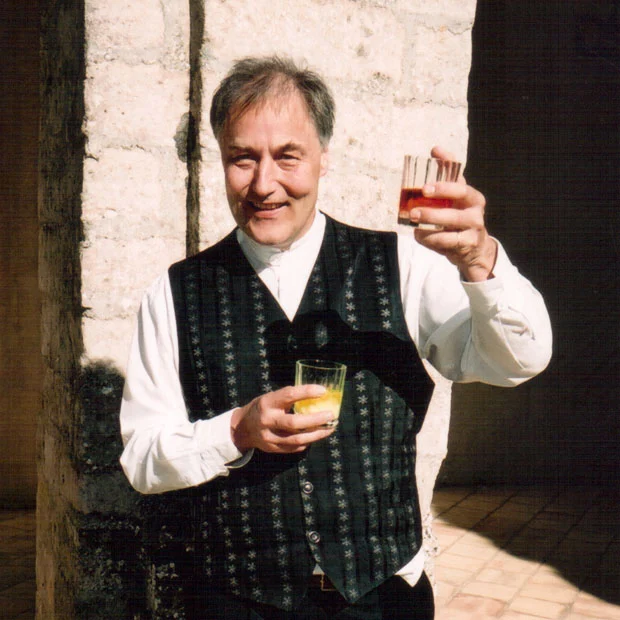
The intellectual seeds for molecular gastronomy were sown during a series of international workshops. The first of these seminal gatherings, the "International Workshop on Molecular Gastronomy," was held in Erice, Italy, a picturesque medieval town in Sicily, beginning in 1992. These workshops, co-founded by This and Kurti, brought together a diverse group of scientists, chefs, food writers, and historians. The goal was not merely to create new dishes, but to explore the "why" behind culinary processes – why bread rises, why eggs coagulate, why meat browns, and how these transformations can be controlled and understood. The image accompanying the recent announcement, depicting Hervé This demonstrating eggs immersed in colored solutions at the 2004 Erice workshop, vividly captures the spirit of scientific inquiry that defined these early gatherings and continues to characterize the field. These workshops served as a crucial forum for interdisciplinary dialogue, fostering a community dedicated to applying scientific rigor to the art of cooking.
Two Decades of Systematic Inquiry: The Paris Seminars
The molecular gastronomy seminars in Paris, initiated by Dr. This following the foundational work with Professor Kurti, have systematically continued this mission over the past twenty years. Operating on a monthly basis, these seminars function as a collaborative laboratory where culinary claims and kitchen myths are subjected to empirical verification. The methodology employed mirrors that of traditional scientific research: formulating hypotheses based on common culinary beliefs, designing controlled experiments to test these hypotheses, meticulously documenting the procedures and observations, and finally, analyzing the results to draw evidence-based conclusions.
The scope of investigations undertaken during these two decades is remarkably broad, spanning virtually every aspect of food preparation. Participants have delved into questions ranging from the seemingly trivial to the profoundly complex. For instance, common kitchen wisdom often dictates specific techniques for tasks like boiling eggs, making mayonnaise, or searing meat. The seminars have rigorously tested such claims, often revealing that established practices may be based on misconception rather than scientific efficacy. Studies have explored the optimal conditions for achieving desired textures in custards and meringues, the chemical reactions involved in browning vegetables, the impact of various salts and acids on protein denaturation, and the efficacy of different cooking methods in preserving nutrients or enhancing flavor.
One prominent area of investigation has involved debunking prevalent culinary myths. For example, the long-held belief that searing meat "seals in the juices" has been scientifically disproven; searing primarily develops flavor through the Maillard reaction, but does not prevent moisture loss. Similarly, the seminars have likely explored the utility of adding oil to pasta water (it largely serves to prevent sticking rather than affecting cooking quality) or the precise temperature control needed for perfect tempering of chocolate. Each finding, no matter how small, contributes to a growing body of knowledge that allows chefs and home cooks to approach cooking with greater understanding and precision. The ethos of these seminars is that no culinary claim is too minor to warrant scientific investigation, and every process can be optimized through empirical understanding.
Hervé This: The Driving Force and Educator
Dr. Hervé This’s dedication to molecular gastronomy extends beyond his research. He has been a tireless advocate for scientific literacy in the kitchen, influencing countless individuals through his writings, lectures, and public demonstrations. His early work, such as the German edition of his book "Kitchen Mysteries" (or similar titles in French like "Casseroles et éprouvettes"), proved transformative for many, including the individual who initially shared the seminar results. This book, published over two decades ago, resonated deeply by systematically questioning and explaining the fundamental processes behind everyday recipes. It demonstrated that cooking was not merely an art but an applied science, stimulating a desire in readers to delve deeper into the chemistry of food.
As a professor and researcher, Dr. This has consistently bridged the gap between the academic laboratory and the culinary profession. His work at AgroParisTech and INRAE has provided an institutional framework for the rigorous study of food science. He has mentored numerous students and collaborated with a wide array of culinary professionals, ensuring that the insights generated by molecular gastronomy are not confined to academic journals but are actively disseminated and applied in practical settings. His approach emphasizes that understanding the science behind cooking empowers individuals to innovate, troubleshoot, and achieve consistent, superior results. This commitment to education and popularization has been instrumental in the global adoption and recognition of molecular gastronomy.
Broader Impact and Implications: Reshaping Culinary and Scientific Landscapes
The release of these two decades of seminar results carries profound implications across multiple domains:
1. Revolutionizing Professional Culinary Arts: Molecular gastronomy has already left an indelible mark on high-end cuisine, giving rise to "modernist cuisine" or "experimental cuisine." Chefs like Ferran Adrià of El Bulli, Heston Blumenthal of The Fat Duck, and Grant Achatz of Alinea have famously embraced its principles, employing techniques such as spherification, emulsification with scientific precision, and the use of liquid nitrogen. The seminar results provide a foundational understanding that can further fuel innovation, allowing chefs to move beyond merely replicating techniques to truly understanding and inventing new culinary experiences. This trove of data can inspire new recipe development, optimize existing processes for efficiency and consistency, and even lead to the creation of novel food products. It provides a scientific playbook for controlling texture, flavor release, and presentation with unprecedented accuracy, enabling chefs to push the boundaries of sensory perception in dining.
2. Enhancing Science Education and Engagement: The practical, relatable context of food makes molecular gastronomy an exceptional tool for teaching fundamental scientific principles. The seminar findings can serve as a rich source of inspiration for science educators, offering concrete examples for chemistry and physics lab exercises. Students can replicate simplified versions of the experiments, learning about heat transfer, chemical reactions, phase transitions, and emulsion stability using everyday ingredients. This hands-on approach can demystify science, making abstract concepts tangible and engaging for students of all ages. By demonstrating that science is not confined to laboratories but is omnipresent in daily activities like cooking, molecular gastronomy fosters a deeper appreciation for scientific inquiry and critical thinking. It encourages students to ask "why" and to seek empirical answers, nurturing future scientists and informed citizens.
3. Empowering Home Cooks: While molecular gastronomy often evokes images of avant-garde restaurants, its underlying principles are equally valuable for the amateur cook. By understanding the science behind cooking, home cooks can move beyond simply following recipes to truly understanding how ingredients interact and why certain techniques yield specific results. The seminar data, even in its summarized form, can demystify common kitchen failures and offer insights into achieving consistent success. For instance, understanding the science of gluten development can improve bread-making, while knowing about protein coagulation can perfect egg dishes. This scientific literacy empowers home cooks to experiment with greater confidence, adapt recipes to their preferences, and troubleshoot culinary challenges effectively, transforming cooking from a chore into an intellectual and creative pursuit.
4. Fostering Interdisciplinary Collaboration: The very nature of molecular gastronomy—bridging chemistry, physics, biology, and culinary arts—promotes interdisciplinary collaboration. The seminars themselves are a testament to this, bringing together diverse minds to tackle common problems. The public release of these findings is likely to stimulate further collaboration between academic institutions, food scientists, professional kitchens, and even industrial food producers, leading to advancements that benefit the entire food ecosystem. It encourages a holistic view of food, from its molecular structure to its cultural significance, and its impact on human health and pleasure.
Official Endorsement of Open Knowledge Sharing
Dr. Hervé This’s explicit instruction for recipients not to hesitate in distributing the results underscores a fundamental commitment to open science and knowledge dissemination. In an era where proprietary information often dominates, this move champions the democratic spread of scientific understanding. By making these two decades of accumulated knowledge freely available, Dr. This ensures that the insights gleaned from the Paris seminars can reach the widest possible audience, catalyzing further research, innovation, and education globally. This open-access approach aligns with the academic tradition of sharing discoveries for the collective good, accelerating progress and fostering a more informed public. The scientific and culinary communities are expected to welcome this initiative as a valuable contribution to the shared body of knowledge, providing a robust foundation for future explorations.
The Ongoing Quest: Questioning and Documenting
The ultimate message embedded within these seminar results is the enduring value of questioning, testing, and meticulous documentation. As the original article noted, "even the most minute claims and beliefs can and should be questioned and tested." This principle forms the bedrock of scientific progress and is particularly pertinent in a field as tradition-bound as cooking. Dr. This and his collaborators have set a remarkable example of how sustained, rigorous inquiry can transform an art into a science, leading to profound understanding and innovation.
The journey of molecular gastronomy, as encapsulated in these twenty years of seminars, is far from over. It is an ongoing invitation to curiosity, a call to apply scientific thinking to the everyday marvels of the kitchen. As the initial sharer of these documents aptly concludes, the culinary world is replete with untested claims and kitchen myths. The release of these seminar findings serves not only as a historical archive but also as a powerful catalyst, encouraging individuals everywhere—from professional chefs to home cooks and aspiring scientists—to continue this vital work: to observe, to question, to experiment, and to share their discoveries, further enriching our understanding and appreciation of food. The legacy of Hervé This and the Paris seminars will undoubtedly continue to inspire generations to come, fostering a world where cooking is approached with both artistic flair and scientific precision.