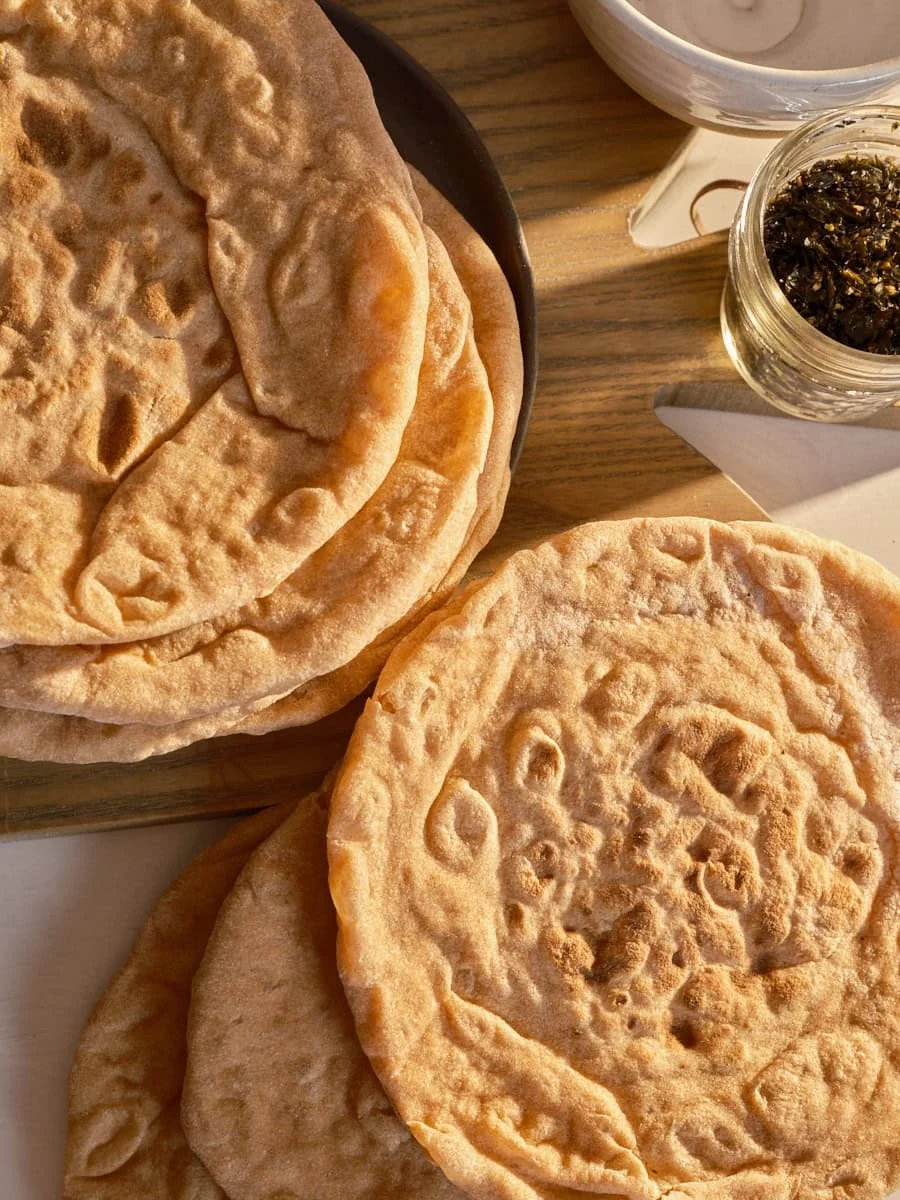

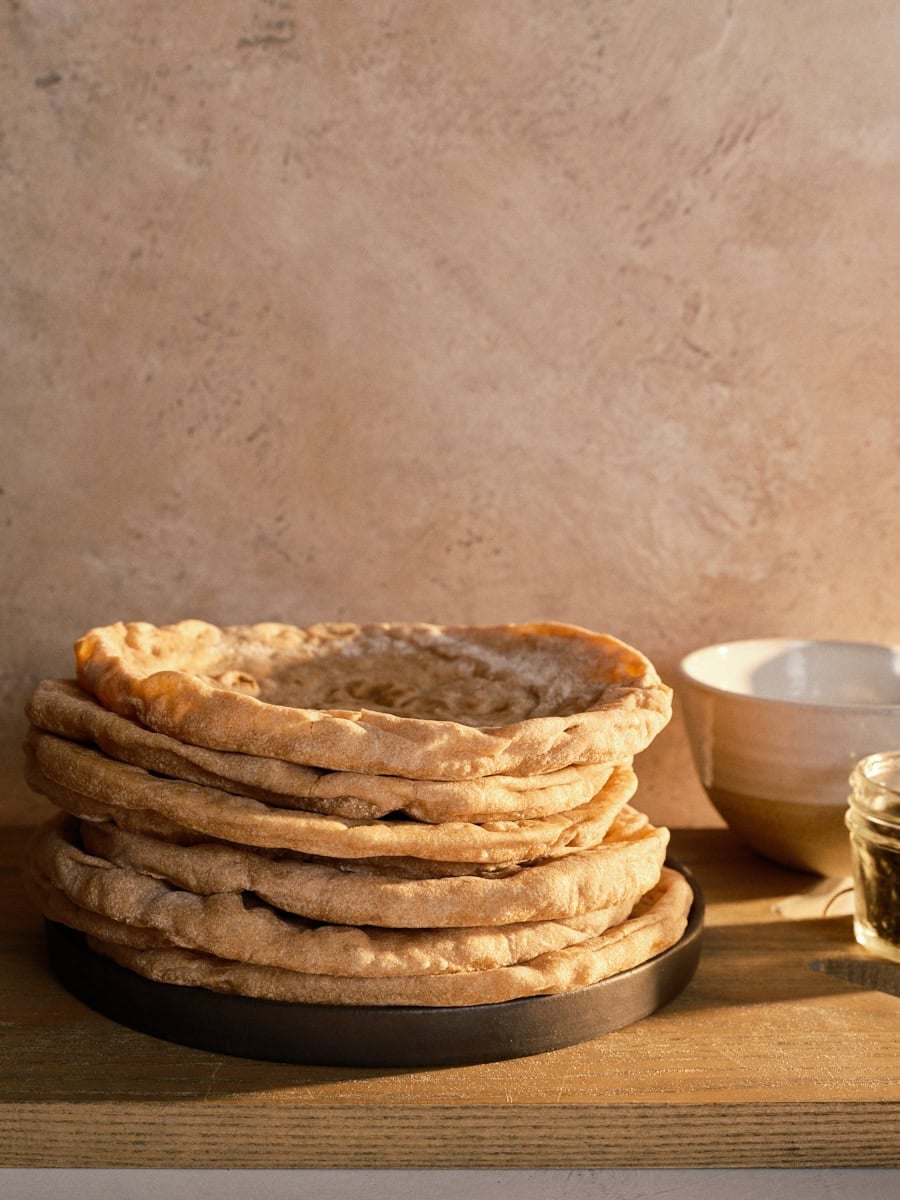
Last year, a baking class co-taught for The Baker’s Corner members at Chimacum Valley Grainery in Washington, alongside esteemed baker Graison Gill, proved to be a profound inspiration. Central to the curriculum was a whole-grain sourdough pita recipe, masterfully formulated by Gill, utilizing barley. The resulting bread, described as hearty, soft, and imbued with the distinct sweetness of freshly milled grain, has lingered in the baker’s memory, sparking a creative endeavor to replicate and share this unique culinary creation. This recipe is a tribute to that transformative experience, a reflection of a damp Pacific Northwest weekend, the singular essence of a farm and mill, and the spirit of community that underscores the art of baking.
This is not the author’s inaugural foray into sourdough pita. Previous iterations include a light, airy version featured in a first cookbook, and an as-yet-unpublished recipe incorporating sweetener and ancient grains. However, the driving force behind this particular undertaking was a desire to push the boundaries further: to achieve a fully whole-grain pita that retained a remarkably soft texture, exhibited a reliable puff when baked, and delivered the profound depth of flavor inherent in the synergy of sourdough fermentation and high-quality whole-grain flour. Each previous attempt has been a valuable learning experience, but the author asserts that this iteration stands apart, both in its exceptional texture and its nuanced flavor profile. The inherent satisfaction derived from consuming whole grains prepared in this manner serves as a powerful validation of the culinary direction.
The Genesis of a Whole-Grain Masterpiece
The inspiration for this particular whole-grain sourdough pita can be traced back to a collaborative baking workshop held at the Chimacum Valley Grainery, a prominent farm and mill located in Washington State. The event, designed for members of The Baker’s Corner, brought together passionate bakers and purveyors of artisanal grains. It was here that Graison Gill, a baker renowned for his innovative approaches to sourdough, presented a unique barley-based whole-grain sourdough pita. The author’s encounter with this bread—its robust heartiness, yielding softness, and the unparalleled sweetness imparted by freshly milled barley—ignited a persistent fascination. This recipe represents a personal interpretation of Gill’s creation, an homage to the specific context of its origin: a characteristic rainy weekend in the Pacific Northwest, the distinctive character of the Chimacum Valley Grainery, and the camaraderie of individuals who deeply appreciate the craft of baking.
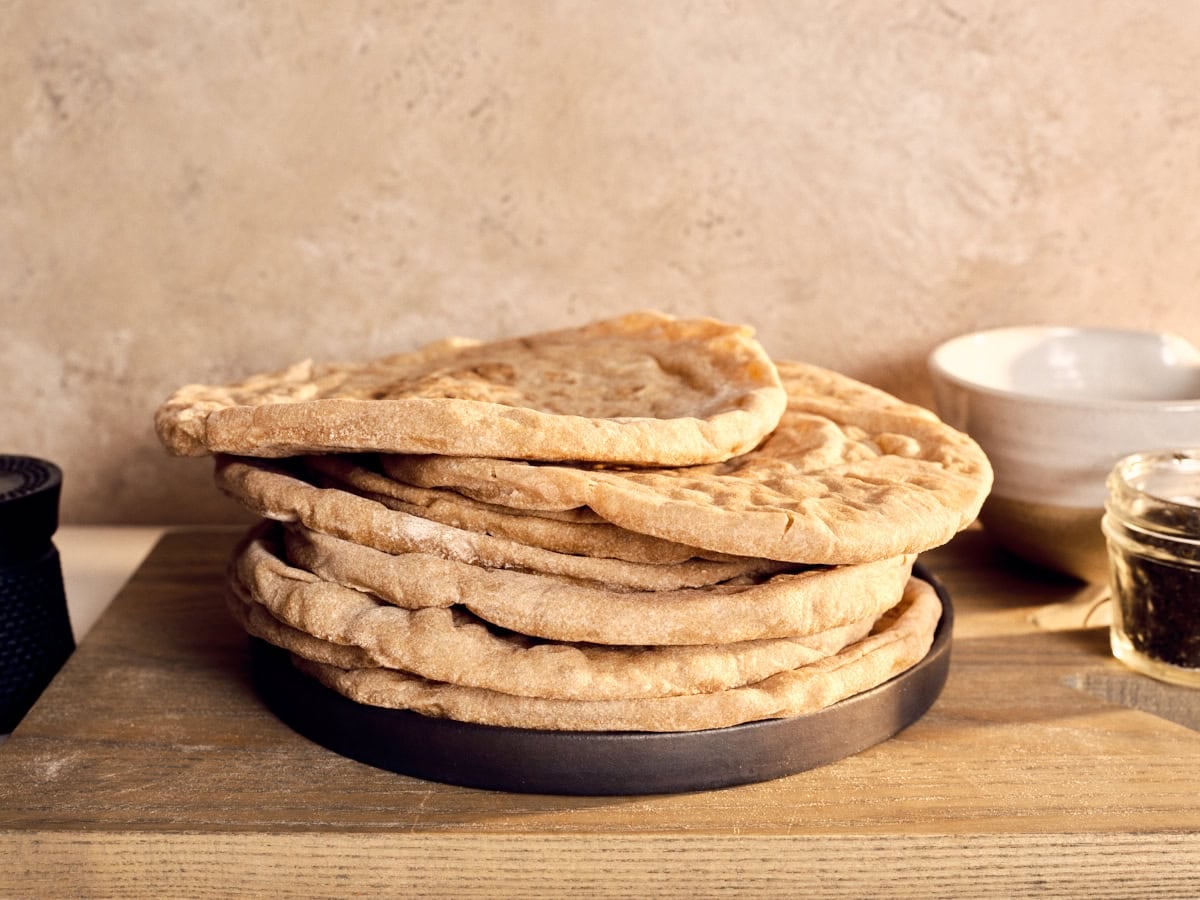
While the author has a history of developing sourdough pita recipes, this particular iteration was conceived with specific textural and flavor goals. Previous recipes, such as the one featured in the author’s first cookbook (page 327, “Pita”), focused on a lighter, more ethereal crumb. Another, yet-to-be-published recipe, explored the use of sweeteners and ancient grains. However, the ambition for this project was to create a fully whole-grain pita that was not only flavorful but also exceptionally soft and reliably puffed, a testament to the power of sourdough fermentation when combined with premium whole grains. The author emphasizes that while each previous pita recipe has been worthwhile, this latest version offers a distinct textural experience, complemented by a rich flavor that truly sets it apart. The intrinsic feeling of well-being derived from consuming such a wholesome bread further reinforces the perceived success of this culinary endeavor.
Achieving the Elusive Pita Puff: Key Baking Techniques
The quintessential characteristic of a well-made pita is its ability to inflate dramatically in the oven, creating a hollow pocket. Achieving this "puff" is a science that relies on several critical factors, all of which have been meticulously considered in the development of this whole-grain sourdough pita recipe.
Precise Rolling Technique: The thickness to which the pita dough is rolled is paramount. The accompanying imagery clearly illustrates the ideal thickness, approximately 1/8 inch. Rolling the dough too thick can prevent the steam from adequately building up to create the pocket, while rolling it too thin can lead to a brittle texture or tearing, hindering the puff. The goal is to create a uniform layer that allows for even expansion.
High Baking Temperature: A critical element for achieving the rapid steam generation necessary for puffing is an extremely hot oven. The recipe specifies preheating the oven to 550°F (290°C), or as hot as the oven will go. This intense heat quickly vaporizes the moisture within the dough, creating steam that forces the layers apart.
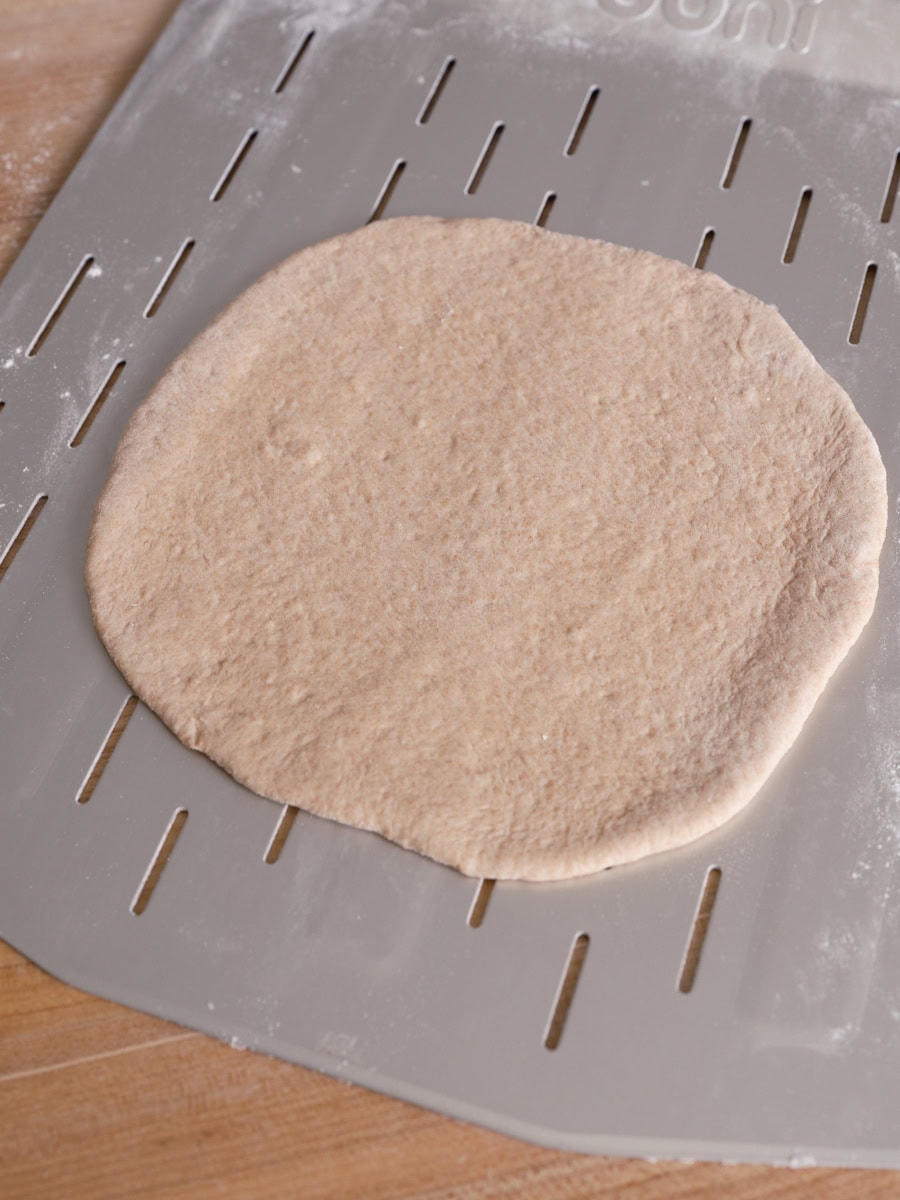
Baking Surface: Utilizing a preheated baking steel or stone is essential. These surfaces retain and radiate heat efficiently, providing the direct, intense heat needed to initiate the puffing process immediately upon contact. The recipe highlights the use of a baking steel, a popular choice among bakers for its superior heat conductivity and ability to produce a crispy crust.
Dough Hydration and Fermentation: The hydration level of the dough plays a significant role. A well-hydrated dough, as this recipe features with 84% hydration, contains sufficient moisture to generate the steam needed for puffing. Proper sourdough fermentation also contributes to the dough’s structure and ability to expand.
Preventing a Dry Skin: It is crucial to prevent the surface of the dough from drying out before baking. A dry skin can act as a barrier, preventing the steam from inflating the dough. Keeping the dough covered during proofing and handling it gently helps maintain its moisture.
Flour Selection: The Heart of Whole-Grain Flavor
The foundation of this whole-grain sourdough pita lies in the careful selection of flour. The recipe specifically calls for 100% whole wheat flour, with a recommendation for using whole-grain Bread Flour from Chimacum Valley Grainery. This choice is deliberate, as freshly milled whole grains offer a complexity of flavor and a nutritional density that cannot be replicated with refined flours.
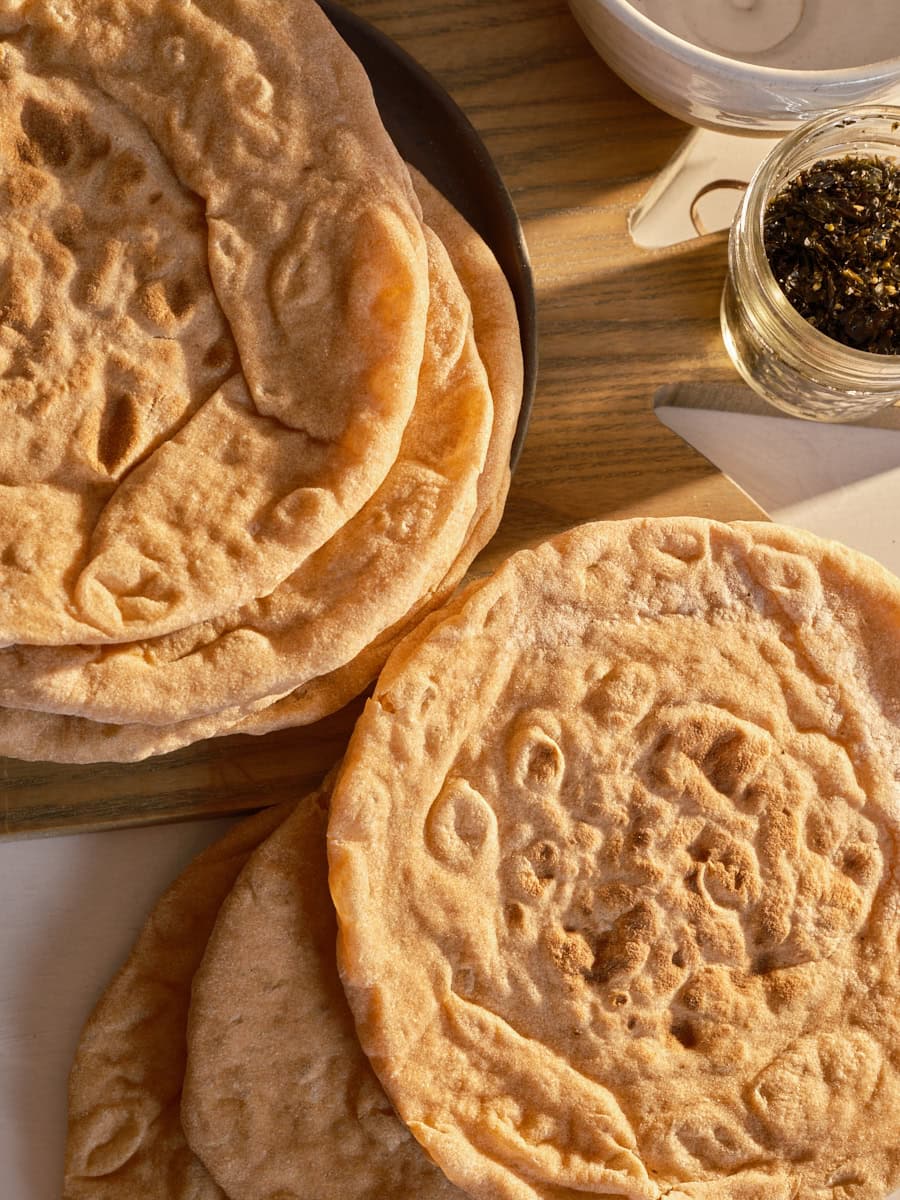
Chimacum Valley Grainery: This specific grainery is noted for its commitment to producing high-quality, locally sourced grains. The use of their bread flour signifies an emphasis on artisanal ingredients and a connection to the agricultural landscape of the Pacific Northwest. The inherent sweetness and robust flavor profile of their freshly milled grains are key contributors to the pita’s distinctive taste.
Flexibility in Grain Selection: While the primary recipe utilizes 100% whole wheat, there is an allowance for substitution. Up to 20% of the whole wheat flour can be replaced with other whole-grain flours, such as whole triticale or whole spelt. This flexibility allows bakers to experiment with different flavor profiles and textures, showcasing the versatility of the recipe. Each alternative grain brings its own unique characteristics, adding subtle nuances to the final pita. For instance, whole spelt often imparts a slightly nutty and sweet flavor, while whole triticale can contribute a more earthy and robust undertone.
Baking Schedule: Integrating Sourdough into a Busy Week
A primary objective of this sourdough pita recipe is to offer a quick yet incredibly nourishing bread option that can be conveniently prepared, even amidst a demanding workweek. The schedule is designed for efficiency without compromising on the quality and depth of flavor that sourdough fermentation provides.
Overnight Levain vs. Ripe Starter: The recipe typically calls for an overnight levain, a small batch of sourdough starter that is fed and allowed to ferment overnight. This ensures a robust leavening agent is ready for morning dough preparation. However, a practical alternative is to use a ripe sourdough starter directly. This significantly streamlines the process, allowing for dough mixing in the morning and fresh pita ready for dinner.
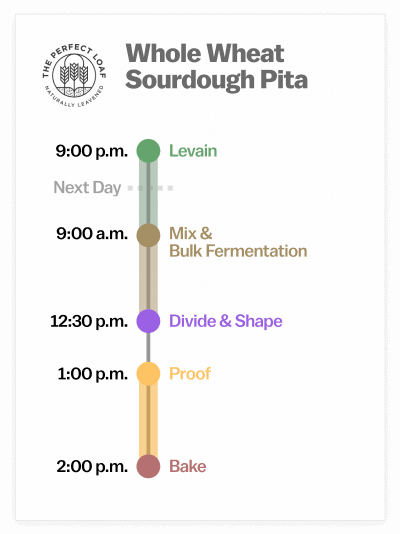
Controlling Sourness: Utilizing a ripe starter directly, or managing the overall fermentation timeline, is crucial for controlling the sourness of the bread. This is particularly important when working with a high percentage of whole-grain flour, which can naturally contribute a tangier profile. The balanced fermentation ensures a mild flavor in the final pita, while still retaining considerable depth.
Bulk Retardation Option: For added flexibility, the dough can undergo bulk retardation in the refrigerator. This involves refrigerating the dough after an initial two-hour bulk fermentation. The following day, the dough is removed from the refrigerator and the process continues with dividing and shaping. This method allows bakers to mix the dough one day and bake the pita the next, fitting seamlessly into varying schedules.
Vitals: Recipe Specifications
This recipe is designed to yield ten individual pita breads, each weighing approximately 120 grams. The ingredients and proportions have been carefully calculated to achieve the desired texture and flavor. Adjustments can be made to halve or double the recipe to accommodate varying needs.
- Total Dough Weight: 1,320 grams
- Prefermented Flour: 9.5%
- Levain in Final Dough: 22.0%
- Hydration: 84.0%
- Yield: Ten 120-gram pita
The author aims for a final dough temperature of 77-78°F (25-26°C) to optimize sourdough fermentation.
Total Formula: Ingredients Breakdown
The following ingredient list outlines the precise quantities required for the whole wheat sourdough pita dough, presented in both weight and baker’s percentage for clarity and scalability.
| Weight (g) | Ingredient | Baker’s Percentage (%) |
|---|---|---|
| 699g | Whole wheat flour (Chimacum Valley Grainery) | 100.0% |
| 14g | Extra-virgin olive oil | 2.0% |
| 503g | Water 1 (for levain and initial mix) | 72.0% |
| 84g | Water 2 (for final mix) | 12.0% |
| 14g | Fine sea salt | 2.0% |
| 7g | Ripe sourdough starter (100% hydration) | 0.95% |
Whole Wheat Sourdough Pita Method: A Step-by-Step Guide
1. Prepare the Levain (9:00 PM):
For the levain, combine 66g of whole wheat flour, 66g of water, and 7g of ripe sourdough starter (100% hydration). Mix thoroughly in a clean jar and allow it to ripen overnight at a temperature of 74-76°F (23-24°C). Alternatively, use your established ripe sourdough starter directly in the main dough.
2. Mix the Dough (9:00 AM):
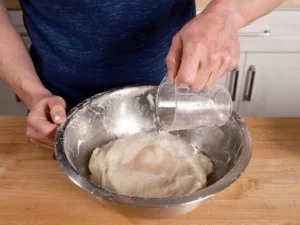
In a large mixing bowl, combine 632g of whole wheat flour, 437g of Water 1, 84g of Water 2, 14g of fine sea salt, 139g of ripe levain, and 14g of extra-virgin olive oil. Mix until a cohesive dough forms. If using a mechanical mixer, follow a phased mixing approach for optimal dough development. For hand mixing, knead the dough for 6-8 minutes using the slap-and-fold technique or the folds-in-the-bowl method until smooth. Rest for 5 minutes, then incorporate additional Water 2 gradually while continuing to knead until the dough is smooth and cohesive. Transfer to a bulk fermentation container and cover.
3. Bulk Fermentation (9:30 AM to 12:30 PM – 3 hours):
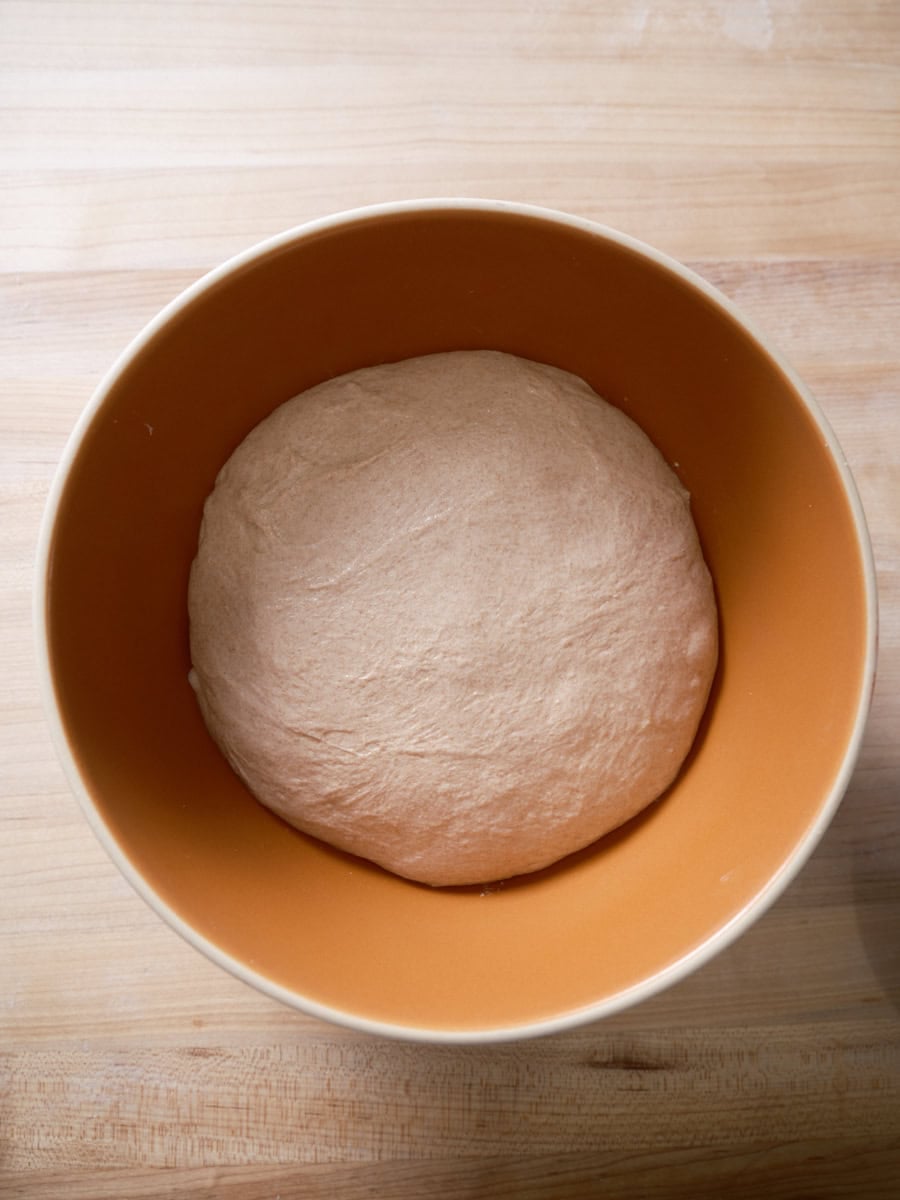
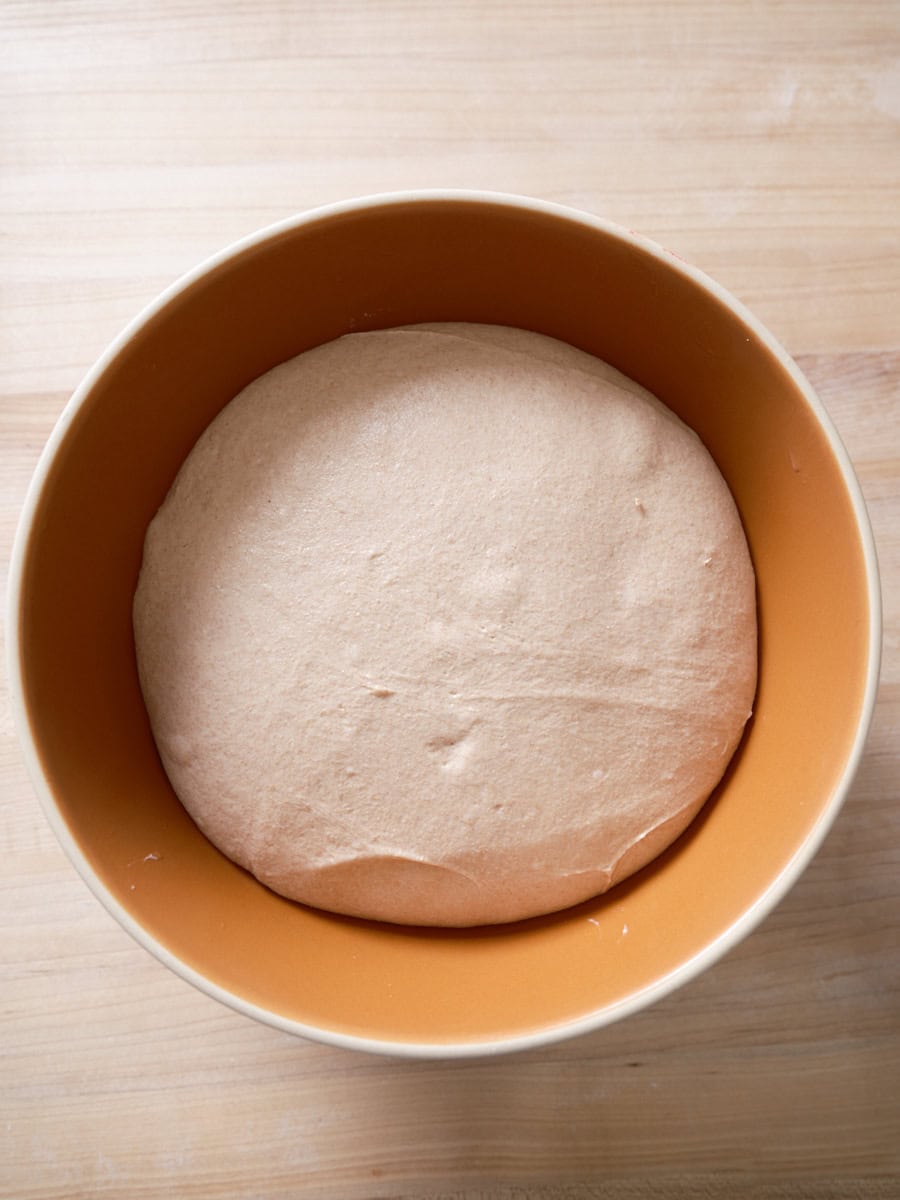
Allow the dough to bulk ferment at a warm room temperature (74-76°F / 23-24°C) for approximately 3 hours. During this period, perform two sets of stretch and folds at 30-minute intervals. The first set involves stretching and folding each side of the dough, rotating the bowl, and repeating. After the second set, allow the dough to rest undisturbed for the remainder of the bulk fermentation. The dough should appear smooth, puffy, and have increased in volume by about 25%.
4. Divide and Shape (12:30 PM):
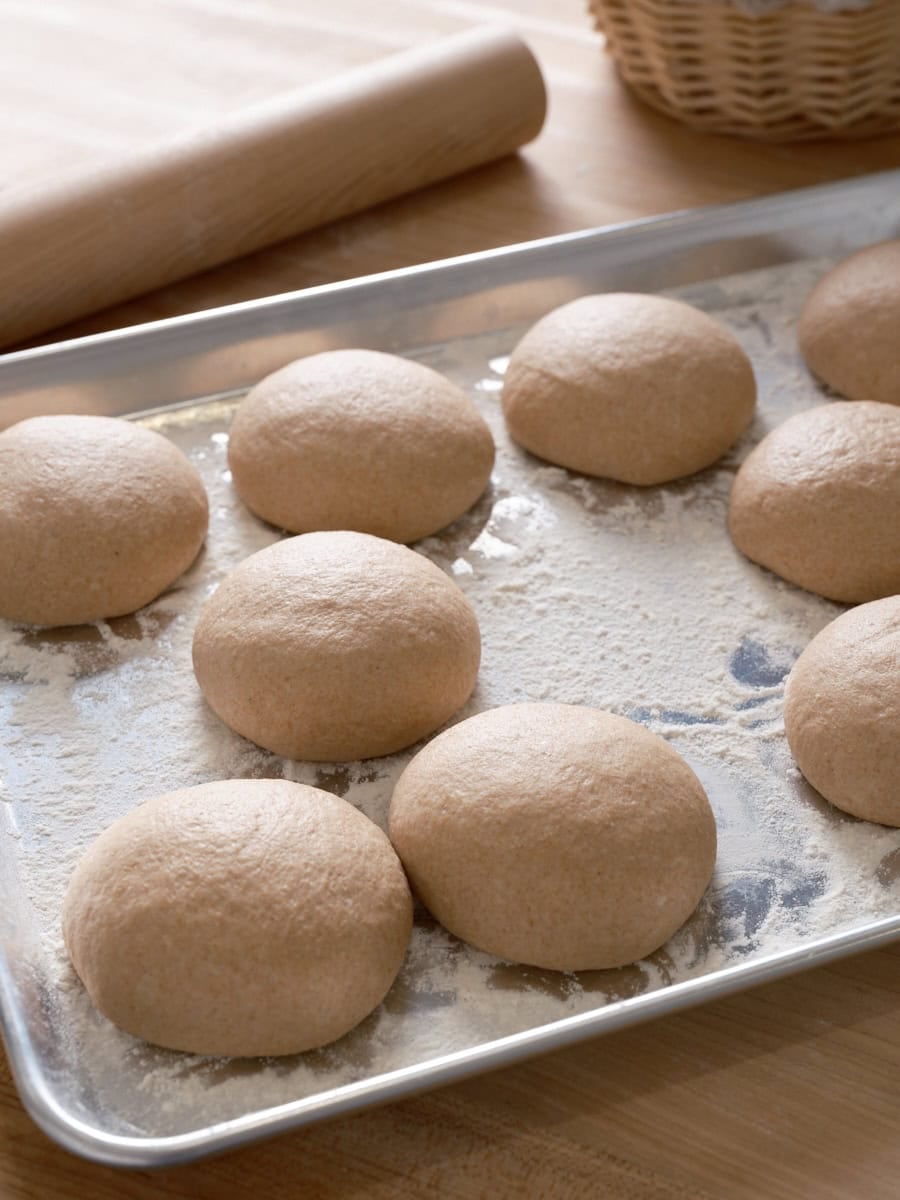
Lightly flour a half sheet pan. Gently scrape the fermented dough onto a floured work surface. Using a bench knife, divide the dough into ten equal portions of approximately 120 grams each. Shape each portion into a tight ball by degassing it lightly, folding in the sides, and then creating surface tension by dragging it against the work surface. Pinch the seams closed on the bottom. Place the shaped balls onto the prepared baking sheet, ensuring adequate space between them.
5. Proof (1:00 PM to 2:00 PM – 1 hour):
Cover half of the baking sheet with a large bag or snap-on covers to allow the dough balls to proof. Concurrently, preheat your oven to 550°F (290°C) with a baking steel or stone positioned on the middle rack for at least 1 hour.
6. Bake (2:00 PM):
The dough is ready for baking when it has increased in volume by approximately 30% and feels soft to the touch, passing the poke test. It is advisable to bake whole wheat pita on the earlier side of proofing to prevent breakdown. Prepare your tools for baking. Gently lift each proofed dough ball, coat it lightly in flour, and roll it out to a uniform thickness of about 1/8 inch and a diameter of 7 inches. Avoid pressing too hard during rolling to prevent compression. Transfer the rolled dough to a floured pizza peel and slide it into the preheated oven. Bake for 1-2 minutes until it puffs, then carefully flip the pita using a fish spatula and bake for an additional minute. Remove the pita to a towel-lined container and cover to keep it warm and soft. Repeat with the remaining dough portions.
These whole wheat sourdough pitas will retain their freshness for up to a week when stored in a sealed bag at room temperature. Gently rewarm them in a low oven or toaster oven before serving.
Sourdough Pita Bread FAQs
Why won’t my pita puff in the oven?
Several factors can contribute to a lack of puff. Ensure the dough is rolled to an even thickness of approximately 1/8 inch. Confirm that your oven and baking surface are fully preheated to the highest possible temperature. Also, prevent the dough from drying out before baking, as a skin can inhibit inflation.
Why does only half of my pita puff?
Uneven rolling is often the culprit. If the dough is not rolled to a consistent thickness, one side may puff while the other remains flat.
Why is my pita forming large bubbles all over instead of puffing completely?
This can occur when the dough is overproofed. The dough may develop large, irregular bubbles instead of a uniform pocket. In such cases, reducing the proofing time in future batches is recommended.
Culinary Evolution and Future Directions
The development of this whole-grain sourdough pita represents a significant step in the ongoing exploration of sourdough baking, particularly with whole grains. The success of this recipe not only provides a delicious and nutritious bread but also serves as a testament to the power of thoughtful technique and high-quality ingredients.
For those seeking alternative flatbread options, the author suggests exploring sourdough tortillas, which offer a different yet equally satisfying culinary experience, perfect for wraps and burritos. This exploration into whole grains and sourdough continues to reveal the immense potential of these ancient baking methods to create modern, healthful, and exceptionally flavorful foods.