
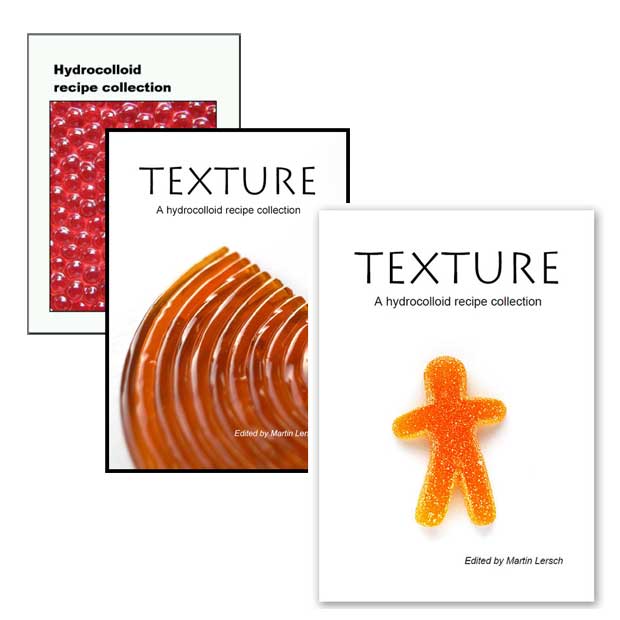
Six years following its last significant revision, "Texture – A hydrocolloid recipe collection," a seminal resource in the realm of food science and molecular gastronomy, is slated for an incremental update, transitioning to version 3.1. The announcement, made by the collection’s editor and curator, underscores a commitment to refining the comprehensive guide, incorporating community feedback, rectifying existing errors, and expanding its repertoire of recipes. This forthcoming revision aims to solidify "Texture’s" standing as an indispensable reference for culinary professionals, food scientists, and enthusiastic home cooks alike, navigating the intricate world of hydrocolloids and their transformative applications in food.
A Legacy of Culinary Innovation: The Genesis and Evolution of "Texture"
The "Texture" project, spearheaded by the renowned food science platform Khymos.org, first emerged in 2007 with the release of version 1.0. This initial offering quickly established itself as a pioneering compendium, demystifying the complex world of hydrocolloids – substances derived from natural sources that exert significant influence over the texture, viscosity, and stability of food products. Its timely arrival coincided with the burgeoning global interest in molecular gastronomy, a culinary movement that applies scientific principles to food preparation, texture modification, and flavor enhancement.
The collection saw its first major update with version 2.0 in 2008, expanding its scope and refining existing entries. This rapid iteration demonstrated the dynamic nature of the field and the editor’s dedication to keeping the resource current. The most recent comprehensive update, version 3.0, was published in 2014, further cementing "Texture’s" reputation as a go-to guide. Over its 13-year trajectory, "Texture" has become more than just a recipe book; it functions as an open-source educational platform, fostering a deeper understanding of food rheology and the functional properties of various gelling, thickening, and emulsifying agents. Its collaborative model, actively soliciting contributions and feedback from its global user base, has been a cornerstone of its sustained relevance and accuracy. This participatory approach ensures that the collection remains a living document, evolving with advancements in food science and culinary techniques.
The Scope of the Upcoming Version 3.1 Update: Refining and Expanding a Definitive Guide
The forthcoming version 3.1 is described as an "incremental revision," focusing primarily on "ironing out wrinkles." This suggests a meticulous process of review and correction, addressing minor inconsistencies, clarifying instructions, and correcting any identified typographical errors. The editor explicitly acknowledged the invaluable role of the community in this process, stating that feedback, error reports, and submitted pictures, even if not individually acknowledged at the time, have been diligently recorded and will be integrated into the update. This iterative improvement cycle is crucial for a technical resource of this nature, where precision and clarity are paramount.
A key objective of version 3.1 is to enhance the practical utility of the collection by incorporating visual evidence of successful recipe outcomes. The editor has issued a renewed call for photographic submissions, emphasizing that a recipe accompanied by a photo serves as a strong indicator of its successful testing. Detailed instructions for submitting photos, originally published in a 2010 blog post and also found on page 8 of the "Texture" collection, have been reiterated, highlighting the long-standing commitment to enriching the resource visually. This visual documentation not only validates the recipes but also provides practical guidance and inspiration for users attempting these techniques.
The Collaborative Imperative: A Call for Community Contributions
A cornerstone of "Texture’s" success has been its collaborative ethos. The editor has made a robust appeal to the culinary and scientific communities for active participation in shaping version 3.1. This call for contributions extends across several critical areas:
- Recipe Validation and Feedback: Users are encouraged to report any recipes that did not yield expected results. This critical feedback loop is essential for identifying and refining problematic entries, ensuring the collection’s reliability.
- Photographic Documentation: As previously mentioned, high-quality images of successfully executed recipes are highly sought after. These visual aids are invaluable for demonstrating the desired texture and appearance, enhancing the user experience, and building confidence in the recipes.
- Expansion of Hydrocolloid Coverage: The update specifically aims to address gaps in the collection’s coverage of certain hydrocolloids. The editor is actively seeking recipes that showcase the diverse applications of guar gum, gum arabic, konjac, locust bean gum, and tara gum. This targeted expansion ensures that the collection remains comprehensive and reflective of the full spectrum of available gelling and thickening agents.
- Identification of Missing Hydrocolloids: Beyond the underrepresented, the editor is also open to suggestions for entirely new hydrocolloids that may have been accidentally omitted, particularly rare or novel compounds. However, a deliberate policy of exclusion remains for proprietary products such as Ultra-Tex and Pure Cote (both modified starches) and Trisol (a wheat fiber), which are commercially branded and often have undisclosed formulations. This distinction maintains the collection’s focus on fundamental, widely accessible ingredients.
- "Non-Hydrocolloid Recipes": Bridging Science and Tradition: Perhaps one of the most intriguing aspects of the update is the expansion of the "non-hydrocolloid recipes" category. This section celebrates traditional gelling mechanisms from regional kitchens worldwide that achieve unique textures without the addition of conventional hydrocolloids. Existing examples include Junket, Cuajada, Ginger milk custard, Aiyu jelly, Grass jelly, Gelled seafood sauce, Tofu, and Hominy. The editor is actively seeking further examples of such naturally gelling or foaming preparations. This category highlights the intersection of ancient culinary wisdom and modern scientific understanding, demonstrating that complex textural transformations can occur through diverse biochemical processes.
Spotlight on Underrepresented Hydrocolloids: Properties and Culinary Potential
The specific call for recipes featuring guar gum, gum arabic, konjac, locust bean gum, and tara gum underscores their significant, yet perhaps less explored, roles in modern gastronomy. Understanding their individual properties is key to unlocking their full culinary potential:
- Guar Gum: Derived from the guar bean, this polysaccharide is a potent thickener and stabilizer. It is widely used in gluten-free baking to provide structure and elasticity, in dairy products to prevent ice crystal formation, and in sauces and dressings for viscosity. Its ability to hydrate rapidly in cold water makes it particularly versatile.
- Gum Arabic (Acacia Gum): An exudate from acacia trees, gum arabic is primarily known as an emulsifier and stabilizer, particularly in beverages and confectionery. It helps suspend insoluble ingredients, prevents sugar crystallization, and can contribute to a desirable mouthfeel without excessive viscosity. Its unique properties also make it valuable in encapsulating flavors.
- Konjac (Glucomannan): Extracted from the konjac plant, glucomannan is a highly viscous dietary fiber known for its remarkable gelling capabilities. It is a staple in traditional Asian cuisine, used to make noodles (shirataki) and gelatinous dishes. As a vegan gelling agent, it offers a distinct, firm, yet elastic texture that differs from agar or gelatin, often requiring an alkaline environment to fully set.
- Locust Bean Gum (Carob Gum): Obtained from the seeds of the carob tree, locust bean gum (LBG) is a powerful thickener and stabilizer. It is often used in synergy with other hydrocolloids like xanthan gum or carrageenan to produce enhanced gelling and textural properties. LBG is particularly valued in ice creams for preventing ice crystal formation and providing a smooth, creamy texture, and in dairy alternatives.
- Tara Gum: Sourced from the tara plant, this hydrocolloid shares structural similarities with both guar gum and locust bean gum. It functions as an effective thickener and stabilizer, offering good freeze-thaw stability, making it suitable for frozen desserts and processed foods. Tara gum can provide a smooth, short texture, often used to improve the body of sauces, dressings, and baked goods.
By actively seeking recipes that highlight the range of applications for these specific hydrocolloids, "Texture" v.3.1 aims to equip users with a broader palette of textural tools, encouraging experimentation and innovation.
The Dalgona Phenomenon: A Testament to Accessible Culinary Science
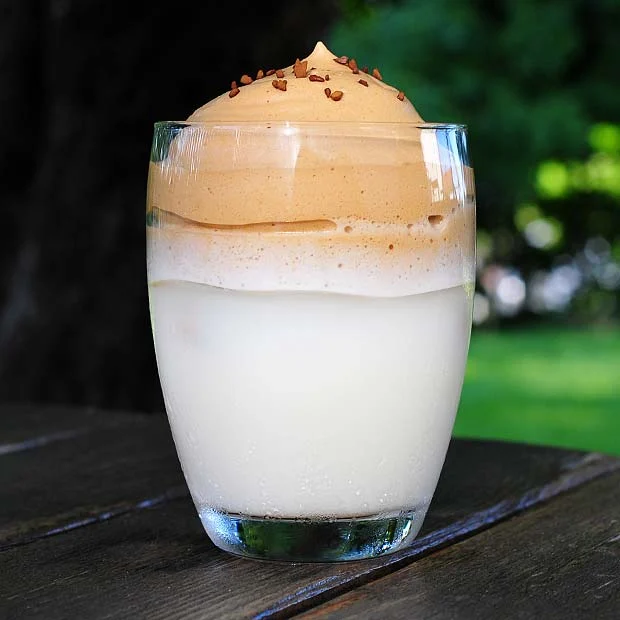
Among the new inclusions, the editor specifically highlighted the Dalgona coffee foam, which "took the internet by storm this spring" (referring to Spring 2020). This viral sensation perfectly encapsulates the spirit of the "non-hydrocolloid recipes" category. Dalgona coffee, a beverage originating from South Korea, involves whipping equal parts instant coffee, sugar, and hot water until it forms a thick, creamy foam, which is then spooned over cold milk.
The inclusion of Dalgona coffee is significant for several reasons:
- Accessibility: It demonstrates that complex-looking textures can be achieved with common household ingredients and simple techniques, without specialized hydrocolloids.
- Global Relevance: Its viral nature highlights a global trend in culinary exploration and the rapid dissemination of food ideas through digital platforms.
- Fundamental Principles: The creation of the Dalgona foam relies on basic principles of emulsion and aeration, where the sugar stabilizes the whipped coffee-water mixture, creating a stable foam. This makes it an excellent case study for understanding foaming mechanisms without relying on external gelling agents.
- Cultural Exchange: It represents a contemporary example of a "gel (or foam!) from a regional kitchen," fitting perfectly into the expanded category that bridges scientific understanding with cultural culinary practices.
Its inclusion underscores the collection’s commitment to remaining current and relevant, incorporating both timeless traditional methods and contemporary culinary phenomena.
The Broader Impact on Culinary Innovation and Education
The ongoing evolution of "Texture – A hydrocolloid recipe collection" through its forthcoming version 3.1 carries significant implications for the culinary world.
- Democratization of Knowledge: By providing a freely accessible, meticulously curated, and continuously updated resource, Khymos.org democratizes advanced food science knowledge. This empowers a wider audience, from aspiring chefs in culinary schools to professional food product developers and curious home cooks, to experiment with and understand the science behind food textures.
- Driving Innovation: A deeper understanding of hydrocolloids and gelling mechanisms fosters innovation. Chefs can create novel textures and presentations, while food scientists can develop improved products with enhanced stability, shelf life, and sensory attributes. The collection serves as a springboard for creativity, encouraging users to move beyond conventional applications.
- Bridging Science and Art: "Texture" effectively bridges the often-perceived gap between the scientific rigor of the laboratory and the artistic expression of the kitchen. It translates complex chemical and physical properties into practical, actionable recipes and explanations, making molecular gastronomy less intimidating and more approachable.
- Community Building: The collaborative model reinforces the idea of a global culinary community united by a shared passion for food science. The call for feedback and contributions transforms passive users into active co-creators, fostering a sense of ownership and collective advancement.
- Preservation of Culinary Heritage: The inclusion of "non-hydrocolloid recipes" serves a crucial role in documenting and understanding traditional food preparation techniques. By analyzing the scientific principles behind dishes like Aiyu jelly or Ginger milk custard, the collection contributes to the preservation and appreciation of diverse culinary heritages.
Looking Ahead: The Future of Culinary Exploration
The anticipated release of "Texture" v.3.1 marks another significant milestone in the ongoing journey of exploring and documenting food textures. This incremental update, while not a complete overhaul, is a testament to the editor’s enduring dedication and the vibrant, collaborative spirit of the global food science community. As culinary practices continue to evolve, influenced by new ingredients, scientific discoveries, and cultural exchanges, resources like "Texture" will remain vital tools for understanding, innovating, and appreciating the intricate world of food. The update serves as a powerful reminder that even in specialized fields, the collective wisdom and contributions of a dedicated community are indispensable for creating a truly comprehensive and dynamic body of knowledge. The culinary world eagerly awaits the refined insights and expanded repertoire that version 3.1 promises to deliver, further empowering exploration at the intersection of science and gastronomy.