
The unprecedented global health crisis triggered by the SARS-CoV-2 virus brought numerous scientific concepts into mainstream discourse, none more prominent than exponential growth. While regrettably often discussed in the grim context of viral spread and infection rates, this counterintuitive mathematical principle also quietly underpinned a surprising, positive phenomenon: the global surge in home baking and, paradoxically, the resilience of many home kitchens against widespread yeast shortages. The pandemic, with its enforced lockdowns and increased time at home, inadvertently transformed millions into amateur bakers, leading to an extraordinary demand for ingredients like flour and yeast. This era highlighted how a fundamental understanding of microbial life cycles, particularly the rapid proliferation of yeast, could empower individuals to navigate supply chain disruptions and elevate their culinary craft.
The Pandemic’s Culinary Shift: A Chronology of Home Baking
The early months of 2020 marked a dramatic shift in global routines. As countries implemented strict lockdown measures to curb the spread of COVID-19, billions found themselves confined to their homes. Commuting ceased, social gatherings were prohibited, and the rhythms of daily life were profoundly altered. This abrupt change created an abundance of free time, particularly during evenings and weekends, which many sought to fill with new hobbies or rediscover old ones. Among the most widespread and enduring trends to emerge was a fervent return to home cooking and, more specifically, baking.
From New York to London, Sydney to Oslo, social media platforms became awash with images of freshly baked sourdough loaves, intricate pastries, and rustic breads. The act of baking offered solace, a tangible sense of accomplishment, and a comforting aroma that permeated homes during an anxious period. It also provided a practical solution to reduced access to cafes and bakeries, and for many, a way to ensure food security by producing staple items from scratch. This groundswell of culinary activity placed immense and unforeseen pressure on the global supply chain for key baking ingredients. Flour mills operated at maximum capacity, and retailers struggled to keep shelves stocked with essential items. Among these, yeast, the microscopic leavening agent crucial for most bread and many pastry recipes, became a particularly hot commodity. Reports from various nations, including Norway where yeast was reportedly sold out for weeks and months, underscored the scale of this demand surge.
The Paradox of Yeast Shortages and Abundance
The sudden, exponential increase in demand for yeast created a paradox. On one hand, consumers faced empty shelves and frustrated searches for the small packets of dried granules. On the other hand, the very nature of yeast – its capacity for exponential growth – offered a solution, albeit one requiring a deeper understanding of its biology. Commercial yeast production, typically operating on stable, predictable demand, was caught off guard by the unprecedented spike. While manufacturers swiftly moved to increase output, the lead times for expanding fermentation tanks, processing facilities, and distribution networks meant that immediate supply could not match the sudden surge in global home baking.
The situation prompted many home bakers to re-evaluate their usage of this vital ingredient. Instead of adhering strictly to recipes calling for a full sachet of yeast, resourceful individuals began experimenting with smaller quantities, relying on extended fermentation times. This approach, rooted in an appreciation for yeast’s biological capabilities, not only conserved scarce resources but often resulted in superior flavor and texture in their baked goods. The experience highlighted a critical lesson in resourcefulness and a renewed appreciation for the fundamental processes of food creation, moving beyond mere consumption to a more engaged and informed approach to ingredients.
Understanding Exponential Growth: From Viruses to Microbes
Exponential growth, a concept often perceived as abstract, became starkly real during the pandemic. In the context of the SARS-CoV-2 virus, it described how a small initial number of infections could rapidly escalate into widespread outbreaks, often appearing to "skyrocket out of nowhere" after a period of seemingly slow progression. This counterintuitive nature is famously illustrated by the ancient "wheat and chessboard problem," where placing one grain of wheat on the first square, two on the second, four on the third, and so on, quickly leads to an astronomically large number of grains – far more than exists on Earth – by the time the final square is reached. What appears as negligible growth for a long duration suddenly explodes into overwhelming numbers.
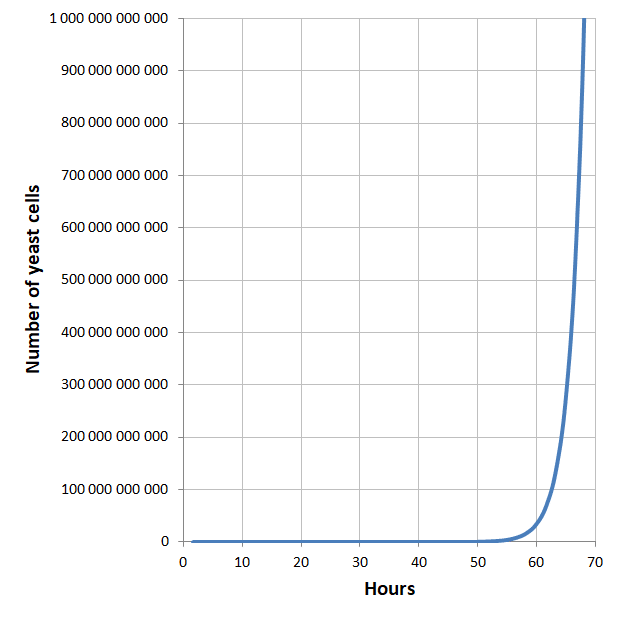
This same principle, however, operates beneficially within the world of microbiology, particularly with Saccharomyces cerevisiae, the common baker’s yeast. Under ideal conditions – a warm, nutrient-rich environment with access to oxygen – a single yeast cell can reproduce by budding, effectively splitting into two cells, in approximately 100 minutes. This constitutes a full life cycle in less than two hours. The implications of this rapid doubling are profound. After another 100 minutes, those two cells become four. The progression continues at an accelerating rate:
- Initial: 1 cell
- After ~100 minutes: 2 cells
- After ~200 minutes: 4 cells
- After ~24 hours (14.4 doubling cycles): Approximately 16,000 cells
- After ~48 hours (28.8 doubling cycles): Approximately 268 million cells
- Before 72 hours (3 days) are complete: The number can reach an astonishing one trillion (1,000,000,000,000) yeast cells.
To put this into perspective, a typical 50-gram piece of compressed fresh yeast contains roughly a trillion cells. This means that, theoretically, a single yeast cell could multiply to the volume of a standard block of fresh yeast in under three days, given optimal conditions. While such ideal conditions are meticulously maintained in commercial yeast production for a limited time, the environment within a typical bread dough is far less perfect, leading to a considerably slower, though still exponential, growth rate. Factors like temperature fluctuations, limited oxygen, and the eventual depletion of readily available nutrients all contribute to moderating this rapid proliferation in a home baking setting. Nevertheless, the underlying principle remains powerful: a tiny amount of yeast possesses the inherent capacity for immense reproduction.
Optimizing Yeast Usage: The Science of Slow Fermentation
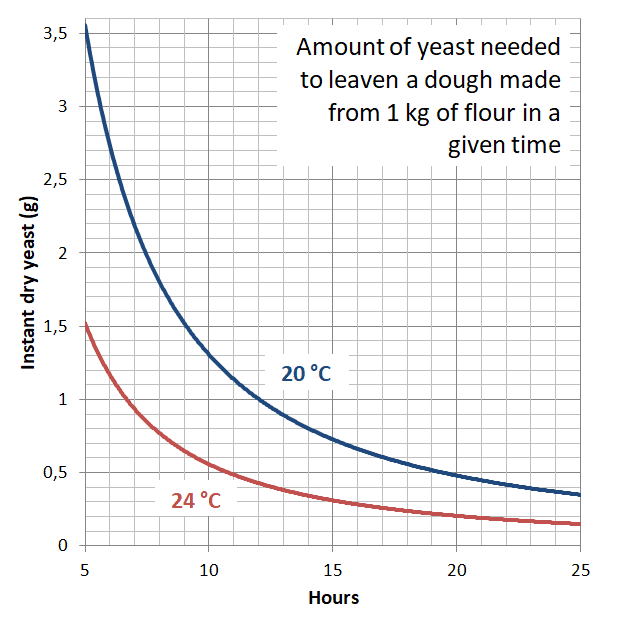
For the home baker, understanding yeast’s exponential potential translates into practical advantages, especially during periods of scarcity. The core strategy is simple: use less yeast and allow more time for fermentation. This approach, often referred to as a "slow fermentation" or "long proof," harnesses the yeast’s natural reproductive cycle to achieve the desired leavening with a minimal initial quantity of active cells.
Beyond conserving yeast, longer fermentation offers significant benefits for the final product:
- Enhanced Flavor Development: Extended fermentation periods allow yeast and, crucially, naturally occurring lactic acid bacteria (LAB) present in flour, to produce a wider array of complex organic acids and aromatic compounds. These byproducts contribute to a deeper, more nuanced flavor profile, a more appealing aroma, and a subtle tang often associated with artisanal breads. Short, rapid proofs, while convenient, typically yield a blander taste.
- Improved Dough Structure and Texture: A slower rise allows the gluten network within the dough more time to relax and develop. This results in a more extensible, easier-to-handle dough, and ultimately, a bread with a more open, airy crumb structure and a chewier texture.
- Potential for Increased Digestibility: Some studies suggest that longer fermentation can aid in breaking down complex carbohydrates and potentially reduce the levels of certain compounds, like FODMAPs (Fermentable Oligosaccharides, Disaccharides, Monosaccharides, and Polyols), which can be difficult for some individuals to digest.
- Resourcefulness and Economy: Making a small 12-gram sachet of instant dry yeast last for dozens of loaves instead of just one or two is a testament to mindful ingredient usage and economic savvy.
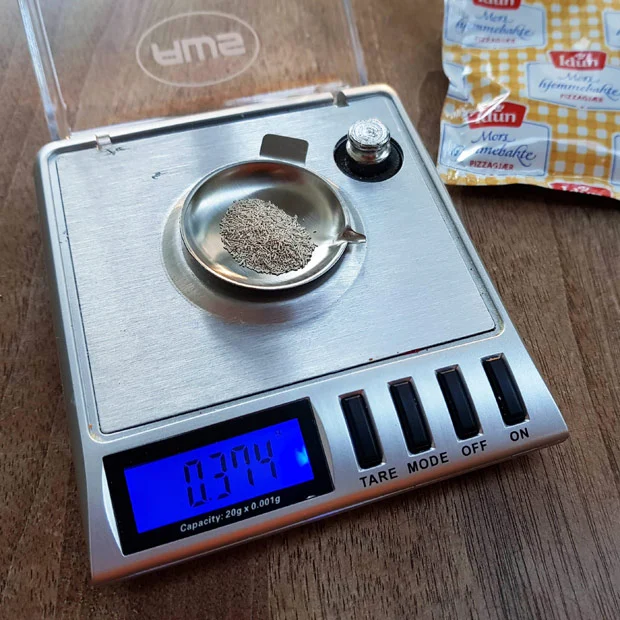
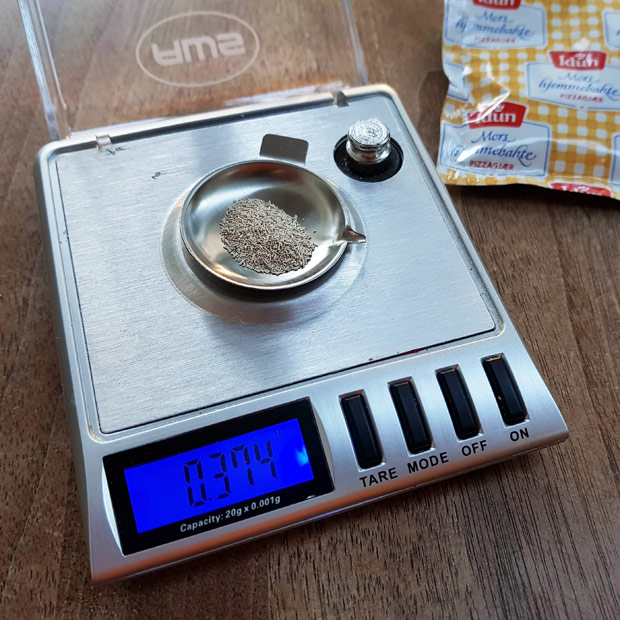
To facilitate this precise approach, tools have emerged that democratize the science of baking. Apps like "PizzApp+" (available for Android, and similar tools for other platforms) have become invaluable resources for home bakers. These applications allow users to input parameters such as flour weight, desired fermentation time, and ambient temperature, then calculate the precise amount of yeast needed. For instance, the app might indicate that a dough made with 1 kilogram of wheat flour requires only 0.48 grams of instant dry yeast if left to rise for 20 hours at a moderate temperature of 20°C (68°F). Such minute quantities necessitate the use of precision scales, ideally those with a 0.001 gram readout. While once considered specialized laboratory equipment, these small, accurate balances are now readily available and relatively inexpensive, making advanced baking accessible to a broader audience.
Beyond Instant Yeast: The Sourdough Renaissance
While instant dry yeast offers unparalleled convenience, the pandemic-induced shortages propelled many home bakers towards an even more self-sufficient leavening method: sourdough. For those seeking to completely eliminate reliance on commercially produced yeast, cultivating a sourdough starter became a popular, albeit more demanding, alternative.
A sourdough starter is a living culture, typically a mixture of flour and water, that harbors a symbiotic community of wild yeasts and lactic acid bacteria. This vibrant ecosystem, once established and properly maintained, can provide a continuous supply of leavening power indefinitely. The process of feeding and nurturing a starter requires commitment and patience, but it offers unique rewards. Sourdough breads are renowned for their complex, tangy flavors, distinct crusts, and often a slightly chewier crumb. The wild yeasts and bacteria in a starter contribute to a different fermentation profile compared to commercial yeast, resulting in a broader spectrum of aromatic compounds.
The allure of instant dry yeast, however, remains potent for its ease of use and predictable results. It requires no prior preparation, activates quickly, and allows for more flexible baking schedules. For many, the ability to simply add a measured amount of yeast to a recipe and expect a reliable rise outweighs the deeper complexity of sourdough. The pandemic, therefore, not only highlighted the scientific principles behind yeast but also underscored the diverse preferences and priorities within the home baking community, from those seeking ultimate convenience to those embracing the ancient art of sourdough.
Broader Implications and Future Outlook
The baking boom of the pandemic era offers several broader implications beyond the kitchen.
- Economic Impact: The surge in home baking provided an unexpected boost to industries supporting domestic food production. Flour mills, yeast manufacturers, kitchen equipment suppliers (mixers, baking stones, precision scales), and even cookbook authors saw increased demand. This demonstrated the resilience and adaptability of certain sectors in response to unforeseen societal shifts.
- Educational Value: The widespread discussion of exponential growth in the context of both viral spread and yeast fermentation inadvertently served as a global science lesson. It made abstract mathematical and biological concepts tangible and relevant to everyday life, fostering a greater public understanding of how these principles operate in the natural world.
- Shift in Consumer Habits: While the most intense phase of home baking has likely subsided with the return to pre-pandemic routines, many individuals have retained their newly acquired skills and appreciation for homemade goods. The experience may have permanently altered consumer preferences, leading to a sustained interest in artisanal products and a greater demand for quality ingredients.
- Resilience and Self-Sufficiency: The challenges posed by supply chain disruptions fostered a renewed sense of self-reliance. Learning to bake bread from scratch, extend ingredient usage, or cultivate a sourdough starter represented a move towards greater food security and a more engaged relationship with what we consume.
- Innovation in Baking Technology: The increased demand for precision and information fueled the popularity of digital tools like PizzApp+. These applications exemplify how technology can empower home cooks to achieve professional-level results by demystifying complex variables like fermentation kinetics.
In conclusion, the global pandemic, while a period of immense challenge, also illuminated fascinating intersections between microbiology, mathematics, human behavior, and the culinary arts. The humble yeast, a single-celled organism operating on principles of exponential growth, became a focal point. Its role in the spread of disease served as a stark warning, while its benevolent proliferation in the dough offered comfort, creativity, and a practical lesson in resourcefulness. The era of pandemic baking underscored that a deeper understanding of fundamental scientific processes can not only enhance our daily lives but also equip us with the knowledge to navigate unforeseen challenges, transforming scarcity into an opportunity for skill development and culinary enrichment.