
The past year has indelibly etched the concept of exponential growth into the global consciousness, primarily through the somber lens of the SARS-CoV-2 pandemic and its relentless spread. Yet, amidst the public health crisis, another, more benign form of exponential growth quietly unfolded in kitchens worldwide: the proliferation of yeast, fueling an unprecedented surge in home baking. This unexpected culinary phenomenon not only highlighted the fascinating biology of a microscopic organism but also exposed the delicate balance of global supply chains and prompted a re-evaluation of fundamental baking practices. From the initial, seemingly slow accumulation of COVID-19 cases to the sudden, widespread scarcity of baking essentials, the world witnessed the counterintuitive power of exponential curves, where minimal activity can quickly escalate into overwhelming abundance or critical shortage.
The Paradox of Exponential Growth: From Viral Spread to Flour Shortages
Exponential growth, a mathematical function where the rate of growth is proportional to the current quantity, is notoriously counterintuitive for the human mind to grasp. It implies a fixed percentage increase over a given period, meaning that as the quantity grows, the absolute increase becomes dramatically larger. This principle was starkly demonstrated by the spread of the SARS-CoV-2 virus, where initial isolated cases rapidly multiplied into widespread outbreaks, seemingly "skyrocketing out of nowhere." Epidemiological models, which inherently rely on exponential functions to predict infection rates, struggled to convey the impending scale of the crisis to a public unaccustomed to such rapid escalation. The "wheat and chessboard problem," a classic mathematical riddle illustrating how a single grain of wheat doubled on each square of a chessboard quickly leads to astronomical numbers, serves as a poignant analogy for both viral propagation and, surprisingly, the unseen power of yeast.
While the negative implications of exponential viral spread dominated headlines, a parallel, positive manifestation of this principle unfolded behind closed doors. Lockdowns and stay-at-home orders transformed kitchens into laboratories of culinary experimentation. With evenings and weekends suddenly freed from commutes and social engagements, millions turned to baking as a source of comfort, creativity, and sustenance. This shift triggered an unprecedented demand for baking ingredients, most notably flour and yeast. Across continents, grocery store shelves that once held ample supplies were stripped bare, with yeast becoming a particularly elusive commodity. In regions like Norway, where the author resides, instant dry yeast was reportedly sold out for weeks, even months, reflecting a global trend that left many aspiring bakers scrambling. This unexpected scarcity underscored how even a seemingly small shift in consumer behavior, when amplified across a population, can create significant ripple effects throughout complex supply chains.
The Global Baking Boom and Supply Chain Strain
The timeline of the baking boom largely coincided with the initial wave of global lockdowns in early 2020. As countries implemented widespread restrictions, typically from March onwards, a dramatic spike in the sale of baking ingredients became evident. Retail data from various markets painted a clear picture: in the United States, sales of baking yeast surged by over 600% in March 2020 compared to the previous year, with flour sales also seeing triple-digit increases. Similar patterns were reported across Europe, Australia, and other regions. Major retailers, including Tesco in the UK and Walmart in the US, confirmed unprecedented demand for staples like flour, sugar, and, critically, yeast.
This sudden and sustained surge overwhelmed established supply chains designed for steady, predictable demand. Yeast production, a sophisticated industrial process, could not instantly scale up to meet a multi-fold increase. Manufacturers, while operating at maximum capacity, faced challenges in sourcing raw materials, packaging, and logistics. Companies like Lesaffre, one of the world’s largest yeast producers, publicly acknowledged the unprecedented demand, explaining that while production facilities were running 24/7, the distribution network struggled to keep shelves stocked. This was not merely a matter of increasing production; it involved the entire ecosystem from raw material procurement to final retail distribution. The result was widespread shortages, turning a humble sachet of instant dry yeast into a coveted item. Bakers shared tips online on how to find yeast, swap ingredients, or even cultivate sourdough starters from scratch, highlighting the ingenuity born of necessity.
Unveiling the Microscopic Marvel: The Biology of Yeast
At the heart of this culinary phenomenon lies Saccharomyces cerevisiae, commonly known as baker’s yeast. This single-celled fungus is a biological powerhouse, capable of remarkable exponential growth under optimal conditions. Its primary role in baking is fermentation: converting sugars in dough into carbon dioxide gas and ethanol. The carbon dioxide creates air pockets, causing the dough to rise and giving bread its characteristic airy texture, while the ethanol contributes to flavor before evaporating during baking.
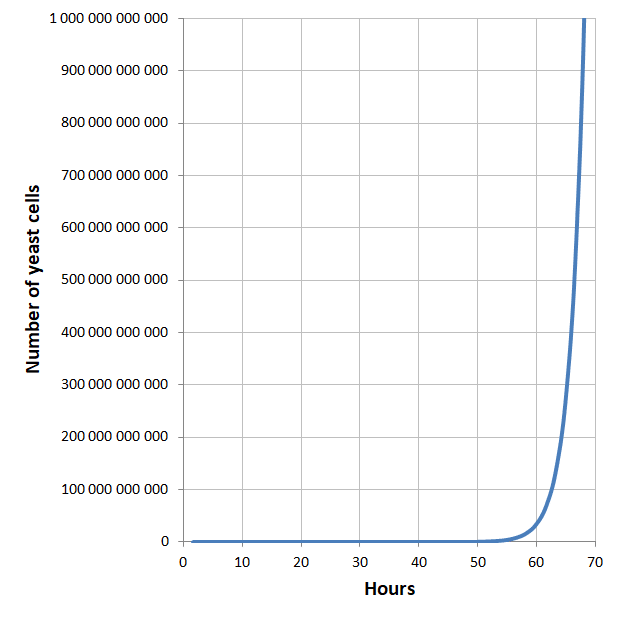
The speed at which yeast can multiply is truly astonishing. Under ideal laboratory conditions, with ample nutrients (sugars), sufficient oxygen, and the correct temperature (typically around 25-30°C or 77-86°F), a single yeast cell can grow, bud, and split into two identical cells in approximately 100 minutes. This means that within less than two hours, a full life cycle is completed. The implications of this exponential doubling are profound:
- Initial: 1 cell
- 100 minutes: 2 cells
- 200 minutes: 4 cells
- 10 hours (6 doublings): 64 cells
- 24 hours (14.4 doublings): Approximately 16,384 cells
- 48 hours (28.8 doublings): Approximately 268 million cells
- Less than 72 hours (approx. 43 doublings): On the order of one trillion (1,000,000,000,000) yeast cells.
To put this into perspective, a typical 50-gram block of fresh compressed yeast contains a staggering number of cells, roughly equivalent to the trillion cells that can be generated from a single cell in just under three days under perfect conditions. This rapid proliferation is commercially harnessed in large-scale yeast production, where carefully controlled bioreactors provide the ideal environment for exponential growth. However, in the context of a bread dough, the conditions are far from ideal. Oxygen quickly depletes, nutrients become less accessible, and metabolic byproducts accumulate, all of which slow down the yeast’s reproductive rate considerably. Nevertheless, the underlying principle of exponential growth means that even a minuscule amount of yeast, given sufficient time, can eventually leaven a substantial dough.
Adapting Baking Practices: The "Less Yeast, More Time" Philosophy
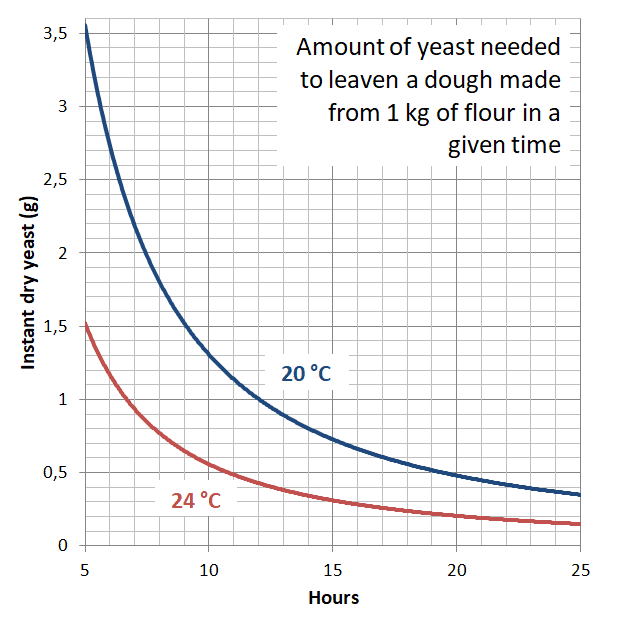
Faced with yeast shortages, home bakers quickly adopted or rediscovered the "less yeast, more time" philosophy. This approach, long favored by artisan bakers for its flavor benefits, became a practical necessity. By significantly reducing the quantity of yeast and extending the fermentation period, bakers allowed the smaller initial population of yeast cells ample opportunity to multiply and perform their leavening duties. This strategy not only conserved precious yeast supplies but also unlocked a new dimension of flavor and texture in home-baked goods.
The benefits of longer, slower fermentation extend beyond mere leavening:
- Enhanced Flavor Development: Extended fermentation allows for the proliferation of not just yeast, but also naturally occurring lactic acid bacteria (LAB) present in flour. These bacteria produce lactic and acetic acids, contributing complex, nuanced flavors and aromas that are absent in quick-rise breads. This process mimics some aspects of sourdough fermentation, even in a direct dough.
- Improved Dough Structure: A slower rise gives the gluten network in the dough more time to relax and develop, resulting in a more extensible and manageable dough. This leads to a finer, more open crumb structure and a chewier texture in the final baked product.
- Better Digestibility: The prolonged enzymatic activity during slow fermentation can break down complex carbohydrates and proteins in the flour, potentially making the bread easier to digest for some individuals.
- Practicality: While requiring patience, a long, slow fermentation can also offer scheduling flexibility, allowing bakers to prepare dough ahead of time and bake when convenient.
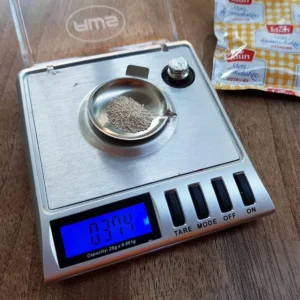
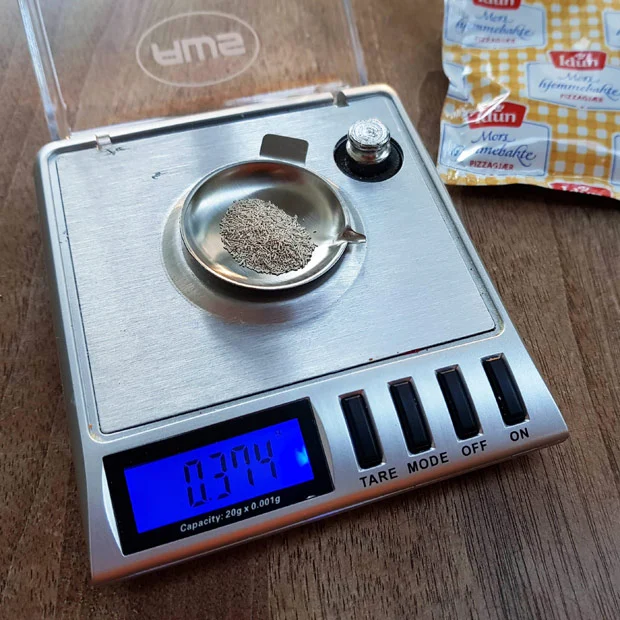
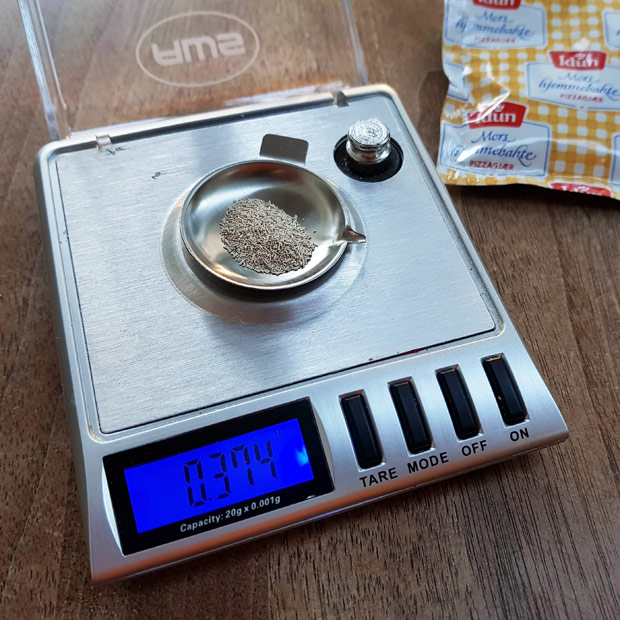
To effectively implement this "less yeast, more time" approach, precision becomes paramount. Measuring minute quantities of yeast, often in fractions of a gram, necessitates accurate tools. Digital balances capable of measuring with a precision of 0.001 grams, once considered specialized equipment, became highly sought after by home bakers. These scales, now more accessible and affordable, allow for the exact measurement required to confidently use, for instance, just 0.48 grams of instant dry yeast for a kilogram of flour when planning a 20-hour rise at 20°C (68°F), a quantity that would be impossible to estimate accurately by volume.
Complementing these precision tools are digital applications designed for bakers. Apps like "PizzApp+" (available for Android) became invaluable resources. These sophisticated tools allow users to input various parameters – flour weight, desired fermentation time, ambient temperature, and even the type of yeast (fresh, active dry, instant dry, or various sourdough cultures) – and instantly calculate the precise amount of leavening agent required. This demystifies the art of fermentation, turning complex variables into actionable data for the home cook, enabling consistent results even with unconventional fermentation schedules. For example, the app can show that a 500g dough at a cooler 16°C might need 0.3g of instant yeast for an 18-hour bulk ferment, a calculation difficult to perform manually.
The Sourdough Renaissance and the Enduring Appeal of Convenience
The yeast shortage also spurred a widespread "sourdough renaissance." For many, the cultivation of a sourdough starter, a symbiotic culture of wild yeasts and lactic acid bacteria, offered a complete bypass of commercial yeast supply issues. The process of feeding and maintaining a starter became a meditative ritual for some, a scientific experiment for others, and a lifeline for those desperate to bake. Sourdough bread, with its distinctive tangy flavor, robust crust, and open crumb, gained immense popularity, leading to online communities sharing starter tips, recipes, and troubleshooting advice. This shift represented a deeper dive into the science of fermentation for many home bakers, fostering a greater appreciation for microbial ecosystems.
Despite the allure and benefits of sourdough, the convenience of instant dry yeast remains undeniable. Its reliability, predictable activity, and ease of use—no rehydration, no lengthy feeding schedule—make it an indispensable tool for many bakers, whether they are making a quick pizza dough, a batch of cinnamon rolls, or a rustic loaf. The instant yeast packets, once taken for granted, are now viewed with a renewed appreciation for their role in democratizing baking.
Broader Implications and a Culinary Legacy
The pandemic-induced baking boom and the subsequent yeast shortage offer several enduring implications:
- Shifts in Consumer Habits: While the initial surge has subsided, a significant portion of the population that discovered the joys of home baking during lockdown is likely to continue the practice. This could lead to a sustained increase in demand for baking ingredients and tools, albeit at a more manageable pace.
- Increased Culinary Education: Millions of people gained a hands-on understanding of fermentation, gluten development, and the impact of temperature and time on baking. This newfound knowledge represents a significant informal culinary education, potentially fostering a more discerning and adventurous generation of home cooks.
- Supply Chain Resilience: The experience prompted ingredient manufacturers and retailers to re-evaluate and strengthen their supply chains, developing strategies to better anticipate and respond to unexpected spikes in demand. This includes diversifying sourcing, increasing buffer stocks, and enhancing logistics.
- Appreciation for Fundamental Science: The intertwining narratives of viral spread and yeast growth underscored the pervasive and often underestimated power of exponential phenomena. For many, it provided a tangible, personal connection to abstract scientific principles.
- Sustainability and Resourcefulness: The "less yeast, more time" approach promotes a more resourceful and potentially sustainable way of baking, reducing reliance on larger quantities of commercial products and encouraging patience and appreciation for natural processes.
In conclusion, the past year presented a unique juxtaposition of exponential growth’s challenges and opportunities. While the spread of SARS-CoV-2 highlighted its destructive potential, the simultaneous explosion in home baking, particularly with yeast, showcased its constructive power. The global shortage of yeast, rather than halting culinary creativity, spurred innovation, educated a new generation of bakers, and underscored the fascinating biological principles at play in our everyday food. From the microscopic world of Saccharomyces cerevisiae to the macroeconomics of global supply, the pandemic offered an unexpected lesson in the profound impact of exponential curves on human society and culture.