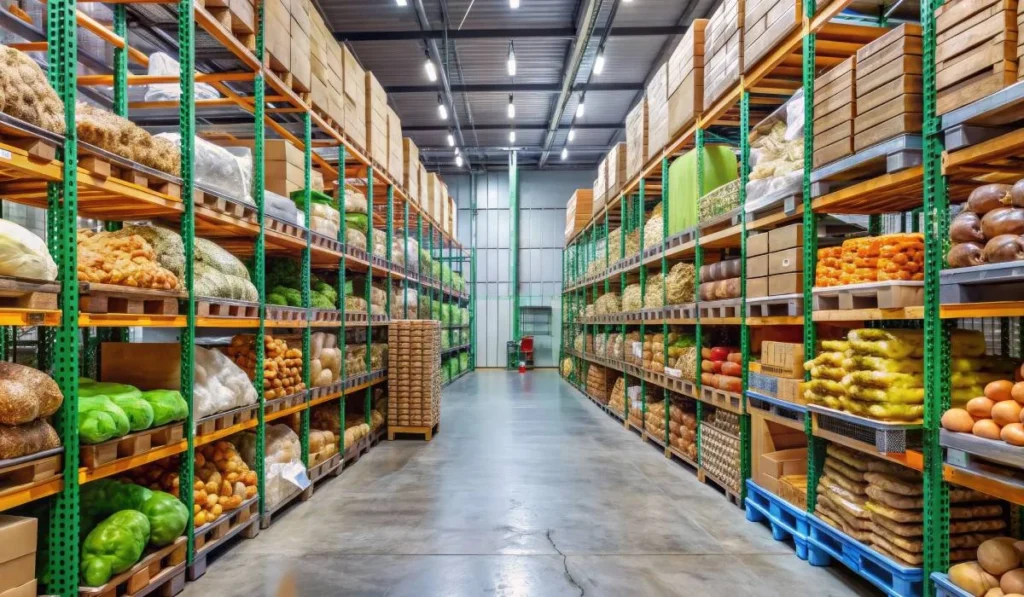

During the unprecedented global upheaval of the COVID-19 pandemic, public discourse became saturated with references to exponential growth, typically viewed through the grim lens of viral transmission curves and epidemiological models. Epidemiologists and public health officials frequently warned populations about the deceptive nature of exponential curves, wherein a phenomenon appears deceptively stable for an extended period before accelerating violently. However, this mathematical concept found a surprisingly harmonious application in domestic kitchens worldwide. Lockdowns, shelter-in-place mandates, and remote work policies catalyzed an extraordinary surge in home baking. As millions of citizens found themselves confined to their residences with empty weekends and disrupted routines, consumer demand for baking staples skyrocketed. In countries like Norway, supermarket shelves were routinely stripped bare of dry and compressed yeast for weeks and even months at a time. Yet, an understanding of the very biological mathematics that governed viral spread offered home bakers a practical advantage: the ability to stretch a single sachet of instant dry yeast almost indefinitely through the power of controlled, long-term fermentation.
Understanding Exponential Growth in Yeast Populations
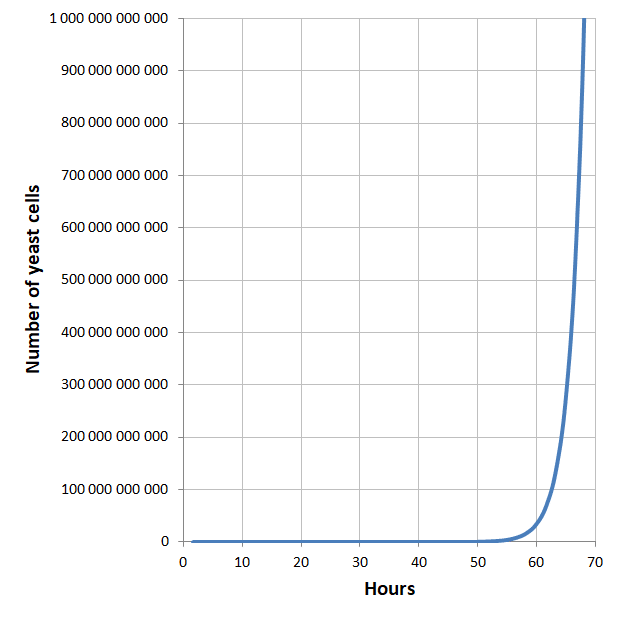
Exponential growth is formally defined as a process wherein the rate of growth is proportional to the current value of the quantity, resulting in a constant percentage increase over fixed intervals of time. In the biological context of Saccharomyces cerevisiae—commonly known as baker’s yeast—ideal environmental conditions featuring adequate nutrients, oxygen, moisture, and optimal temperatures allow a single yeast cell to undergo budding and split into two identical daughter cells in approximately 100 minutes. This constitutes a complete biological life cycle completed in under two hours.
The progression of this mathematical sequence quickly defies intuitive comprehension. Following the initial 100-minute cycle, two cells become four, four become eight, and the doubling continues unabated. After 24 hours of sustained ideal conditions, a single cell multiplies into roughly 16,000 cells. By the 48-hour mark, that population explodes to 268 million cells. Within less than 72 hours, the colony reaches approximately one trillion individual cells—roughly equivalent to the cellular mass found in a standard 50-gram block of commercial compressed yeast. While commercial yeast manufacturers artificially sustain these hyper-growth conditions for limited periods to maximize industrial yields, home dough preparation naturally decelerates this biological expansion due to nutrient limitations and metabolic waste accumulation.
The Global Baking Boom and Supply Chain Pressures
The early months of 2020 marked a watershed moment for the global retail grocery sector. As governments instituted sweeping lockdowns to curb the spread of SARS-CoV-2, consumer behavior shifted dramatically overnight. Restaurant dining ground to a halt, commercial supply chains fractured temporarily, and households turned inward, rediscovering traditional domestic arts. Home baking emerged as both a comforting psychological coping mechanism and a practical necessity. Flour, sugar, and yeast became prized commodities, frequently subjected to panic-buying and subsequent rationing by major supermarket chains.
Retail data from across Europe and North America highlighted a staggering increase in the sales of baking goods. In Norway, national grocery distributors reported that yeast sales surged by several hundred percent compared to historical seasonal averages. Manufacturing facilities belonging to major yeast producers ramped up production schedules to 24-hour shifts, yet struggled to outpace consumer stockpiling. This scarcity forced home bakers to reevaluate how they utilized their limited pantry reserves, transforming a baking hobby into an exercise in resource management and applied microbiology.
Leveraging Time Over Quantity in Modern Baking
Faced with persistent shortages of commercial yeast, resourceful home cooks began adopting techniques long utilized by artisan bakers and commercial pizzerias: substituting high quantities of yeast with extended fermentation times. By drastically reducing the initial inoculation rate of yeast in a standard direct dough (or straight dough) and extending the bulk fermentation or proofing period, bakers could achieve superior flavor profiles while consuming a fraction of a traditional packet’s contents.
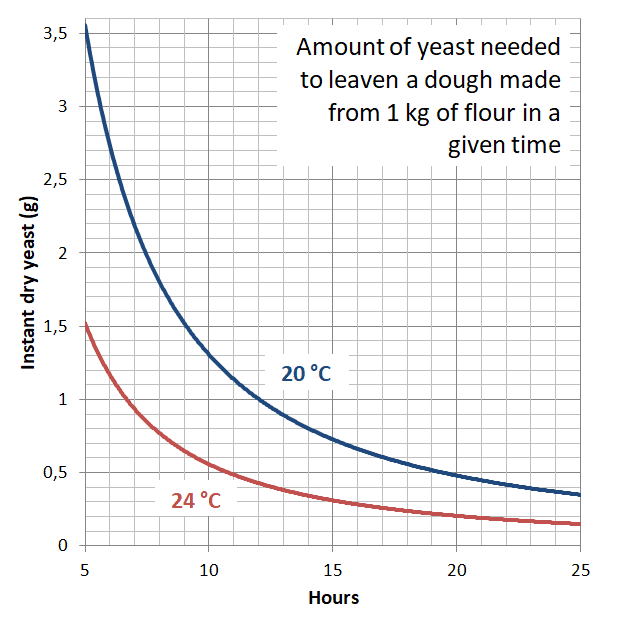
To navigate this approach accurately, culinary hobbyists increasingly turned to specialized digital tools. Applications such as PizzApp+, originally developed for Android platforms to assist pizza artisans in calculating precise ingredient ratios based on ambient room temperatures and fermentation timelines, found a broader audience among bread bakers. Empirical data derived from these algorithms demonstrated that a standard dough formulation utilizing one kilogram of wheat flour requires as little as 0.48 grams of instant dry yeast when subjected to a 20-hour bulk fermentation at a controlled ambient temperature of 20°C.
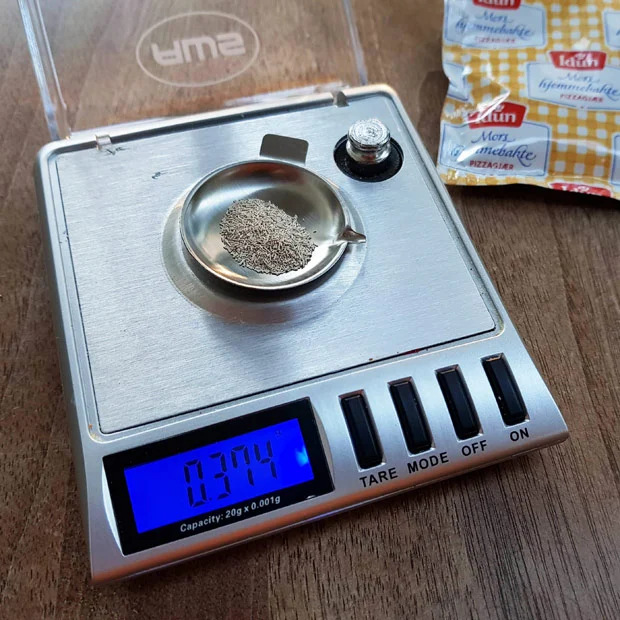
To measure such minute quantities with precision, home cooks began utilizing affordable digital kitchen scales capable of reading down to 0.001 grams. While once restricted to scientific laboratories, these precision balances became accessible consumer electronics, retailing at modest price points. Beyond mere yeast conservation, this slow-fermentation methodology afforded chemical and biological advantages. Extended proofing times allow endogenous enzymes and wild lactic acid bacteria naturally present in flour to metabolize starches and proteins, developing complex organic acids that significantly enhance the aroma, crumb structure, and digestibility of the final baked loaf.
The Broader Cultural and Culinary Implications
While the ultimate solution for yeast scarcity for many culinary purists involved transitioning entirely to wild-fermented sourdough starters—cultivating symbiotic cultures of wild yeasts and bacteria from flour and water—the convenience of instant dry yeast retained a powerful allure. Sourdough maintenance demands daily feeding schedules, precise temperature management, and psychological commitment, whereas instant dry yeast offers shelf-stable dormancy and rapid deployment when paired with mathematical calculation.
The convergence of mathematical modeling, digital application technology, and traditional gastronomy during the pandemic highlights a broader trend in modern home cooking: the democratization of food science. Amateur cooks are no longer strictly reliant on rigid culinary folklore or ancestral heuristics; instead, they utilize precise digital measurements and biological principles to optimize results. As global supply chains have largely normalized in the wake of pandemic restrictions, the habits formed during those months of confinement have persisted. Home bakers continue to embrace long-fermentation techniques, recognizing that patience, combined with the exponential growth capacity of a microscopic fungus, yields superior culinary outcomes while minimizing resource consumption.