
The modern restaurant industry operates on razor-thin margins, where the difference between a thriving establishment and a failing venture often hinges on the effective management of the supply chain. While many independent restaurant owners view their food distributors as comprehensive partners or even de facto financial advisors, industry experts warn that this perception creates a dangerous accountability gap. By delegating the responsibility of cost control to external vendors, operators inadvertently surrender their financial power, leading to a phenomenon known as "margin creep." To reclaim profitability, restaurateurs must shift from an emotional, reactive stance to a data-driven, systemic approach to procurement and vendor management.
The Evolution of the Distributor-Operator Relationship
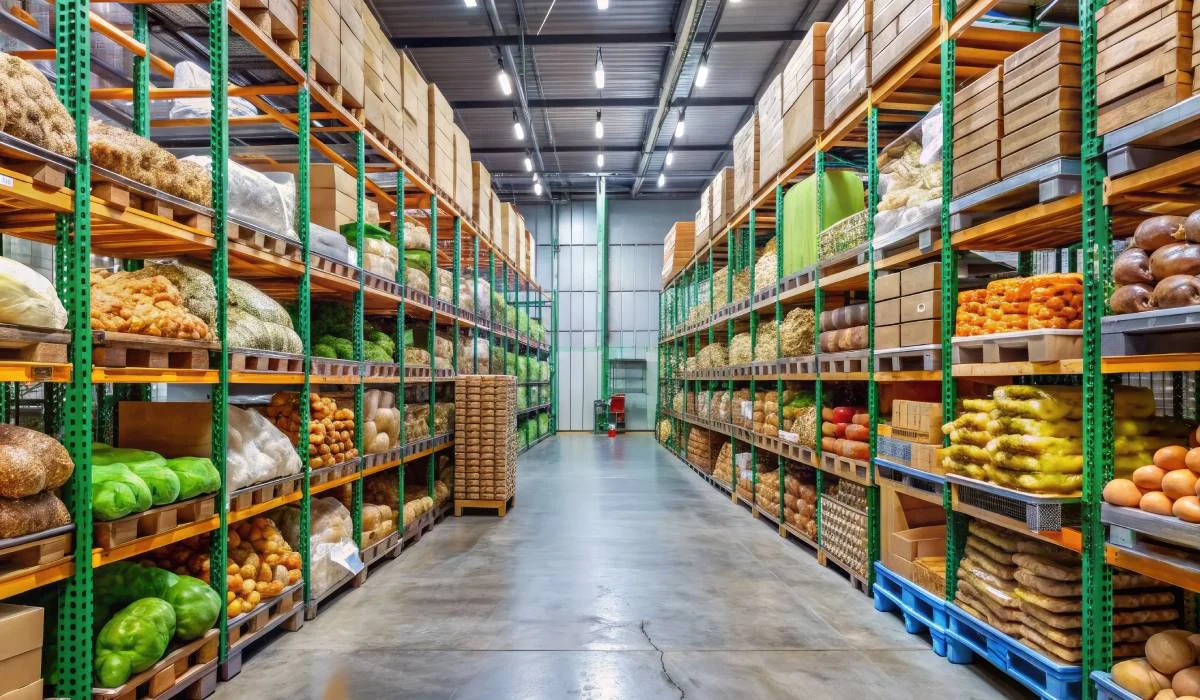
Historically, the relationship between a restaurant and its food distributor was built on personal rapport and local proximity. Sales representatives often acted as the primary point of contact for everything from emergency inventory needs to menu development. However, as the global supply chain has become more complex and consolidated, the role of the distributor has transformed. Large-scale distributors now operate with sophisticated algorithmic pricing and high-volume logistics models designed to maximize their own corporate margins.
In this environment, a friendly relationship with a sales representative, while beneficial for operational fluidity, is no longer a substitute for rigorous financial oversight. Industry analysts note that while a sales rep may be responsive and helpful, their primary objective is to increase sales volume and maintain the distributor’s profitability. When restaurant owners confuse a positive interpersonal relationship with professional accountability, they often overlook the subtle price increases and inefficiencies that erode their bottom line over time.
Analyzing the Macroeconomic Context of Rising Food Costs
The urgency for better distributor management is underscored by recent economic data. According to the National Restaurant Association’s 2024 State of the Industry report, nearly 90% of restaurant operators cite food costs as a significant challenge to their profitability. Data from the U.S. Bureau of Labor Statistics (BLS) indicates that while general inflation has shown signs of cooling, the Producer Price Index (PPI) for various food commodities remains volatile.
Between 2021 and 2023, the industry witnessed unprecedented spikes in the cost of staples such as eggs, poultry, and vegetable oils. While market volatility is an external factor beyond an owner’s control, the "leaks" that occur during these periods are often internal. When market prices fluctuate, distributors frequently adjust their margins across various product categories. Without a system to track these changes on a per-unit basis, restaurant owners may continue to pay "peak" prices even after market commodities have stabilized.
The Chronology of Margin Erosion
The process of losing control over food costs rarely happens overnight; it is typically a gradual progression marked by specific operational lapses.
- The Initial Reliance Phase: A restaurant opens or transitions to a new distributor. The owner relies heavily on the sales rep to set up the initial order guide and pricing.
- The "Relationship" Buffer: As the business grows, the owner becomes busy with daily operations. They trust the rep to "take care of them," leading to a reduction in invoice auditing.
- The Silent Price Creep: Small increases—five cents on a pound of chicken, two dollars on a case of oil—are introduced. Individually, these seem negligible, but they begin to compound across hundreds of Stock Keeping Units (SKUs).
- Systemic Breakdown: Managers are given ordering privileges without strict budget constraints. "Panic ordering" becomes common to cover for poor inventory management.
- The Profit Crisis: The owner realizes that despite steady sales, the bank account is stagnant. The immediate reaction is often to blame the distributor or the "market," rather than the lack of internal controls.
Identifying Internal Systemic Failures
Experts in restaurant consultancy, including David Scott Peters, emphasize that most "vendor problems" are actually symptoms of internal "system problems." To address these, operators must identify where the lack of oversight is costing them money.
Unrestricted Ordering Protocols
In many independent kitchens, chefs or floor managers have the authority to place orders without a pre-set declining budget. This leads to overstocking, which not only ties up cash flow but also increases the likelihood of spoilage and theft. Professional management requires a "declining budget" system, where the amount available for the next order is dictated by the actual sales volume of the previous period.
The Absence of Bid Sheets
A bid sheet is a tool used to compare pricing between multiple vendors for key "high-spend" items. Many restaurants fail to utilize these, staying loyal to a single distributor for the sake of convenience. While "prime vendor" agreements can offer rebates, they often lead to complacency. Without regular price benchmarking, an operator has no way of knowing if they are receiving competitive market rates.
Neglecting Invoice Audits
The administrative task of checking every line item on an invoice against the agreed-upon price is often the first thing skipped in a busy restaurant. However, billing errors, missed discounts, and unauthorized substitutions are common in the high-volume world of food distribution. A failure to audit invoices weekly is essentially an invitation for margin loss.
Professionalizing the Distributor Conversation
Shifting from a reactive to a proactive management style requires a change in communication. Professionalism in procurement is defined by data and clear expectations rather than emotional appeals.
Instead of accusing a distributor of "charging too much," a professional operator presents a list of key products—often referred to as the "Top 20" items that account for 80% of the food spend—and requests a quarterly price review. This approach signals to the distributor that the restaurant is monitoring its data closely. It shifts the dynamic from a buyer-seller relationship to a professional contract where performance is measured by accuracy and price stability.
Key metrics that should be discussed in these professional reviews include:
- Order Accuracy: The percentage of orders delivered without "shorts" or substitutions.
- Price Deviation: How closely the invoiced price matched the quoted price.
- Drop Size Efficiency: Exploring if larger, less frequent deliveries could result in lower per-case costs.
The Impact of Technological Integration
The modern solution to distributor management lies in the integration of technology. Inventory management software and automated invoice processing tools have become more accessible to independent operators. These systems can automatically flag price increases that exceed a certain percentage, track waste, and provide real-time updates on theoretical versus actual food costs.
By implementing these technologies, restaurant owners can move away from "gut-feeling" management. For example, if the system shows that the cost of fry oil has risen by 15% over three weeks, the owner can immediately decide whether to re-negotiate with the vendor, change the product, or adjust the menu price, rather than waiting for a monthly P&L statement to show a loss.
Broad Implications for Industry Sustainability
The shift toward rigorous distributor management has broader implications for the hospitality industry. As labor costs continue to rise due to minimum wage increases and a competitive talent market, food cost remains one of the few "controllable" variables in a restaurant’s Prime Cost (the sum of food cost and labor cost).
Operators who master the "Restaurant Prosperity Formula"—a combination of budgeting, systems, and accountability—report significant improvements in their financial health. According to industry benchmarks, independent operators who implement structured purchasing systems can see a reduction in food and labor costs by an average of 23%. This level of savings does not come from cutting quality, but from eliminating waste, preventing over-ordering, and ensuring price accountability.
Furthermore, a more disciplined approach by restaurant owners forces distributors to be more efficient. When clients demand transparency and accuracy, it drives higher standards across the entire supply chain, ultimately benefiting the consumer through more stable pricing and consistent quality.
Conclusion: Reclaiming the Power of Choice
The fundamental lesson for the independent restaurateur is that power in the marketplace is derived from knowledge and systems. Blaming a distributor for rising costs is a passive stance that yields no financial return. In contrast, building a framework of oversight—comprised of bid sheets, weekly audits, and declining budgets—allows an owner to make decisions based on empirical evidence.
While a distributor is an essential partner in the logistical success of a restaurant, they are not responsible for its profitability. That responsibility rests solely with the operator. By taking back the "power" through professional management, restaurant owners can ensure that their margins are protected, their businesses are sustainable, and their professional relationships are based on mutual respect and performance rather than dependency. In the end, the most successful restaurants are those where the owner treats the back-of-house finances with the same level of care and precision as the food on the plate.