
The appreciation of coffee has evolved significantly, moving beyond a simple morning stimulant to a sophisticated culinary pursuit. This shift, largely driven by the "third wave of coffee" movement, emphasizes origin, quality, and the intricate science behind brewing. What was once an occasional indulgence for many has become a daily ritual underpinned by a meticulous understanding of chemical extraction and sensory profiles. This transformation has fueled a deeper scientific inquiry into every stage of coffee preparation, from bean to cup, allowing enthusiasts and professionals alike to elevate the brewing process to an art form grounded in empirical data.
The journey into understanding optimal coffee extraction often begins with a personal awakening to the nuances of flavor. For many, this occurs after years of simply consuming coffee for its caffeine content. The gradual discovery of specialty coffees, particularly lightly roasted and single-sourced varieties, marks a pivotal point. Scandinavia, for instance, has been a hotbed for the third wave coffee scene, fostering a vibrant culture of discerning roasters and subscribers eager to explore diverse origins and processing methods. This heightened appreciation often leads to a desire for greater control over the brewing process, pushing individuals to delve into the scientific principles that govern a perfect cup.
The year 2020, with its unprecedented global changes, paradoxically provided many with the time and impetus for such deep dives. Reduced social interaction led to more opportunities for reading, contemplation, and, fittingly, coffee experimentation. Experiences like a coffee advent calendar, offering 24 days of blind tasting, highlighted the vast spectrum of flavors influenced by bean origin and processing. Such exercises reveal the subtle complexities of coffee, demonstrating that discerning origins and processing methods can be both challenging and immensely rewarding. Simultaneously, experimenting with various coffee grinders introduces variables that can initially frustrate, yet ultimately serve as catalysts for deeper learning, exposing the inherent variability in seemingly simple brewing methods like pour-over. This realization that achieving consistently excellent coffee requires precise control often marks the beginning of a profound scientific exploration.
The Evolution of Coffee Appreciation: From Commodity to Craft

Coffee’s history is typically segmented into three "waves" of consumption and appreciation. The first wave, spanning much of the 19th and 20th centuries, focused on mass production and accessibility, epitomized by brands offering convenient, often instant, coffee. Quality was secondary to availability and affordability. The second wave, emerging in the 1960s and 70s, introduced the concept of specialty coffee houses, fostering a social experience around coffee and introducing variations like lattes and cappuccinos. While an improvement in quality, the focus remained largely on milk-based drinks and consistent branding rather than the unique characteristics of the beans themselves.
The third wave, gaining prominence in the early 2000s, represents a paradigm shift. It champions coffee as an artisanal product, akin to fine wine or craft beer, emphasizing transparency in sourcing, distinct regional flavors, and meticulous preparation. This movement places a premium on single-origin beans, lighter roasts that highlight inherent varietal characteristics, and a deep understanding of the entire supply chain, from farmer to roaster to brewer. This philosophy naturally leads to a scientific approach to brewing, where variables are controlled, measured, and optimized to express the coffee’s full potential. The significant growth in scientific publications related to coffee brewing in recent years underscores this shift, transforming anecdotal practices into empirically validated methodologies.
Core Pillars of Coffee Extraction Science
Understanding the fundamental parameters of coffee extraction is crucial for reproducible quality. These parameters, when systematically controlled, unlock the full flavor spectrum of specialty coffee.
Brew Ratio: The Foundation of Strength
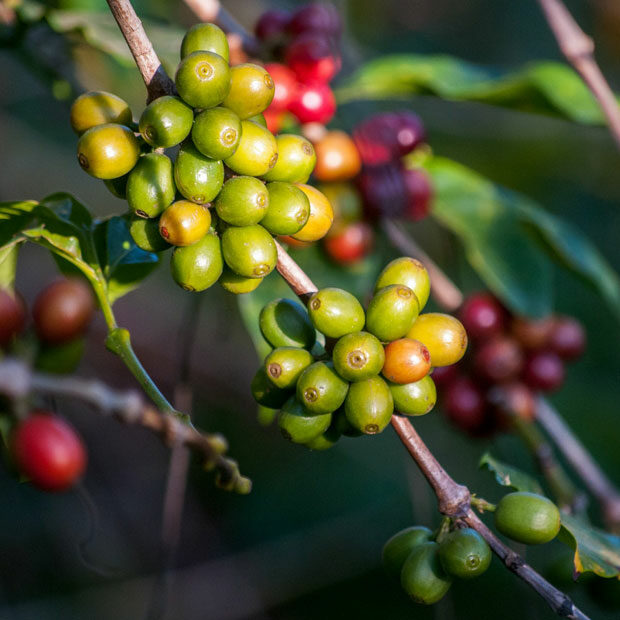
The brew ratio (BR) is arguably the most fundamental parameter in coffee brewing, defining the relationship between the mass of water and the mass of dry coffee grounds. It is typically expressed as grams of water per gram of coffee (e.g., 15:1 or 16.7:1). A common starting point for black coffee is 60 grams of coffee per 1000 grams of water, resulting in a BR of approximately 16.7. This ratio serves as a convenient "recipe" for brewers, allowing for easy scaling of quantities while maintaining consistency.
Brew ratios for black coffee generally fall within the range of 15:1 to 25:1. Ratios below 15:1 typically produce stronger, more concentrated coffee, while ratios above 25:1 result in a lighter, more dilute brew. The Specialty Coffee Association (SCA) often recommends a "Golden Ratio" of 1:18 (55 grams of coffee per 1000 ml of water) as a guideline for optimal extraction, though individual preferences and specific coffee characteristics can warrant deviation. Just as a baker’s percentage provides a single number to remember dough formulations, the brew ratio simplifies the complex relationship between coffee and water, making it accessible for both novice and experienced brewers to scale recipes up or down without compromising consistency.
Total Dissolved Solids (TDS): Quantifying Coffee Strength
Beyond simply "strong" or "weak," the concept of Total Dissolved Solids (TDS) provides an objective measure of coffee’s concentration. TDS quantifies the percentage of non-water compounds dissolved in the brewed coffee, typically ranging from 1.2% to 1.5% for a standard cup. While TDS does not directly measure taste quality, it is a critical diagnostic tool. Coffee that is "too strong" often masks delicate flavors, leading to perceptions of bitterness or astringency. Adjusting the TDS, even by simply adding a small amount of hot water, can transform a seemingly harsh brew into one bursting with fruity notes.
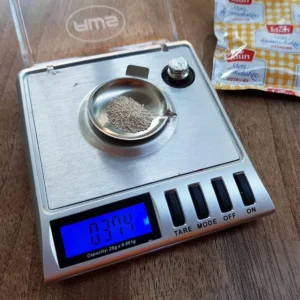
Historically, measuring TDS involved gravimetric analysis – evaporating a known volume of coffee to dryness and weighing the residue. This method, while accurate, is impractical for daily brewing, requiring specialized laboratory equipment (e.g., a balance accurate to 0.0001 g) to measure the small amounts of solids (6-7 mg for a 500 mg sample).
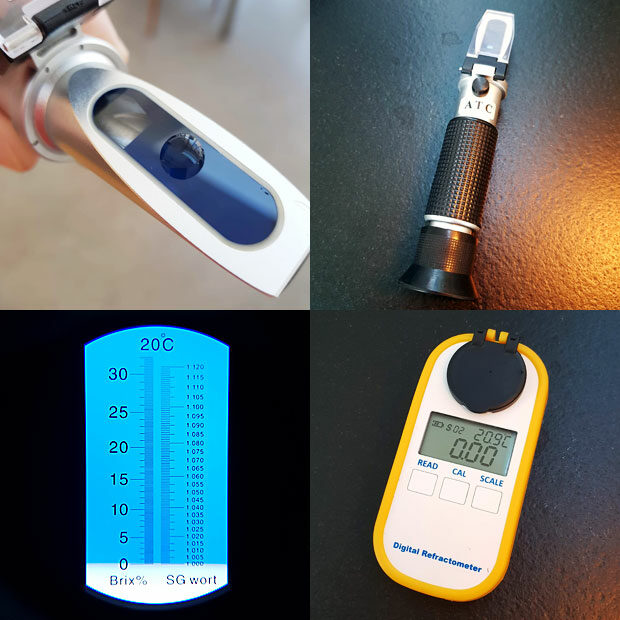
Fortunately, a more accessible and practical method utilizes refractometry. Refractometers measure the bending of light (refractive index) as it passes through a liquid. Since light travels at different speeds through pure water versus water containing dissolved solids, this change can be correlated to the concentration of dissolved substances. Analog handheld refractometers, often with a %Brix scale, offer a cost-effective entry point. Brix values can be converted to %TDS by multiplying by a factor of 0.85. While these handheld devices provide a resolution of 0.1-0.2 %Brix, sufficient to confirm if a brew falls within the typical range (1.4-1.8 %Brix corresponds to 1.2-1.5 %TDS), they lack the precision for fine-tuning. Digital refractometers, especially those calibrated specifically for coffee, offer greater accuracy (0.01 °Brix readout) and automatic TDS conversion, albeit at a higher cost.
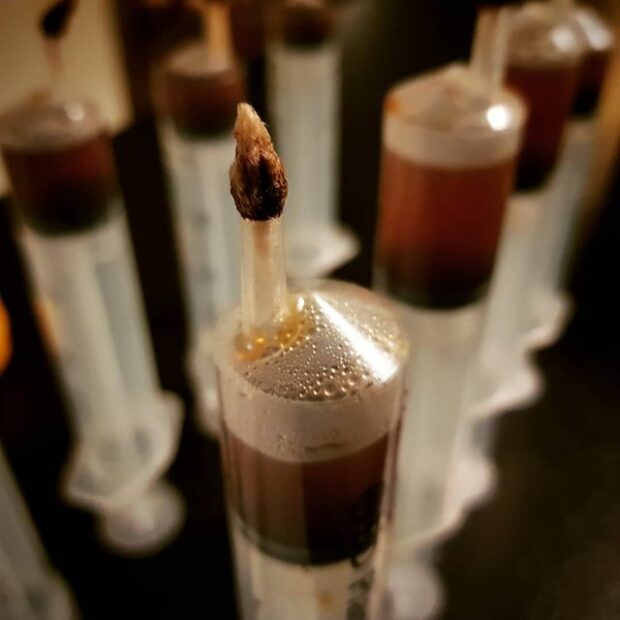
Beyond coffee, a handheld refractometer proves its versatility in the kitchen, useful for measuring sugar content in sorbets (aiming for ~26 %Brix) or specific gravity in homebrewing beer. For accurate coffee TDS measurements, samples must be hot-filtered to halt extraction and then cooled completely to ambient temperature, as refractive index is temperature-dependent. A simple DIY method involves using plastic syringes with a cotton plug for hot filtering and cooling, minimizing evaporation and waste while providing a rapid workflow without expensive lab-grade filters. The final measurement reveals a surprising truth: a standard cup of black coffee is over 98% water, highlighting the profound impact of that remaining 1-2% of dissolved solids.
Extraction Yield (EY): Decoding Efficiency and Flavor
Once TDS is measured, calculating the extraction yield (EY) becomes the next logical step. EY represents the percentage of the original dry coffee mass that has been dissolved into the brewed liquid. This metric is crucial for understanding brewing efficiency and predicting flavor profiles. Under-extracted coffee (low EY) often tastes sour, grassy, or underdeveloped, as desirable compounds haven’t fully dissolved. Over-extracted coffee (high EY) tends to be bitter, astringent, and hollow, as undesirable compounds are extracted. The SCA recommends an optimal EY range of 18-22% for balanced flavor.
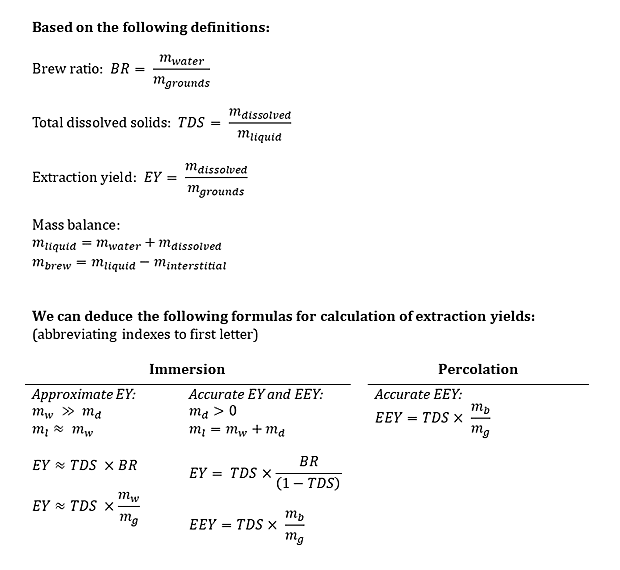
The calculation of EY can be nuanced, particularly when distinguishing between immersion and percolation brewing methods. For immersion brews (e.g., French press, AeroPress where all grounds are saturated), the entire liquid mass is considered. However, for percolation brews (e.g., pour-over, drip coffee), a portion of the water remains trapped within the spent coffee grounds (interstitial liquid) and does not contribute to the final beverage.
To address this, two distinct extraction yields can be defined:
- Extraction Yield (EY): Focuses on the total solids removed from the coffee grounds into the entire liquid mass used for brewing.
- Effective Extraction Yield (EEY): Focuses on the total solids present in the final brewed beverage that ends up in the cup.
In a percolation brew, where the interstitial liquid does not reach the cup, EY and EEY can be considered equivalent if the calculation only accounts for the liquid in the final cup. However, a more rigorous approach, as discussed by experts like Scott Rao and Jonathan Gagné, acknowledges the complexities of dissolved solids within the interstitial liquid in percolation brews. The proposed definitions simplify this by considering EY as what’s extracted into all the water that contacted the grounds, and EEY as what’s delivered to the cup.
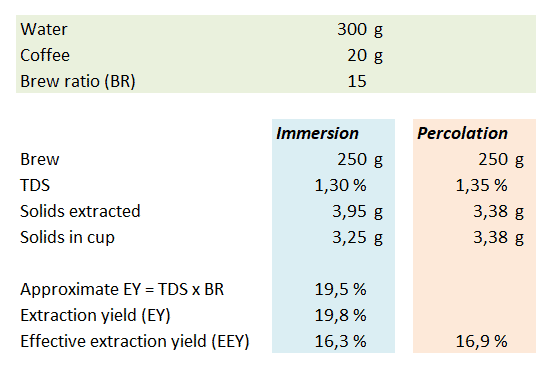
For example, using 20g of coffee and 300g of water to yield 250g of brewed coffee:
- An immersion brew measuring 1.30% TDS in the final cup suggests approximately 3.95g of dissolved solids extracted from the grounds into the total liquid mass (EY ~19.8%). However, only 3.25g of these solids (EEY ~16.3%) make it into the 250g cup.
- A percolation brew measuring 1.35% TDS in the 250g cup implies 3.38g of dissolved solids, resulting in an EEY of ~16.9%.
This example illustrates that while immersion methods might extract more total solids from the grounds into the entire water volume, percolation methods are often more efficient at delivering those solids into the cup. The difference in the absolute mass of extracted solids (e.g., 3.95g vs. 3.38g in the example) directly contributes to the distinct flavor profiles observed between immersion and percolation brewing, as the diverse chemical compounds making up these solids will vary in their ratios.
Factors like evaporation, which can reduce the effective brew ratio and alter temperature, and the inherent water content (1-4%) in roasted coffee beans, are additional considerations for highly accurate yield calculations. Precision in weighing coffee grounds and measuring TDS directly impacts the accuracy of EY calculations, with even small uncertainties in TDS having significant implications for the calculated yield.
Grind Size and Particle Size Distribution (PSD): The Unseen Influence
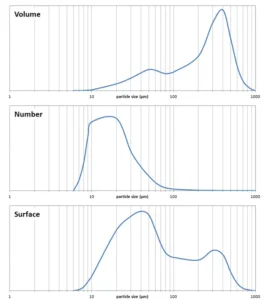
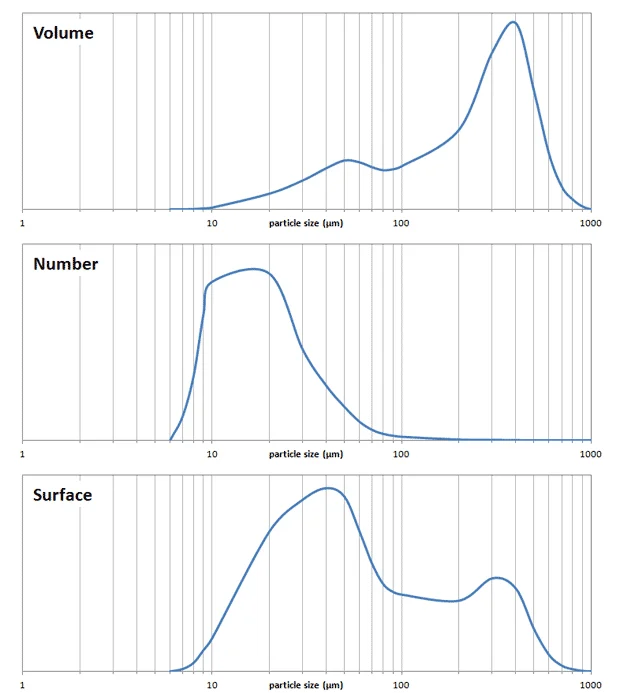
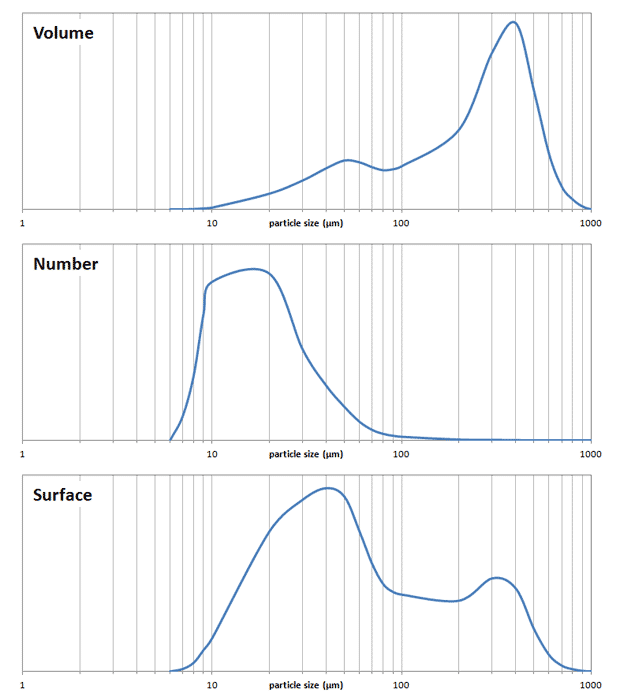
Before extraction can occur, roasted coffee beans must be ground. This process, however, is not uniform. Grinding shatters beans into a range of sizes, from large "boulders" to microscopic "fines" (generally defined as particles smaller than 100 µm). Understanding the particle size distribution (PSD) is paramount because it dictates the total surface area available for extraction and significantly influences water flow dynamics during brewing.
Visualizing PSD can be misleading if only considering volume distribution, which might suggest fines are negligible. However, when viewed by the number of particles or, more critically, by surface area, the true impact of fines becomes apparent. For instance, over half of the total extraction surface area can reside in particles smaller than 100 µm. This is significant because research, such as preliminary findings from Barista Hustle, suggests that coffee particles are only extracted to a depth of about 100 µm. This implies that the core of larger particles may remain unextracted, representing "wasted" coffee. Larger particles, while less efficient for extraction, are crucial for forming a stable filter bed that allows water to flow through, preventing clogging and dictating drawdown time in percolation methods.
The ideal grind size and PSD for pour-over coffee generally favor narrower distributions with fewer fines. Fines tend to clog filters, impede water flow, and can lead to over-extraction and bitterness. Conversely, an overly coarse grind leads to under-extraction and a weak, sour cup. The choice of grinder profoundly impacts PSD. Inexpensive blade grinders produce an inconsistent and wide distribution with excessive fines, making them unsuitable for quality brewing. Burr grinders, available in conical and flat varieties, are the standard for home and cafe use. Flat burrs, often found in higher-end machines, can produce more uniform grinds, with specific geometries designed for espresso (which benefits from some fines for crema and body) or pour-over (where fines are undesirable). Conical burrs are common in hand grinders due to their compact design.
From an industrial perspective, filter-ground coffee, often processed with highly uniform cylindrical grinders and packaged in inert atmospheres, can theoretically offer a more consistent grind than smaller-scale equipment. However, the rapid oxidation of ground coffee upon exposure to air, leading to stale flavors within days, underscores the importance of grinding whole beans immediately before brewing. Double grinding—initially coarse, then finer—is an experimental technique thought to narrow PSD by reducing particle size in stages, potentially yielding a more consistent extraction. Measuring PSD accurately at home, however, remains a challenge, often requiring specialized sieves (e.g., Kruve) or image analysis software.
Freshness of Beans: The Race Against Oxidation
The freshness of roasted coffee beans is a critical determinant of flavor. Coffee contains volatile aromatic compounds and oils that contribute to its complex profile. Upon roasting, these compounds begin to degrade and oxidize when exposed to oxygen, leading to the development of stale, cardboard-like flavors and rancidity of oils. Therefore, using freshly roasted beans is paramount.
Proper storage is key to preserving freshness. Beans should be stored in an airtight, opaque container, ideally with a one-way valve to allow off-gassing of carbon dioxide while preventing oxygen ingress. Minimizing air exposure is crucial. For larger quantities or extended storage, freezing or refrigeration can significantly slow down oxidative reactions, preserving flavor for longer periods. Crucially, coffee should only be ground immediately before brewing. Grinding dramatically increases the surface area of the coffee, accelerating oxidation and the loss of desirable aromatics. A bag of ground coffee will stale far more rapidly than whole beans.
Water Composition: The Silent Ingredient
Often overlooked, water is not merely a neutral solvent; it is an active ingredient that profoundly influences coffee extraction and taste. The mineral content of water plays a crucial role in how flavors are extracted and perceived. For example, certain minerals, like magnesium and calcium, enhance the extraction of desirable organic acids and flavorful compounds. Conversely, high alkalinity (bicarbonate levels) can neutralize beneficial acids, leading to flat or dull flavors.
The Specialty Coffee Association (SCA) provides water quality standards, recommending parameters for hardness (17-85 mg/L CaCO3), alkalinity (40 mg/L CaCO3), and pH (6.5-7.5). Soft water, common in regions like Norway, may require mineral additives to optimize extraction, while hard water often benefits from filtration or reverse osmosis followed by remineralization. The concept of "DIY mineral waters," involving the precise addition of mineral salts (e.g., magnesium sulfate, calcium chloride, sodium bicarbonate) to distilled or tap water, has gained traction among enthusiasts. This allows brewers to tailor their water profile to specific coffee origins or desired flavor outcomes, moving beyond generalized recommendations to a truly customized brewing approach.
Temperature: The Catalyst of Extraction
Temperature is a primary driver of chemical reactions and physical processes during coffee brewing, influencing both the rate and selectivity of extraction. Higher temperatures generally increase the solubility of compounds and accelerate diffusion, leading to a faster and more comprehensive extraction. The SCA recommends brewing temperatures between 90°C and 96°C (195°F and 205°F) for optimal extraction. Brewing below this range can result in under-extraction, producing sour and thin coffee, while excessively high temperatures can lead to over-extraction, emphasizing bitterness and astringency.
The phenomenon of cold brewing highlights temperature’s impact. Cold brew, typically prepared by steeping coffee grounds in cold water for 12-24 hours, results in a distinctly different flavor profile compared to hot-brewed coffee. The lower temperature significantly slows extraction, particularly of acidic compounds, yielding a brew that is often less acidic, smoother, and sweeter, with a lower perceived bitterness. This difference is not solely due to extraction kinetics; the temperature at which a beverage is tasted also affects sensory perception. Sweetness and bitterness tend to be attenuated as a beverage cools, while sourness and saltiness remain relatively stable. Therefore, comparing hot and cold brews fairly often requires tasting them at similar temperatures. Evaporation, often disregarded, can also significantly impact brew temperature and, consequently, the extraction process over a typical 5-minute brewing routine.
Filter Material: Shaping Clarity and Mouthfeel
The choice of filter material significantly influences the clarity, body, and mouthfeel of the final coffee. Filters primarily function to separate spent coffee grounds from the brewed liquid, but their pore size and material properties also affect the retention of microscopic particles and oils.
Paper filters are widely used and are highly effective at retaining fine particles, producing a "cleaner" cup with less sediment. The difference is palpable: a French press, which uses a coarse metal mesh filter, often yields a "muddy" or full-bodied coffee with noticeable sediment at the bottom of the cup, contrasting sharply with the "clean" taste of a Chemex, known for its thick paper filter. Scientific studies, such as those on chocolate, indicate that humans can detect particle size differences as small as 5 µm, explaining why microscopic coffee fines contribute to a perceived "texture" or "body."
Beyond particles, paper filters also retain coffee oils. While these oils can contribute to the rich taste and mouthfeel in espresso (forming crema), their absence in pour-over coffee results in a lighter, brighter cup. Experimenting with metal filters in pour-over devices like the V60 or AeroPress can offer a benchmark for understanding the contribution of these oils.
Within paper filters, choices abound. Bleached filters are often preferred for their neutrality; the bleaching process (typically using oxygen-based agents rather than chlorine today) removes lignin and hemicellulose, leaving behind pure cellulose, which is less likely to impart off-flavors. Unbleached filters, while sometimes chosen for environmental reasons, may contain more residual compounds that could affect taste. The vast array of scientific filter papers, like Whatman grades, illustrates the precision possible in filtration, offering different pore sizes that balance flow rate with particle retention. Research into coffee filters, including microscopy and performance analysis, reveals that even dry filter characteristics change significantly when wet due to cellulose swelling, affecting actual filtration performance.
Integrating the Variables: A Holistic Approach to Brewing
The journey to consistently brew exceptional coffee is a continuous learning process, where each parameter interacts with others. Rather than isolated variables, they form a complex system. For those embarking on this scientific exploration, a structured approach is recommended:
- Brew Ratio & Total Dissolved Solids (TDS) & Extraction Yield (EY): These three parameters are intrinsically linked and form the bedrock of reproducible brewing. Mastering their interplay allows for precise control over coffee strength and extraction efficiency. Without correctly dialling in these fundamentals, even the finest beans will not yield their full potential.
- Grind Size and Particle Size Distribution (PSD): Once brew strength and yield are understood, optimizing grind becomes crucial. The grinder is often considered the most important piece of brewing equipment after the beans themselves. Fine-tuning grind size directly impacts extraction rate and flow dynamics.
- Freshness of Beans: While essential, even the freshest beans cannot compensate for incorrect brewing parameters. However, once the foundational parameters are managed, bean freshness becomes a critical factor for peak flavor.
- Temperature: Control over brewing temperature allows for targeted extraction of specific compounds and consistency across brews.
- Water Composition: This is a more advanced parameter. While vital, its impact might be less discernible if the primary brewing variables are not yet optimized. Tailoring water to specific coffees can unlock subtle nuances.
- Filter Material: The choice of filter refines the final sensory experience, impacting clarity and mouthfeel.
For brewers navigating the complexities of these variables, diagnostic tools like the "Coffee Compass" (developed by Barista Hustle) offer practical guidance. By identifying common taste defects (e.g., sour, bitter, weak, strong), the compass directs brewers to adjust specific parameters like grind size or brew ratio to correct the issue. This systematic approach transforms guesswork into an informed, iterative process of refinement.
The increasing scientific understanding of coffee extraction signifies a profound maturation of the industry and hobby. By applying principles of chemistry, physics, and sensory science, coffee enthusiasts are moving beyond traditional methods, unlocking unprecedented levels of control, consistency, and flavor expression. This ongoing exploration promises an even richer and more diverse future for the world of coffee.