
The past year has brought the concept of exponential growth into stark relief, primarily through the unsettling lens of the SARS-CoV-2 pandemic. This mathematical phenomenon, often counterintuitive in its progression, played a dual role in global society: driving the rapid escalation of viral cases and, paradoxically, underpinning a quiet revolution in home kitchens as millions turned to baking with yeast. During periods of widespread lockdown, particularly in regions like Norway, a surprising scarcity of instant dry yeast emerged, reflecting a surge in demand that overwhelmed established supply chains. This unprecedented interest in domestic bread-making inadvertently provided a practical, albeit less menacing, demonstration of exponential growth, as savvy bakers learned to harness the microscopic power of yeast to overcome shortages and produce delectable results.
The Counterintuitive Nature of Exponential Growth
Exponential growth describes a process where a quantity increases by a fixed percentage over a given period, leading to an accelerating rate of increase. This concept is notoriously difficult for human intuition to grasp, often appearing insignificant in its early stages before exploding into dramatic proportions. A classic illustration is the ancient "wheat and chessboard problem," where placing one grain of wheat on the first square, two on the second, four on the third, and so on, quickly leads to an astronomically large number of grains by the final squares, far exceeding the world’s total wheat production. Similarly, the initial slow burn of the COVID-19 outbreak often masked the underlying exponential spread, leading to a perception that "nothing was happening" before case numbers seemed to "skyrocket out of nowhere." This same principle, however, is a fundamental engine of life, driving everything from population dynamics to microbial proliferation.
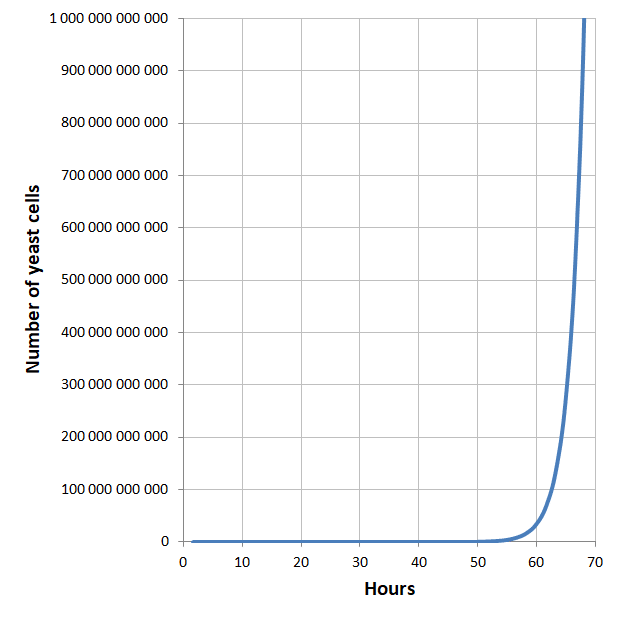
In the realm of microbiology, yeast cells exemplify this principle perfectly. Under ideal conditions – sufficient nutrients, appropriate temperature, and adequate oxygen – a single yeast cell, typically Saccharomyces cerevisiae, can undergo budding and split into two new cells in approximately 100 minutes. This remarkably short life cycle means that the population doubles roughly every hour and 40 minutes. Extending this process, within just 24 hours, that single cell will have multiplied into approximately 16,000 cells. After 48 hours, the count escalates dramatically to an estimated 268 million cells. By the third day, the population can reach the staggering figure of one trillion (1,000,000,000,000) yeast cells. To put this into perspective, a common 50-gram block of compressed fresh yeast contains a similar order of magnitude of cells. While commercial yeast production can achieve these rapid growth rates in bioreactors, the complex environment of a bread dough typically slows this process considerably, yet the underlying exponential potential remains.
A Culinary Chronology of the Pandemic
The early months of 2020 marked a pivotal shift in global routines. As governments implemented strict lockdown measures to curb the spread of SARS-CoV-2, millions found themselves confined to their homes with newfound time and a desire for comfort and productivity. This period saw an unprecedented surge in domestic activities, with home baking emerging as a particular favorite. Social media platforms brimmed with images of sourdough starters, artisanal loaves, and elaborate pastries, signaling a collective return to kitchen fundamentals.
This sudden, widespread embrace of baking created unforeseen pressures on supply chains. By March and April 2020, reports of flour and yeast shortages became commonplace across North America, Europe, and other regions. Retailers struggled to keep shelves stocked as demand for these staple ingredients skyrocketed. In countries like Norway, where the original article’s author resides, yeast remained sold out for weeks, even months, highlighting the disconnect between typical consumer purchasing patterns and the sudden, massive shift. While commercial yeast production facilities continued to operate, their output was largely geared towards industrial bakeries and food manufacturers, leaving the retail segment vulnerable to the unprecedented spike in household demand. This global phenomenon underscored the intricate interdependencies of modern supply chains and the ripple effects of sudden, widespread changes in consumer behavior.
Navigating Scarcity: Strategic Yeast Utilization
Faced with the scarcity of baking yeast, many home bakers were compelled to adapt their methods. This situation inadvertently led to a rediscovery of traditional bread-making techniques that prioritize time and minimal ingredients, rather than relying on large quantities of leavening agents for rapid proofing. The core insight, championed by experienced bakers and now more widely adopted, involves leveraging the exponential growth potential of yeast by using significantly smaller amounts and extending the fermentation period.
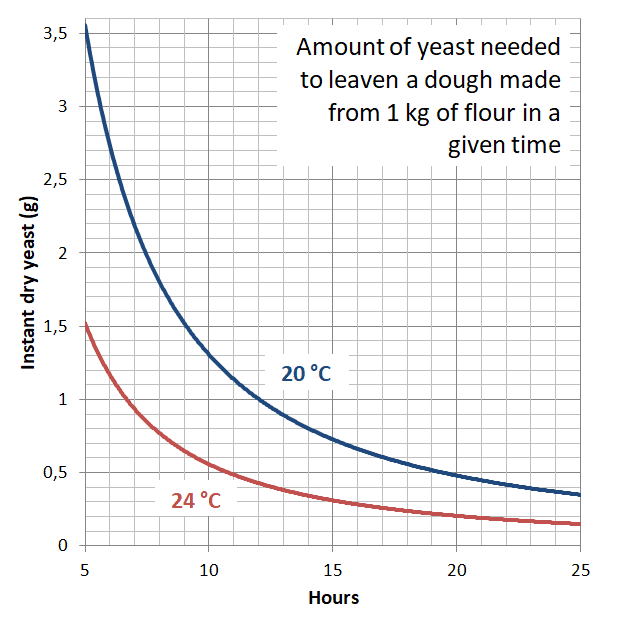
For instance, rather than using an entire sachet of instant dry yeast (typically 7-12g) for a standard loaf, bakers discovered that quantities as minute as 0.5 grams could effectively leaven a kilogram of flour, provided sufficient time. This approach not only conserved precious yeast supplies but also yielded superior results in terms of flavor and texture. Longer, slower fermentation allows yeast to fully develop its metabolic byproducts, contributing complex aromatic compounds. Crucially, it also provides an opportunity for lactic acid bacteria, often naturally present in flour or introduced by the environment, to multiply. These bacteria produce lactic and acetic acids, which are responsible for the nuanced tangy flavors characteristic of artisan breads and also contribute to better crust development and crumb structure.
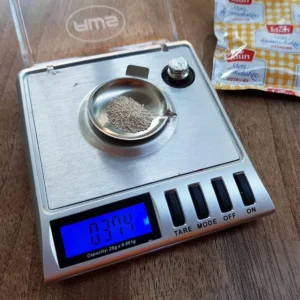
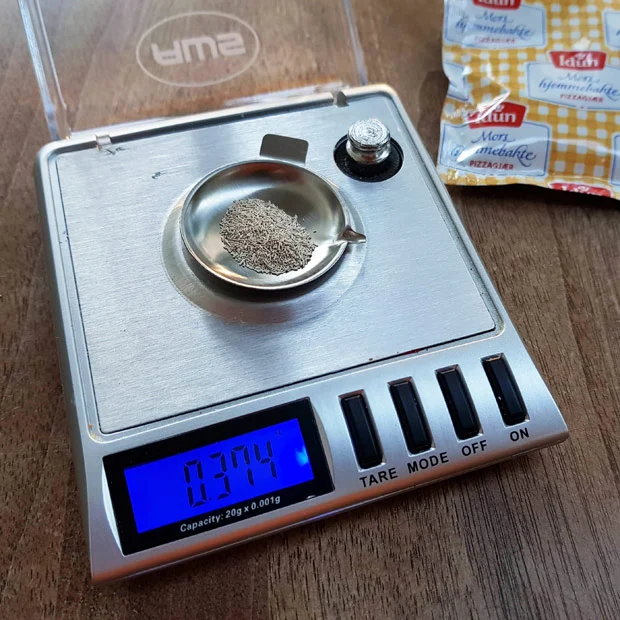
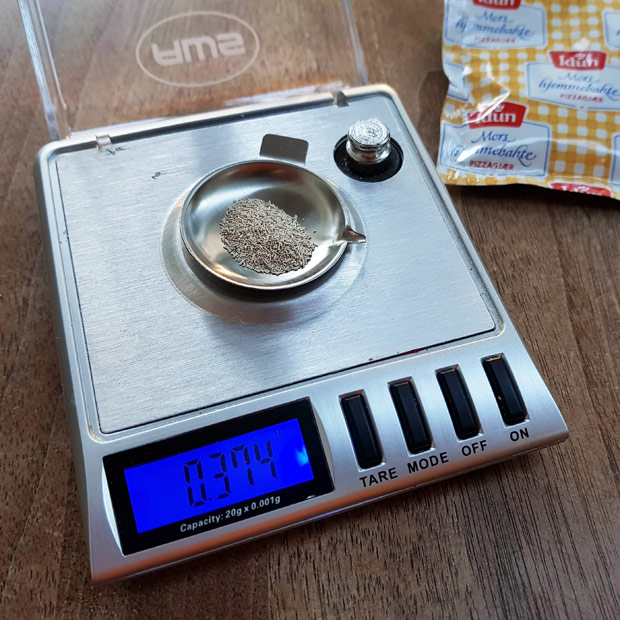
To facilitate this precision baking, the acquisition of a digital balance capable of measuring quantities down to 0.001 grams became a valuable tool for home bakers. While laboratory-grade equipment can be prohibitively expensive, consumer-grade precision scales are now widely available and affordable, making accurate measurement of minute yeast quantities accessible. Tools like the PizzApp+ for Android devices further empowered bakers, providing a practical interface to calculate optimal yeast amounts based on desired fermentation time, ambient temperature, and flour weight. This application, and others like it, effectively translates complex microbiological kinetics into actionable advice for the home kitchen, enabling precise control over the leavening process for various dough types, including direct doughs, sourdoughs, and preferments like poolish or biga.
The Biology of Leavening: Yeast in Depth
At the heart of bread-making lies Saccharomyces cerevisiae, commonly known as baker’s yeast. This single-celled fungus is a remarkable microorganism, capable of both aerobic respiration and anaerobic fermentation. In the presence of oxygen and fermentable sugars (derived from the breakdown of starch in flour), yeast respires, producing carbon dioxide and water. In the anaerobic environment of a dough, however, yeast shifts to fermentation, converting sugars into ethanol and, crucially for bakers, carbon dioxide gas. It is this trapped carbon dioxide that creates bubbles within the dough, causing it to rise and develop its characteristic airy texture.
Different forms of commercial yeast are available, each with specific applications:
- Fresh Compressed Yeast: A block of living yeast cells, typically containing about 70% water. It is highly active but has a short shelf life and requires refrigeration.
- Active Dry Yeast: Dormant yeast granules that require rehydration in warm water before being added to dough. The drying process kills some cells, making it slightly less potent than fresh yeast.
- Instant Dry Yeast: A more finely ground, porous form of dry yeast that can be added directly to dry ingredients without rehydration. It is highly active and has a longer shelf life than fresh yeast.
While commercial yeast offers unparalleled convenience and consistency, the pandemic also reignited interest in sourdough baking. Sourdough relies on a "starter," a symbiotic culture of wild yeasts and lactic acid bacteria cultivated from flour and water. This starter provides both the leavening power and the distinctive tangy flavor profile. While establishing and maintaining a sourdough starter requires more time and attention, it offers complete independence from commercial yeast supplies, a significant advantage during periods of scarcity. However, for many, the reliability and rapid action of instant dry yeast remain an alluring and practical choice.
Broader Implications and Lasting Legacy
The surge in home baking during the pandemic, driven partly by necessity and partly by a desire for comfort and creative outlet, has had several lasting implications. Firstly, it has fostered a new generation of home bakers, many of whom previously had little experience in the kitchen. This re-engagement with fundamental culinary skills could contribute to a longer-term trend towards home cooking and a deeper appreciation for the provenance of food.
Secondly, the yeast shortages and the subsequent adoption of slower fermentation methods have broadened public understanding of baking science. Consumers are now more aware of the subtle interplay between ingredients, temperature, and time. The use of precision scales and baking apps has demystified complex processes, turning once esoteric techniques into accessible practices. This shift represents a broader trend towards leveraging technology to enhance traditional crafts.
Finally, the entire episode served as a powerful, real-world lesson in the principle of exponential growth. From the spread of a virus to the propagation of microscopic yeast cells, and even the rapid depletion of supermarket shelves, the pandemic vividly demonstrated how seemingly small initial changes can lead to dramatic, far-reaching consequences. As societies continue to navigate complex challenges, from climate change to technological innovation, a nuanced understanding of exponential dynamics will remain crucial. The humble yeast, in its quiet, exponential proliferation, offered a profound insight into the forces that shape our world, transforming a period of global uncertainty into an opportunity for culinary discovery and scientific appreciation within millions of homes.