
The pursuit of the perfect cup of coffee is a deeply scientific and artistic endeavor, fraught with complexities that challenge even the most seasoned baristas and coffee enthusiasts. The seemingly simple act of pouring hot water over ground coffee or steeping grounds in water belies a sophisticated interplay of chemistry, physics, and fluid dynamics. As explored in previous analyses of coffee’s chemical composition, a single cup contains compounds spanning an astonishing nine orders of magnitude in concentration, from trace aromatics to abundant organic acids and sugars. Each of these compounds possesses unique solubility and extraction rates, a characteristic that, far from being a disadvantage, provides the essential canvas for crafting diverse and nuanced coffee experiences. Without this inherent variability, brewing would be a monotonous, one-size-fits-all process. Instead, it opens the door to "selective extraction," a technique where specific desirable compounds are maximized while less palatable ones are minimized, leading to a truly exceptional brew. This stands in contrast to a "total extraction" approach, akin to a finely ground, long-steeped, or even boiled Turkish coffee, which, while potent and yielding up to 30% extraction, often sacrifices balance and clarity for maximum yield. The goal, for many, is not merely to reflect the soluble part of the bean as accurately as possible, but to selectively highlight its finest attributes, achieving what is often mislabeled as "even extraction" but is, chemically speaking, a precisely "uneven extraction" designed for optimal flavor.
The Precision of Pour-Over: A Symphony of Dozens of Variables
Pour-over brewing, the method of choice for many specialty coffee aficionados, epitomizes this selective extraction. The technique involves gravity-driven filtration where hot water passes through a bed of ground coffee, dripping into a receptacle below. While its fundamental principle appears straightforward, the reality is a remarkably intricate system governed by a multitude of interconnected parameters.
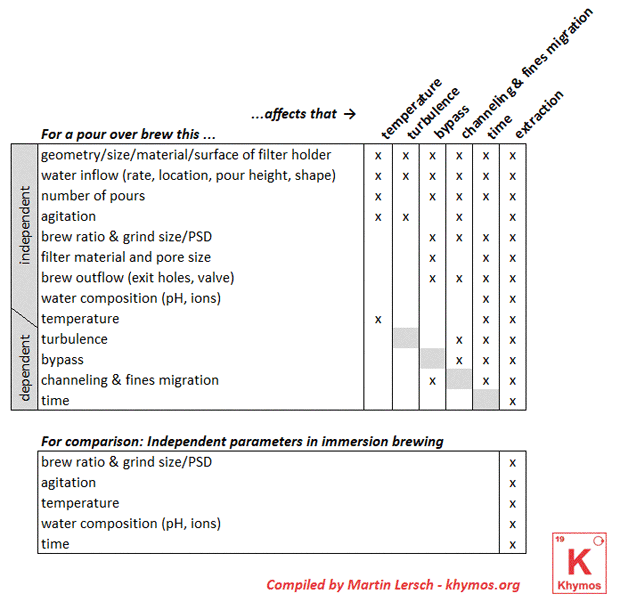
Beyond fundamental elements like brew ratio, grind size distribution, water composition, and temperature—which profoundly influence the final cup—a host of other factors contribute to the pour-over’s complexity. These include the specific material and geometry of the filter holder, the design of its internal wall surface, the type of filter used, the method of water inflow, and the control mechanisms for outflow and bypass. An additional layer of complexity arises from the pervasive correlations among these variables. For instance, a finer grind size not only increases the total surface area for extraction but also significantly slows down water flow, thereby extending contact time. This can lead to increased extraction but also heightens the risk of filter clogging and uncontrolled "channeling," where water carves preferential paths through the coffee bed, bypassing significant portions of the grounds. This intricate web of interactions explains why replicating a pour-over recipe precisely can be so challenging, leading to numerous coffee preparation myths and varied outcomes even when following ostensibly identical instructions.
Grind Size and Particle Distribution: The Foundation of Extraction
The consistency and fineness of coffee grounds are paramount to a balanced extraction. A high-quality burr grinder, preferred over less consistent blade grinders, produces a more uniform particle size distribution (PSD), which is crucial for even extraction. Finer particles offer a larger total surface area, accelerating the rate at which soluble compounds dissolve. However, excessively fine grinds can impede water flow, leading to over-extraction of bitter compounds and a muddy, astringent cup. Conversely, overly coarse grinds result in under-extraction, producing a weak, sour, or watery beverage because the water cannot extract enough soluble solids. The ideal grind is a delicate balance, tailored to the specific brewer, roast level, and desired extraction time, aiming for uniform saturation and flow through the entire coffee bed. Uneven grind consistency, with a mix of very fine "fines" and large "boulders," is particularly problematic, as fines over-extract rapidly while boulders under-extract, creating a simultaneously bitter and sour cup.
Water Chemistry: The Unsung Hero of Flavor
Water is not merely a solvent; it is an active ingredient that profoundly influences the taste of the final brew. Its mineral content, particularly calcium, magnesium, and bicarbonates, dramatically impacts extraction efficiency and flavor perception. Magnesium and calcium ions are known to enhance the extraction of desirable organic acids and sugars, contributing to a brighter, sweeter cup with increased clarity. Bicarbonates, on the other hand, act as buffers, neutralizing some of the coffee’s natural acidity, which can either mellow an overly acidic coffee or render a balanced coffee flat and dull. The Specialty Coffee Association (SCA) recommends specific water parameters for optimal brewing: 12.5–17.5 mg/L of potassium, 30–70 mg/L of total hardness (as CaCO3), and 40–70 mg/L of total alkalinity (as CaCO3), with a pH between 6.5 and 7.5. Deviations from these guidelines can lead to anything from flat and lifeless coffee to excessively bitter or sour brews, underscoring the critical role of water quality.
Temperature Control: The Kinetic Driver
The temperature of the brewing water directly impacts the kinetics of extraction. Hotter water extracts solubles more quickly and efficiently. The generally accepted optimal temperature range for pour-over is between 90°C and 96°C (195°F and 205°F). Water that is too cold will result in under-extraction, leading to a sour, thin, and underdeveloped taste, as many desirable compounds simply won’t dissolve. Conversely, water that is too hot can lead to over-extraction, emphasizing bitterness, astringency, and potentially scalding delicate aromatics. Maintaining a stable temperature throughout the brewing cycle is a significant challenge, especially with uninsulated brewing equipment or during extended brew times, as heat loss can drastically alter extraction dynamics.
Filter Material and Geometry: Shaping the Flow and Clarity
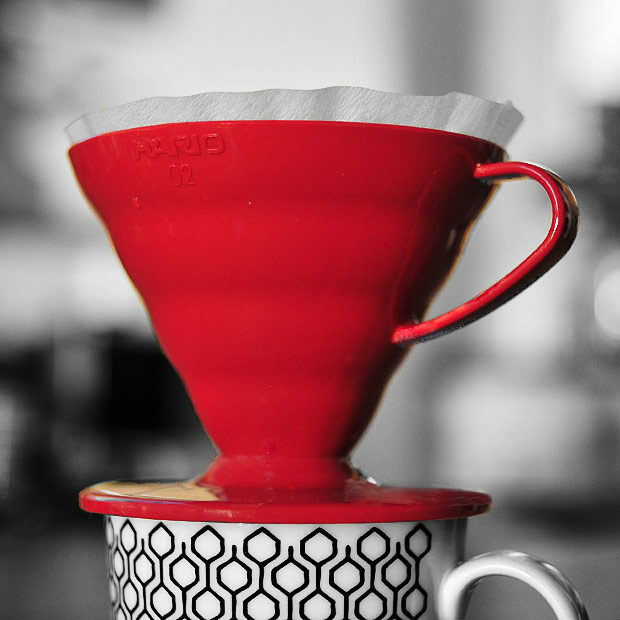
The choice of filter material—paper, cloth, or metal—and the geometry of the filter holder (cone, flat-bottom, trapezoid) are critical determinants of the final cup profile. Paper filters, such as those used in the Hario V60 or Chemex, are made of cellulose and absorb oils and trap fines, resulting in a cleaner, brighter cup with less body and enhanced clarity. The Chemex, with its notably thicker filter paper and smooth, non-ridged walls, significantly reduces bypass and absorbs more colloidal particles and oils, leading to an exceptionally clean and delicate brew. The Hario V60, with its conical shape and prominent spiral ridges, encourages a faster, more dynamic flow through a single, large exit hole, while allowing some flow along the filter sides. Flat-bottom brewers like the Kalita Wave promote a shallower, wider, and more uniform coffee bed depth, often utilizing W-folded filters which increase surface area to mitigate clogging and promote even saturation. Metal filters, common in some pour-over cones and the French Press, allow more oils and micro-fines to pass through, contributing to a fuller body, richer mouthfeel, and often more robust flavors, though sometimes at the expense of clarity.
The Peril of Bypass: Water’s Path of Least Resistance
A critical concept in pour-over brewing is "bypass." This refers to water that passes through the filter without making adequate contact with the coffee grounds, essentially diluting the brewed coffee without contributing to extraction. As observed by coffee scientists like Jonathan Gagné, optimal percolation seeks to minimize this phenomenon. Brewers with smooth internal walls and thick, clinging filters (like the Chemex) are designed to reduce bypass by forcing all water through the coffee bed. Conversely, brewers with pronounced ridges or patterns (like the Hario V60) or those using fluted/folded filters inherently allow for some bypass along the filter’s sides. While this design can prevent clogging, it introduces an element of uncontrolled dilution. Manually, controlling the pouring rate and ensuring the water level does not stand excessively high above the coffee bed are crucial techniques to mitigate bypass, as water, being "lazy," will always seek the path of least resistance.
Inflow and Outflow Control: Precision in Delivery
Innovations in pour-over equipment increasingly focus on controlling water inflow and outflow. Gooseneck kettles provide precise control over pouring rate and pattern, minimizing disturbance to the coffee bed and promoting even wetting during the bloom and subsequent pulse pours. Advanced accessories like the Gabi Dripmaster B or Melodrip act as sophisticated showerheads, distributing water evenly across the coffee bed through multiple small holes. This ensures gentle and uniform saturation, minimizing the agitation that can lead to channeling and promoting a perfectly flat coffee bed. Outflow control, often via a valve (as seen in the Clever Dripper or Hario Switch), allows for an initial immersion phase followed by percolation. This hybrid approach offers a significant advantage, enabling brewers to dictate contact time more precisely, making recipes more scalable and forgiving to variations in grind size or dose. This level of granular control is a direct response to the inherent complexity and variability of traditional, uncontrolled pour-over.
The Evolution of Brewing Devices: A Century of Innovation
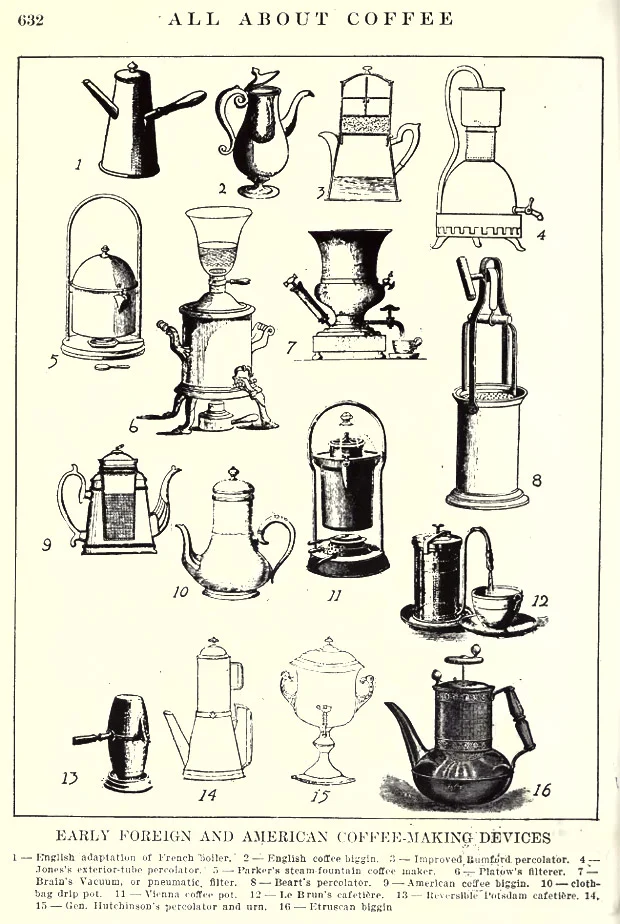
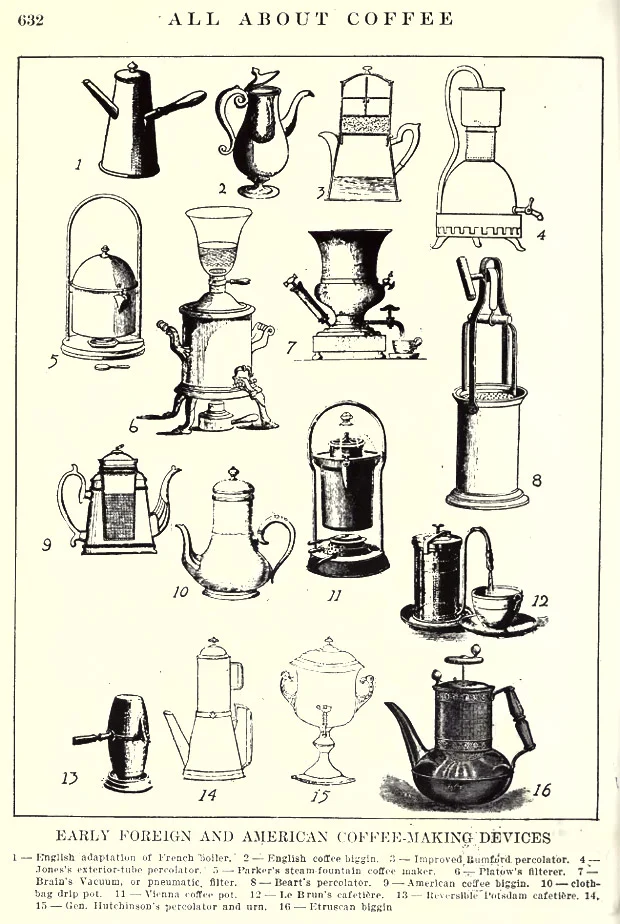
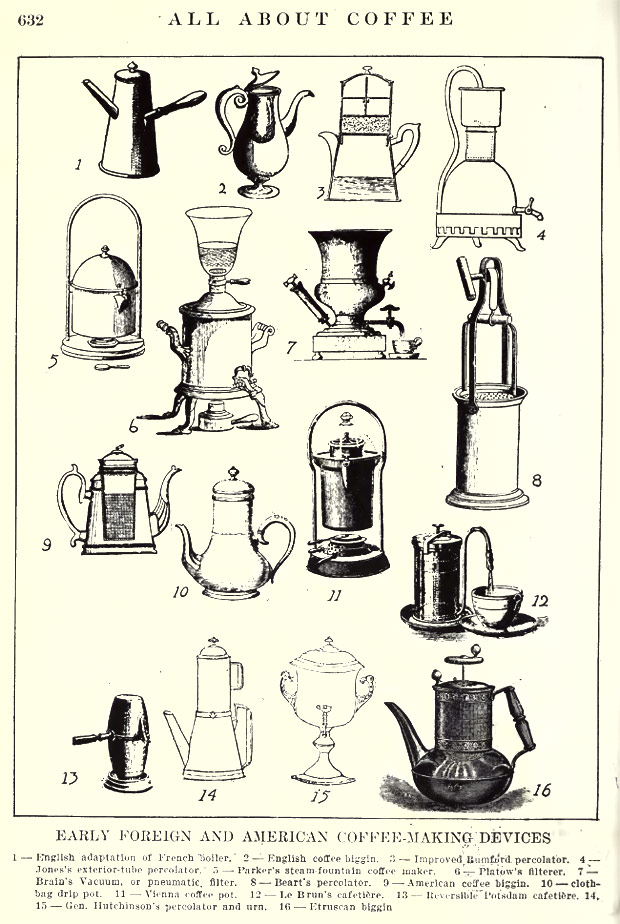
The quest for the perfect brew is not new; it is a continuous historical narrative. A glance at historical texts, such as W. A. Ukers’ monumental "All About Coffee" (1922), reveals a rich tapestry of innovation in coffee maker design stretching back centuries. Early percolators, dating back over 200 years, relied on convection to circulate hot water through coffee grounds, though often at boiling temperatures that could over-extract and bitter the coffee. The early 20th century saw the invention of the paper filter by Melitta Bentz in 1908, a pivotal moment that revolutionized drip brewing by introducing a cleaner cup profile and making coffee preparation more accessible. Iconic designs like the Chemex (1941), a minimalist masterpiece, and the proliferation of pour-over cones in the latter half of the 20th century, culminating in modern favorites like the Hario V60 (introduced in 2004) and the Aeropress (2005), showcase a continuous evolution driven by both scientific understanding and consumer demand.
Today’s market boasts an almost bewildering array of pour-over devices, each with subtle differences designed to tackle specific aspects of extraction. Materials range from plastic (like the lightweight, heat-retentive polypropylene Hario V60, favored for its thermal stability compared to metal or glass) to ceramic (for excellent thermal mass and aesthetics), glass (for inertness and visual appeal), and metal (sometimes vacuum-insulated for temperature stability, like the Stagg X/XF). Each design, from the conical Hario V60 with its single large hole promoting fast flow, to the flat-bottomed Kalita Wave with three smaller holes encouraging a more controlled drain, attempts to "untie the coffee knot" by manipulating flow rate, bed depth, and contact time to optimize extraction. This ongoing innovation underscores the profound scientific and engineering challenges inherent in coffee brewing, with designers constantly experimenting with ridges, patterns, and exit hole configurations to achieve consistent and desirable results.
Immersion Brewing: The Pursuit of Repeatability
In stark contrast to the intricate dance of pour-over, immersion brewing offers a robust and remarkably repeatable method. Here, all the coffee grounds are steeped in the entire volume of hot water for a predetermined duration, typically with an initial stir to ensure complete saturation and degasification. After the desired contact time, the brew is separated from the grounds, usually through filtration.
The primary advantage of immersion brewing, particularly for the home brewer or in high-volume settings, is its inherent consistency. Sharing an immersion recipe between two individuals is far more likely to yield similar results than a pour-over recipe, primarily because the multitude of real-time variables (e.g., pouring speed, turbulence, channeling) are significantly reduced. This method demands less constant attention, making it a forgiving choice for those seeking a dependable and delicious cup without the precision demands of pour-over.
French Press: Body and Character
The French Press stands as a quintessential example of immersion brewing. Characterized by its relatively coarse metal mesh filter, it allows a significant amount of coffee fines and oils to pass into the final beverage. This results in a coffee with a rich, full body and a distinctive mouthfeel, often accompanied by a fine sediment at the bottom of the cup. While some appreciate this added texture and robustness, others find the sediment and potential for extended extraction of bitter compounds from fines undesirable. For those seeking clarity, an interesting experiment is to filter French Press coffee through a paper filter post-brew, which effectively removes fines and oils, revealing a different facet of the coffee’s flavor profile—often cleaner and brighter, albeit with reduced body.
Aeropress: Versatility and Pressure
The Aeropress, a more modern immersion brewer introduced in 2005, offers remarkable versatility. Utilizing pressure to force water through a compact bed of coffee and a small paper filter, it can produce a concentrate,