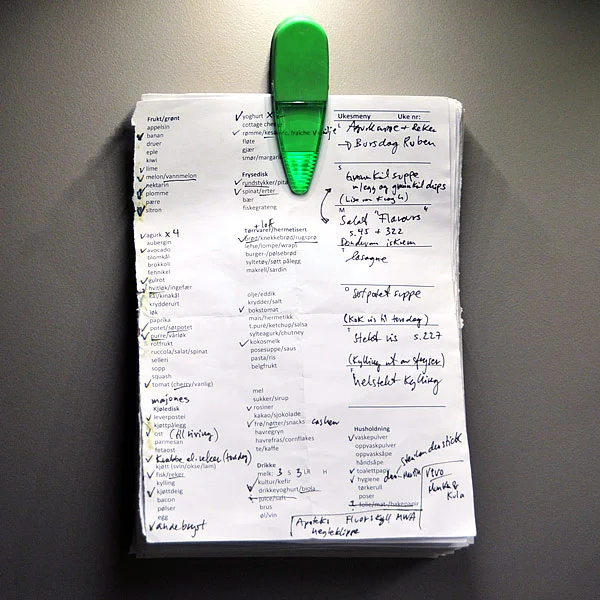

The prolonged hiatus on a prominent blog, spanning over three years, has drawn attention to a simple yet profoundly effective system for managing household logistics: a meticulously developed, personalized paper grocery list. Despite the blog’s digital dormancy, the creator’s kitchen remained a hub of activity, producing numerous culinary delights, including many desserts. This sustained productivity, particularly in cooking, is attributed largely to a consistent weekly dinner plan and its accompanying grocery list, a testament to the enduring power of analog organization in an increasingly digital world.
The Genesis of a System: Six Years of Refinement
The core of this efficiency lies in a pre-populated grocery list, rather than starting anew each week. This generic list serves as a foundational template from which necessary items are simply ticked off. Crucially, it incorporates ample space for adding specific notes or items not already present. What began as a practical necessity has evolved over six years into a highly customized document. It is organized not merely by food categories but specifically tailored to the physical layout of the local supermarket, a detail that significantly reduces shopping time. This iterative process of compilation and adjustment ensures the list remains a living document, reflecting the family’s current preferences, dietary needs, and the specific availability of products in their chosen store. The creator emphasizes that while the list itself is unique, its underlying methodology is universally adaptable, inviting others to customize it to their own household’s rhythm.
The journey of this list from a rudimentary aid to a sophisticated organizational tool mirrors the evolving demands of modern family life. Initially, items were added to accommodate young children’s needs; as they grew, some of these items naturally departed the list, replaced by new staples. This constant flux underscores the dynamic nature of household consumption and the necessity for flexible planning instruments. The process of reviewing past lists – typically the last 10 or 20 copies – before printing a new batch, allows for a periodic assessment of purchasing patterns, facilitating the addition or deletion of items from the generic template. This continuous feedback loop is vital for maintaining the list’s relevance and maximizing its efficiency, transforming it from a static checklist into a responsive management tool.
The Enduring Case for Paper in a Digital Age
In an era saturated with digital solutions, the creator staunchly advocates for the tangible benefits of a paper-based system. While acknowledging the proliferation of grocery list applications, the argument is made that "nothing beats paper for this purpose." This preference is rooted in several practical advantages that digital platforms often struggle to replicate effectively.
Firstly, the "superb resolution" of paper provides an unparalleled, immediate overview. A single A5-sized sheet can encompass an entire weekly menu alongside the complete shopping list, allowing for a comprehensive glance without the need for scrolling, swiping, or navigating multiple screens. This holistic view is a significant cognitive advantage, reducing mental load and the likelihood of oversight. Studies in cognitive psychology often highlight the benefits of physical interaction and spatial memory in recall and planning, suggesting that a physical list can enhance engagement and retention compared to its digital counterpart.
Secondly, the practical portability and resilience of paper are often underestimated. A physical list can be folded and slipped into a pocket, impervious to battery life concerns, software glitches, or screen glare under supermarket lighting. It offers unrestricted space for impromptu notes, calculations, or crossing out items with a satisfying pen stroke. Should more space be needed, the reverse side of the paper is readily available, offering a level of flexibility and immediacy that digital apps, with their structured input fields, often cannot match. The absence of digital distractions, such as notifications or other app temptations, further ensures focus during the shopping task.
Furthermore, the archiving capability of paper lists, while seemingly low-tech, proves highly effective for continuous improvement. Printing multiple copies and reviewing them periodically allows for a tangible historical record of consumption. This analog "data" can be quickly scanned for patterns, seasonal adjustments, or changes in family preferences, making the iterative refinement of the generic list a straightforward process. In contrast, while digital apps offer sophisticated data tracking, the act of quickly reviewing historical shopping patterns for holistic list optimization can often be more cumbersome, requiring specific app features or data export capabilities.
Integrating Menu Planning for Seamless Execution
The utility of this system extends beyond mere itemization; it strategically integrates with meal planning. By including the weekly menu directly on the grocery list – often as simply as a page number referencing a cookbook recipe – the list transforms into a dual-purpose planning and execution tool. This integration serves as a crucial additional reminder during the shopping trip. A quick glance at the planned meals can often jog the memory for those "last items" that might otherwise be forgotten, ensuring all necessary ingredients are procured for the week’s culinary endeavors. This synergy between menu and shopping list reduces the cognitive burden of recalling disparate pieces of information, streamlining the entire process from planning to plate.
This integrated approach also contributes to reducing food waste. By aligning purchases directly with planned meals, households are less likely to buy superfluous ingredients that may spoil before use. Data from organizations like the U.S. Environmental Protection Agency (EPA) and similar bodies globally consistently show that household food waste is a significant problem, with estimates often ranging from 20-40% of food purchased. Meal planning, supported by a precise grocery list, is a primary strategy recommended by experts to combat this waste, leading to both environmental benefits and financial savings.
Navigating the "Tidsklemma": Efficiency in a Time-Scarce Society
The underlying motivation for such a meticulous system resonates deeply with a prevalent challenge in modern life, particularly in countries like Norway, where the term "tidsklemma" captures this societal phenomenon. While often translated simply as "time crunch" or "time squeeze," "tidsklemma" denotes a more nuanced reality: a persistent feeling of being short on time, even within societies designed with robust social support systems (e.g., generous parental leave, affordable childcare) that theoretically should free up more personal time. It reflects the struggle to balance demanding full-time jobs, family obligations, and personal pursuits.
In this context, the proactive planning offered by a structured grocery list and meal plan becomes not just a convenience but a necessity. For individuals with full-time employment and familial responsibilities, the "inspirational approach" to cooking – deciding meals spontaneously based on what looks fresh or what one craves – is often an unattainable luxury. Weekly planning allows for a more controlled approach, transforming cooking from a daily dilemma into a manageable part of the routine. It shifts the burden of decision-making from the end of a tiring workday to a calmer, pre-scheduled planning session.
However, the creator wisely introduces an important caveat: the necessity to sometimes "deviate from your weekly dinner plan." This flexibility is crucial to prevent the system from becoming overly rigid or a source of stress itself. Spontaneous social invitations, unexpected exhaustion leading to a takeout meal, or simply a change of mood should be accommodated without guilt. The value of the plan lies in its ability to ensure a baseline of home-cooked meals, not in its absolute adherence. On balance, the planning significantly increases the likelihood of cooking at home, fostering healthier eating habits and greater culinary enjoyment than would otherwise be possible. This balance between structure and flexibility is key to the long-term sustainability of any personal organizational system.
Economic and Environmental Implications of Streamlined Shopping
The implications of adopting such a system extend beyond personal convenience, touching upon significant economic and environmental factors. From an economic perspective, a pre-planned grocery list is a powerful tool for budget management. Impulse purchases, which often inflate grocery bills, are significantly reduced when shopping with a clear, specific list. This disciplined approach ensures that only necessary items are bought, leading to quantifiable savings over time. For an average household, even a modest reduction in weekly spending can accumulate to hundreds or even thousands of dollars annually.
Environmentally, the impact is equally profound. As previously noted, reduced food waste is a direct consequence of precise meal planning and shopping. When purchases are aligned with consumption, fewer perishable goods end up in landfills, mitigating the environmental burden associated with food production, transportation, and disposal. Food waste contributes significantly to greenhouse gas emissions, particularly methane, a potent greenhouse gas released during anaerobic decomposition in landfills. Therefore, practices that minimize food waste, like using a personalized grocery list, contribute directly to broader sustainability efforts.
Moreover, consolidating shopping trips to once a week, as practiced by the creator, reduces fuel consumption and associated emissions. While seemingly minor on an individual level, widespread adoption of such habits can contribute to a collective reduction in carbon footprint from transportation. The efficiency gained also translates to more free time, a valuable commodity that can be reinvested in other productive or leisure activities, thereby enhancing overall quality of life.
Adaptability, Personalization, and Broader Impact
The beauty of this personalized grocery list system lies in its universal adaptability. While the creator offers downloadable templates in various formats (Norwegian A4, English A4, legal size), these serve merely as starting points. The true power emerges when individuals take ownership, customizing the list to their unique family dynamics, dietary requirements, preferred recipes, and local supermarket configurations. This personalization ensures that the system remains relevant and maximally efficient for each user.
The continuous improvement aspect, where the list is regularly reviewed and updated, highlights its nature as a "work-in-progress." No two individuals or families will arrive at identical lists, underscoring the bespoke nature of effective personal organization. This iterative process empowers users to adapt to life changes – new dietary trends, children leaving home, new cooking interests – ensuring the list remains a dynamic reflection of their current reality.
From a broader societal perspective, the widespread adoption of such mindful consumption and planning habits could have ripple effects. Imagine a collective reduction in food waste, more efficient use of household budgets, and a slight alleviation of the "tidsklemma" for countless individuals. These seemingly small, personal organizational shifts contribute to a more sustainable, less stressful, and potentially healthier society. The emphasis on cooking at home, facilitated by such planning, can also foster a greater connection to food preparation, potentially leading to healthier eating habits and a deeper appreciation for culinary skills.
In conclusion, the simple paper grocery list, refined over years and tailored to specific needs, stands as a powerful antidote to the complexities of modern life. It demonstrates that sometimes, the most effective solutions are not found in the latest app or technological marvel, but in the enduring simplicity and flexibility of analog tools. By streamlining one of life’s mundane but essential tasks, it frees up valuable time and mental energy, allowing individuals and families to navigate their busy lives with greater ease, purpose, and culinary enjoyment. It is a compelling argument for intentionality and structure, proving that even in the desert-like conditions of a blog’s hiatus, the seeds of practical innovation continue to flourish.