
For decades, the restaurant industry viewed catering as a secondary, reactive function—a "nice to have" source of occasional revenue that usually involved taking large orders over the phone and hoping the kitchen could handle the extra load. However, a significant paradigm shift is underway as operators transition from passive order-taking to treating catering as a sophisticated, dedicated sales and marketing channel. In a landscape defined by fluctuating dine-in traffic and the permanence of hybrid work models, restaurants are increasingly deploying advanced technology, data-driven menus, and rigorous operational protocols to capture a burgeoning market of employer-sponsored meals and large-scale events.
The Strategic Pivot: From Reactive Orders to Intentional Growth
The traditional model of catering often lacked transparency and consistency. Orders were frequently handled through the same channels as individual takeout, leading to logistical bottlenecks during peak hours. Furthermore, restaurants often lacked insight into their catering clientele, missing opportunities for follow-up and brand loyalty. Today, the industry is witnessing the rise of "intentional catering," a movement characterized by the separation of catering operations from standard dine-in workflows.
This shift is largely driven by the evolving nature of the modern workplace. As corporate entities navigate the balance between remote and in-office work, food has emerged as a primary tool for fostering culture and incentivizing office attendance. Industry experts note that communal meals are no longer just a perk; they are a strategic investment for employers. Orazio Buzza, founder and CEO of Fooda—a workplace food technology platform—notes that employer-sponsored catering is not a fleeting trend but a long-term fixture of the corporate landscape. For restaurants, this represents a massive opportunity for incremental revenue, provided they are structurally prepared to meet the demand.
Case Study: The Firebirds Wood Fired Grill Transformation
The evolution of catering is perhaps most visible in the trajectory of Firebirds Wood Fired Grill. With over 70 locations across 23 states, the brand recognized that while it had a loyal following, its catering arm lacked the infrastructure necessary to scale effectively. In 2022, the company appointed Jordan Johnson as Director of Off-Premise to overhaul the program.
The Firebirds strategy provides a blueprint for modern catering expansion. Rather than a nationwide rollout of unvetted systems, the brand utilized a pilot program in Charlotte, North Carolina. This location served as both a catering hub and a research-and-development kitchen, allowing the team to stress-test menus and packaging in a controlled environment. By 2023, the program was expanded across the entire fleet, supported by a tech stack that included Olo for digital ordering and ezCater for broader distribution.
Key to this success was the creation of a "Catering Playbook." This internal resource standardized every aspect of the operation, from how tickets are routed through the Point of Sale (POS) system to specific protocols for food storage and tip distribution. By providing clear rationale and operational guardrails, Firebirds ensured that catering would supplement, rather than overwhelm, its core dine-in business.
Menu Engineering and the "Rule of 10"
One of the most critical components of a successful catering program is a specialized menu. Kelly Grogan, founder of Crumbs—an agency specializing in restaurant revenue growth—argues that many operators fail because they simply try to scale up their standard menu. Standard dishes that work for a single diner often fail to maintain quality when served in a buffet format or transported over long distances.
Grogan advocates for the "Rule of 10" as a foundational principle. By designing every catering item to serve groups of ten, operators create a "North Star" for portioning and pricing. This standardization simplifies the ordering process for the client and the preparation process for the kitchen.
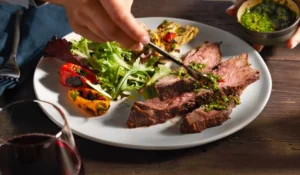
Furthermore, menu engineering for catering requires a focus on "travelability." Firebirds, for instance, refined its menu to include items that retain heat and texture during transit. This included slicing sirloin specifically for buffet-style service to ensure it remains tender and easy for guests to portion. The testing phase for these items is rigorous: food must be packed, allowed to sit for a predetermined period, and then evaluated for presentation and taste. If a dish loses its appeal after twenty minutes under a lid, it is removed from the catering menu.
Packaging as a Marketing Vehicle
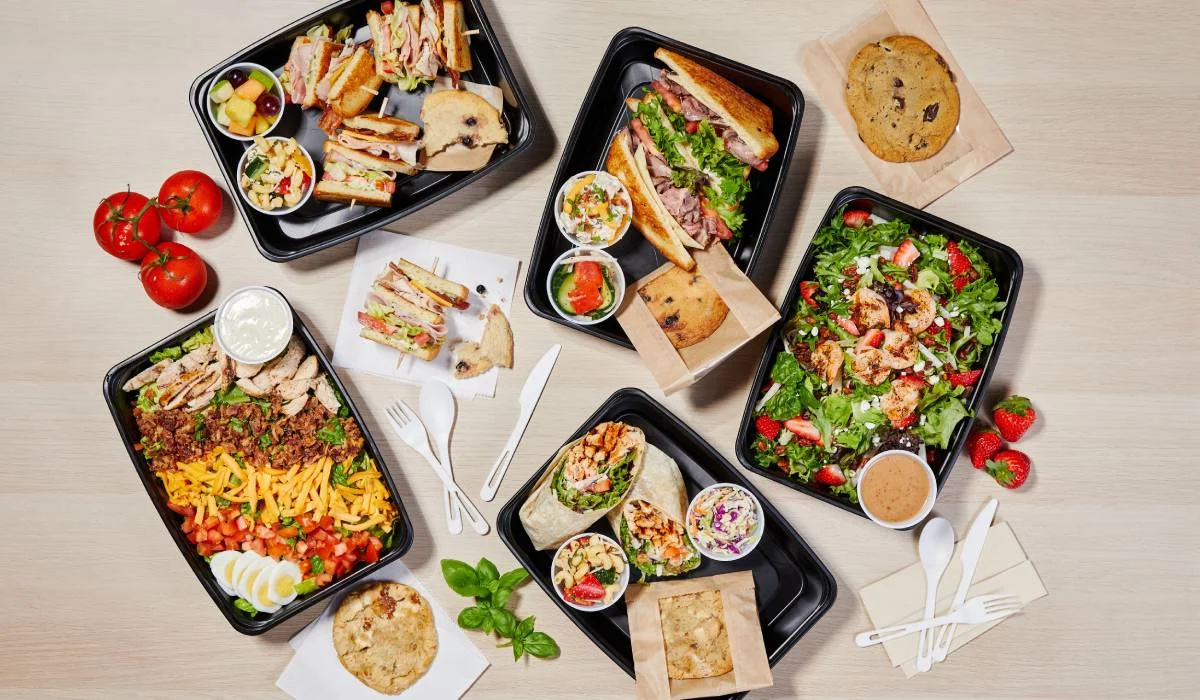
In the world of catering, the packaging is the dining room. It is the primary physical touchpoint between the brand and the consumer. Firebirds invested heavily in packaging that reflects its "polished casual" aesthetic while remaining functional for tight restaurant storage spaces.
The importance of presentation extends beyond aesthetics; it is a critical marketing tool. A single catering order for 50 people represents 50 potential new customers who may have never visited a Firebirds location. This "halo effect" is a core reason why modern catering programs include branded collateral, QR codes for loyalty sign-ups, and social media prompts within the packaging. The goal is to convert a passive participant in an office lunch into a future dine-in or individual takeout customer.
The Role of Data and Predictive Analytics
The integration of technology has moved catering from a "gut-feeling" business to a data-driven one. By analyzing ordering patterns, restaurants can identify missed opportunities that were previously invisible. A notable example from Firebirds involved the adjustment of operating hours. Data revealed that corporate clients frequently looked to place lunch orders for delivery between 10:30 a.m. and 11:30 a.m. However, because many restaurants did not technically open until 11:00 a.m., they were invisible on digital marketplaces during the peak search window.
By shifting catering availability to 10:30 a.m., Firebirds saw a significant uptick in volume. This type of micro-adjustment is made possible through the use of first-party data and third-party marketplace insights.
Looking forward, Artificial Intelligence (AI) is expected to play a larger role in predictive ordering and customer relationship management. AI tools can help operators identify "VIP" corporate accounts, predict seasonal surges in demand, and personalize marketing campaigns to increase reorder rates. Orazio Buzza of Fooda emphasizes that the strongest operators are already using technology not just to react to orders, but to proactively manage their margins and grow accounts.
Logistics and the Delivery Challenge
While technology and menus are vital, delivery remains the most significant hurdle for catering success. An order that arrives late or incomplete can permanently damage a restaurant’s reputation with a corporate client.
The industry is currently divided between using in-house delivery teams and third-party providers. While first-party ordering allows for better control of the customer relationship and higher margins, marketplaces like ezCater remain essential for customer discovery. Many corporate clients utilize these platforms because they integrate with existing corporate purchasing systems and offer a wide variety of vetted options. The consensus among experts like Grogan is that restaurants should leverage these marketplaces for their deep marketing pockets while simultaneously building robust first-party channels to capture returning customers.
Chronology of the Catering Revolution
To understand the current state of the industry, it is helpful to look at the timeline of its transformation:
- 2015–2019: The Fragmented Era. Catering is largely a manual process. A few large chains (like Panera Bread and Chipotle) dominate the space with dedicated teams, but most independent and mid-sized brands treat it as an afterthought.
- 2020–2021: The Pivot to Survival. The pandemic collapses traditional corporate catering. Restaurants pivot to "boxed lunches" and individual packaging to meet safety protocols. This period forces many brands to adopt digital ordering systems.
- 2022: The Hybrid Rebound. As offices reopen, a surge in "culture-building" meals begins. Brands like Firebirds begin hiring dedicated executive leadership for off-premise sales.
- 2023–Present: The Tech Integration. Integration between POS systems, catering marketplaces, and loyalty programs becomes the industry standard. Data-driven menu engineering and specialized packaging become the primary differentiators between successful and struggling programs.
Broader Impact and Industry Implications
The professionalization of catering has profound implications for the restaurant industry’s financial health. Catering orders typically have a higher average check size and better labor efficiency than individual dine-in orders. Because catering orders are usually placed 24 to 48 hours in advance, kitchens can plan their labor and prep schedules with much higher precision, reducing waste and overtime costs.
Moreover, as the real estate market for restaurants becomes increasingly expensive, catering allows brands to maximize the productivity of their existing square footage. Some brands are even exploring "catering-only" hubs or ghost kitchens to handle high volumes without disrupting the guest experience in their main dining rooms.
As we move into the latter half of the decade, the divide between restaurants that "do catering" and those that "have a catering program" will widen. Success will depend on a brand’s ability to treat the catering guest with the same level of hospitality and intentionality as the guest sitting at a table in their restaurant. As Kelly Grogan aptly summarizes, many restaurants are currently "sitting on leads" within their own four walls; the challenge lies in building the systems to convert those leads into a sustainable, high-growth business unit.