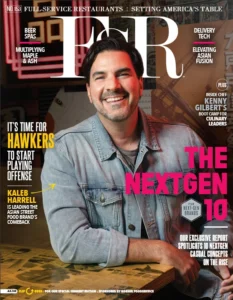

The full-service restaurant industry stands at a critical juncture in the mid-2020s, navigating a complex terrain defined by shifting consumer preferences, technological integration, and a volatile economic environment. At the center of this transformation is FSR Magazine, a flagship publication under WTWH Media, LLC, which has solidified its position as a primary resource for decision-makers across the hospitality spectrum. By focusing on independent operators, large-scale hospitality groups, and the burgeoning sector of "NextGen" chains, the publication serves as both a mirror to the industry’s current state and a roadmap for its future. As the sector matures toward a projected trillion-dollar valuation globally, the role of specialized B2B media in guiding executive strategy has never been more consequential.
The Strategic Focus on Independent and Emerging Brands
The full-service restaurant (FSR) segment is distinct from the quick-service restaurant (QSR) sector in its emphasis on experience, culinary craftsmanship, and prolonged customer engagement. While QSRs focus on speed and volume, FSRs—ranging from casual dining to fine dining—rely on the "table-setting" experience. FSR Magazine has carved a niche by prioritizing the needs of independent restaurants and hospitality groups, which often lack the massive corporate infrastructure of global fast-food giants but provide the innovation and cultural footprint that define the American dining scene.
According to recent industry analysis, independent restaurants and small groups (those with fewer than 10 locations) still account for a significant portion of the total FSR market share. However, these entities face the highest barriers to entry and the most significant operational risks. By providing targeted insights into supply chain management, labor optimization, and menu engineering, specialized media outlets enable these smaller players to compete on a level playing field with national conglomerates.
Furthermore, the emphasis on "NextGen" chains—emerging brands with 10 to 50 units that are poised for national expansion—highlights a shift in the investment landscape. Private equity firms and institutional investors have increasingly turned their attention to these mid-sized brands, viewing them as the future "category killers" of the dining world. These brands typically combine the agility of an independent kitchen with the scalable systems of a corporate entity, making them the primary drivers of growth in the 2024–2026 period.
A Chronology of the Full-Service Resurgence (2020–2026)
To understand the current importance of decision-making tools in the FSR space, one must examine the timeline of the industry’s recovery and evolution over the last several years.
2020–2021: The Survival and Pivot Era. The full-service sector faced an existential crisis during the global pandemic. The industry was forced to adopt off-premise strategies, including curbside pickup and third-party delivery, which were previously secondary to the dine-in experience. FSR media during this time focused heavily on crisis management, government relief programs like the Restaurant Revitalization Fund (RRF), and ghost kitchen integration.
2022–2023: The Inflationary Rebound. As dining rooms reopened, the industry was met with unprecedented challenges: a "Great Resignation" in the labor market and historic inflation in food costs. Operators were forced to rethink their pricing models and labor structures. This period saw the rise of the "service charge" model and a significant investment in back-of-house automation to reduce reliance on scarce labor.
2024–2025: The Efficiency and Experience Integration. By 2024, the focus shifted toward "omnichannel" dining. Successful operators began using data analytics to track customer preferences across both digital and physical platforms. The "NextGen" chains emerged as leaders during this time, utilizing smaller footprints and high-tech loyalty programs to maintain margins despite rising operational costs.
2026 and Beyond: The Hyper-Personalization Era. As reflected in the current market outlook, the industry is now entering a phase where artificial intelligence (AI) and machine learning are used to personalize the dining experience. From AI-driven inventory forecasting to personalized menu recommendations via mobile apps, the "decision-makers" are now data-literate executives who must balance high-touch hospitality with high-tech efficiency.
Supporting Data: The Economics of Full-Service Dining
The economic weight of the full-service segment is substantial. Data from the National Restaurant Association and various hospitality research firms indicate that the total restaurant industry sales are expected to exceed $1.1 trillion by the end of 2026. Within this, the full-service segment is projected to grow at a compound annual growth rate (CAGR) of approximately 4.5%.
Key data points driving the industry include:
- Labor Costs: Labor continues to be the largest expense for FSRs, often consuming 30% to 35% of gross revenue. This has led to a 15% increase in the adoption of kitchen display systems (KDS) and automated scheduling software since 2023.
- Consumer Spending: Despite inflationary pressures, consumer spending on "experiences" remains resilient. A 2025 survey indicated that 62% of consumers would rather spend money on a high-quality meal at a full-service restaurant than on physical goods.
- Digital Integration: While QSRs lead in digital sales, FSRs have seen digital ordering grow to 15% of their total revenue, up from just 4% in 2019. This includes online reservations, digital gift cards, and table-side QR code ordering in casual settings.
These figures underscore why publications like FSR Magazine focus on the "decision-maker." The margin for error has shrunk; a 2% fluctuation in food waste or a 5% turnover in staff can mean the difference between profitability and closure for an independent operator.
Official Responses and Industry Sentiment
While the source material provides a foundational look at the publication’s mission, industry leaders have often voiced the necessity of such platforms. In various industry forums, CEOs of emerging hospitality groups have noted that the "information gap" is the greatest hurdle for scaling a brand.
"In the current environment, we aren’t just competing with the restaurant down the street; we are competing with the convenience of home delivery and the rising cost of living," noted a prominent hospitality group executive in a recent industry roundtable. "Having a centralized source of intelligence that understands the specific nuances of full-service—where the ‘vibe’ and the service are as important as the food—is essential for our strategic planning."
Market analysts at WTWH Media have historically emphasized that their role is to provide "actionable intelligence." This involves moving beyond mere news reporting to offer deep-dive analyses on real estate trends, liquor liability insurance, and the legislative landscape regarding the tip credit—a major point of contention in several U.S. states.
Broader Impact and Implications for the Future
The implications of a robust, well-informed FSR sector extend beyond the walls of the restaurants themselves. The industry is a major engine of the broader economy, serving as one of the largest private-sector employers. The success of independent and NextGen chains is vital for urban development, as restaurants often serve as "anchor tenants" that drive foot traffic to retail districts.
Moreover, the shift toward "NextGen" chains signifies a move toward more sustainable and ethical business practices. Many of these emerging brands prioritize local sourcing, reduced carbon footprints, and transparent labor practices. As FSR Magazine and similar outlets highlight these successes, they set a new standard for the industry at large.
The integration of technology also presents a paradox that decision-makers must navigate: how to use automation without losing the "soul" of hospitality. The trend toward "polished casual"—dining that feels upscale but remains accessible—requires a delicate balance. The data suggests that while customers appreciate the efficiency of digital payments, they still crave the human connection of a knowledgeable server and a curated atmosphere.
Conclusion: The Enduring Value of Specialized Intelligence
As the hospitality landscape continues to fragment and evolve, the need for specialized media like FSR Magazine becomes increasingly apparent. By catering to the specific needs of independent operators and the leaders of the next generation of dining brands, these platforms ensure that the art of the "full service" experience remains viable in a digital-first world.
The "table" that FSR sets for decision-makers is one built on a foundation of data, historical context, and a forward-looking understanding of consumer behavior. In an era where the only constant is change, the ability to synthesize complex market trends into actionable business strategies remains the most valuable tool in a restaurateur’s arsenal. As we look toward the late 2020s, the full-service restaurant remains a resilient and vital part of the global economy, driven by leaders who are informed, agile, and dedicated to the craft of hospitality.