
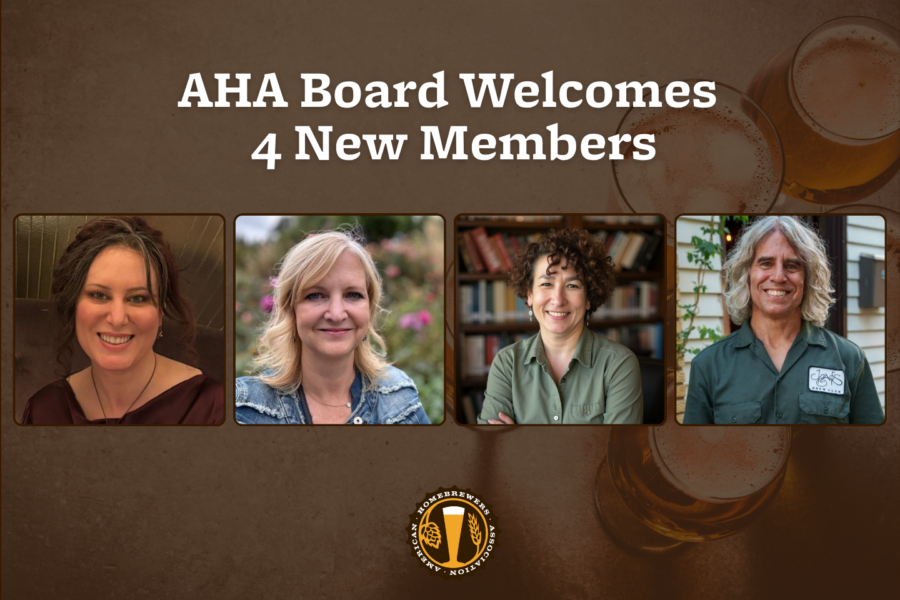
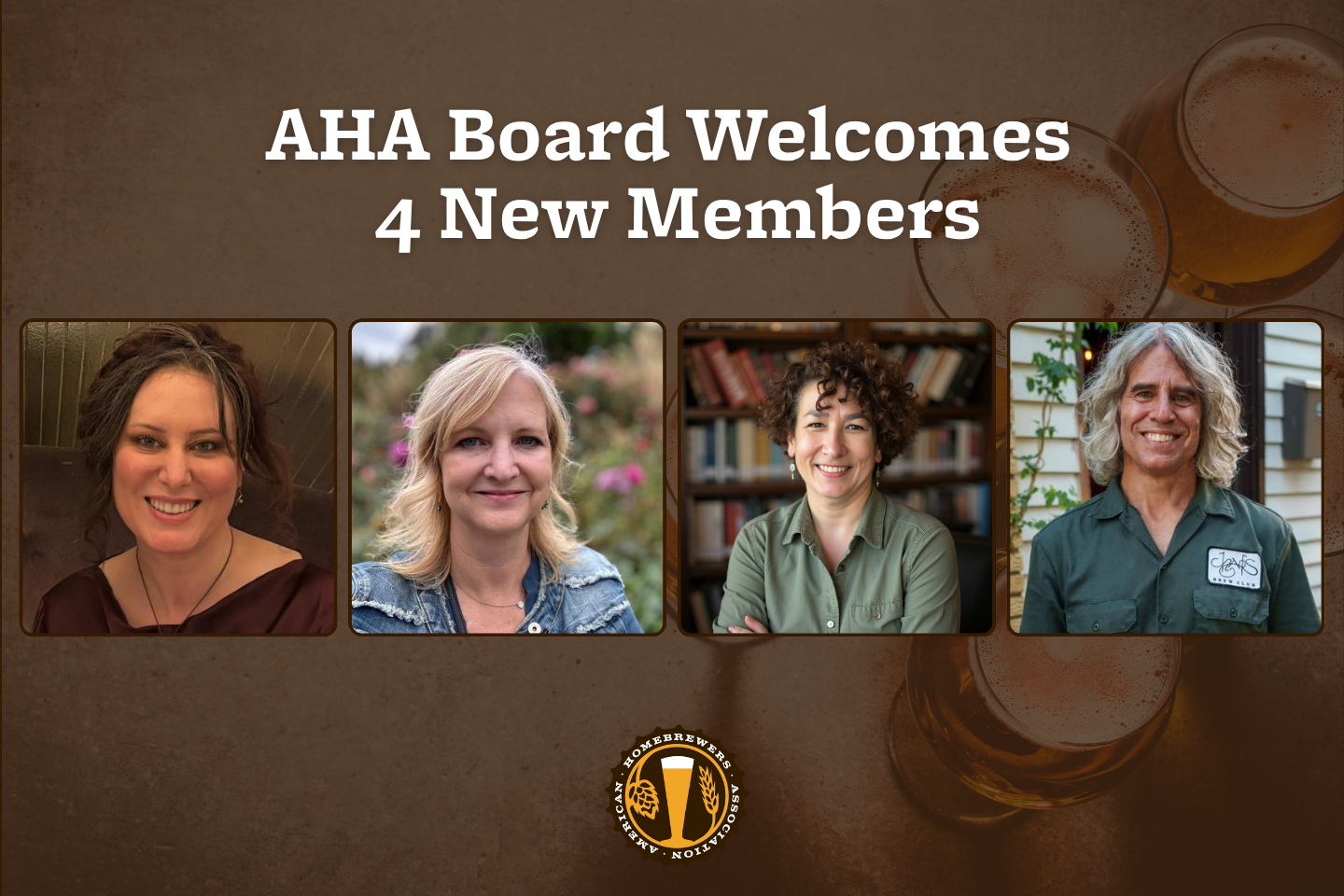
The American Homebrewers Association (AHA) has officially concluded its inaugural board of directors election as a newly independent entity, signaling a transformative era for the organization and the wider homebrewing community. Following a rigorous selection process that began earlier this year, AHA members have elected four new leaders to the Board of Directors: Jen Blair, Stephanie Butler, Jen Pereira, and Jeff Whelpley. These individuals will each serve a three-year term, contributing their expertise to the governance of an association that has recently transitioned into a dual-structured organization comprising a 501(c)(6) membership association and a 501(c)(3) supporting foundation, known as the A-HA Foundation.
This election serves as a pivotal milestone in the AHA’s nearly 50-year history. Since its founding in 1978, the association has operated under various administrative structures, most notably as a division of the Brewers Association. The move toward independence reflects a strategic shift intended to provide the AHA with greater autonomy, allowing it to focus exclusively on the needs of amateur brewers, local clubs, and the preservation of homebrewing culture. The newly elected board members will join continuing directors Shawna Cormier, Drew Beechum, and Gregory Roskopf to steer the association through this period of organizational maturation.
The Election Process and Member Engagement
The 2026 election cycle demonstrated significant engagement within the homebrewing community, reflecting a renewed interest in the association’s self-governance. The process began with an open call for nominations, which yielded an impressive pool of 28 candidates from diverse backgrounds across the United States. Following a review by the nominating committee, this pool was narrowed to a final slate of 10 candidates.
In March, the AHA membership was invited to cast their ballots, selecting the four individuals they believed were best suited to navigate the complexities of the association’s new independent status. The high volume of nominees and the active participation in the voting process underscore the importance of the AHA’s democratic shift. By allowing members to directly elect their leadership, the AHA is reinforcing its commitment to its core values: Community, Education, Joy, and Volunteerism.
The four elected members bring a wealth of experience to the table. Jen Blair, Stephanie Butler, Jen Pereira, and Jeff Whelpley represent a cross-section of the homebrewing world, including expertise in sensory analysis, education, community organizing, and organizational management. Their diverse perspectives are expected to be instrumental as the board addresses modern challenges, such as the shifting demographics of the hobby and the evolving landscape of digital resources for brewers.
Transition of Leadership and the Asheville Annual Meeting
The transition of power will be formalized during the AHA’s 2026 annual meeting, scheduled for June 20, 2026. This meeting will take place in Asheville, North Carolina, a city renowned for its vibrant craft beer culture, during the association’s signature event, Homebrew Con. The annual gathering serves as the primary nexus for homebrewers, offering educational seminars, social networking, and the culmination of the National Homebrew Competition (NHC).
As the new board members prepare to take their seats, the association has expressed profound gratitude to the departing board members, Sandy Cockerham and Gary Glass. Both Cockerham and Glass served as Founding Board members during the association’s critical transition to independence. Their leadership was essential in establishing the legal and operational frameworks required for the AHA to function as a standalone 501(c)(6) and 501(c)(3).
Gary Glass, in particular, has been a long-standing figure in the homebrewing community, having previously served as the AHA Director for nearly two decades. His presence on the Founding Board provided continuity and institutional knowledge that helped bridge the gap between the association’s past and its new future. Sandy Cockerham’s contributions, particularly in the realm of competition and judging, have likewise left an indelible mark on the organization’s standards and practices.
Historical Context and the Road to Independence
To understand the significance of this election, one must look back at the origins of the American Homebrewers Association. Founded in 1978 by Charlie Papazian in Boulder, Colorado, the AHA was established shortly after President Jimmy Carter signed H.R. 1337, which legalized homebrewing at the federal level for the first time since Prohibition. For decades, the AHA grew in tandem with the American craft beer revolution, often acting as the "nursery" for the professional brewing industry.
Historically, the AHA operated under the umbrella of the Brewers Association (BA), the trade group representing small and independent professional craft brewers. While this partnership was mutually beneficial for many years, the needs of amateur brewers and professional brewery owners began to diverge as the craft beer market matured. By moving toward independence as a 501(c)(6) membership organization, the AHA is now better positioned to lobby for homebrew-specific legislation—such as the ability to share homebrew in public spaces or transport it to competitions—without the potential conflicts of interest that can arise within a professional trade group.
The creation of the A-HA Foundation as a 501(c)(3) supporting organization further enhances this new structure. This arm of the association allows for tax-deductible donations and grants specifically aimed at education and the promotion of the hobby. This dual structure is common among high-level professional and hobbyist associations, providing a robust platform for both member services and charitable outreach.
Strategic Vision and Community Impact
Board Chair Shawna Cormier has articulated a clear vision for the future of the association, emphasizing growth and community reach. In a statement regarding the election results, Cormier noted that the work started by the Founding Board has laid a foundation that will allow the AHA to grow "for generations."
The association’s stated vision—"a homebrewer in every neighborhood and a homebrew club in every community"—serves as the North Star for the new board. Achieving this goal requires a multi-pronged approach:
- Educational Excellence: Continuing to provide high-quality content through Zymurgy magazine and online resources.
- Competition Standards: Maintaining the National Homebrew Competition as the gold standard for amateur brewing excellence.
- Local Support: Strengthening the network of local homebrew clubs, which serve as the grassroots engine of the hobby.
- Inclusivity: Expanding the hobby to reach younger and more diverse demographics to ensure long-term sustainability.
The homebrewing hobby has faced headwinds in recent years, including the rising convenience of craft beer and the closure of some local homebrew supply shops. However, data suggests that the core of the hobby remains resilient. There are an estimated 1.1 million homebrewers in the United States, and the AHA remains the primary voice for these enthusiasts. By becoming independent, the AHA can more nimbly react to market trends and provide direct support to the retailers and clubs that form the hobby’s infrastructure.
Analysis of Implications for the Homebrewing Sector
The independence of the AHA and the seating of its first elected board have several long-term implications for the brewing industry. First, it ensures that the "voice of the amateur" remains distinct and powerful. This is crucial for legislative efforts; while professional brewers focus on excise taxes and distribution laws, homebrewers focus on the right to brew and share their creations without undue government interference.
Second, the new board will likely focus on the digital evolution of the association. As print media faces challenges, the AHA’s digital resources—including its recipe database and community forums—will require strategic investment to remain relevant to a tech-savvy generation of brewers. The professional backgrounds of the new board members suggest a shift toward a more modern, data-driven approach to member engagement.
Finally, the success of Homebrew Con 2026 in Asheville will be a litmus test for the new leadership. As the first major event under the fully elected board, the convention will serve as a platform to demonstrate the association’s value proposition to its members. The choice of Asheville is strategic; as a hub of brewing innovation, the city provides an ideal backdrop for the AHA to showcase its commitment to the "Joy" of brewing.
The American Homebrewers Association stands at a crossroads, moving from a subsidiary model to a self-governing, independent powerhouse. With the election of Jen Blair, Stephanie Butler, Jen Pereira, and Jeff Whelpley, the membership has signaled its trust in a new generation of leaders. As these directors take their seats in June, the focus will remain squarely on the mission established in 1978: to promote the community and education of those who find passion in the craft of homebrewing. Through this historic election, the AHA has not only honored its past but has secured a democratic and independent pathway for its future.