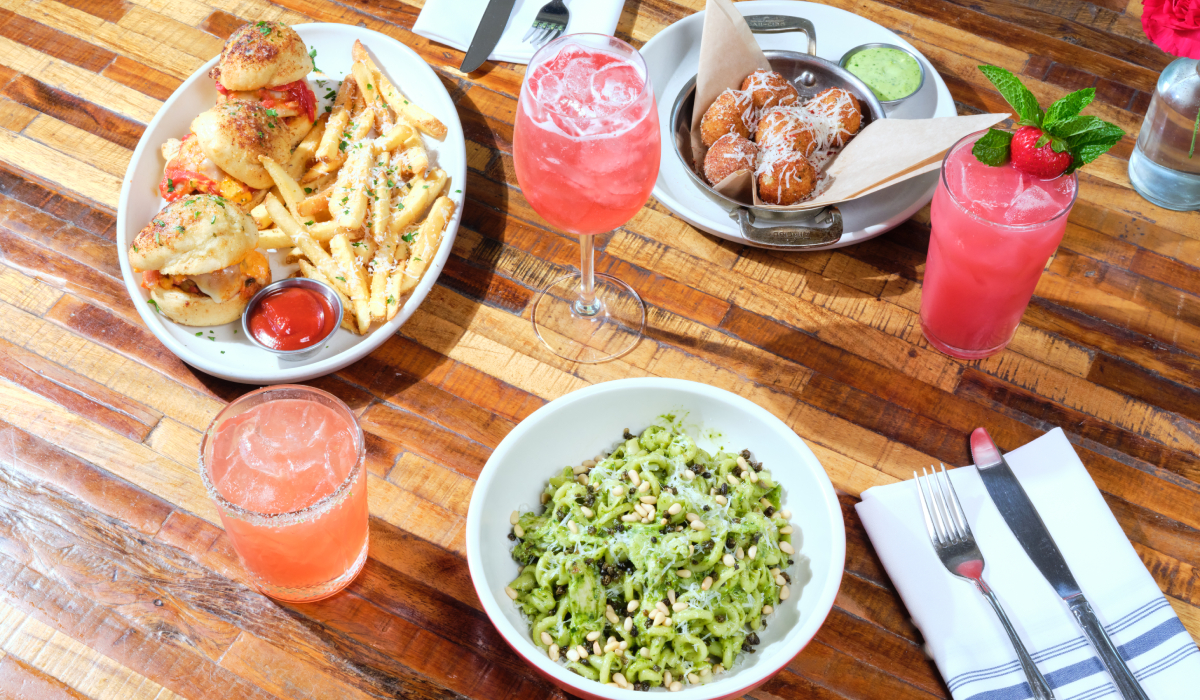

The Cheesecake Factory’s executive leadership team recently took the stage at the Barclays Annual Global Consumer Staples Conference to provide a comprehensive update on the company’s strategic trajectory, financial health, and the explosive growth potential of its burgeoning fast-casual brand, Flower Child. Led by Executive Vice President and Chief Financial Officer Matthew Clark, alongside Vice President of Finance and Investor Relations Etienne Marcus, company executives addressed the investor community’s persistent inquiries regarding expansion pacing, unit economics, evolving consumer behavior, and the overarching performance of the hospitality giant’s diverse portfolio, which includes North Italia and Fox Restaurant Concepts (FRC).
As the restaurant industry navigates a shifting macroeconomic landscape characterized by discerning consumers and fluctuating traffic patterns, The Cheesecake Factory continues to leverage its multi-concept portfolio to capture market share. During the high-profile financial conference, Clark and Marcus emphasized that while Wall Street consistently clamors for rapid expansion, the company’s primary objective remains deliberate, high-quality growth rooted in rigorous operational execution, stringent labor management, and careful site selection.
The Genesis and Meteoric Rise of Flower Child
The journey of Flower Child within The Cheesecake Factory’s corporate ecosystem spans nearly a decade, beginning in 2016 when the polished casual giant acquired a minority stake in Fox Restaurant Concepts—the incubator that originally housed the health-conscious fast-casual brand. At the time of the initial investment, Flower Child operated a modest footprint of just five locations, while sister concept North Italia boasted nine.
In a pivotal structural move three years later, in 2019, The Cheesecake Factory exercised its option to acquire full ownership of both North Italia and Fox Restaurant Concepts for approximately $308 million. Over the ensuing seven years, the strategic value of that acquisition has become increasingly clear to financial analysts and institutional investors alike. Today, the system has scaled significantly, encompassing roughly 50 North Italia units, 40 Flower Child locations, and a core Cheesecake Factory footprint of approximately 220 restaurants.
Despite this substantial growth, investor inquiries regarding the acceleration of Flower Child’s footprint remain frequent. Clark acknowledged that while Wall Street understands the emerging chain’s trajectory, it frequently underappreciates the structural mechanics required to scale a concept of its nature successfully. The company aims to expand Flower Child at a measured pace targeting a 20 to 25 percent annual growth range, ensuring that unit-level management, labor pipelines, and site selection meet the brand’s exacting standards. For the current fiscal year, the company projects the opening of seven new Flower Child locations, alongside five to six traditional Cheesecake Factory boxes, six to seven North Italias, and up to seven additional concepts from the FRC umbrella, such as The Henry.

Unprecedented Unit Economics and Fast-Casual Differentiation
The investor community’s intense focus on Flower Child is well-justified by the brand’s extraordinary financial metrics. During the preceding quarter, Flower Child posted a stellar 17 percent two-year same-store sales stack, driven by a 13 percent year-over-year same-store sales gain. Approximately 8 percentage points of this growth stemmed directly from traffic increases, supplemented by 2.5 percent menu pricing adjustments and incremental check lifts driven by a growing catering business.
These robust sales figures propelled Flower Child’s annualized average-unit volumes (AUVs) to an impressive $5.4 million, accompanied by adjusted mature store-level operating margins of 20.1 percent. Several of the brand’s more established legacy units even outperformed these averages, recording AUVs between $6.5 million and $7 million. To put these figures into broader industry perspective, if Flower Child were evaluated alongside the top 50 grossing quick-service restaurants in the United States, its AUV would rank fourth overall—eclipsing fast-food behemoth McDonald’s ($4.088 million) and trailing only In-N-Out Burger ($6.032 million), while positioning well ahead of Shake Shack ($4.048 million). Furthermore, within fast-casual industry benchmarks, Flower Child’s AUV comfortably outpaces other publicly traded competitors, such as Sweetgreen, which reports an average of $2.677 million.
Clark highlighted that Flower Child currently boasts the strongest unit economics across the entire Cheesecake Factory portfolio, delivering approximately 33 percent cash-on-cash returns. The brand benefits from an exceptionally broad total addressable market, proving adaptable to diverse geographies ranging from densely populated urban centers to smaller suburban trade areas. Furthermore, internal data indicates that as the brand densifies its presence in mature markets like Phoenix and Dallas, overall performance and brand awareness rise concurrently without cannibalizing existing store sales.
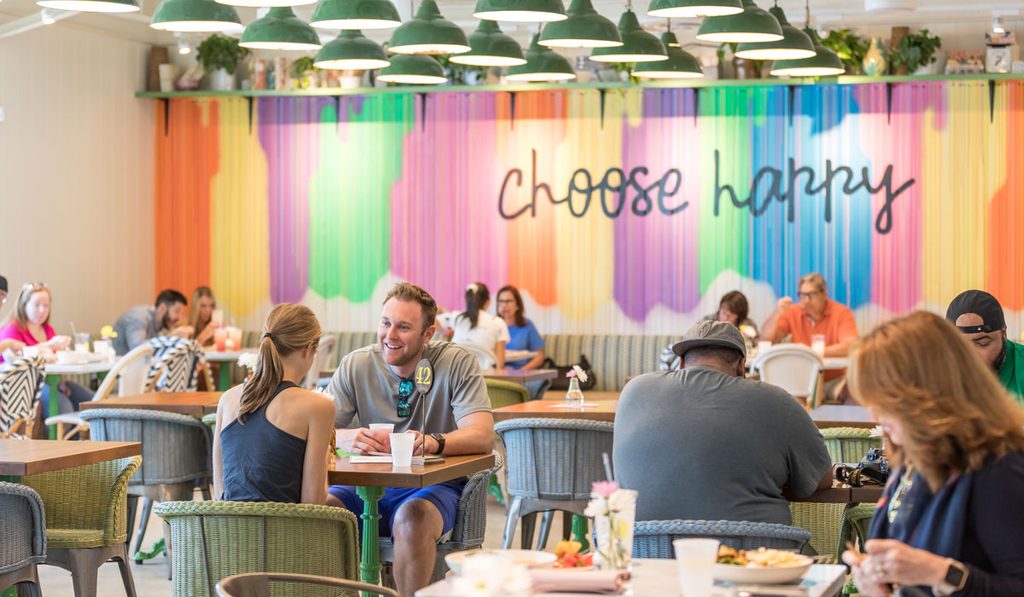
What truly sets Flower Child apart in the competitive landscape, according to executive leadership, is its unique operational hybrid model. Internally dubbed "The Cheesecake Factory fast casual," the concept rejects traditional assembly-line fast-casual configurations in favor of open-concept scratch kitchens where patrons can observe meal preparation upon entry. Furthermore, the brand delivers an elevated experiential component: meals are served on real ceramic plateware by actual servers who clear tables, offering a higher-touch dining experience than traditional counter-service establishments.
This hybrid positioning creates a formidable competitive moat. Flower Child splits its revenue streams efficiently, capturing slightly over 40 percent of its business during dinner hours and under 60 percent during lunch—a distribution highly differentiated from traditional fast-casual peers whose sales are typically heavily skewed toward the midday meal. Additionally, the brand maintains an almost even split between on-premises dining and off-premises channels, defying standard industry categorization.
Broader Corporate Performance and Consumer Resilience
Flower Child’s exceptional performance mirrors the broader operational momentum of its parent company. The Cheesecake Factory recently closed a record-breaking second quarter, surpassing $1 billion in quarterly revenue for the first time in corporate history. Net income climbed 25 percent to reach $68 million, while same-store sales rose 5.8 percent, outperforming the broader Black Box Casual Dining Index by a notable 350 basis points.
Company executives attribute these milestone achievements not to aggressive promotional discounting, but rather to a disciplined operational playbook emphasizing consistent execution, ongoing menu innovation, robust digital engagement, and the April rollout of a highly anticipated customer rewards application. Average weekly sales reached historic company watermarks, pushing AUVs north of $13.5 million and driving store-level margins to 20 percent—the chain’s highest profitability metric in a decade. This margin expansion was successfully achieved through effective sales leverage, heightened labor productivity, and optimized food supply chain efficiencies that effectively neutralized ongoing commodity cost pressures.
Addressing the prevailing narrative surrounding the modern consumer, Clark noted that while guests maintain available discretionary spending, they have undeniably grown more discerning. In this environment, long-term success requires an uncompromising value proposition tailored to each brand’s specific core audience. For The Cheesecake Factory, this translates to generous portion sizes, broad menu optionality, and relevant price points that empower guests to curate their own dining experience—whether that involves opting for a modest salad paired with complimentary bread or trading up to a decadent slice of specialty cheesecake.
Demographically, the brand continues to capture market share across diverse age cohorts, noting a particularly encouraging resurgence in younger consumers returning to physical retail malls for social engagement and experiential dining. Internal research underscores that modern diners—particularly digital natives—increasingly view restaurants as destinations for socialization and an accessible escape from daily routines, positioning the casual dining sector advantageously against other retail categories.
Addressing Industry Headwinds: GLP-1s and Menu Evolution
During the Barclays conference, executives also addressed broader macroeconomic and cultural phenomena impacting the restaurant sector, including the rising adoption of GLP-1 weight-loss medications. Drawing parallels to the implementation of mandatory federal calorie-disclosure regulations in 2018—which many pessimistic analysts predicted would signal the financial demise of indulgent brands like The Cheesecake Factory—Clark expressed confidence in the company’s long-term resilience.
Historical data from the calorie-labeling transition demonstrated that guests simply learned to budget their caloric intake rather than abandoning indulgent dining altogether. Consumers frequently balance smaller everyday dietary choices to reserve calories and financial capital for a dedicated Thursday night outing at The Cheesecake Factory, where they intend to enjoy the complete experiential offering. Moreover, the brand’s extensive "SkinnyLicious" menu—which features hundreds of options under 590 calories and rivals the total menu breadth of smaller independent restaurants—has maintained a remarkably consistent percentage of overall sales over time, suggesting that weight-loss drug adoption has not fundamentally altered guest purchasing patterns or demand for full-scale indulgence.
Meanwhile, sister concept North Italia experienced a slight cooling in second-quarter same-store sales, which slipped 3 percent amid post-pandemic pricing adjustments and commodity inflation. Despite annualized AUVs remaining strong at $7.9 million, adjusted mature restaurant margins dipped from 18.2 percent to 15.6 percent due to temporary sales deleverage. In response, leadership outlined proactive strategic initiatives, including the introduction of lower-priced pasta dishes, curated lunch specials, targeted digital advertising, and community-focused events designed to eliminate psychological price barriers and broaden the brand’s demographic reach without relying on margin-eroding promotional discounting.

Technological Integration and Future Outlook
Looking forward, The Cheesecake Factory plans to continue refining its digital ecosystem, leveraging artificial intelligence and data analytics to drive operational efficiencies. While executive leadership views AI implementation as being in its "early innings," the company is actively exploring technological applications in supply chain management, marketing productivity, and back-of-house administrative functions to maintain flat headcount expenses while scaling revenue.
The successful nationwide rollout of the brand’s proprietary rewards app has fundamentally transformed customer engagement metrics, yielding exceptionally high retention rates across critical 30-, 60-, and 90-day intervals. By integrating this digital infrastructure with foundational operational excellence and aggressive, playful social media marketing that embraces the brand’s generous portions, The Cheesecake Factory has established robust mechanisms to control its own traffic and ticket trajectories.
As executive leadership looks to the quarters ahead, the combination of Flower Child’s high-margin fast-casual expansion, North Italia’s menu architectural realignment, and the core brand’s resilient experiential dining model positions The Cheesecake Factory for sustained, disciplined growth across its diverse hospitality portfolio.