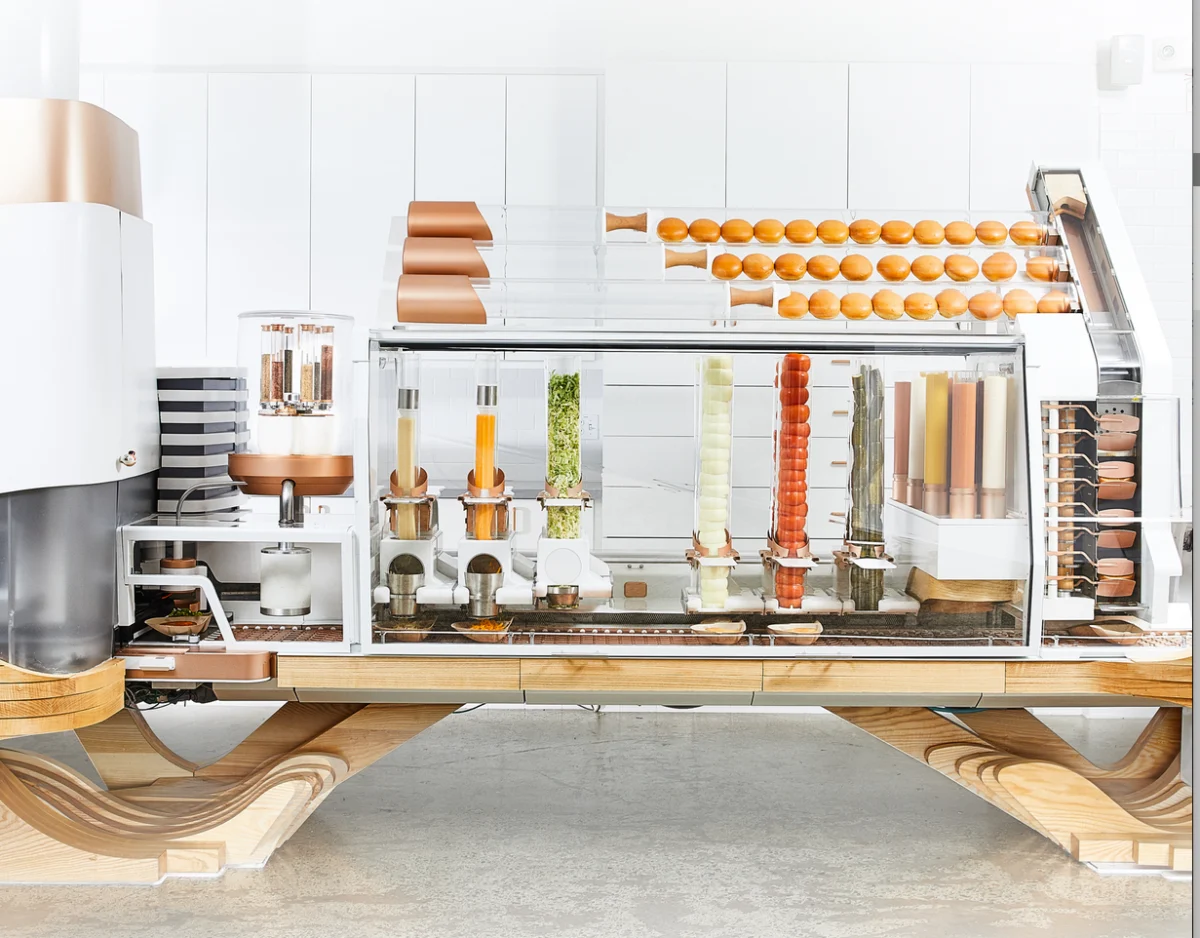

The story of Creator, a pioneering robotic restaurant concept that once captured significant attention and investment in the San Francisco food tech scene, has taken a dramatic turn. After a period of relative quiet and speculation surrounding its future, the company has officially announced a strategic pivot, re-emerging not as a direct-to-consumer eatery, but as a business-to-business (B2B) platform provider. This significant shift sees Creator focusing on licensing its advanced robotic burger-making technology to established restaurant brands and emerging concepts, marking a departure from its original vision of "robot theater" and a move towards becoming a back-of-house infrastructure solution.
A Decade of Ambition and Evolution
Creator’s journey began in 2012, with development efforts dating back to 2009, in the heart of San Francisco’s burgeoning tech and culinary innovation hub. The company initially garnered substantial attention and funding, raising approximately $60 million in its early stages. Its flagship establishment was designed to be a showcase of automated culinary excellence, where a sophisticated robotic system would assemble burgers with precision and efficiency. This consumer-facing model aimed to revolutionize the fast-casual dining experience by offering a novel, tech-driven approach to food preparation.
However, like many ventures in the highly competitive and capital-intensive restaurant technology sector, Creator faced significant challenges. The onset of the COVID-19 pandemic proved to be a pivotal moment, forcing the closure of its flagship San Francisco location. While the company managed to operate sporadically at other sites, such as a brief stint in Daly City, its public presence diminished, leading many observers to believe the venture had effectively ceased operations over the past couple of years.
The Strategic Pivot: From Showpiece to Backend Infrastructure
The recent announcement, disseminated through Creator’s updated website and a LinkedIn post, reveals a deliberate and calculated strategic redirection. Creator is no longer solely focused on operating its own branded restaurants. Instead, it is repositioning itself as a technology provider, offering its redesigned robotic burger platform to other businesses within the food service industry.
"Creator as a brand carries on – but the platform is bigger than the brand," states the company’s website. "The technology has been redesigned to allow any operator to deploy it under their own existing brand, or for new brands to build a sustainable concept around the technology." This signifies a fundamental shift from a direct consumer experience to a B2B licensing model, aiming to integrate its robotics into the operational fabric of existing or new restaurant chains.
This move away from "robot theater," as the company describes its former consumer-facing approach, suggests a pragmatic assessment of the market and the challenges inherent in building and scaling a consumer-facing robotic restaurant brand. By focusing on technology licensing, Creator aims to leverage its existing intellectual property and operational expertise to serve a broader market more efficiently.
A New Leadership Team and Advisory Board
The relaunch as a B2B platform is accompanied by a refreshed leadership structure and an augmented advisory board, signaling a new phase of growth and strategic direction. Michael Balsamo has assumed the role of CEO. Balsamo’s tenure at Creator dates back to 2014 when he joined as a hardware engineer, following a period at Tesla. He has since progressed through various leadership positions, including Director of Hardware Engineering and CTO, before taking the helm as chief executive last year.
Peter Rosenbaum, Head of Engineering and Hardware, is another key full-time employee, having joined Creator in 2019. His continued presence underscores the company’s commitment to its core technological development.

The company is also leveraging the expertise of a distinguished advisory board, comprised of seasoned professionals from across the restaurant and technology industries. This group includes:
- Atul Sood: Former Chief Business Officer at Kitchen United, bringing experience in ghost kitchen and shared commercial kitchen operations.
- Eric Hansen: Former Global Head of Enterprise Sales for Uber Eats and Business Development for Nuro, offering insights into delivery logistics and autonomous vehicle technology.
- Ron Glavan: Former SVP of Equipment Innovation for Wendy’s, providing valuable perspective on chain restaurant operations and equipment integration.
- Chef JJ Johnson: A well-known author and owner of Fieldtrip, contributing culinary expertise and a deep understanding of consumer tastes and trends.
Notably, Alex Vardakostas, the original founder who initiated work on Creator in 2009, is no longer directly involved with the company. According to his LinkedIn profile, Vardakostas transitioned from Creator in March 2023 and is now engaged in research and advisory roles for other companies. His departure marks the end of an era for the company’s founding vision, paving the way for the new leadership to steer its B2B strategy.
A Debut at the Restaurant Leadership Conference
Creator’s re-emergence is being formally marked with a presence at the Restaurant Leadership Conference (RLC) in Phoenix. This event serves as a significant platform for the company to showcase its revamped technology and engage with potential partners and clients within the restaurant industry. While Creator’s website indicates plans for a new San Francisco location in the near future, the primary objective of its current strategy appears to be securing adoption and partnerships with existing restaurant chains.
The transition from a consumer-facing robot restaurant, where a burger assembly took approximately four minutes, to a B2B platform presents a unique set of challenges. Traditional fast-food operations are characterized by extremely high throughput and rapid order fulfillment, often producing multiple items simultaneously at speeds that far exceed the initial Creator model. The success of this new iteration will hinge on the platform’s ability to integrate seamlessly into these demanding environments, delivering speed, consistency, and cost-effectiveness that meet the rigorous demands of high-volume establishments.
Market Context and Implications
The broader restaurant industry has been actively exploring automation and robotics as solutions to address labor shortages, rising labor costs, and the need for enhanced operational efficiency. Concepts like automated kitchens, robotic baristas, and AI-powered ordering systems are gaining traction. Creator’s pivot aligns with this industry-wide trend, offering a specialized solution for burger preparation.
Supporting Data and Industry Trends:
- Labor Shortages: According to the U.S. Bureau of Labor Statistics, the food service and accommodation sector consistently faces high quit rates and job openings, underscoring the ongoing need for automation.
- Investment in Food Robotics: Global investment in food robotics has seen significant growth. While specific figures fluctuate, the trend indicates a strong investor appetite for technologies that can improve efficiency and reduce reliance on manual labor in kitchens. For instance, reports have indicated billions of dollars invested in food tech and robotics over the past decade, with a notable portion directed towards kitchen automation.
- Demand for Efficiency: The fast-casual and quick-service restaurant (QSR) segments, in particular, operate on thin margins and require highly efficient processes to maintain profitability. Automation can offer a competitive edge by standardizing quality, reducing waste, and speeding up service times.
Analysis of Implications:
Creator’s success as a B2B platform could have several significant implications:
- Democratization of Robotics: By licensing its technology, Creator could enable smaller chains or even independent restaurants to adopt advanced robotics without the prohibitive upfront costs of developing their own systems.
- Evolution of Kitchen Design: The integration of robotic platforms might lead to a redesign of kitchen layouts, shifting from traditional assembly lines to more modular and automated workstations.
- Competitive Landscape: Creator’s success could spur further innovation and competition in the food robotics space, potentially leading to a wider array of automated solutions for different menu items and restaurant formats.
- Consumer Perception: The shift from a visible "robot theater" to a back-of-house solution may alter consumer perception of robotic food preparation. Instead of a novelty, it could become a standard component of efficient food production, focusing on the quality and consistency of the final product rather than the robotic process itself.
The company’s ability to adapt its technology to the varied needs and operational tempos of different restaurant brands will be crucial. The transition from a singular, highly curated consumer experience to a scalable B2B solution is a complex undertaking. The industry will be watching closely to see if Creator can replicate the precision and quality of its original vision within the demanding and diverse landscape of mainstream food service operations. The coming months, with potential deployments and partnerships, will provide the first real indications of whether Creator’s new chapter will be a recipe for sustained success.