
The global culinary and scientific communities have received an extraordinary gift: a comprehensive summary detailing two decades of pioneering molecular gastronomy seminars conducted in Paris. Spearheaded by Hervé This, the renowned physical chemist and co-founder of the discipline, this newly released document offers an invaluable retrospective of rigorous experimentation and profound discoveries that have fundamentally reshaped our understanding of food and cooking. Made publicly available in both French and English, this unprecedented compilation is poised to become a monumental resource, illuminating the scientific underpinnings of traditional culinary practices and challenging long-held kitchen myths. Its release marks a significant milestone, providing a treasure trove of insights for professionals and enthusiasts alike, solidifying the scientific legitimacy of gastronomy.
The Genesis of Molecular Gastronomy: A Scientific Revolution in the Kitchen
The story of molecular gastronomy formally began in 1988, when Hervé This, a French physical chemist at the Institut National de la Recherche Agronomique (INRA) and AgroParisTech, collaborated with Nicholas Kurti, a Hungarian-born British physicist and former Vice-President of the Royal Society. Kurti, a pioneer in low-temperature physics, had a passionate interest in the science of cooking and had previously delivered a groundbreaking lecture titled "The Physicist in the Kitchen" at the Royal Society in 1969. Both men shared a profound curiosity about the scientific principles governing culinary processes, questioning the empirical wisdom passed down through generations of chefs and home cooks. They sought to establish a formal scientific discipline dedicated to investigating the physical and chemical transformations that occur during cooking.
Their collaboration led to the coining of the term "Molecular Gastronomy." The vision was clear: to create a scientific field focused on studying the mechanisms of culinary processes, rather than simply creating new dishes or techniques. This distinction is crucial; while "molecular cuisine" refers to the application of scientific principles and tools to create innovative dishes, molecular gastronomy is the pure scientific inquiry into why food behaves the way it does. It is the pursuit of knowledge, aiming to understand phenomena like emulsification, gelation, heat transfer, and flavor perception at a molecular level. This intellectual framework sought to move cooking from an art based purely on tradition and intuition to a discipline informed by scientific understanding.
The Paris Seminars: Two Decades of Systematic Inquiry
At the heart of Hervé This’s enduring contribution are the monthly molecular gastronomy seminars held in Paris. For over 20 years, these sessions have served as a vibrant laboratory for culinary science, bringing together a diverse group of participants including professional chefs, food scientists, academics, and enthusiastic home cooks. The methodology employed has been consistently rigorous, applying the scientific method to everyday kitchen claims. Each seminar typically focused on a specific culinary question or myth, designing experiments to test hypotheses under controlled conditions.
The sheer volume of work accumulated over two decades is immense. The seminars systematically addressed hundreds of questions that often go unchallenged in traditional kitchens. From the seemingly trivial, such as the ideal temperature for poaching an egg or the effect of adding oil to pasta water, to more complex inquiries concerning meat denaturation or the stability of emulsions, no claim was too small to warrant scientific scrutiny. The process involved meticulous experimentation, observation, and documentation of results, often leading to surprising conclusions that contradicted popular belief. For instance, the long-held notion that searing meat "seals in the juices" has been scientifically debunked through these types of investigations, revealing that searing primarily contributes to flavor development via the Maillard reaction, while moisture loss is primarily a function of temperature and cooking time.
The newly released summary, available in both French and English, provides a brief overview of these findings. However, Hervé This has emphasized that extensive documentation, including complete results and detailed experimental conditions, is available for every seminar in French. This commitment to transparency and thoroughness underscores the academic rigor inherent in molecular gastronomy and provides an unparalleled resource for anyone wishing to delve deeper into the scientific basis of cooking. The seminar format has fostered a unique environment for collaborative discovery, embodying the spirit of open scientific inquiry in a domain often perceived as purely artistic.
The Erice Workshops: A Global Forum for Food Science
Complementing the systematic research conducted in Paris were the International Workshops on Molecular Gastronomy held in Erice, Sicily, Italy. Co-founded by Nicholas Kurti and Hervé This, these biennial gatherings, beginning in the early 1990s, quickly became a crucial international forum for the nascent field. The workshops brought together leading scientists, chefs, and food writers from around the world, fostering cross-disciplinary dialogue and accelerating the recognition of molecular gastronomy as a legitimate scientific discipline.
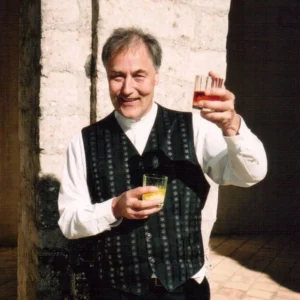
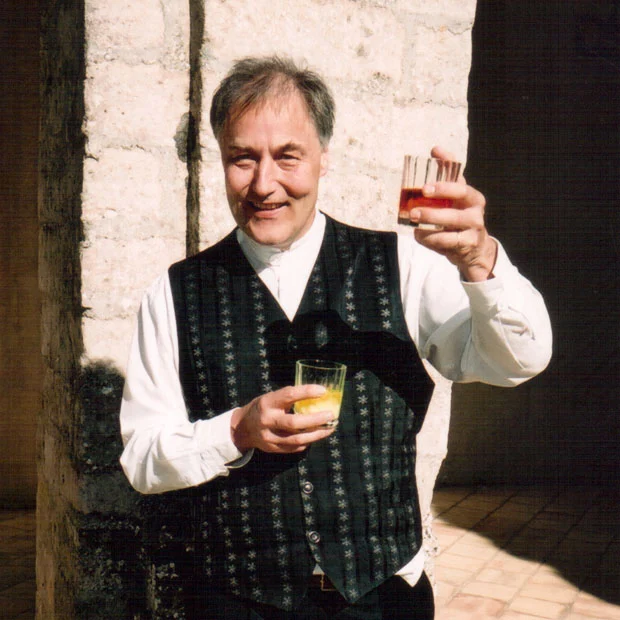
The Erice workshops were instrumental in shaping the early trajectory of molecular gastronomy, providing a platform for presenting new research, debating methodologies, and forging collaborations. They allowed for the exchange of ideas between theoretical scientists and practical culinary experts, bridging the gap between the laboratory and the kitchen. The image accompanying the article, depicting Hervé This demonstrating experiments with eggs immersed in colored solutions at the 2004 Erice workshop, perfectly encapsulates the spirit of these gatherings: hands-on, inquisitive, and dedicated to revealing the hidden science of food. These international conferences played a pivotal role in disseminating the principles of molecular gastronomy globally, inspiring a new generation of chefs and scientists to explore the culinary landscape with a scientific lens.
A "Treasure Trove" for Professionals and Enthusiasts Alike
The collective output of these seminars and workshops, now summarized and made accessible, is indeed a "treasure trove" for a broad spectrum of individuals. For professional chefs, it offers more than just theoretical knowledge; it provides actionable insights to refine techniques, ensure consistency, and innovate with greater precision. Understanding the scientific basis of a sauce’s emulsification or a soufflé’s rise empowers chefs to troubleshoot problems and push the boundaries of flavor and texture with confidence. The findings challenge them to move beyond rote execution of recipes and embrace a deeper understanding of the ingredients and processes they employ daily.
For food scientists and chemists, the documents offer a wealth of empirical data and practical examples that can inspire further research. They highlight the complex interplay of physical and chemical forces in food systems, providing a rich source of questions for academic inquiry. The interdisciplinary nature of the work also encourages collaboration between food science departments and culinary arts programs, fostering a holistic approach to food research.
Culinary students and educators will find the material invaluable for curriculum development and hands-on learning. The seminar results can serve as compelling case studies, demonstrating the application of scientific principles in a real-world context. This approach helps students develop critical thinking skills, encouraging them to question, experiment, and analyze, rather than simply memorize recipes. It transforms cooking from a vocational skill into an intellectual pursuit, preparing students for a dynamic and evolving food industry.
Even for the enthusiastic home cook, these summaries offer empowering knowledge. They demystify common kitchen processes, explain why certain techniques work (or don’t), and provide a foundation for more confident and creative cooking. By understanding the science behind baking, roasting, or braising, home cooks can achieve more consistent results and embark on their own culinary experiments with greater insight. The philosophy of questioning and testing, central to the seminars, encourages a more engaged and informed approach to everyday cooking.
Impact on Culinary Practices and Education
The enduring legacy of Hervé This and the molecular gastronomy seminars is evident in the profound shift in culinary practices and education worldwide. Prior to their work, cooking was largely an empirical art, with knowledge passed down through apprenticeships and intuition. Molecular gastronomy introduced a paradigm shift, advocating for an evidence-based approach. This has led to a greater appreciation for precision, measurement, and controlled experimentation in professional kitchens. Chefs are now more likely to consult scientific literature or collaborate with food scientists to solve culinary challenges or develop new dishes.
This scientific rigor has also permeated culinary education. Leading culinary schools now often incorporate elements of food science and molecular gastronomy into their curricula. Students learn about thermodynamics, rheology, and colloid chemistry alongside traditional knife skills and classical French techniques. This integrated approach prepares graduates not only to execute recipes but also to understand, adapt, and innovate, making them more versatile and adaptable to the evolving demands of the food industry. The debunking of culinary myths, a cornerstone of the seminars’ work, has liberated chefs and cooks from adherence to ineffective or counterproductive traditions, allowing for more efficient and effective cooking methods.
Beyond the Kitchen: Broader Scientific Implications
Beyond its direct impact on cooking, molecular gastronomy has significant broader scientific implications. It stands as a testament to the value of interdisciplinary research, blending chemistry, physics, biology, and sensory science to understand a complex human activity. The methodologies developed and refined through the Paris seminars offer a model for applying scientific inquiry to seemingly mundane aspects of daily life, demonstrating that scientific principles are omnipresent.
The field contributes to fundamental food science research by providing detailed insights into ingredient functionality, flavor perception, and the stability of food products. Understanding the molecular interactions during cooking can lead to innovations in food processing, preservation, and the development of novel ingredients or dietary solutions. For instance, the study of how different cooking methods affect nutrient retention or bioavailability has clear implications for public health and nutrition. Moreover, the emphasis on rigorous documentation and reproducibility in molecular gastronomy aligns with the highest standards of scientific research, reinforcing the importance of empirical evidence in all scientific endeavors.
Chronology of Key Milestones in Molecular Gastronomy
The journey of molecular gastronomy, from a nascent idea to a recognized scientific discipline, is marked by several key milestones:
- 1969: Nicholas Kurti delivers his seminal lecture, "The Physicist in the Kitchen," at the Royal Society in London, planting the seeds for a scientific approach to cooking.
- 1980s: Hervé This, a young physical chemist, begins systematically collecting and questioning culinary wisdom, identifying a gap in scientific understanding.
- 1988: Hervé This and Nicholas Kurti officially coin the term "Molecular Gastronomy" to define the scientific study of culinary phenomena.
- Early 1990s: The first International Workshop on Molecular Gastronomy is held in Erice, Italy, bringing together an international cohort of scientists and chefs to discuss the new field.
- Mid-1990s Onwards: Hervé This establishes and regularly conducts the monthly molecular gastronomy seminars in Paris, developing a systematic approach to experimentation and documentation.
- 2004: The International Workshop on Molecular Gastronomy in Erice continues to serve as a vital forum for the field, as evidenced by the image depicting Hervé This at this particular event.
- 2000s-2010s: Molecular gastronomy gains increasing academic recognition, leading to publications, books, and its integration into university curricula and culinary school programs globally.
- 2020: Hervé This releases the comprehensive summary of 20 years of results from the Paris molecular gastronomy seminars, making a vast body of knowledge widely accessible.
The Future of Food Science and Gastronomy
The release of this extensive summary from Hervé This’s seminars not only commemorates past achievements but also lays a robust foundation for the future of food science and gastronomy. In an era increasingly focused on precision nutrition, sustainable food systems, and personalized diets, the principles of molecular gastronomy become ever more relevant. Understanding the intricate molecular dance within food allows for more informed decisions regarding ingredient selection, processing, and consumption, addressing challenges related to food waste, resource efficiency, and dietary health.
The ongoing dialogue between scientists and chefs, fostered by pioneers like Hervé This, is crucial for continued innovation. As new technologies emerge, from artificial intelligence in recipe development to advanced analytical techniques for flavor profiling, the foundational scientific understanding provided by molecular gastronomy will guide their application. The legacy of Hervé This is not merely in the term he coined, but in the enduring spirit of curiosity, rigorous experimentation, and open sharing of knowledge that he has championed for decades. This latest release ensures that his profound influence will continue to inspire and inform culinary and scientific exploration for generations to come, encouraging a culture of continuous questioning and discovery in the world of food.