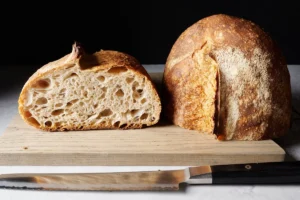

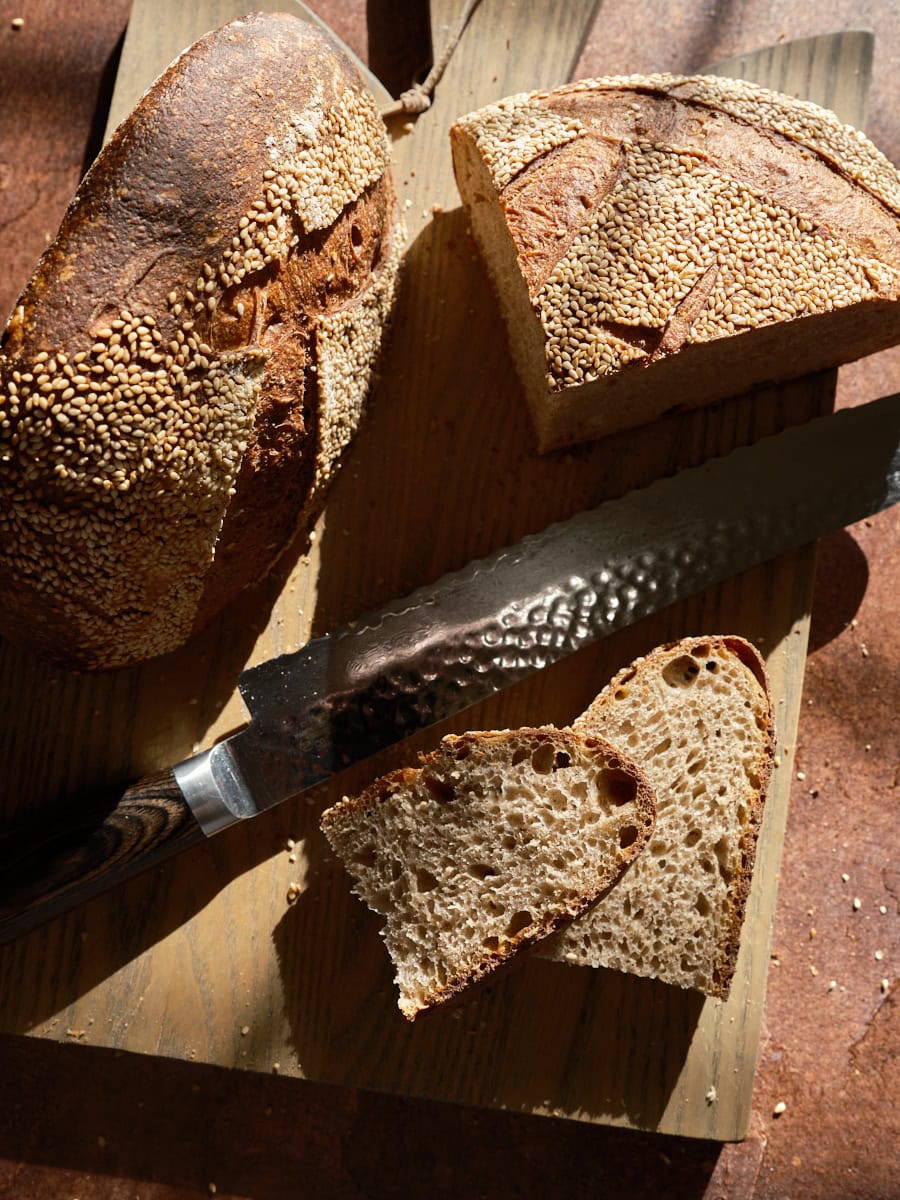
The persistent chill that has clung to the month far longer than anticipated has found its perfect antidote in a robust, spice-forward sourdough. This particular loaf, a testament to the enduring power of artisanal baking, offers a comforting warmth that penetrates the deepest of winter doldrums. While the early darkness and dry air of these frigid months may not be conducive to outdoor activities, they certainly serve as a potent motivator to fire up the oven and welcome a well-proofed dough within its embrace. The journey of creating this bread, from the initial pungent aroma of freshly ground anise to the rich sweetness of malt, the visual appeal of a buckwheat-speckled dough, and the silken texture derived from a flour scald, provides a welcome distraction from the encroaching cold.
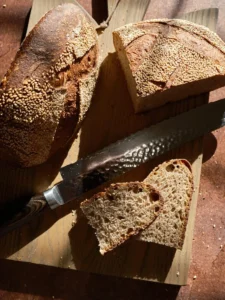
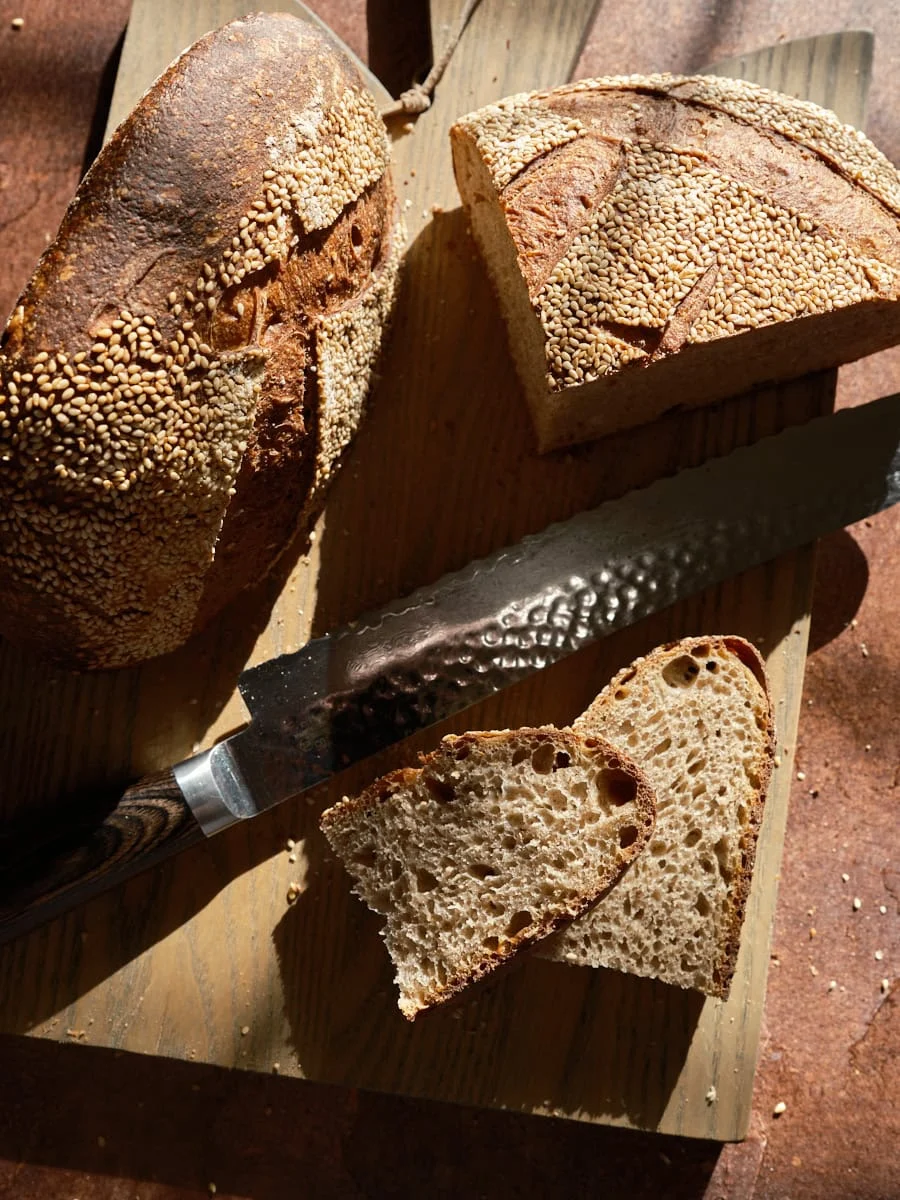
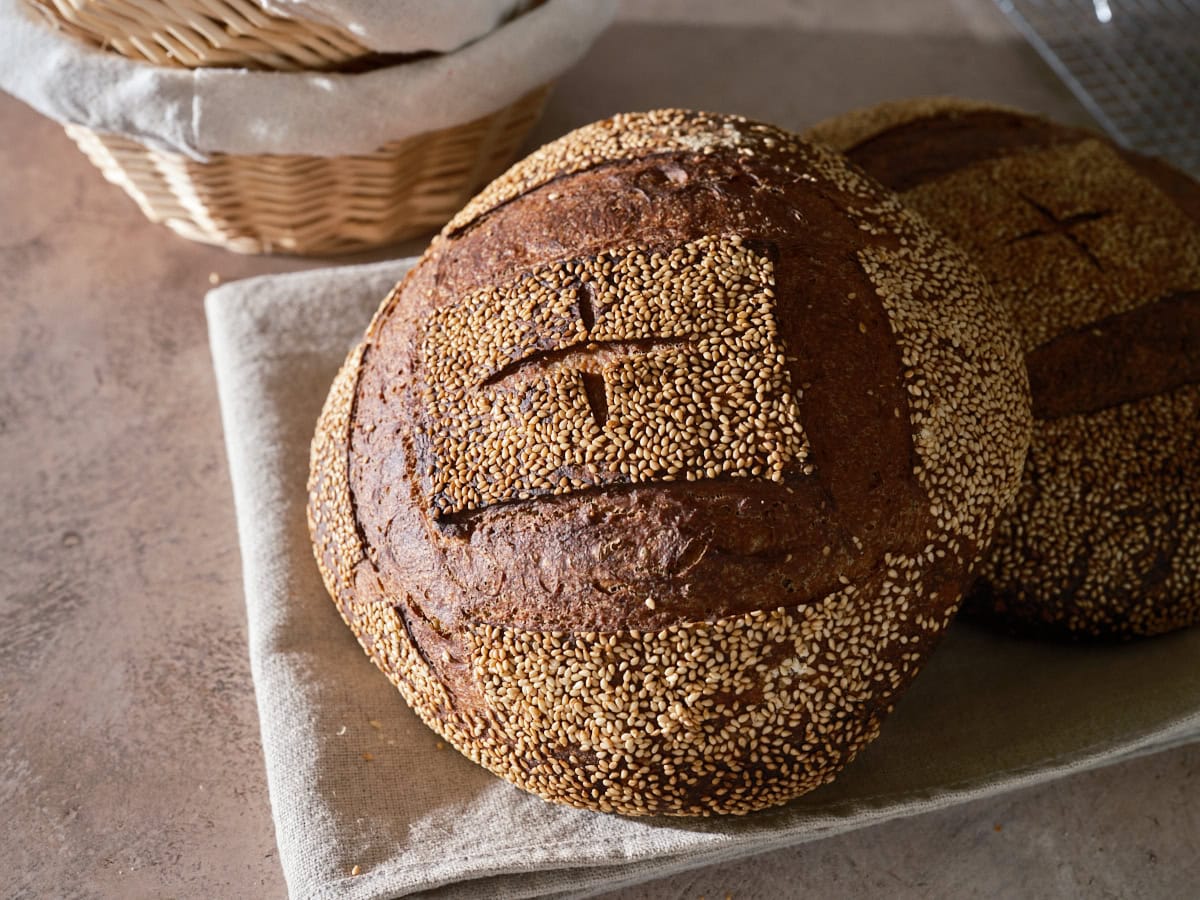
Anise, a spice that announces its presence with an assertive, licorice-sweet fragrance, is a cherished ingredient in the world of baking. Its potent aroma doesn’t politely wait for acknowledgment; it arrives with undeniable character. While it frequently finds its way into biscotti, as seen in the author’s cookbook, and various cookies, its integration into a large loaf of sourdough bread marks a novel exploration. When this warm, assertive spice is paired with the nutty, mineral, and slightly tannic notes of buckwheat, the result is a sourdough bread that achieves a remarkable balance and an irresistible allure. To crown this flavorful creation, striking white sesame seeds are generously applied, their subtle flavor complementing the spice and sweetness while adding a visually stunning contrast to the whole-grain composition.
The Science Behind the Scald: Enhancing Flavor and Texture
The incorporation of buckwheat into this recipe was a deliberate choice, inspired by the desire for a heartier loaf. The technique of scalding flour, a simple yet effective method, was employed to not only amplify the inherent flavors of the grains but also to significantly enhance the textural qualities of the final bread. Scalding involves covering flour with boiling water, a process that gelatinizes the starches. This transforms the flour into a thick, aromatic paste, similar in principle to the Japanese Yudane technique and closely related to the more widely known Tangzhong method. This paste is not only rich in aroma and flavor but also plays a crucial role in retaining moisture within the bread, thereby extending its freshness and delaying the onset of staleness. This easy-to-implement technique adds an extra dimension to each loaf, elevating it beyond the ordinary.
Flour Selection: A Foundation of Flavor and Nutrition
The foundation of this hearty, sandwich-ready loaf is a high-extraction (Type 85) flour. Specifically, Cairnspring’s Trailblazer, a versatile flour known for its robust performance in baking, was chosen. This type of flour, which includes a greater proportion of bran and germ compared to standard white flour, contributes a more profound flavor and enhanced nutritional profile to the bread. Buckwheat, while celebrated for its distinct earthiness and striking color, requires careful consideration. Drawing from past baking experiences, it’s understood that buckwheat, lacking the gluten structure of wheat, can tighten the crumb when used in larger percentages. However, even in modest amounts, it imparts an intense earthiness and a beautiful hue that enriches the visual appeal of the finished product.
A Measured Approach: The Baking Schedule
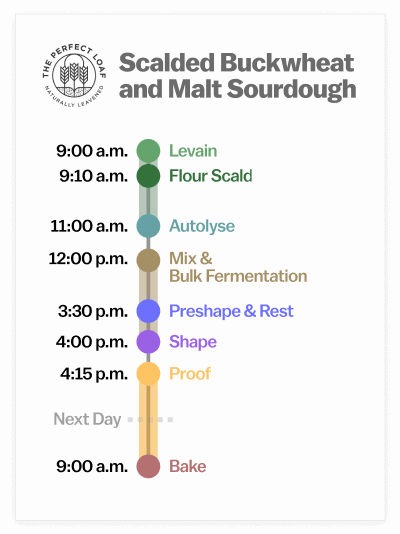
This sourdough bread recipe is designed for a two-day process, minimizing the need for constant baker intervention. The baker is primarily required to monitor the dough during bulk fermentation and, after shaping, to allow it to undergo a cold proof overnight in the refrigerator. The following day, the loaves can be baked in the morning for immediate enjoyment or kept chilled until the evening, providing fresh bread for dinner. This methodical approach ensures optimal flavor development and a superior crumb structure.
Vitals of the Recipe
This recipe yields two approximately 900-gram loaves. For bakers wishing to produce a single loaf, all ingredient quantities can be halved. Comprehensive spreadsheets for scaling recipes are often made available to baking community members, allowing for precise adjustments.
- Total Dough Weight: 1,800 grams
- Prefermented Flour: 5.8%
- Levain in Final Dough: 18.5%
- Hydration: 75.0% (calculated at 83% when including the water from the flour scald)
- Yield: Two 900g loaves
The target final dough temperature for this recipe is 78°F (26°C). Understanding and controlling dough temperature is a critical aspect of successful sourdough baking, influencing fermentation rates and dough development.
Total Formula Breakdown
| Weight (g) | Ingredient | Baker’s Percentage |
|---|---|---|
| 46 | Scald: Buckwheat flour (e.g., Anthony’s Organic Buckwheat Flour) | 5.0% |
| 73 | Scald: Water | 8.0% |
| 687 | High-extraction wheat flour (Type 85; e.g., Cairnspring Trailblazer) | 75.0% |
| 183 | Whole wheat flour (e.g., Camas Country Hard Red Wheat) | 20.0% |
| 46 | Barley malt syrup | 5.0% |
| 6 | Aniseed, ground | 0.6% |
| 596 | Water 1 (for levain and autolyse) | 65.0% |
| 92 | Water 2 (for final mixing) | 10.0% |
| 18 | Fine sea salt | 2.0% |
| 53 | Ripe sourdough starter, 100% hydration | 5.8% |
The Method: A Step-by-Step Guide to Crafting the Loaf
1. Prepare the Levain – Approximately 9:00 a.m.
- Levain Formula:
- 53g High-extraction wheat flour
- 53g Water (100% hydration)
- 53g Ripe sourdough starter (100% hydration)
Combine the levain ingredients in a clean jar or container. Cover and allow to ripen at a warm temperature, ideally between 74-76°F (23-24°C), for approximately three hours. For those who wish to adjust the levain quantity for different recipes or batch sizes, a specialized sourdough starter and levain calculator can be a valuable tool.
2. Prepare the Flour Scald – Approximately 9:10 a.m.
- Scald Formula:
- 46g Buckwheat flour
- 73g Water, boiling
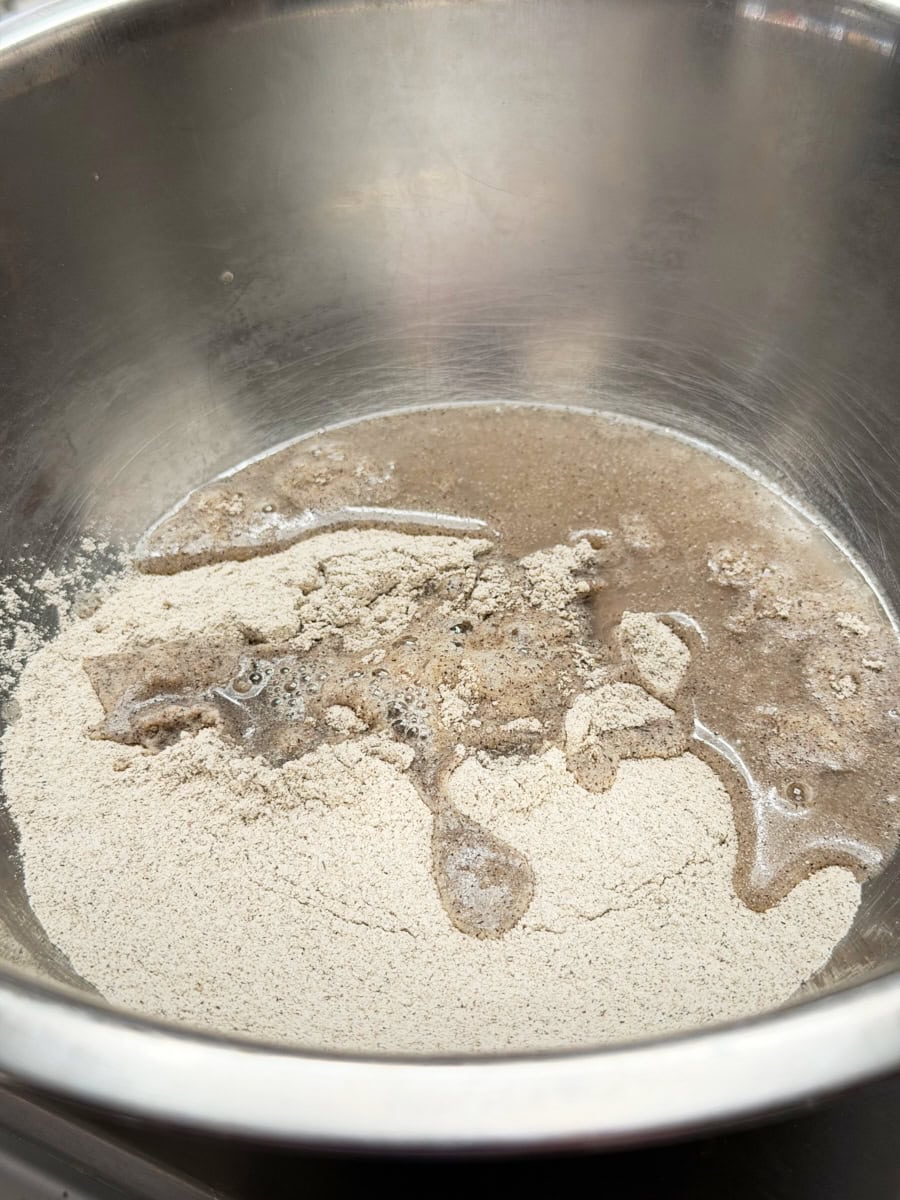
In a small bowl, combine the buckwheat flour. Gradually pour the boiling water over the flour, stirring continuously until a thick paste forms. If the mixture appears too dry, add a small additional splash of boiling water. Cover the bowl and set aside until ready for incorporation into the main dough. The resulting scald is intensely aromatic and flavorful.
3. Autolyse – Approximately 11:00 a.m.
- Autolyse Ingredients:
- 634g High-extraction wheat flour
- 183g Whole wheat flour
- 543g Water 1 (for autolyse)
- Entire flour scald (from Step 2)
Utilize a water temperature calculator to ensure the autolyse water is adjusted to achieve the target final dough temperature of 78°F (25°C) for this recipe. In a large mixing bowl, combine the flours, Water 1, and the prepared flour scald. Mix with wet hands or a mixer on low speed until no dry flour remains. The dough will appear shaggy and loose at this stage. Use a bowl scraper to gather the dough towards the bottom of the bowl. Cover the bowl and let it rest near the ripening levain for one hour. Following the autolyse, the dough should exhibit increased strength and hydration.
4. Mixing the Dough – Approximately 12:00 p.m.

- Mixing Ingredients:
- 92g Water 2 (for mixing)
- 18g Fine sea salt
- 159g Ripe levain (from Step 1)
This recipe features a high hydration level, resulting in a dough that will feel slack and sticky. It is crucial to reserve Water 2 and add it incrementally only if the dough can readily incorporate it. This "bassinage" technique helps prevent over-hydration.
-
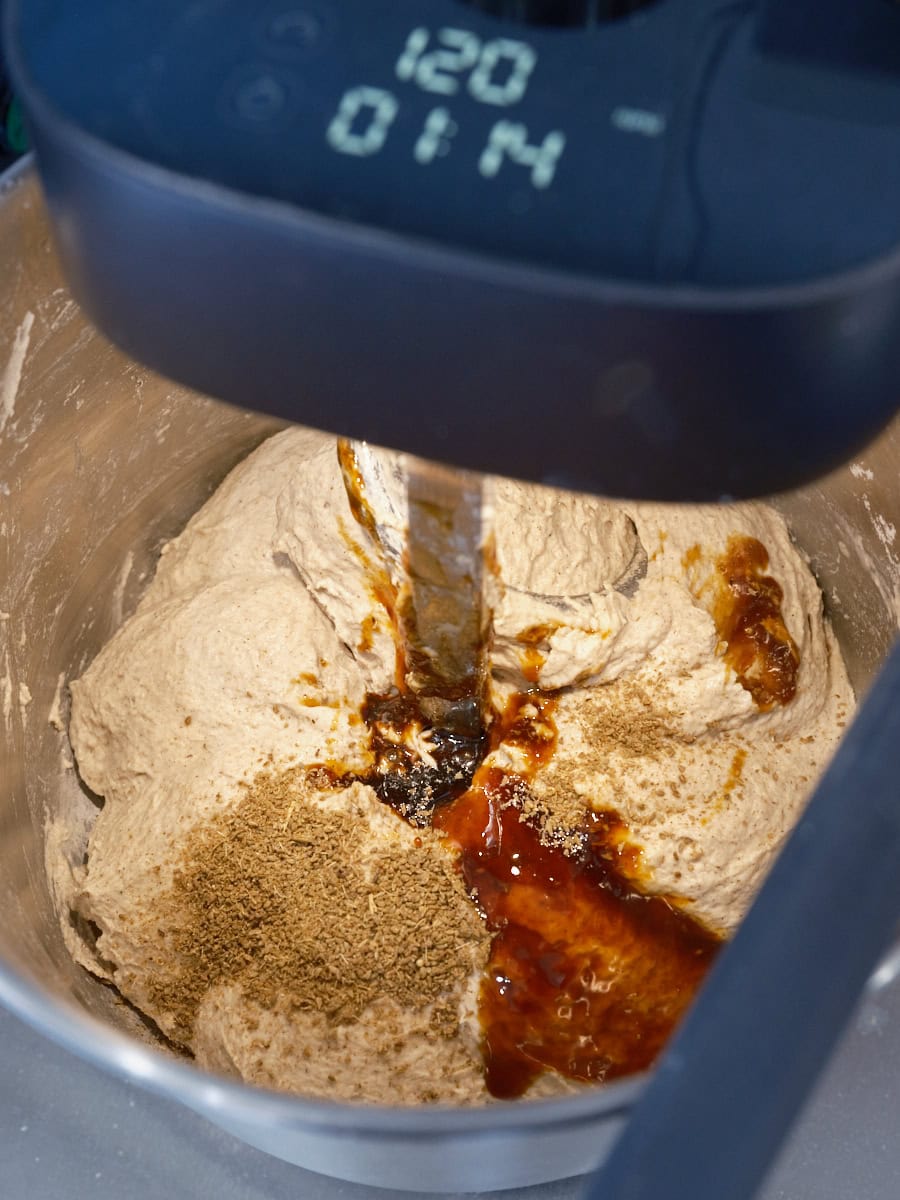
Mechanical Mixing: For those using a stand mixer with a spiral hook, such as the Ooni Halo Pro, the dough can be mixed in stages after the autolyse. Initial mixing incorporates the salt and levain, with Water 2 added gradually. The dough is then mixed for approximately 8-10 minutes until it begins to pull away from the sides of the bowl, developing a smooth and elastic consistency.
-
Hand Mixing: To mix by hand, add the salt and levain to the top of the autolysed dough. Incorporate a splash of Water 2 to moisten. Thoroughly mix using wet hands or a dough whisk. Subsequently, knead the dough for approximately 5 minutes using either the slap-and-fold technique or the folds-in-the-bowl method until it becomes smooth and cohesive. Transfer the dough to a clean container, cover, and let it rest for 10 minutes. If the dough remains very wet, incorporate the remaining Water 2. If it feels cohesive but still shaggy, the remaining water can be added and mixed in. After this, perform a final series of slap-and-folds on a lightly floured surface for 3-5 minutes until the dough is smooth and elastic. Alternatively, perform a series of folds within the bowl to minimize mess. Transfer the dough to a bulk fermentation container and cover.
5. Bulk Fermentation – Approximately 12:30 p.m. to 3:30 p.m. (3 hours)
Under warm room conditions (74-76°F or 23-24°C), bulk fermentation should last approximately 3 hours. This phase requires two sets of stretch-and-folds, performed at 30-minute intervals. After the first 30 minutes of bulk fermentation, perform the first set of stretches and folds. Gently stretch one side of the dough upwards and fold it over the mass. Rotate the bowl 180 degrees and repeat. Rotate again by 90 degrees for another stretch and fold, followed by a final 180-degree rotation and stretch and fold. Cover the dough. Perform a second set of stretch-and-folds after another 30 minutes. Following this, allow the dough to rest, covered, for the remainder of the bulk fermentation period. The dough should appear smooth, puffy, and have increased in volume by approximately 30%.
6. Pre-shape – Approximately 3:30 p.m.
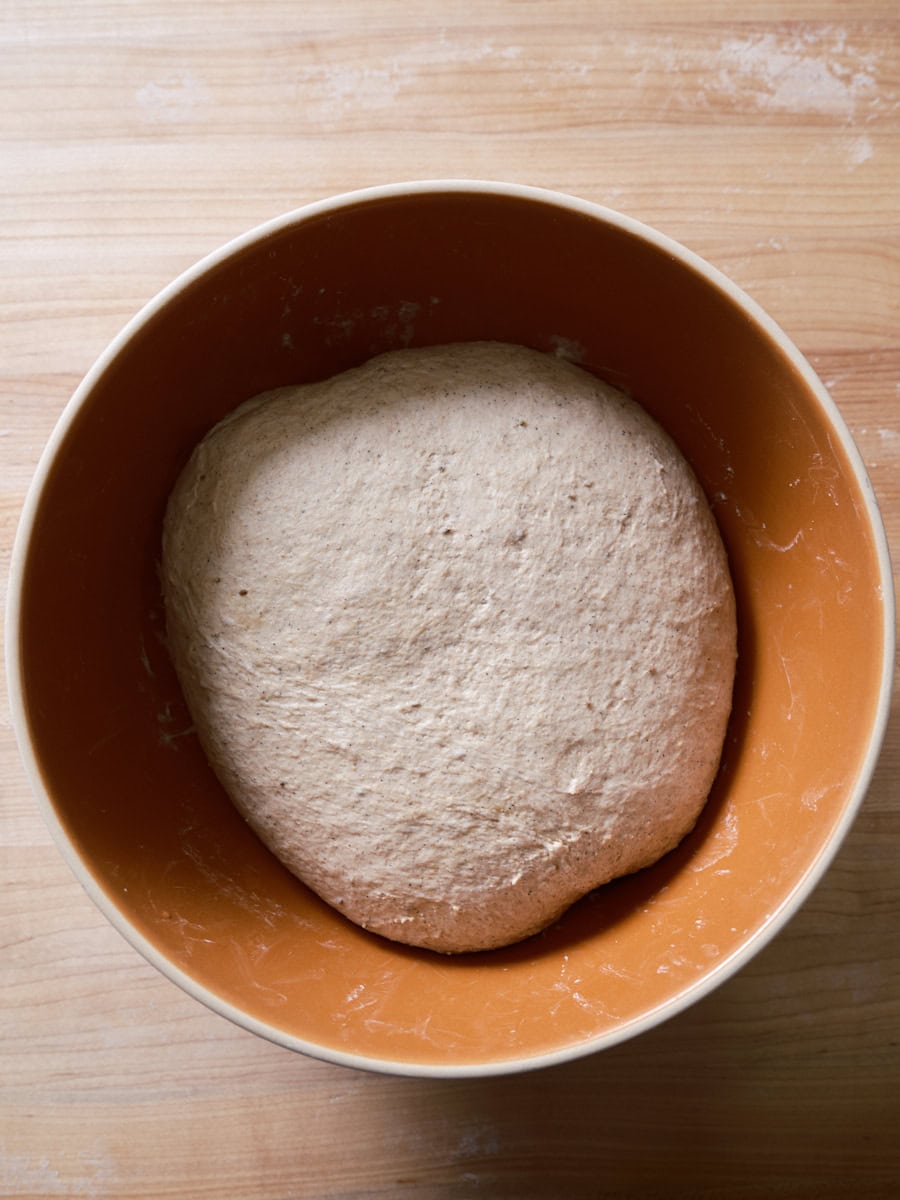
Gently turn the dough out onto a lightly floured work surface. Divide the dough in half and carefully pre-shape each portion into a loose round. Allow these rounds to rest, uncovered, for 30 minutes.
7. Shape – Approximately 4:00 p.m.
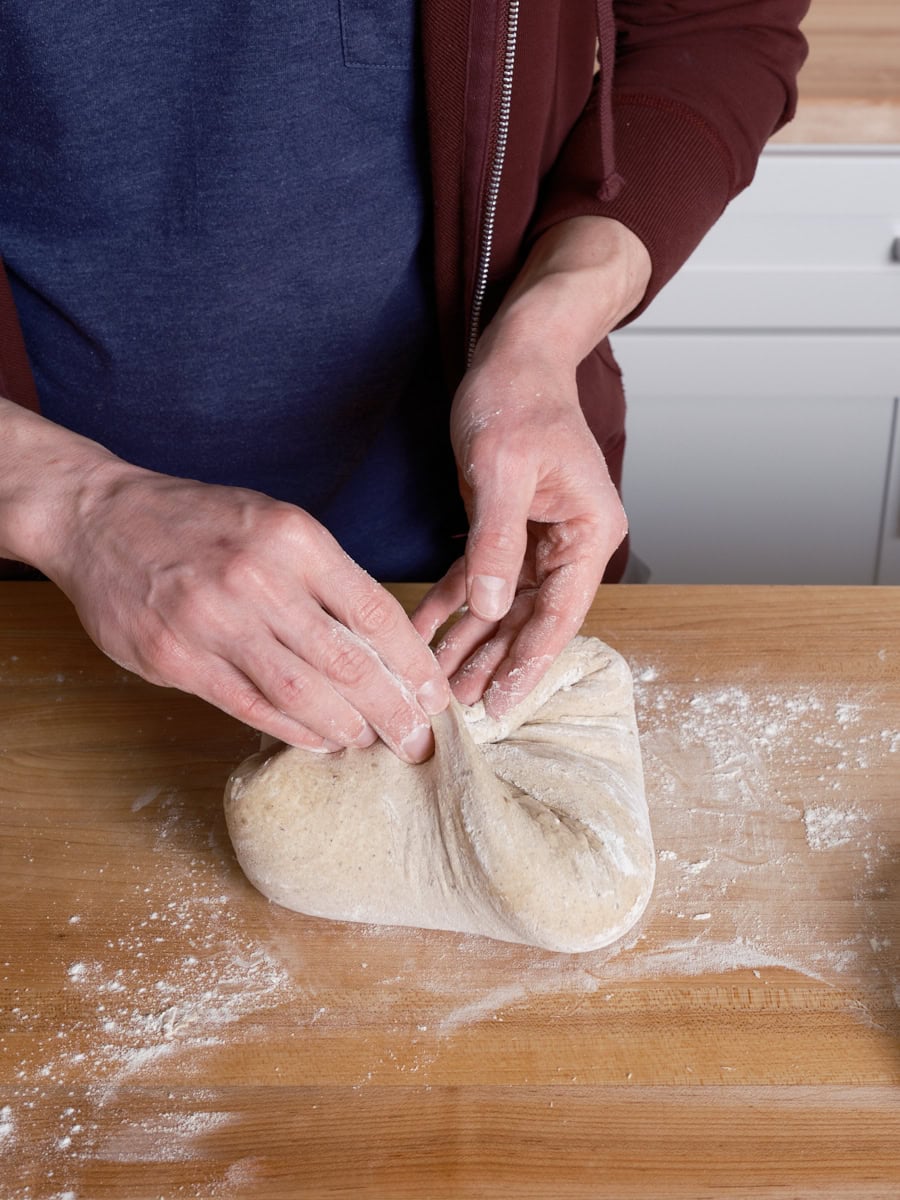
Prepare a clean kitchen towel or a quarter-sheet pan by spreading an even layer of raw white sesame seeds. For shaping, a "gather up" method is recommended. Lightly flour the tops of the rested dough rounds. Using a bench scraper, flip one dough round onto the lightly floured surface. Take two opposing points on the edge of the dough and fold them towards the center, overlapping slightly. Repeat with the remaining two opposing points. Flip the dough over and use your hands to gently pull the dough towards your body, creating surface tension. The goal is to achieve a smooth, round shape. Gently scoop the shaped dough with both hands and invert it onto the prepared sesame seeds. Transfer the dough, seam-side up, into a round 10-inch proofing basket. Repeat this process for the second piece of dough.
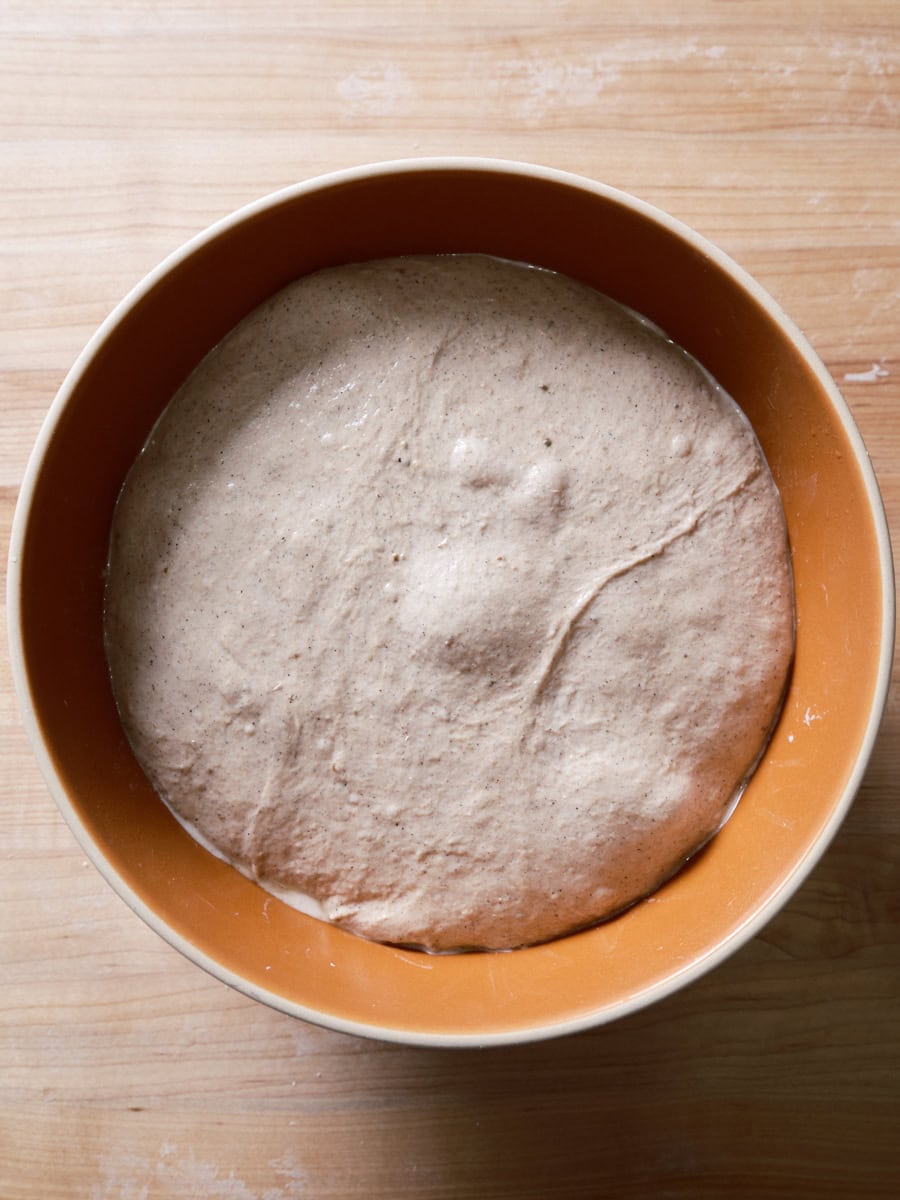
8. Proof – Approximately 4:15 p.m. to 9:00 a.m. (Overnight)
Cover the proofing baskets with reusable plastic bags, sealing them securely. Place the baskets in the refrigerator for an overnight cold proof.
9. Bake – Approximately 9:00 a.m. the Following Day
Preheat the oven with a baking vessel (Dutch oven, combo cooker, or baking stone/steel) on the bottom third rack to 450°F (230°C). If using a baking stone or steel, place an empty pan at the bottom for steam generation.
Remove one proofing basket from the refrigerator. Uncover the dough and place a piece of parchment paper over the basket. Position a pizza peel or inverted baking sheet on top of the parchment. With both hands, carefully flip the entire assembly over. Gently remove the proofing basket and score the dough. Slide the dough into the preheated baking vessel or onto the hot baking surface. Generate steam by covering the Dutch oven, or by adding ice to the preheated pan at the bottom of the oven. Bake for 20 minutes with steam.
After 20 minutes, vent the oven of steam by removing the lid of the Dutch oven or taking out the steaming pan. Continue baking for an additional 30 minutes, or until the loaves achieve a deep golden-brown color and an internal temperature of approximately 204°F (95°C). Repeat the baking process for the second loaf. Allow the baked loaves to cool completely on a wire rack for 1 to 2 hours before slicing.

Frequently Asked Questions
- What can I use instead of aniseed? Caraway seeds offer a comparable spice note and would be a suitable substitute.
- What can I use instead of barley malt syrup? For a more complex bitter-sweet profile, blackstrap molasses can be used. Alternatively, honey provides a floral sweetness that also pairs exceptionally well with anise.
This Scalded Buckwheat and Malt Sourdough Bread is more than just a recipe; it’s an invitation to find comfort and joy in the slow, deliberate act of creation, a delicious counterpoint to the lingering winter’s embrace.