
Dough hydration, a seemingly simple metric in sourdough bread baking, unveils itself as one of the most intricate and nuanced aspects of the craft. Far from being a mere number in a recipe, it represents a dynamic interplay between the baker and the dough, influenced by a myriad of factors including ambient temperature, humidity, and critically, the type of flour used. This in-depth guide delves into the accumulated knowledge surrounding dough hydration, exploring the scientific principles behind the percentages and offering practical strategies for bakers to adapt and excel, whether facing a stubbornly sticky mass or a dense, underdeveloped loaf. Understanding hydration is frequently the key to unlocking superior bread-making results, expanding upon concepts often introduced in more comprehensive sourdough bread resources.
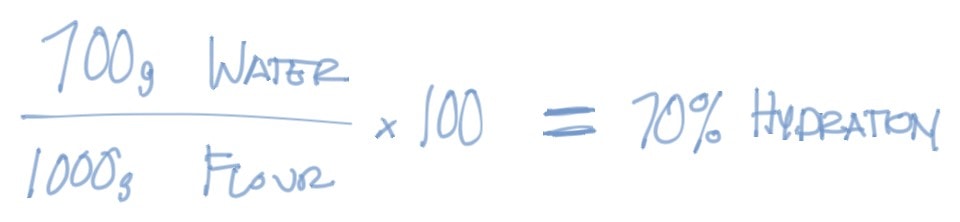
At its core, dough hydration is defined as the total amount of water in a recipe, expressed as a percentage relative to the total flour weight. The calculation is straightforward: divide the weight of the water by the total weight of the flour and multiply by 100. For instance, a recipe calling for 1,000 grams of flour and 700 grams of water yields a hydration level of 70% (700g water / 1000g flour * 100 = 70%). This percentage serves as an essential initial indicator for bakers, providing a predictive understanding of the dough’s expected behavior before the mixing process even begins.
However, a crucial realization for any aspiring baker is that a dough’s hydration percentage is a guideline, not an immutable rule. Flour, the fundamental ingredient, is not a static entity. Its water absorption capabilities vary significantly based on its type, the mill it originated from, and even the specific batch within a single bag. Environmental conditions, such as temperature and humidity, also play a role, though their impact is often less pronounced unless there are drastic diurnal shifts. A dough that mixes smoothly and develops elasticity on a dry day might require adjustments on a subsequent day if increased humidity is present.
The Significance of Hydration in Bread Characteristics
The hydration level of a dough profoundly influences the final characteristics of the baked loaf. Water is the transformative agent that converts dry flour into a viable dough, enabling it to trap the gases produced during fermentation. Insufficient water results in a tight, resistant dough, while an excess can lead to a shapeless, soupy mixture. The spectrum between these extremes allows for a diverse range of bread styles, from loaves with substantial crusts and chewy textures achieved at lower hydration levels, to those with delicate, brittle crusts and custardy interiors characteristic of high-hydration doughs.
Lower-Hydration Bread (Typically 60-68%):
Breads baked at lower hydration levels often exhibit specific traits. The dough is generally easier to handle, making it more forgiving for novice bakers. This typically translates to a more substantial crust, which can offer a satisfying chew. The crumb structure tends to be tighter, with a more uniform cell pattern. These characteristics are often sought after in certain types of bread, such as bagels, pretzels, and some rustic loaves where a dense, chewy interior is desired. The reduced water content means less steam is generated during baking, contributing to a thicker, more robust crust.
Higher-Hydration Bread (Typically 75-85%+):
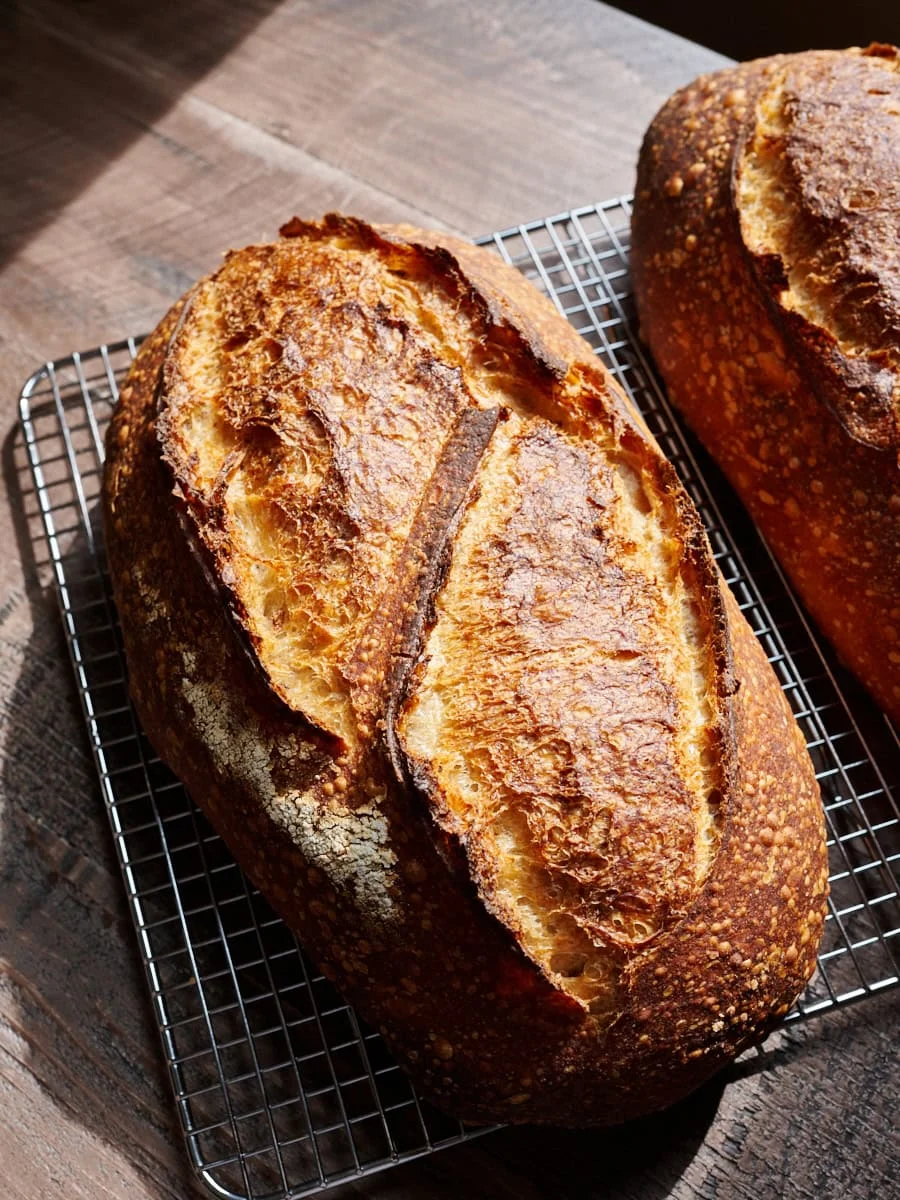
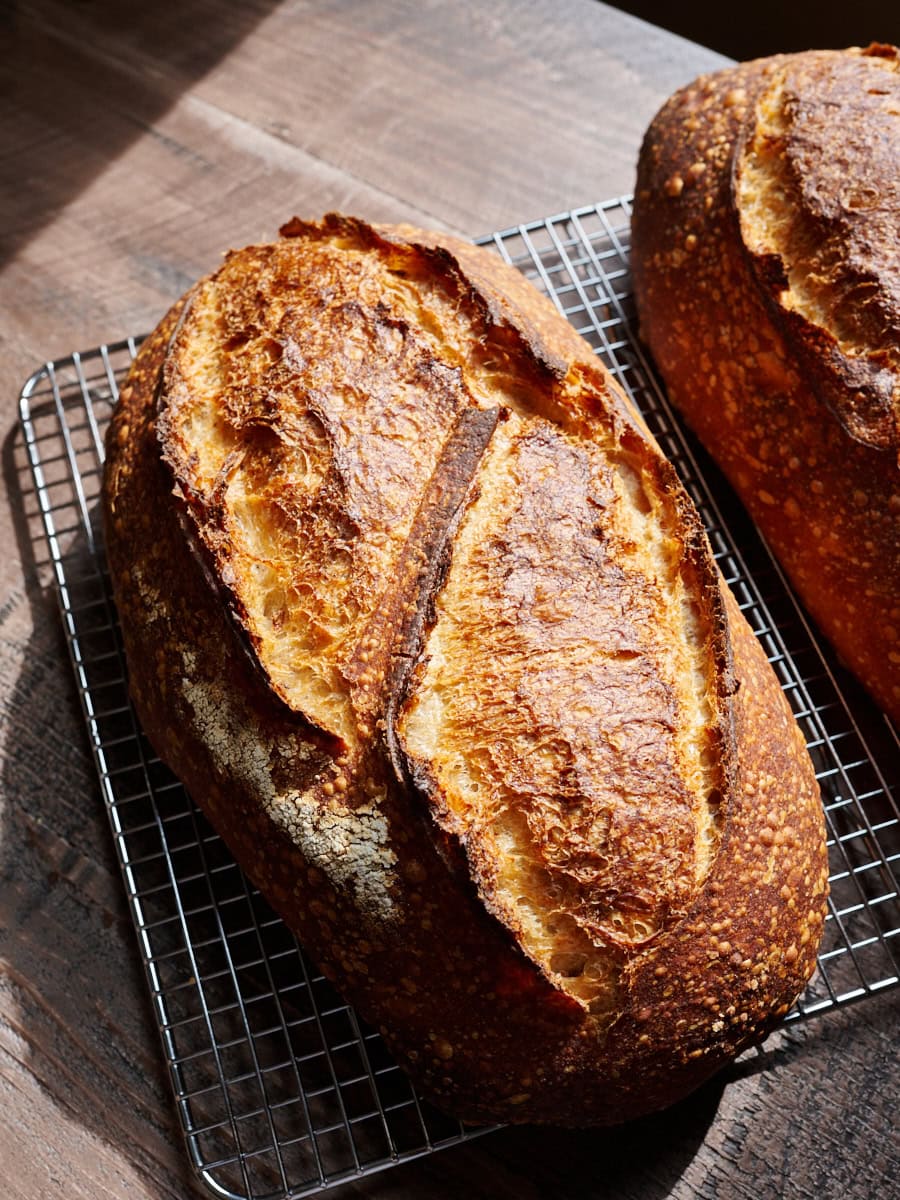
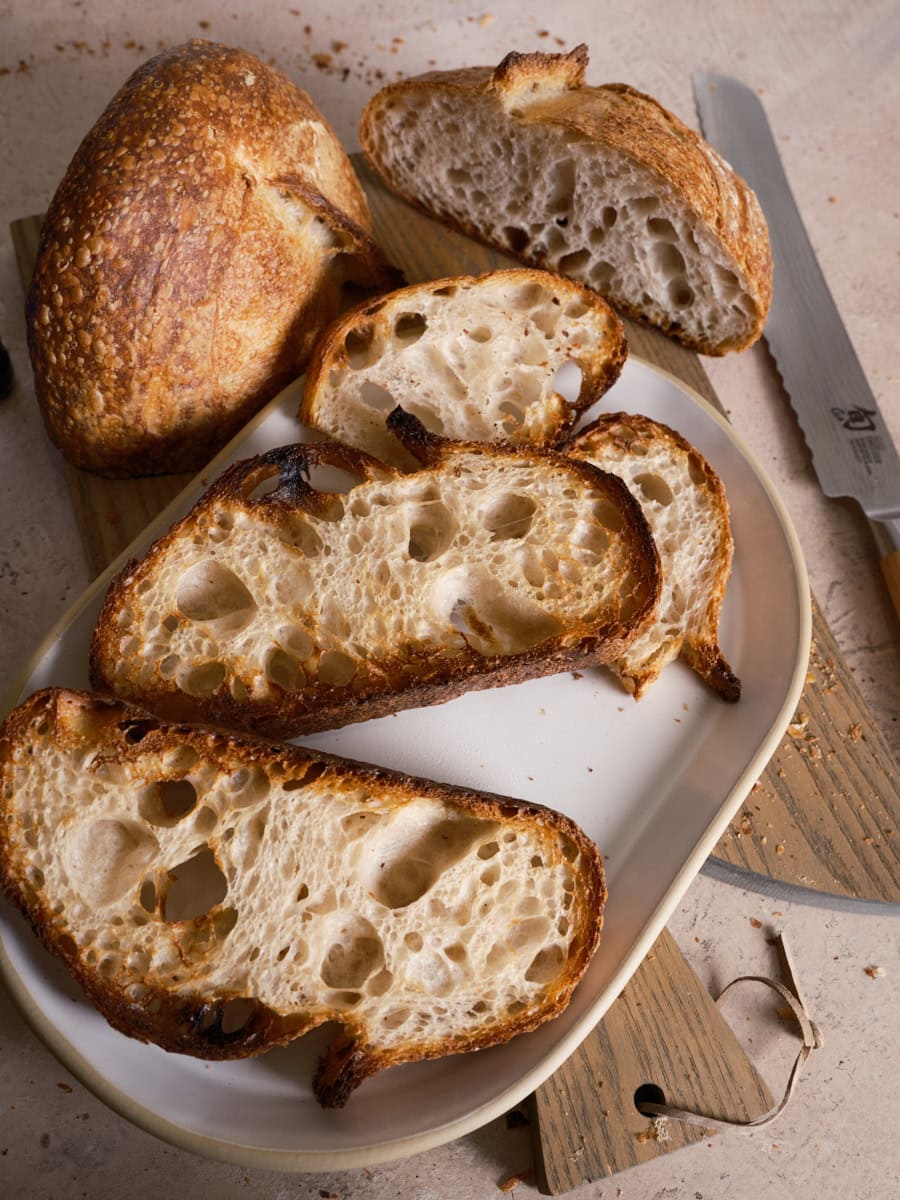
Conversely, increasing the hydration level unlocks different textural possibilities. Doughs at 75-85% hydration and above require more skill and attention during mixing and handling. They are often characterized by a thinner, more delicate crust that can shatter pleasingly when cut. The crumb structure is typically more open and irregular, with larger air pockets, giving it a custardy, melt-in-your-mouth quality. This open crumb is often the hallmark of artisanal breads like ciabatta and focaccia, where lightness and a tender interior are paramount. However, excessively high hydration can lead to a gummy texture, a loss of structural integrity shortly after baking, and a faster staling rate if not properly stored. The goal for many bakers is to find the optimal hydration that delivers desired textures and crumb without compromising volume or overall eating quality.
Is High-Hydration Bread Superior?
The pursuit of high hydration in bread baking is not inherently about achieving a "better" loaf, but rather about achieving specific textural and structural outcomes. Anecdotal evidence and common baking trends sometimes suggest that higher hydration automatically equates to superior bread. However, this is a misconception. The true measure of a loaf’s success lies in its balance of flavor, texture, and appearance, all of which are influenced by a confluence of factors, with hydration being just one.
The choice of flour is paramount. High-extraction flours, such as those common in European baking (e.g., T85), or those with a higher protein content (12-14%), possess a greater capacity for water absorption. These flours can benefit from higher hydration levels to achieve a desirable texture, preventing a gummy outcome. Conversely, softer flours with lower protein content, prevalent in some regions, may require reduced hydration to remain manageable and avoid excessive stickiness. Whole grain flours, rich in bran and germ, also absorb significantly more water. A loaf with 50% whole wheat flour, for example, might comfortably accommodate 82% hydration, a level that could be unmanageable with 100% white flour. Freshly milled flour also tends to require more water than aged flour due to its inherent properties.
Furthermore, environmental factors, such as altitude and humidity, play a tangible role. Bakers in arid, high-altitude regions like New Mexico often find themselves needing higher hydration percentages to achieve optimal dough consistency compared to those in more humid, lower-altitude environments. Even subtle daily variations in humidity can necessitate minor adjustments to water quantities. Therefore, the "ideal" hydration is not a universal constant but a variable dependent on these numerous interacting elements.
A Visual Approach to Dough Hydration
Beyond the numerical percentage, developing the ability to "read" the dough is an indispensable skill for any baker. The visual cues and tactile sensations a dough provides are often more reliable indicators than a strict adherence to a recipe’s hydration figure. A dough that feels slack and overly wet at 70% hydration with one type of flour might feel perfectly manageable at the same percentage with a different flour.
Under-Hydrated Dough (~62% or less):
Doughs at this hydration level typically appear stiff and may feel dry to the touch. They are often crumbly and difficult to bring together into a cohesive mass. When attempting to knead, the dough will resist stretching and may tear easily. It will not exhibit the characteristic smooth, elastic sheen of well-hydrated dough.
"Just Right" Hydrated Dough (~68-75%):
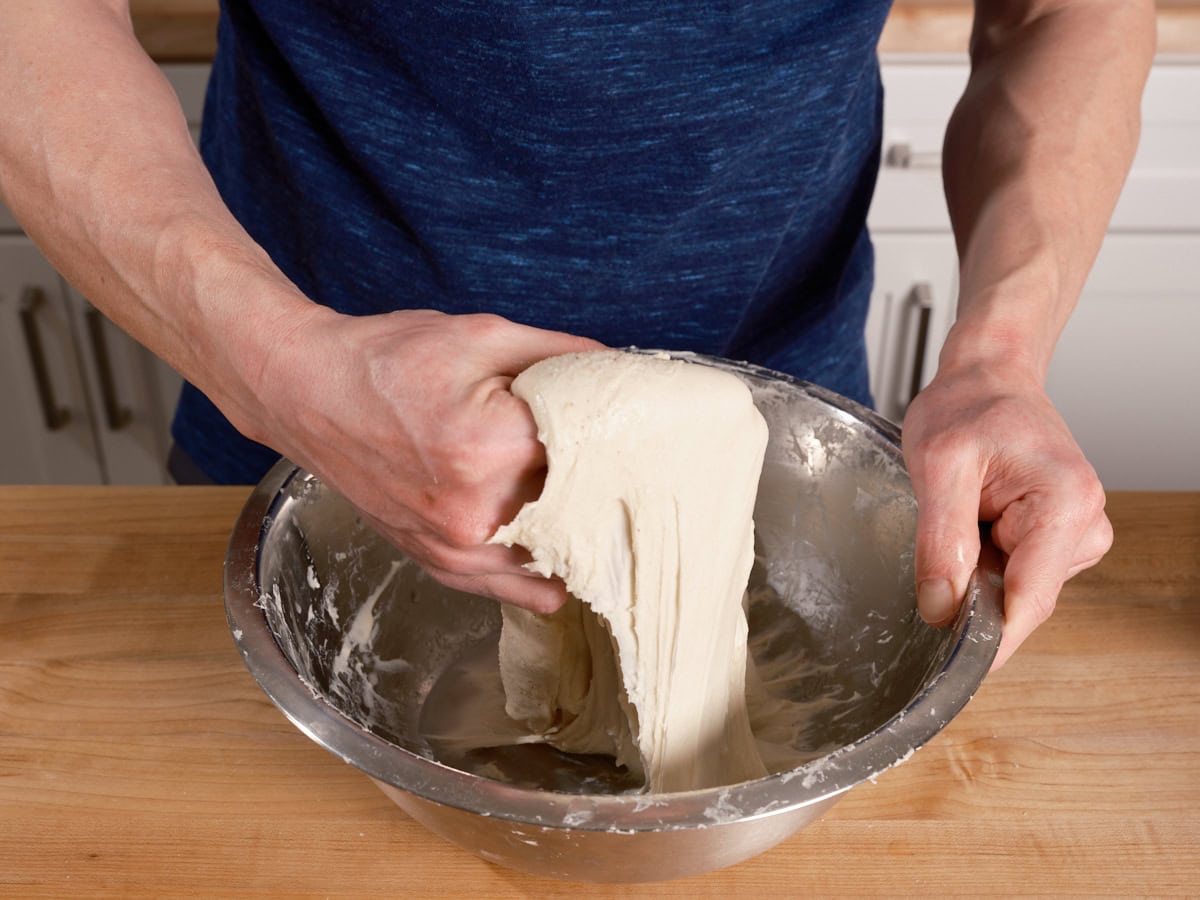
This range represents a sweet spot for many bread styles. The dough is typically smooth, elastic, and slightly tacky but manageable. It will stretch without tearing easily and will hold its shape reasonably well after initial mixing. When poked, it will spring back slowly. This level of hydration often strikes a balance between an open crumb and ease of handling.
Over-Hydrated Dough (~75%+):
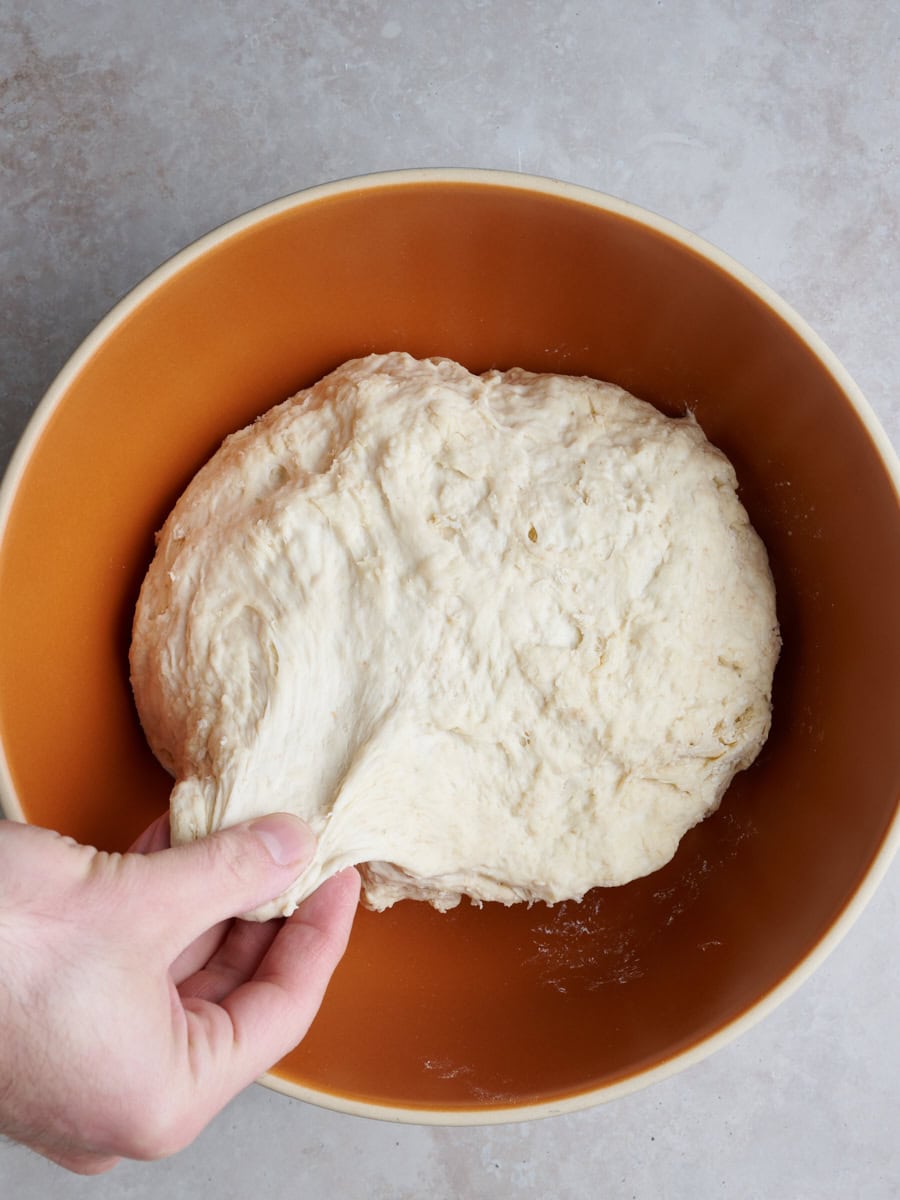
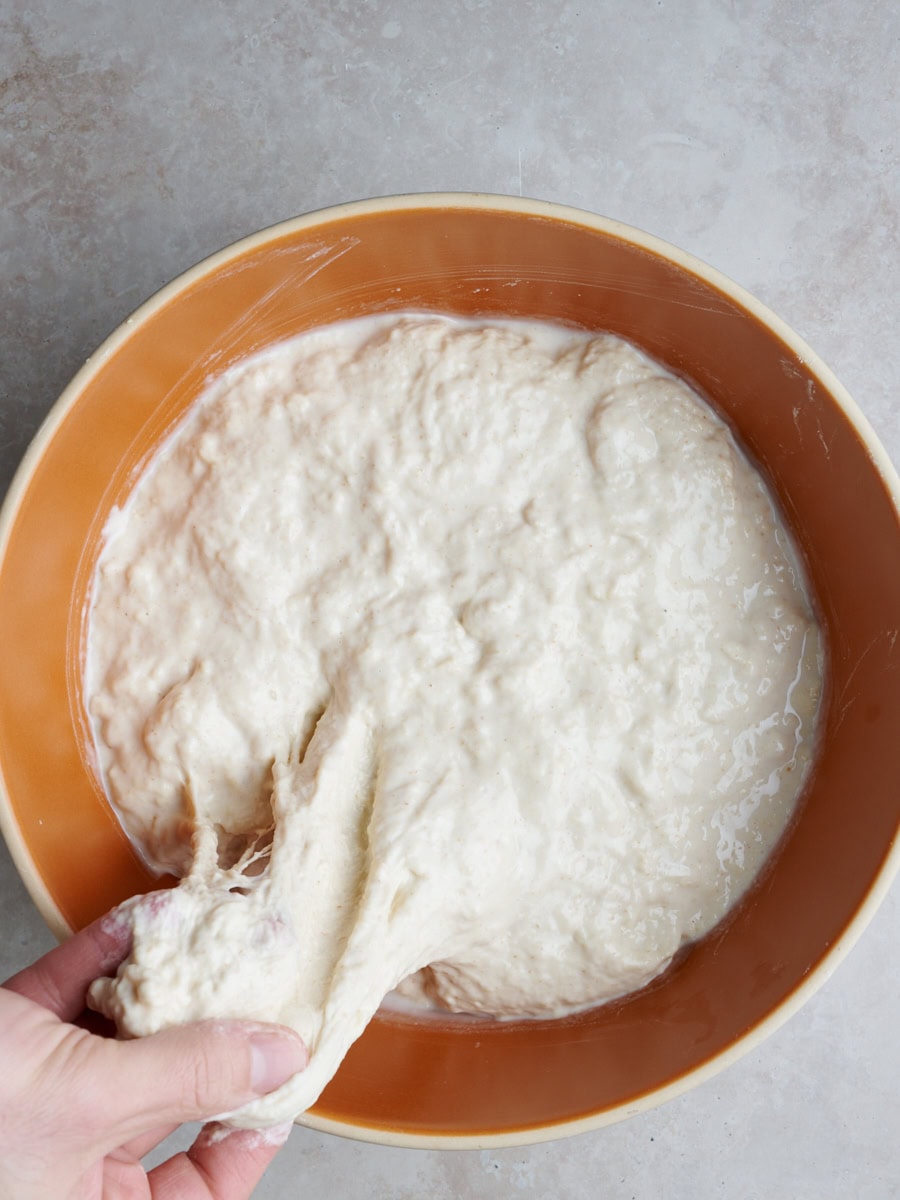
At higher hydration levels, the dough becomes noticeably slack and can be very sticky. It will spread out readily and may struggle to hold its shape, especially during shaping. It will feel wet and potentially "soupy." While it can yield a wonderfully open and tender crumb, it demands more advanced techniques for handling and proofing.
Bassinage: The Technique of Phased Hydration
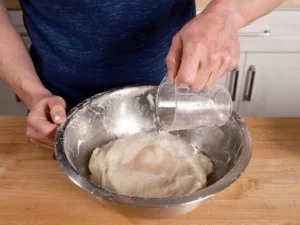
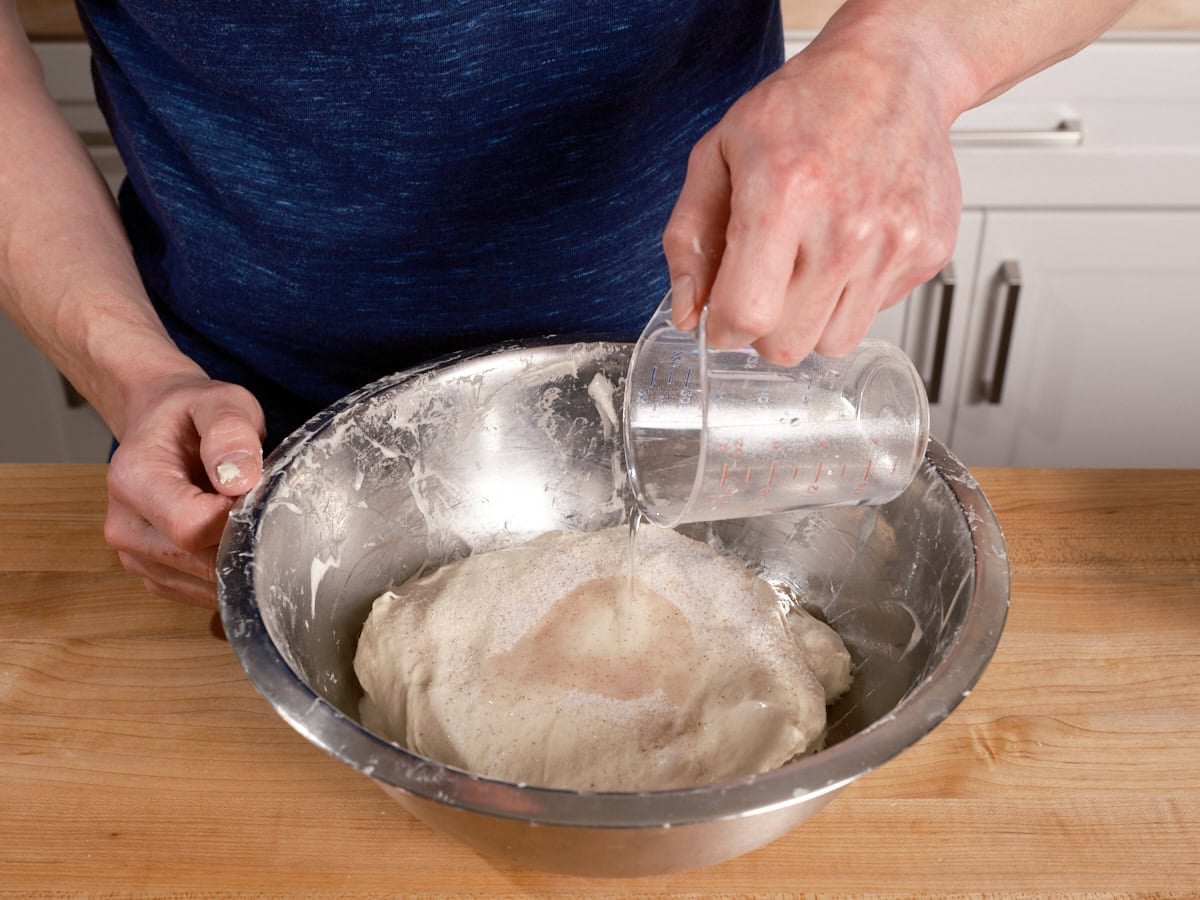
A transformative technique in managing dough hydration, particularly for higher levels, is bassinage, also known as "double hydration." This method involves adding the total water in stages rather than all at once. Typically, 80-90% of the water is incorporated during the initial mixing stages, allowing the flour starches to begin absorbing moisture and the gluten network to start developing. The remaining water is then added incrementally during the later stages of mixing.
This phased approach offers significant advantages. Firstly, it simplifies gluten development. Introducing all the water at the beginning of mixing, especially in high-hydration recipes, can make it difficult to build a strong gluten network due to insufficient friction and cohesion. By gradually incorporating the water, bakers can achieve higher hydration levels without excessively long mixing times or the risk of under-developing the dough.
Secondly, bassinage provides a crucial opportunity to assess dough strength. Holding back a portion of the water allows the baker to gauge the dough’s developing structure. If the dough feels sufficiently strong and capable of incorporating more liquid, the reserved water can be added. If it already appears slack and overly wet, the reserved water can be omitted entirely, preventing a dough that is too difficult to manage. Many advanced sourdough recipes incorporate this by specifying "Water 1" for initial mixing and "Water 2" (the bassinage water) for final adjustments.
Factors Influencing Water Absorption
Beyond the fundamental flour type, several other factors influence how much water dough will absorb and retain:

- Flour Type and Protein Content: As mentioned, higher protein flours form a stronger gluten network capable of holding more water. American bread flours, typically higher in protein, often necessitate increased hydration for optimal texture. Conversely, softer flours from other regions may require less water.
- Whole Grain Flours: The bran and germ in whole wheat, rye, and other whole grains are highly absorbent, demanding significantly more water to achieve proper dough consistency.
- Freshly Milled Flour: Flour milled at home, even when sifted, generally requires more hydration than commercially aged flour.
- Climate and Environment: Altitude, ambient temperature, and humidity all impact how flour behaves and how much water it will absorb. Dry climates generally require higher hydration, while humid environments may necessitate slightly less.
Addressing Dough Stickiness
Sticky dough is a common lament among bakers, frequently stemming from issues with hydration, dough strength, or a combination of both. Understanding the root cause is key to overcoming this challenge. Often, excessive stickiness indicates either that the hydration level is too high for the flour being used, or that the gluten network has not been sufficiently developed to contain the water.
Mastering High-Hydration Doughs
As hydration levels increase, dough stability decreases. Pushing the water content is akin to stretching the gluten matrix to its limits. Successful management of high-hydration doughs relies on specific techniques:
- Embrace Stickiness: Accept that high-hydration doughs will be sticky. Avoid the temptation to add excessive flour, which can compromise the final texture. Instead, learn to work with it.
- Utilize Wet Hands and Tools: Dampen your hands, bench scraper, and any other tools to prevent dough from adhering excessively.
- Develop Gluten Strength: Employ methods like stretch-and-folds or coil folds during bulk fermentation to build a robust gluten network capable of supporting the higher water content.
- Strategic Shaping: High-hydration doughs require gentle but firm shaping techniques. Over-handling can degas the dough, while under-handling will result in poor structure.
Hydration Quick Reference Chart
| Hydration Level | Characteristics | Best For |
|---|---|---|
| 60-65% | Stiff, easy to handle, potentially thicker crust | Bagels, pretzels, pizza, some pan loaves |
| 65-70% | Balanced, manageable, good structure | Classic breads, beginner-friendly sourdough |
| 70-75% | Moderately open crumb, thin crust | Classic country loaves, baguettes |
| 75-80% | Requires longer mixing, tender crumb, requires skill | Ciabatta, focaccia, open-crumb loaves, sandwich loaves |
| 80%+ | Requires longer mixing, typically more open crumb, challenging to shape | High-hydration loaves, exceptionally tender and custardy interiors |
Addressing Common Questions
Why can’t I just add more flour if my dough is too wet?
While seemingly a simple solution, adding flour to a dough that is already mixed disrupts the carefully calculated ratios of ingredients based on baker’s percentages. Each ingredient (salt, levain, etc.) is a percentage of the total flour weight. Altering the flour weight necessitates recalculating all other percentages. Adjusting water, however, directly impacts only the hydration level, maintaining the integrity of the other ingredient ratios. In extreme cases where a dough is completely unmanageable, a small addition of flour can be a last resort, but it’s crucial to record this deviation for future reference.
Does higher hydration mean a more open crumb?
Not necessarily. Hydration is only one component influencing crumb structure. Fermentation, shaping techniques, and baking all play critical roles. An open crumb is achievable at moderate hydration levels with proper technique, just as a tight crumb can result from an 80% hydration dough if other factors are not optimized. Focus on mastering all fundamental aspects of bread making rather than solely relying on high hydration.
What hydration should a beginner start with?
A starting point of 68-70% hydration using a quality bread flour is often recommended. This range provides a dough that is forgiving and manageable, yet capable of producing excellent results. As bakers gain experience and develop an intuitive understanding of dough feel, they can gradually increase hydration levels.
What is the ideal hydration for bread dough?
There is no single "ideal" hydration. It is entirely dependent on the type of flour used and the desired characteristics of the final bread. While most bread doughs fall within the 60%-80% hydration range, variations outside this spectrum are also possible and can yield unique results.
Cultivating Baker’s Intuition
Ultimately, mastering dough hydration is about cultivating sensitivity and what experienced bakers often refer to as "baker’s intuition." It’s the ability to observe, feel, and understand what the dough is communicating at each stage, rather than blindly following numerical guidelines. Each batch of flour, each kitchen environment, and each day presents unique variables. The most skilled bakers treat recipes as starting points for a dialogue with their ingredients.
The practice of keeping detailed baking notes is invaluable. Recording the hydration level used, the dough’s texture and behavior, ambient conditions, and the outcome of the final loaf will, over time, foster a profound intuitive understanding of hydration that transcends any written guide. This journey of learning and adaptation is what defines the art and science of sourdough baking.