
In an era dominated by digital solutions vying for every facet of daily life, a remarkably low-tech yet highly effective methodology for household management has re-emerged as a compelling case study in optimizing efficiency and reducing the cognitive load associated with modern living. At its core is a meticulously crafted, adaptable paper grocery list, refined over more than six years, which proponents argue offers tangible advantages over its digital counterparts in terms of usability, overview, and psychological benefits. This system, which integrates meal planning with the weekly shopping routine, stands as a testament to the power of structured analog tools in navigating the complexities of contemporary household logistics.
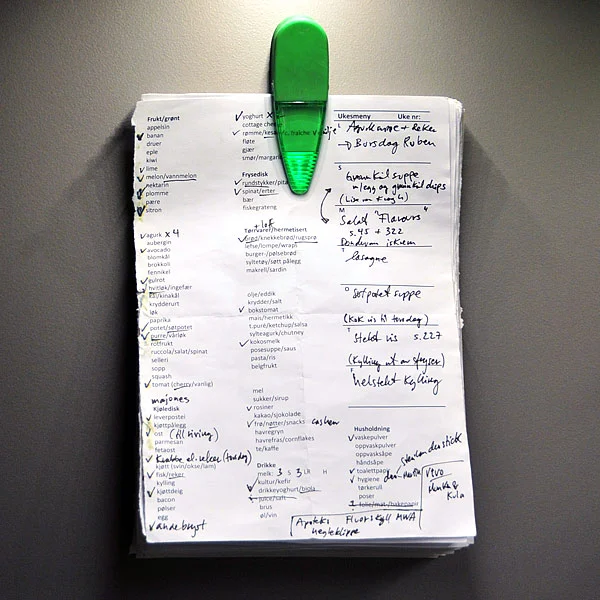
The methodology, championed by individuals seeking to mitigate the pervasive pressures of time scarcity – a phenomenon colloquially known in Norway as "tidsklemma" – addresses a critical challenge faced by countless families: how to consistently prepare home-cooked meals, manage household budgets, and minimize food waste without succumbing to daily decision fatigue. The core innovation lies not in novelty, but in refinement: a pre-populated, category-organized list that mirrors the layout of a local supermarket, allowing for rapid selection of needed items and ample space for specific additions or alterations.
The Digital Conundrum and the Paper Solution
The modern marketplace is saturated with grocery list applications and meal planning software, each promising unparalleled convenience and efficiency. However, the experience of many users suggests that these digital tools, while offering certain advantages like cloud synchronization and shareability, often fall short in practical, in-store application. Screens can be distracting, battery life can be a concern, and the inherent linearity of many digital interfaces can obscure a comprehensive overview of the entire week’s culinary requirements and shopping needs.
The proponent of the paper-based system articulates a preference for what is described as the "superb resolution" of paper. An A5-sized sheet, for instance, can simultaneously display an entire week’s menu alongside a comprehensive shopping list. This physical overview allows for quick glances, cross-referencing, and the addition of spontaneous notes without the need to navigate multiple screens or applications. The tactile nature of paper, its ability to be folded and tucked into a pocket, and its independence from power sources, further enhance its utility in a bustling supermarket environment. This simplicity inherently reduces friction points often encountered with digital alternatives, providing an uninterrupted focus on the task at hand.
A System Forged in Practice: Six Years of Refinement
The genesis of this particular grocery list system dates back over six years, evolving through continuous adaptation to reflect changing family needs, dietary preferences, and the fluctuating availability of products in local grocery stores. What began as a generic template has been meticulously tailored, item by item, to align with the specific consumption patterns of a family, ensuring that the list is a living document rather than a static fixture. This iterative process of compilation and adjustment is crucial; it ensures the list remains relevant and maximally efficient.
Initial versions of the list would have included items specific to young children, which have subsequently been removed as the children grew older. Conversely, new staples may have been added as tastes evolved or as new recipes entered the family’s culinary repertoire. This dynamic adaptation underscores the principle that an effective organizational tool is not merely created but continually honed through practical application. The structure of the list is also strategically organized by food categories and, crucially, by the physical layout of the primary grocery store, minimizing time spent navigating aisles and backtracking, thereby streamlining the entire shopping experience.
Integrating Menu Planning for Enhanced Efficiency
A key feature differentiating this system from a standalone shopping list is its integrated menu planning component. By dedicating a section of the paper to the week’s planned meals, often simply noting a recipe name or a cookbook page number, the list transcends its basic function. This dual-purpose document serves as a constant reminder of upcoming meals while shopping, acting as a critical memory aid for those "last items I forgot" moments.
This integration addresses a common pitfall in household management: the disconnect between meal ideation and ingredient procurement. When the menu is physically present alongside the shopping list, it fosters a holistic approach to weekly provisioning. For instance, a quick glance at "Tuesday: Lentil Soup (p. 45)" might trigger the realization that a specific herb or stock, not explicitly on the general list, is required. This synergy between planning and purchasing contributes significantly to reducing forgotten items, subsequent impromptu trips to the store, and ultimately, overall household stress.
Expert Perspectives on Cognitive Load and Household Logistics
Psychologists and organizational experts often highlight the concept of "cognitive load" – the total amount of mental effort being used in the working memory. Everyday tasks, especially those involving multiple decisions and memory recall like meal planning and grocery shopping, can significantly contribute to this load. Dr. Elena Petrova, a behavioral economist specializing in household management, suggests, "Pre-emptive planning tools like this structured grocery list effectively externalize a significant portion of the cognitive load. By moving routine decisions from the working memory to a physical, pre-organized document, individuals free up mental resources for more complex or creative tasks. This reduction in decision fatigue is invaluable for busy individuals and families."
Furthermore, the act of physically ticking off items on a paper list can provide a sense of accomplishment and control, reinforcing positive habits. This contrasts with the often-ephemeral nature of digital checklists, where items might be deleted rather than marked, losing the visual representation of progress. "There’s a tangible satisfaction in crossing off an item with a pen," explains Dr. Petrova. "It’s a small but significant psychological reward that reinforces the efficiency of the system."
Beyond Time Savings: Economic and Environmental Benefits
While the primary motivation for adopting such a system is often time efficiency, its implications extend to significant economic and environmental benefits. A well-planned grocery list, derived from a clear meal plan, directly contributes to a reduction in impulse purchases. According to a 2022 study by the National Retail Federation, impulse buying accounts for an average of 15-20% of a typical shopping trip’s expenditure. By adhering to a pre-defined list, shoppers are less susceptible to marketing ploys and last-minute cravings, leading to substantial savings over time.
Moreover, the precise procurement of ingredients, driven by a structured meal plan, is a powerful antidote to food waste. The United Nations Environment Programme estimates that approximately 17% of total global food production is wasted, with households accounting for 61% of this waste. A system that ensures ingredients are bought with specific meals in mind, and in appropriate quantities, dramatically reduces the likelihood of perishable items expiring unused. This not only saves money but also lessens the environmental footprint associated with food production and disposal. The reduction in multiple, unplanned trips to the store also contributes to lower fuel consumption and decreased carbon emissions, offering a tangible, albeit indirect, environmental benefit.
Navigating Modern Life: Flexibility Within Structure
The proponent acknowledges that a rigid adherence to any plan can be counterproductive in the dynamic context of family life. While the system encourages weekly planning, it inherently builds in a degree of flexibility. The concept of "tidsklemma" – the time squeeze – acknowledges that unforeseen events, spontaneous invitations, or sheer exhaustion can necessitate deviations from the planned menu. In such instances, the system does not collapse; rather, it provides a structured baseline that allows for temporary divergence without derailing the entire week’s provisioning.
"It’s about having a robust framework that can absorb shocks," explains a time management consultant. "Planning for the majority of meals ensures that even if two out of seven dinners are takeout or eaten elsewhere, the household still benefits from the efficiency of the other five planned meals. This prevents a complete return to chaotic, day-to-day decision-making, which is far more draining." The ability to archive past lists also provides a valuable historical record, allowing for a quick review of consumption patterns and aiding in future planning, further refining the iterative process.
The Iterative Process: Continuous Adaptation and Archiving
The practical application of this system involves printing multiple copies of the generic list, typically 10 to 20 at a time. This ensures a ready supply and encourages consistency. Crucially, the process does not end with a completed shopping trip. Periodically, perhaps every few months or when a new batch of lists is printed, a review of recent lists is undertaken. This audit serves as an opportunity to identify items that have consistently been added or deleted, signaling a shift in household needs or preferences.
This archiving and review mechanism is vital for maintaining the list’s relevance and effectiveness. It transforms the list from a static document into a dynamic tool that mirrors the evolving lifestyle of the family. The continuous feedback loop ensures that the system remains finely tuned, preventing it from becoming outdated or burdensome. This commitment to ongoing refinement is what ultimately distinguishes a truly effective organizational tool from a transient trend.
Broader Implications for Contemporary Households
The widespread appeal of this personalized paper grocery list system, despite the proliferation of high-tech alternatives, underscores a fundamental human need for simplicity, tangibility, and control in managing daily life. In an increasingly complex world, tools that reduce cognitive load, save time, and offer clear, immediate utility often prove more enduring than those that promise advanced features at the cost of ease of use.
The method exemplifies how a well-designed, low-tech solution can profoundly impact household efficiency, financial management, mental well-being, and even environmental responsibility. It offers a practical template for families grappling with the demands of modern life, demonstrating that sometimes, the most effective innovations are those that simplify, rather than complicate, our routines. As society continues to navigate the "tidsklemma" and the myriad pressures of contemporary existence, the enduring value of a personalized, adaptable paper grocery list may serve as a powerful reminder that fundamental organizational principles often hold the key to greater domestic harmony and efficiency. The availability of downloadable templates in various formats further democratizes this approach, inviting individuals to experience firsthand the benefits of a system honed over years of practical application.