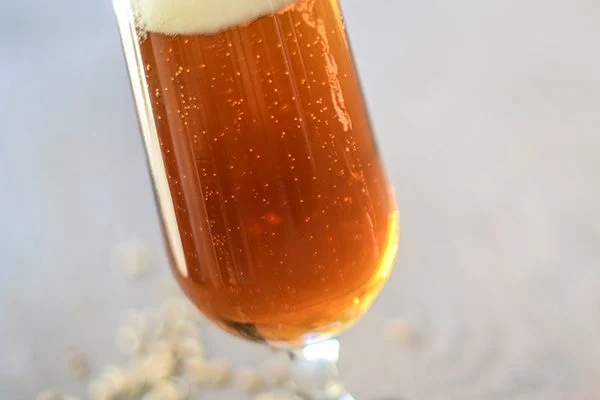

The art of craft brewing reached a triumphant crescendo as David Towles of Amarillo, Texas, secured a prestigious gold medal at the final round of the 2026 National Homebrew Competition. Competing within Category 7: Dark European Lager, Towles distinguished his brew among a fiercely competitive field of 157 exceptional entries submitted from across the globe. Representing the local brewing community as a dedicated member of the Amarillo High Plains Drafters (AHPD), Towles’s victory highlights the rising standard of excellence, precision, and passion found within regional American homebrewing clubs.
The National Homebrew Competition, widely recognized as the world’s largest annual amateur beer competition, serves as the premier stage for hobbyist brewers to showcase their mastery of traditional and innovative styles. Administered annually by the American Homebrewers Association (AHA), the tournament evaluates thousands of entries through rigorous multi-tier judging processes. Beers are judged against strict style guidelines that assess aroma, appearance, flavor, and mouthfeel, ensuring that only the most technically flawless and creatively inspired beverages reach the podium.
The Anatomy of Category 7: Dark European Lager
To fully appreciate the magnitude of David Towles’s victory, one must examine the complex nature of Category 7: Dark European Lager. This broad category encompasses classic styles such as Munich Dunkel, Schwarzbier, and international dark lagers, each demanding meticulous control over fermentation temperatures, grain bills, and lagering times. Unlike ales, which can forgive minor temperature fluctuations during fermentation, lagers require cold temperatures and extended conditioning periods. Any flaw in yeast health, sanitation, or temperature regulation immediately presents as off-flavors in the finished glass.
Competing against 157 other entries in this specific category means that Towles’s beer successfully navigated both the first-round regional evaluations and the ultimate national final judging panel. Master judges—many of whom hold prestigious ranks within the Beer Judge Certification Program (BJCP)—evaluated the entries blind, relying entirely on sensory precision. For Towles’s Dark European Lager to rise to the top, it must have exhibited a delicate balance of rich, toasted malt characteristics, restrained noble hop bitterness, and a remarkably crisp, clean lager finish without any harsh astringency or diacetyl.
A Community Triumph: The Amarillo High Plains Drafters
Behind every successful homebrewer stands a supportive network of peers, mentors, and local organizations. Towles’s affiliation with the Amarillo High Plains Drafters (AHPD) underscores the vital role that regional homebrewing clubs play in fostering talent. The AHPD has long served as a hub for culinary experimentation, technical education, and camaraderie among Texas brewers. Local clubs provide constructive criticism during club-only competitions, share expensive equipment, and pool collective knowledge regarding water chemistry, grain sourcing, and yeast propagation.

Local brewing advocates and club leaders noted that Towles’s gold medal victory brings positive recognition not only to the individual brewer but to the broader Texas panhandle craft beverage community. In a state renowned for its booming commercial craft beer scene, the amateur sector continues to act as an incubator for future commercial founders, professional head brewers, and passionate industry innovators.
The Rigorous Journey to the Podium: A Timeline of the Competition
The path to the 2026 National Homebrew Competition medal stage is a months-long marathon of planning, brewing, bottling, and judging. While the final round took place in 2026, the journey actually began many months prior when brewers across North America and beyond formulated their recipes, sourced specialized European malts, and dialed in their water profiles.
- Recipe Formulation and Pilot Brewing (Late 2025): Brewers like Towles spent weeks refining their grain bills, often brewing multiple pilot batches to achieve the ideal color, malt complexity, and attenuation required for a traditional Dark European Lager.
- Regional First-Round Evaluations (Spring 2026): Thousands of entries were submitted to designated regional judging centers. Judges evaluated each submission against the 2026 BJCP style guidelines, advancing only the top-scoring beers to the national final round.
- National Final Round Judging (Summer 2026): Surviving entries converged for the ultimate evaluation. A panel of elite national and international judges executed rigorous blind tastings, ultimately awarding gold, silver, and bronze medals across dozens of strict categories.
- Medal Announcement and Industry Recognition: Winners were officially announced, adding their recipes to the global archive of gold-standard homebrew formulations managed by the American Homebrewers Association.
Broader Implications for the Homebrewing Community
The success of amateur brewers at competitions like the National Homebrew Association’s flagship event carries significant weight within the broader alcoholic beverage landscape. Homebrewing has historically served as the R&D wing of the American craft beer movement. Countless commercial craft breweries—many of which now distribute regionally or nationally—began as garage setups and kitchen-pot experiments just like the one David Towles operates in Amarillo.
Furthermore, competitions of this scale emphasize the preservation of historical styles. While modern craft beer enthusiasts are frequently drawn to experimental IPAs, barrel-aged stouts, and fruited sour ales, the meticulous execution of classic European lagers requires a return to fundamentals. By honoring traditional styles with gold medals, organizations like the AHA help keep centuries-old brewing traditions alive and relevant in the modern palate.
Accessing Championship Knowledge and Resources
For aspiring brewers looking to replicate the success of medalists like David Towles, organizations like the American Homebrewers Association provide extensive educational repositories. These resources include access to hundreds of verified, medal-winning homebrew recipes, technical guides on water chemistry, troubleshooting manuals for fermentation control, and expert advice on scaling up recipes from five-gallon home systems to commercial setups.
As the craft beverage community reflects on the outcomes of the 2026 competition, stories like that of David Towles and the Amarillo High Plains Drafters serve as an inspiration to hobbyists everywhere. They demonstrate that with patience, precision, and an unwavering commitment to quality, a homebrewer from Amarillo, Texas, can stand on the highest podium in the country, holding aloft the gold standard of brewing excellence.