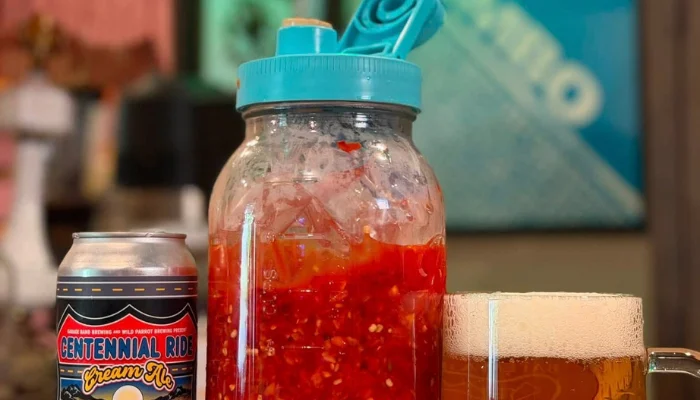

The global homebrewing community celebrated a fiery culinary crossover as the American Homebrewers Association officially released the recipe for Super Rooster Hot Sauce, a signature creation featured during the nationwide Learn to Homebrew Day 2026 celebrations. Sponsored by industry leader Grainfather, the annual event expanded beyond traditional fermented beverages to embrace the art of lacto-fermentation in condiment crafting, drawing widespread participation from culinary enthusiasts, fermentation hobbyists, and craft beer makers alike. Developed by renowned homebrewer Drew Beechum of the historic Maltose Falcons brewing club in Pasadena, California, the recipe was inspired by an abundance of garden-harvested jalapeños and designed to offer a vibrant, artisanal alternative to commercial hot sauces.
Beechum, a prominent figure in the American homebrewing landscape and author of several influential books on fermentation and brewing, engineered Super Rooster as an elevated, customizable take on classic pepper sauces. The recipe yields approximately 0.38 gallons, or 1.44 liters, of deeply complex, probiotic-rich hot sauce. Utilizing a precise blend of 40 ounces—equivalent to 1.134 kilograms—of jalapeños, habaneros, and Thai bird’s-eye chiles, the formulation balances approachable heat with searing complexity. The inclusion of live culture via 1 fluid ounce of Cleveland Classic kraut brine initiates a controlled lacto-fermentation process, transforming fresh produce into a stable, tangy base before final blending, sweetening, and bottling.
The Origins of Learn to Homebrew Day and the Fermentation Intersection
Established in 1999 by the American Homebrewers Association, Learn to Homebrew Day was originally created to foster community engagement, demystify the brewing process, and introduce newcomers to the rewarding craft of making fermented beverages at home. Over more than two decades, the initiative has grown into an international celebration, prompting clubs, retail shops, and commercial breweries to host workshops, demonstrations, and tasting events on the first Saturday of November.
In recent years, the organizational scope of Learn to Homebrew Day has organically expanded to include allied fermentation arts. Because brewing and hot sauce making share foundational scientific principles—specifically wild and inoculated microbial fermentation, sanitation protocols, pH monitoring, and flavor balancing—homebrewing clubs frequently experiment with fermented foods. Drew Beechum’s contribution for the 2026 event underscored this synergy. Drawing from his extensive experience with the Maltose Falcons, the oldest continuously operating homebrewing club in the United States, Beechum sought to channel the resourcefulness of home gardeners into a structured, reproducible recipe that highlights the preservative and flavor-enhancing qualities of lactic acid bacteria.
Comprehensive Ingredient Specifications and Proportions
Crafting Super Rooster Hot Sauce requires strict adherence to measurements to ensure both palatability and microbial safety during the fermentation phase. The ingredient profile is divided into foundational peppers, active microbial cultures, and post-fermentation balancing agents.
The pepper component consists of a balanced 40 oz (1.134 kg) matrix of jalapeños, habaneros, and Thai bird’s-eye chiles. This combination provides a spectrum of capsaicin heat levels and distinct aromatic profiles, ranging from the grassy, thick-walled fruitiness of ripe jalapeños to the tropical fruit notes of habaneros and the sharp, immediate bite of Thai bird’s-eye peppers.
To initiate fermentation, the recipe calls for 1 fl. oz. (30 mL) of live Cleveland Classic kraut brine, serving as an inoculation source of Lactobacillus bacteria. Additional brine is reserved for post-fermentation blending to achieve the desired pouring consistency. Salinity is calculated as a strict percentage of the total mass: exactly 1 oz (28 g) of kosher salt is added, representing approximately 2.5% of the total pepper weight. This specific saline concentration creates a selective environment that inhibits the proliferation of spoilage microorganisms while allowing beneficial lactic acid bacteria to thrive.
Optional post-fermentation additions provide makers with control over the final sensory experience. Vinegar can be added to taste for sharper acidity, while honey, sugar, or alternative sweeteners balance the heat profile. Advanced optional additives include xanthan gum, utilized at minute quantities to prevent emulsion separation in storage, and ascorbic acid powder to lock in the vibrant red and green carotenoid pigments of the peppers against oxidation.
Step-by-Step Methodology and Fermentation Science
The production of Super Rooster Hot Sauce follows a strict chronological protocol designed to maximize food safety and flavor depth.
Phase One: Preparation and Sanitization
Makers begin by thoroughly washing and stemming the 40 ounces of mixed jalapeños, habaneros, and Thai bird’s-eye chiles. Sanitation of all cutting boards, knives, fermentation vessels, and measuring tools is critical to prevent wild molds or undesirable bacteria from contaminating the batch. Peppers can be roughly chopped to expose the interior flesh and seeds, which accelerates the release of natural juices and accelerates the onset of fermentation.
Phase Two: Weighing and Salting
Precision is paramount during this stage. The total weight of the prepared peppers is recorded to calculate the exact amount of kosher salt required. The 1 oz (28 g) of kosher salt—amounting to roughly 2.5% of the pepper weight—is distributed evenly across the chopped chiles. This dry-salting method draws out intracellular moisture through osmosis, creating a natural brine environment.
Phase Three: Inoculation and Fermentation
The salted pepper mash is transferred to a clean fermentation vessel, such as a food-grade glass jar or a specialized fermentation crock equipped with an airlock. The 1 fl. oz. (30 mL) of Cleveland Classic kraut brine is poured over the mixture, introducing a robust colony of lactic acid bacteria. The vessel is sealed to allow carbon dioxide gas to escape while barring oxygen entry, preventing aerobic kahm yeast or mold growth. The fermentation vessel is stored in a dark, temperature-controlled environment—ideally between 65°F and 75°F (18°C to 24°C)—for a duration ranging from one to three weeks, depending on ambient temperature and desired acidity.
Phase Four: Blending, Balancing, and Bottling
Once active fermentation subsides and the mash achieves a pleasantly tart pH level, the contents are transferred to a high-powered blender. The reserved kraut brine is incorporated gradually to achieve a smooth, pourable consistency. At this stage, makers taste the sauce and adjust the profile by adding vinegar for extra sharpness, or honey and sugar to temper the capsaicin burn. For commercial-style stability, optional xanthan gum is sheared into the mixture to prevent liquid separation, and ascorbic acid is blended in to protect the bright hue. The finished hot sauce is transferred into sanitized glass bottles, ready for immediate consumption or long-term refrigeration.
Industry Response and Craft Community Implications
The release of the Super Rooster recipe generated immediate enthusiasm across the global home fermentation and craft beverage communities. Representatives from Grainfather praised the collaboration, noting that events like Learn to Homebrew Day continually demonstrate how traditional brewing skills seamlessly translate into broader culinary pursuits. Culinary historians and food safety specialists have also highlighted the public health benefits of promoting safe, home-scale lacto-fermentation, noting that standardized recipes with precise salt percentages empower consumers to safely preserve seasonal produce without relying on artificial chemical preservatives.
Local homebrewing chapters, including the Maltose Falcons, reported a surge in workshop attendance and online engagement following the publication of the recipe. Members noted that hot sauce formulation offers an accessible entry point for individuals who might feel intimidated by the multi-hour boiling and mashing processes involved in traditional all-grain beer brewing. Furthermore, the cross-pollination of techniques—such as applying yeast-management hygiene to bacterial fermentations—strengthens the overall technical competency of home hobbyists.
Broader Economic and Gastronomic Trends
The formal introduction of Super Rooster Hot Sauce arrives amid a broader consumer shift toward artisanal, gut-healthy, and locally produced condiments. Market research indicates that the global hot sauce industry continues to experience steady compound annual growth, driven by consumer demand for bold, diverse flavor profiles, varying heat indexes, and functional foods containing live probiotics.
By utilizing wild fermentation rather than standard vinegar-and-heat processing, recipes like Super Rooster preserve delicate volatile aromatics found in fresh chiles while generating organic lactic acid, which imparts a smoother, more rounded sourness than commercial acetic acid. As home gardeners and urban farmers seek sustainable ways to utilize seasonal crop surpluses, standardized fermentation frameworks provide a reliable, economically viable method for extending shelf life and enhancing nutritional value.
Ultimately, the dissemination of the Super Rooster recipe through the American Homebrewers Association and Grainfather bridges the gap between structured brewing science and everyday kitchen creativity, cementing the role of fermentation as a foundational pillar of modern artisanal food culture.