
In an increasingly digital world, where myriad applications promise to streamline every aspect of daily life, a unique methodology for household management is gaining traction through its steadfast reliance on a seemingly archaic tool: the humble paper grocery list. This meticulously crafted, highly personalized system, refined over six years by an individual balancing a full-time career with family obligations, offers a compelling counter-narrative to the pervasive digital solutions, demonstrating how a tangible, custom-designed document can dramatically enhance efficiency, reduce decision fatigue, and contribute to a more mindful approach to consumption. The system, detailed by its creator, highlights a profound understanding of human psychology and practical logistics, presenting a robust framework for managing weekly provisions that can be adapted by virtually any household.
The Genesis of a System: A Personal Journey to Streamlined Shopping
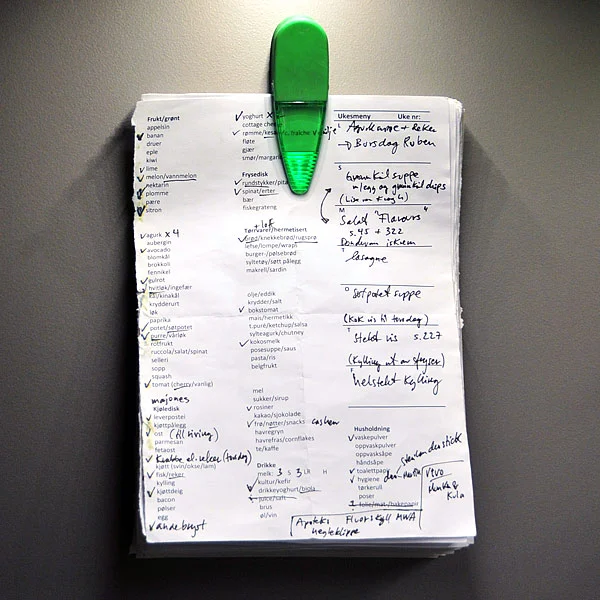
The concept’s originator, despite a prolonged hiatus from active blogging, maintained a consistent culinary practice, producing "many desserts" even as their digital platform lay dormant. This continued engagement with home cooking, even amidst a busy schedule, underscores the necessity for an efficient organizational tool. The genesis of this system was born from a common household challenge: the weekly grocery run. Rather than initiating a shopping list from scratch each week, a process fraught with potential omissions and inefficiencies, the creator developed a generic, pre-printed list. This foundational document is not merely a blank slate but a thoughtfully organized inventory, structured according to food categories and, crucially, aligned with the physical layout of the local supermarket.
The initial compilation of this list was merely the beginning. Over the past six years, it has undergone continuous refinement, evolving to reflect the changing dynamics of the family – their evolving tastes, dietary needs, and the specific availability of items in their preferred grocery store. This iterative process ensures the list remains a living document, perpetually optimized for relevance and effectiveness. The creator emphasizes that while their specific list is a product of their unique circumstances, its underlying principles of customization and systematic organization are universally adaptable, offering a blueprint for others to forge their own bespoke solutions.
Beyond the Digital Divide: The Enduring Efficacy of Paper
In an era dominated by smartphone applications designed for every conceivable task, the deliberate choice of paper for this grocery list system stands as a notable deviation. The creator posits that for this particular purpose, "nothing beats paper." This assertion is supported by several compelling arguments rooted in cognitive and practical advantages. The "superb resolution" of paper allows for a comprehensive overview of the entire weekly menu and shopping list on a single, compact A5-sized sheet. This immediate, complete visual access contrasts sharply with the scrolling and navigating often required within digital interfaces, which can fragment attention and hinder holistic planning.
Furthermore, the physical nature of a paper list offers unparalleled portability and discretion. It can be folded neatly and slipped into a pocket, easily accessible without the distractions inherent in a smartphone (notifications, other apps). The ample space for handwritten notes and specifications, including the option to utilize the reverse side, provides a level of flexibility and immediate annotation that digital equivalents, while offering similar features, often introduce with a layer of interaction that can feel less immediate or intuitive in a fast-paced shopping environment. Psychologically, studies on information retention and recall often suggest a benefit to handwriting and interacting with physical documents, which can enhance memory encoding compared to passive digital consumption. The tactile experience of ticking off items manually also provides a sense of accomplishment and control that can be gratifying.
Strategic Planning: The Architecture of an Optimized List
The effectiveness of this paper-based system lies in its meticulous architecture. The generic list serves as a foundational template, pre-populated with frequently purchased items. This proactive approach significantly reduces the cognitive load associated with weekly meal planning and shopping. Instead of recalling every item from memory or brainstorming anew, the user merely reviews the pre-existing entries and ticks off what is needed. This method capitalizes on the principle of habit formation and minimizes decision fatigue, a critical factor in maintaining consistent efficiency.
Crucially, the list is not merely an arbitrary compilation but is thoughtfully organized. Items are grouped by food categories (e.g., dairy, produce, pantry staples), mirroring the typical layout of a supermarket. This spatial organization minimizes backtracking and reduces the overall time spent navigating aisles, transforming what can often be a disjointed, time-consuming chore into a streamlined, logical process. The inclusion of blank space allows for the addition of non-standard items or specific brand preferences, ensuring the list remains comprehensive and responsive to immediate needs.
Integrating the Menu: A Holistic Approach to Meal Management
A key innovative feature of this system is the integration of the weekly menu directly onto the grocery list. For recipes sourced from cookbooks, the creator simply notes a page number, a simple yet highly effective reminder. This dual-purpose document serves not only as a shopping guide but also as a memory aid in the store. A quick glance at the planned menu can trigger recollections of ancillary ingredients or forgotten items that might not have been explicitly ticked off but are essential for the week’s meals. This synergistic approach ensures a higher degree of accuracy in shopping, further reducing the need for impromptu, costly trips back to the store for forgotten essentials.
This method transcends mere list-making; it embodies a holistic approach to weekly meal management. By visualizing the menu alongside the required ingredients, individuals can make more informed purchasing decisions, avoid unnecessary purchases, and ensure a coherent plan for the week’s culinary endeavors.
Combating ‘Tidsklemma’: The Norwegian Art of Time Management
The creator explicitly links the utility of this system to the Norwegian concept of "tidsklemma," a term for which there is no direct English equivalent but broadly refers to the "time squeeze" or the perennial challenge of balancing work, family, and personal life without sufficient time. This phenomenon is particularly acute for individuals with full-time jobs and significant family obligations, where the luxury of spontaneous, inspiration-driven cooking is often unattainable.
The pre-planned grocery list and menu directly address "tidsklemma" by automating and optimizing a significant portion of household labor. By front-loading the decision-making process for meals and groceries, individuals free up precious mental and physical energy during the week. This systematic approach fosters consistency in home cooking, which is often sacrificed when time pressures mount. The act of planning ahead, even if it’s just for a week, significantly increases the likelihood of preparing home-cooked meals, contributing to healthier eating habits and potentially greater family cohesion around mealtimes.
However, the system also wisely incorporates a crucial caveat: the importance of flexibility. The creator emphasizes the necessity to "deviate from your weekly dinner plan" when spontaneous opportunities arise, such as social invitations, or when exhaustion dictates the need for a takeaway meal. This acknowledgment of real-life unpredictability prevents the system from becoming rigid or burdensome, ensuring it serves as a supportive framework rather than an inflexible mandate. This balance between structure and spontaneity is key to its long-term viability and user acceptance.
The Broader Implications: Economic, Environmental, and Psychological Benefits
The systematic use of a personalized grocery list extends far beyond mere convenience, offering significant economic, environmental, and psychological benefits.
Economic Implications:
Meal planning, facilitated by such a list, is a cornerstone of effective household budgeting. By knowing precisely what is needed for the week’s meals, consumers are less prone to impulse purchases, which often inflate grocery bills. Data from the U.S. Department of Agriculture (USDA) indicates that food waste in the United States accounts for 30-40% of the food supply, with an average family of four wasting approximately $1,500 per year on discarded food. A well-planned shopping list, directly linked to a menu, drastically reduces the likelihood of purchasing excess perishables that spoil before consumption. This translates into tangible financial savings, allowing households to allocate resources more effectively.
Environmental Impact:
The reduction in food waste directly correlates with a positive environmental impact. Food waste is a significant contributor to landfill volume and greenhouse gas emissions. When food rots in landfills, it produces methane, a potent greenhouse gas. By ensuring that purchased food is consumed, this system indirectly supports more sustainable consumption patterns. Moreover, efficient shopping reduces the frequency of trips to the grocery store, potentially lowering fuel consumption and associated carbon emissions.
Psychological Well-being:
The psychological benefits are profound. Decision fatigue, a state of mental exhaustion caused by making too many choices, is a pervasive challenge in modern life. By pre-determining meals and creating a streamlined shopping process, this system significantly alleviates the mental burden associated with daily meal planning and grocery procurement. This reduction in cognitive load frees up mental energy for more demanding tasks or for relaxation, contributing to overall reduced stress levels and an enhanced sense of control over one’s life. The satisfaction derived from an organized household and successful meal preparation further reinforces positive psychological outcomes.
Expert Perspectives on Household Efficiency and Behavioral Economics
Experts in behavioral economics and productivity frequently advocate for systems that automate routine decisions and reduce cognitive load. Professor Kathleen Vohs, known for her research on decision fatigue, has highlighted how the sheer volume of daily choices can deplete willpower and impair subsequent decision-making. A pre-planned grocery list directly addresses this by converting a complex, variable task into a simple, routine checklist.
Similarly, productivity consultants often recommend "batching" similar tasks and creating "default" systems to minimize mental effort. The generic grocery list, organized by store layout, is a prime example of batching shopping decisions and creating an efficient default path through the supermarket. Environmental organizations, like the Natural Resources Defense Council (NRDC), consistently emphasize meal planning as a critical strategy for reducing household food waste, aligning perfectly with the outcomes of this personalized list system. Financial advisors, too, often recommend structured meal planning and grocery lists as fundamental tools for budget management and debt reduction.
Evolution and Adaptability: A Living Document
The enduring strength of this analog system lies in its inherent adaptability. The creator regularly prints multiple copies (10 to 20 at a time) and, upon depletion, reviews past weeks’ lists. This retrospective analysis allows for continuous refinement: items no longer needed are deleted, and new staples are added. This iterative process highlights how the list is not static but a dynamic reflection of the family’s current life stage and preferences. For instance, items once essential for small children may eventually be removed as they grow, while new items catering to teenage appetites or evolving dietary trends are incorporated. This constant evolution ensures the list remains highly relevant and maximally efficient. The certainty that "no two persons will end up with identical lists" underscores the deeply personal and adaptable nature of this system, emphasizing that it is always a "work-in-progress."
Global Relevance and Accessibility
The challenge of efficient meal planning and grocery shopping is a universal one, transcending geographical and cultural boundaries. The core principles of organization, personalization, and cognitive load reduction embedded in this system are applicable worldwide. To facilitate adoption, the creator has generously made templates available for download in various formats, including Norwegian A4, English A4, and English legal sizes. This accessibility empowers individuals globally to experiment with and adapt the system to their unique contexts, fostering a broader movement towards more intentional and efficient household management.
In conclusion, while the digital revolution continues to offer sophisticated tools for modern living, the humble, personalized paper grocery list serves as a powerful reminder of the enduring efficacy of analog solutions. It is a testament to thoughtful design, iterative improvement, and a deep understanding of human needs in combating the pressures of contemporary life, ultimately offering a pathway to greater efficiency, reduced waste, and enhanced well-being for households around the globe.