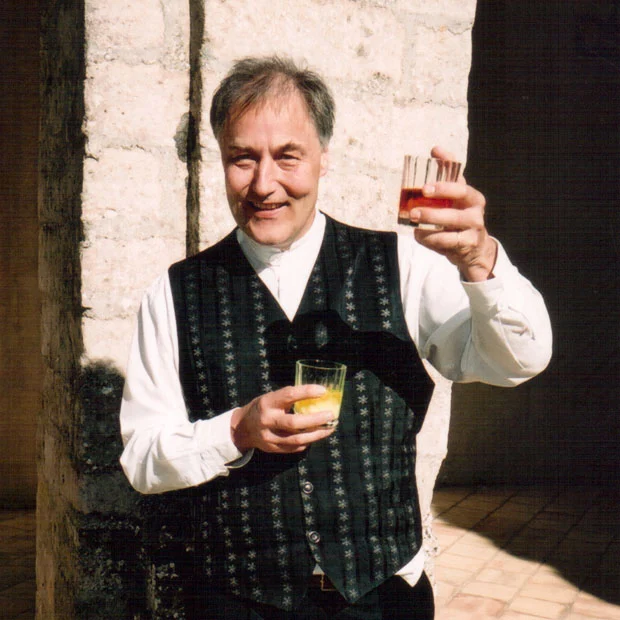

The scientific community and culinary professionals worldwide are abuzz following the release of a comprehensive summary detailing 20 years of groundbreaking research from the monthly molecular gastronomy seminars in Paris, led by the discipline’s co-founder, Hervé This. This monumental compilation, made publicly available in both French and English, represents a significant milestone in the ongoing quest to demystify and scientifically optimize the art of cooking. Described by early recipients as an invaluable "treasure trove for chefs and chemists alike," the document encapsulates decades of rigorous experimentation, challenging long-held culinary beliefs and meticulously documenting the scientific principles governing kitchen phenomena. Its distribution marks a pivotal moment, providing unprecedented access to a wealth of knowledge that promises to inspire further innovation in both professional kitchens and scientific laboratories.
The summary document, a testament to the persistent curiosity and analytical rigor championed by Professor This, offers a condensed overview of the myriad findings generated through sustained, collaborative inquiry. While the English version provides brief insights, the full, extensive documentation, including detailed experimental conditions and methodologies, remains available in French through the AgroParisTech archives. This commitment to transparency and open science underscores the foundational ethos of molecular gastronomy: to systematically question, test, and explain the transformations of ingredients during culinary processes. The initial reception highlights its potential to serve as a catalyst for new experiments in professional and home kitchens, and as a rich source of inspiration for educational projects in science and chemistry.
The Genesis of Molecular Gastronomy: Bridging Science and the Plate
To fully appreciate the significance of this 20-year compendium, it is essential to understand the origins and evolution of molecular gastronomy itself, a field profoundly shaped by Hervé This. The term "Molecular and Physical Gastronomy" was coined in 1988 by This, a French physical chemist and researcher at INRA (National Institute of Agricultural Research), alongside Nicholas Kurti, a Hungarian-born British physicist and former professor at the University of Oxford. Their shared fascination lay in applying scientific principles to everyday cooking, transforming culinary arts from an intuitive craft into an empirical science.
Nicholas Kurti, renowned for his work in low-temperature physics, harbored a lifelong passion for cooking and a scientific curiosity about kitchen processes. He famously posed questions like "What makes a soufflé rise?" or "Why does meat brown?" with the rigor of a physicist approaching a complex problem. His 1969 lecture, "The Physicist in the Kitchen," broadcast by the BBC, is often cited as an early precursor to the formal discipline. Kurti envisioned a scientific approach to cooking that would not diminish its artistic merit but rather enhance it through deeper understanding.
Hervé This, with his background in physical chemistry, provided the perfect intellectual partner. His meticulous approach to experimentation and documentation complemented Kurti’s broader theoretical vision. Together, they established molecular gastronomy as a distinct scientific discipline, defined not as a style of cooking (like "nouvelle cuisine" or "fusion cuisine"), but as the scientific exploration of cooking phenomena. Their initial collaboration blossomed into the "International Workshop on Molecular Gastronomy," first held in Erice, Sicily, in 1992. These workshops brought together an eclectic mix of top chefs, food scientists, physicists, chemists, and psychologists. The goal was simple yet revolutionary: to foster interdisciplinary dialogue, challenge culinary myths, and explore the science behind cooking. The Erice workshops served as a crucial intellectual incubator, laying the groundwork for subsequent research and dissemination efforts, including the Parisian seminars.
Two Decades of Discovery: The Paris Molecular Gastronomy Seminars
The molecular gastronomy seminars in Paris, whose two-decade summary is now released, represent a continuous extension of the pioneering spirit ignited in Erice. Initiated around the year 2000, these monthly gatherings at AgroParisTech under the stewardship of Hervé This have consistently served as a dynamic forum for scientific inquiry into culinary practices. The seminars are not merely academic discussions; they are hands-on, experimental workshops where participants – a diverse group comprising professional chefs, food scientists, students, and enthusiastic amateur cooks – systematically investigate specific culinary claims and techniques.
The primary objective of these seminars has been to question and explain recipes and processes commonly employed in kitchens, often passed down through generations without rigorous scientific validation. Each month, a particular culinary myth or technique is selected for investigation. Participants engage in structured experimentation, varying parameters such as temperature, ingredient ratios, cooking times, and preparation methods. The results are meticulously observed, recorded, and analyzed, often employing scientific tools and methodologies to quantify qualitative observations. This systematic approach stands in stark contrast to the traditional trial-and-error method prevalent in many kitchens, elevating cooking from an art based on intuition to a science grounded in empirical evidence.
Over the past twenty years, the seminars have tackled an astonishing array of topics, from the seemingly trivial to the profoundly complex. Early investigations often focused on debunking common kitchen folklore. For instance, questions like "Does adding oil to pasta water truly prevent sticking?" or "Is it necessary to ‘seal’ meat by searing it at high temperatures to retain juices?" were subjected to rigorous testing. As the field matured, the scope of inquiry expanded to explore more intricate physicochemical transformations, such as the mechanisms of emulsion formation in mayonnaise, the science behind meringue stability, the role of specific proteins in bread making, or the impact of different cooking methods on nutrient retention and flavor development in vegetables.
Illustrative Findings from Years of Rigorous Inquiry
While the released summary offers brief insights, and the full details are available in French, the spirit of the Paris seminars can be exemplified by the types of findings they routinely uncover. These discoveries, often counter-intuitive, serve to refine culinary techniques and enhance the understanding of food science. For example, findings might include:
- Pasta and Oil: Empirical studies demonstrated that adding oil to pasta water does not significantly prevent pasta from sticking. Instead, adequate stirring during the initial cooking phase and using sufficient water are far more effective. The oil tends to sit on the surface, doing little to coat the pasta itself, and can even interfere with sauce adhesion later.
- Searing Meat: Research confirmed that searing meat at high temperatures does not "seal in" juices. Instead, the primary benefit of searing is the Maillard reaction – a complex chemical reaction between amino acids and reducing sugars – which creates desirable browning, intense flavors, and appealing aromas. While some moisture loss is inevitable during cooking, searing contributes minimally to its retention.
- Egg Coagulation: Investigations into egg preparation revealed precise temperature ranges for different levels of coagulation. Understanding that egg whites coagulate around 62-65°C and yolks around 65-70°C allows for greater control in preparing dishes like poached eggs, custards, and sauces, ensuring desired textures without overcooking.
- Vegetable Color Preservation: Studies on cooking green vegetables like broccoli or green beans showed that adding a pinch of baking soda can help preserve their vibrant green color by increasing the pH, which stabilizes chlorophyll. However, this often comes at the cost of texture (making them mushy) and can affect nutrient content, illustrating the trade-offs involved in culinary science.
- Mayonnaise Emulsification: Experiments elucidated the critical role of egg yolk lecithin as an emulsifier and the importance of gradually incorporating oil to create a stable emulsion. Temperature also plays a role, with room-temperature ingredients often yielding better results.
- Meringue Stability: The seminars explored how factors like fat contamination, sugar addition timing, and whipping speed impact the formation and stability of meringues. Even a tiny trace of fat can prevent egg whites from whipping properly, highlighting the precision required in baking.
- Caramelization: Research into sugar caramelization detailed the specific temperature points at which different sugars begin to caramelize, and how acids or bases can influence the process, leading to a broader spectrum of flavors and colors.
These examples, representative of the seminar’s rigorous approach, underscore a fundamental principle: even seemingly minor culinary claims warrant scientific scrutiny. The meticulous documentation of experimental conditions and results, a hallmark of the Paris seminars, ensures that these findings are not merely anecdotal but contribute to a growing body of scientific culinary knowledge.
The Broader Impact and Implications of Molecular Gastronomy
The enduring work of Hervé This and the Paris seminars has had a profound and multifaceted impact, resonating across professional kitchens, scientific laboratories, educational institutions, and even home cooking.
Revolutionizing the Professional Culinary Landscape:
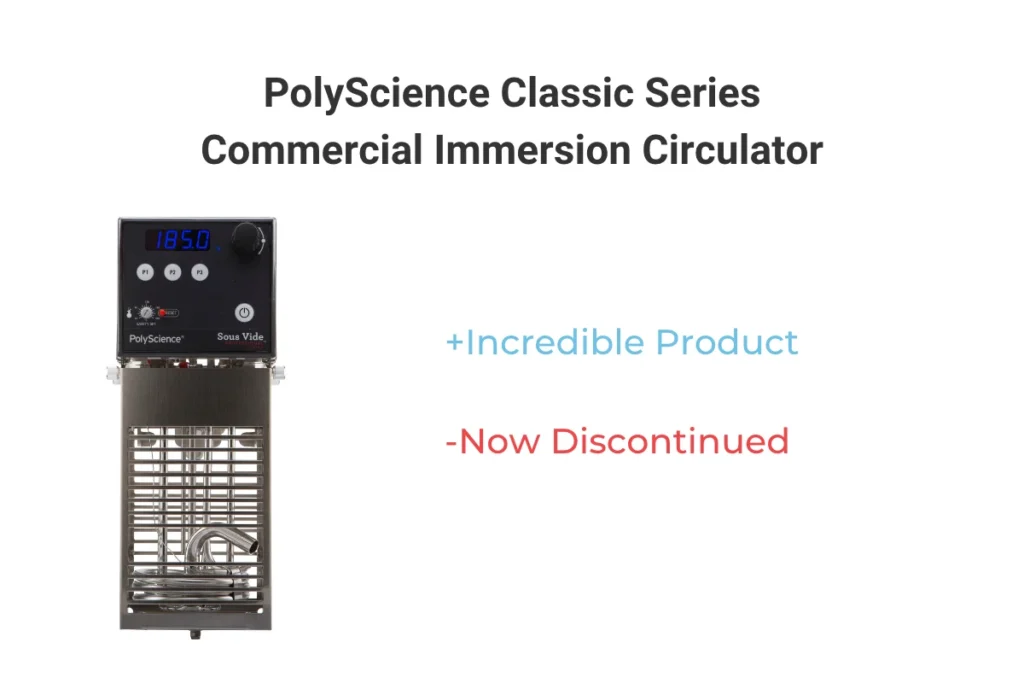
Molecular gastronomy, often mistakenly equated with "modernist cuisine," has fundamentally reshaped the professional culinary landscape. While not a style itself, its principles have empowered chefs to innovate beyond traditional boundaries. Techniques like spherification (creating liquid-filled spheres), emulsification (stabilizing mixtures of liquids that normally don’t mix), gelification (creating gels with precise textures), sous-vide cooking (precision temperature control), and the use of liquid nitrogen for instant freezing have become standard tools in high-end restaurants. Chefs such as Ferran Adrià of the legendary elBulli, Heston Blumenthal of The Fat Duck, and Grant Achatz of Alinea are pioneers who embraced molecular gastronomy’s scientific rigor to push the boundaries of flavor, texture, and presentation, creating multi-sensory dining experiences. This movement has encouraged chefs to think like scientists, understanding the chemical reactions occurring in their food, leading to greater consistency, control, and creativity in their dishes.
Advancing Food Science and Research:
Beyond the kitchen, molecular gastronomy has fostered a vibrant interdisciplinary research area. It has stimulated new inquiries in food chemistry, physical chemistry, rheology (the study of flow and deformation of matter), and sensory science. Researchers are now delving deeper into the molecular structures of ingredients, the kinetics of cooking reactions, and the psychophysics of taste and aroma perception. The seminars provide a living laboratory for generating hypotheses and data, bridging the often-separate worlds of pure scientific research and applied culinary practice. This cross-pollination of ideas is crucial for innovation in food production, preservation, and nutrition.
Empowering Home Cooks and Culinary Education:
The accessibility of resources like the 20-year summary democratizes scientific culinary knowledge, empowering home cooks to approach their kitchens with a new sense of curiosity and understanding. Simple experiments and explanations can transform mundane cooking tasks into engaging scientific explorations. For instance, understanding why certain ingredients react the way they do can lead to better outcomes and greater confidence in adapting recipes.
In education, molecular gastronomy provides compelling examples for teaching chemistry, physics, and biology. The kitchen becomes an accessible and relatable laboratory. Culinary schools have increasingly incorporated molecular gastronomy principles into their curricula, ensuring that the next generation of chefs is equipped with both artistic skill and scientific acumen. University science departments also find inspiration in culinary phenomena for engaging students in practical applications of scientific theories.
Future Trajectories: Beyond Novelty to Integration:
As molecular gastronomy moves past its initial phase of novelty and experimentation with avant-garde techniques, its future lies in deeper integration into mainstream culinary practice and food science. The focus is shifting from spectacular demonstrations to a more nuanced understanding of fundamental processes that can improve everyday cooking, enhance food sustainability, and address health and nutritional challenges. For instance, applying molecular gastronomy principles can lead to more efficient cooking methods, reduced food waste, and the creation of healthier food options with improved sensory qualities. The discipline encourages a mindful approach to food, where scientific understanding informs ethical and environmental considerations.
Official Responses and the Spirit of Open Science
While direct "official responses" in the traditional sense are not explicitly detailed, the very act of Hervé This distributing this summary and explicitly encouraging its widespread dissemination speaks volumes. It reflects a profound commitment to the principles of open science and knowledge sharing. This willingness to make decades of accumulated research freely available contrasts with the often proprietary nature of culinary secrets or academic publications. It suggests a belief that scientific progress in gastronomy benefits most from collective engagement and broad accessibility.
The implied reaction from recipients, such as the initial statement calling it a "treasure trove," indicates widespread appreciation for this generous sharing of knowledge. Culinary institutions, food science departments, and even government bodies concerned with food innovation would likely welcome such a comprehensive and authoritative resource. It serves as a validation of long-term research investment and provides a foundation for future studies and practical applications. This approach fosters a collaborative ecosystem where insights from diverse perspectives can converge to advance the understanding of food.
Conclusion: The Enduring Legacy of Scientific Inquiry in the Kitchen
The release of the 20-year summary from the Paris molecular gastronomy seminars is more than just a document; it is a powerful testament to the enduring legacy of scientific inquiry in the culinary world. Under the visionary leadership of Hervé This, these seminars have systematically dismantled myths, validated techniques, and illuminated the intricate chemistry and physics that transform raw ingredients into delicious meals. The collection serves not only as a historical record of significant discoveries but also as a vibrant source of inspiration for future explorations.
In an era where information is abundant but often unsubstantiated, the rigorous, documented approach of molecular gastronomy stands as a beacon of scientific integrity. It challenges both professional chefs and home cooks to move beyond rote execution and embrace a deeper understanding of why and how food behaves. As the culinary world continues to evolve, the principles championed by Hervé This – curiosity, experimentation, and systematic documentation – will remain indispensable. This release serves as an invitation for all who engage with food, from the casual cook to the seasoned scientist, to question, test, and contribute to the ever-expanding universe of culinary knowledge. The journey of scientific discovery in the kitchen is far from over, and this "treasure trove" ensures that the path forward is brightly illuminated.