
The seemingly innocuous statement, uttered by a highly accomplished legal professional named Anna, recently highlighted a pervasive challenge in modern health and wellness. Anna, a critical thinker known for her ability to discern truth from obfuscation, revealed a surprising vulnerability in her approach to personal well-being. Despite her intellectual rigor, she found herself ensnared in common traps that bypass even the sharpest skeptical minds.
Anna had confided in a friend about her long-standing goal to lose approximately 15 pounds, expressing profound frustration at her inability to achieve it. Her latest strategy, the acquisition of BPA-free food storage containers, struck her friend as an unexpected focus. When questioned about this new avenue, Anna explained, "I’ve been reading about how microplastics in food containers can mess up our hormones and cause weight gain." This rationale immediately followed her admissions of struggling with gym consistency, frequent reliance on takeout, and sacrificing restorative sleep for late-night "doom scrolling."
When confronted with the more foundational suggestions – increased workout consistency and preparing more homemade meals – Anna’s response was telling: "Yeah, but I’ve tried that a thousand times. If it were that simple, it would have worked already." This sentiment encapsulates a widespread societal pattern: the tendency to overlook or delay challenging yet fundamentally impactful habit changes in favor of niche, often unproven "magic bullets" promising transformative results.
The Pervasiveness of the "Magic Bullet" Mentality
This inclination towards seeking complex, novel, or "cutting-edge" solutions over straightforward, consistent efforts is a deeply ingrained human trait. Individuals often dedicate hours to researching the "ultimate" workout regimen or the "most optimal" diet plan, rather than simply engaging in the basic, known exercises or adopting healthier eating patterns already within their grasp. This phenomenon is fueled by several psychological and societal factors.
The act of purchasing new gear, subscribing to a popular supplement, or consuming endless content about health trends can create an illusion of progress. This "action-faking" provides temporary comfort and a sense of moving forward, without requiring the difficult, sustained behavioral shifts that truly drive change. The belief that one is merely waiting for the "right time" or the "perfect plan" further delays meaningful engagement.
Humans are remarkably adept at devising subtle strategies to circumvent the unglamorous, often difficult actions necessary for genuine transformation. This article will delve into the underlying reasons for this common distraction and provide practical, compassionate approaches to fostering impactful, consistent action.
The Unsexy Truth: Core Health Fundamentals
The foundational principles of good health are remarkably consistent and widely understood, yet paradoxically, they remain elusive for a significant portion of the population. These basic habits, though often perceived as "boring," form the bedrock of long-term well-being:
- Consistent Physical Activity: Aiming for at least 30 minutes of moderate-to-vigorous exercise most days of the week, incorporating both aerobic and resistance training. Regular physical activity is unequivocally linked to reduced risks of cardiovascular disease, type 2 diabetes, certain cancers, and improved mental health. Data from the World Health Organization consistently highlights insufficient physical activity as a leading risk factor for global mortality.
- Nutrient-Dense, Minimally Processed Foods: A diet predominantly composed of whole or minimally processed foods (approximately 80% of total intake) is highly effective. This approach emphasizes fruits, vegetables, lean proteins, and whole grains, while allowing for flexibility and occasional indulgences. The notion of "perfection" in diet is counterproductive; sustainable healthy eating accommodates a variety of foods, including occasional treats like pizza, within an overall balanced framework.
- Adequate Protein Intake: Consuming sufficient protein supports muscle mass preservation, satiety, and body composition goals. General recommendations often range from 1.2 to 2.2 grams of protein per kilogram of body weight, typically translating to 4-6 palm-sized portions of lean protein daily for most adults. Protein’s role in satiety can be a critical factor in weight management.
- Prioritizing Quality Sleep: Striving for seven to eight hours of quality sleep nightly is crucial. While sleep quality cannot always be directly controlled, establishing consistent sleep-wake times and a relaxing pre-bed routine significantly contributes. Chronic sleep deprivation is associated with increased risks of obesity, diabetes, cardiovascular disease, and impaired cognitive function.
- Minimizing Harmful Substances: Reducing or avoiding excessive consumption of alcohol, recreational drugs, and tobacco products is a critical, albeit often unpopular, health imperative. These substances have well-documented detrimental effects on nearly every organ system and contribute significantly to preventable diseases.
Beyond these five pillars, other factors like nurturing social relationships and effective stress management are equally vital. However, even the adherence to the initial five is remarkably uncommon. Studies, such as those cited by the CDC or various public health organizations, reveal that a strikingly low percentage of adults consistently meet all basic health recommendations. For instance, the original article highlights that only 6% of Americans consistently perform all five basic health behaviors mentioned. This statistic implies that close to 94% of the population struggles with these fundamentals, despite their widely acknowledged benefits for weight management, athletic performance, and overall longevity.
The "94% Gap": Why Simple Habits Remain Elusive
If the solutions are so straightforward, why do so many individuals, including intelligent and motivated professionals like Anna, find themselves stuck? Several common barriers contribute to this "94% gap."
1. Ambition Overload and the Planning Fallacy:
A common pitfall is the tendency to attempt a radical overhaul of one’s life simultaneously. Individuals, driven by frustration or a desire for rapid change, often declare ambitious plans – "Starting Monday, I will exercise an hour daily, eat perfectly clean, and sleep eight hours every night." This grand vision often ignores current realities, such as a sedentary lifestyle, a dislike for vegetables, or a habit of late-night activity.
This phenomenon is partly explained by cognitive biases like the planning fallacy, where people consistently underestimate the time, resources, and effort required to complete future tasks, especially complex ones. We tend to project an idealized future self who possesses boundless time, energy, and motivation, leading to unrealistic expectations. The temporary relief derived from crafting such an ambitious plan can mask its inherent impracticality. When these elaborate plans inevitably crumble under the weight of daily life, individuals often internalize the failure, blaming their willpower or discipline, rather than recognizing the flawed planning strategy. This self-blame reinforces a narrative of inconsistency and can lead to a cycle of repeated, failed attempts.
2. The Lure of the "Cutting-Edge" and Industry Secrets:
A prevalent belief suggests that if basic habits were truly effective, everyone would be healthy. This skepticism drives many to seek "hardcore," "industry-secret," or "cutting-edge" interventions. The wellness industry, valued in the trillions, thrives on this desire for novelty, often marketing unproven supplements, highly restrictive diets, or extreme workout regimes as the "missing link."
The truth, as the 6% statistic illustrates, is that the efficacy of simple behaviors is not in question; rather, it is their consistent, simultaneous application that remains rare. These fundamental actions are indeed effective, but they are often perceived as boring. The allure of something new promises a different outcome, a "new us," which is inherently appealing. However, many of these "cutting-edge" strategies are unsustainable, inaccessible, ineffective, or lack robust scientific evidence. They divert time, effort, and financial resources away from the proven, foundational practices that genuinely yield results.
3. The Perfection Trap and the Illusion of Optimal Health:
Another pervasive misconception is that achieving and maintaining good health demands perfection – a regimen of organic salads, daily marathons, and early morning meditation. This ideal, often amplified by social media, creates an unattainable standard.
The reality is that perfection is an illusion. Humans, even exceptionally healthy ones, experience illness, digestive issues, slumps, and bad days. Accepting this vulnerability can be challenging, as it confronts the comforting belief that the "right" routine can immunize one against all forms of human suffering. Striving for an "optimal" or "perfect" self can be counterproductive, leading to frustration and abandonment of efforts when inevitable deviations occur. Sustainable health requires accommodating the "real" self, including its imperfections and occasional desires for less-than-ideal choices. Life is unpredictable; work gets busy, family demands shift, and seasonal temptations arise. These realities make sustained perfection impossible, necessitating a flexible approach that embraces rather than fights against human fallibility.

Understanding the Psychology of Change: Ambivalence and Resistance
The internal push-and-pull experienced when contemplating change is a recognized psychological phenomenon known as ambivalence. It manifests as a desire for a particular outcome ("I want to eat healthier") alongside a conflicting desire ("and also want to enjoy my favorite treats without constraint"). Similarly, resistance describes the feeling of wanting a change but simultaneously recoiling from it ("I want to stop mindless phone use, but I don’t want to confront the anxiety of being alone with my thoughts").
These contradictory emotions, while seemingly illogical, are a fundamental and normal part of the change process. Rather than signaling that a change is ill-advised, strong ambivalence and resistance often indicate that the change holds significant personal meaning. This understanding can be empowering, transforming feelings of frustration into recognition that one truly cares about the outcome.
Strategies for Sustainable Action
Acknowledging these barriers and the normalcy of ambivalence, here are four steps to transition from distraction to effective, realistic action:
1. Explore the Why Before the How:
Before embarking on any significant change, it is crucial to delve into deeper motivations. Asking probing questions such as: "Why is this change important to me now?" "What are the long-term benefits of making this change?" "What are the consequences if I don’t take action?" can uncover intrinsic drivers. Tools like "The 5 Whys" exercise, which iteratively asks "why" to peel back layers of superficial motivation, can reveal profound personal values. A clear understanding of the "why" provides a resilient internal compass, sustaining effort even when challenges arise.
2. Prioritize the Most Effective Actions:
Effective change necessitates realistic prioritization. Individuals cannot effectively tackle everything at once. The focus should be on identifying the most impactful actions relative to a specific goal, typically revolving around movement, nutrition, and recovery. This aligns with the Pareto principle (80/20 rule), where 20% of actions often yield 80% of the results. For instance, focusing on consistent protein intake or daily walks might yield greater initial returns than micro-optimizing every nutrient or attempting high-intensity interval training every day. Resources like a "Skills, Practices, and Daily Actions Cheat Sheet" can guide individuals in selecting a specific domain (e.g., Nutrition), a skill within that domain (e.g., "Eat well intuitively"), a practice (e.g., "Eat to satisfied"), and a concrete daily action (e.g., "Record hunger and fullness levels at the start and end of meals"). This structured approach ensures efforts are directed towards high-leverage activities.
3. Embrace Flexibility: The "Floor and Ceiling" Approach:
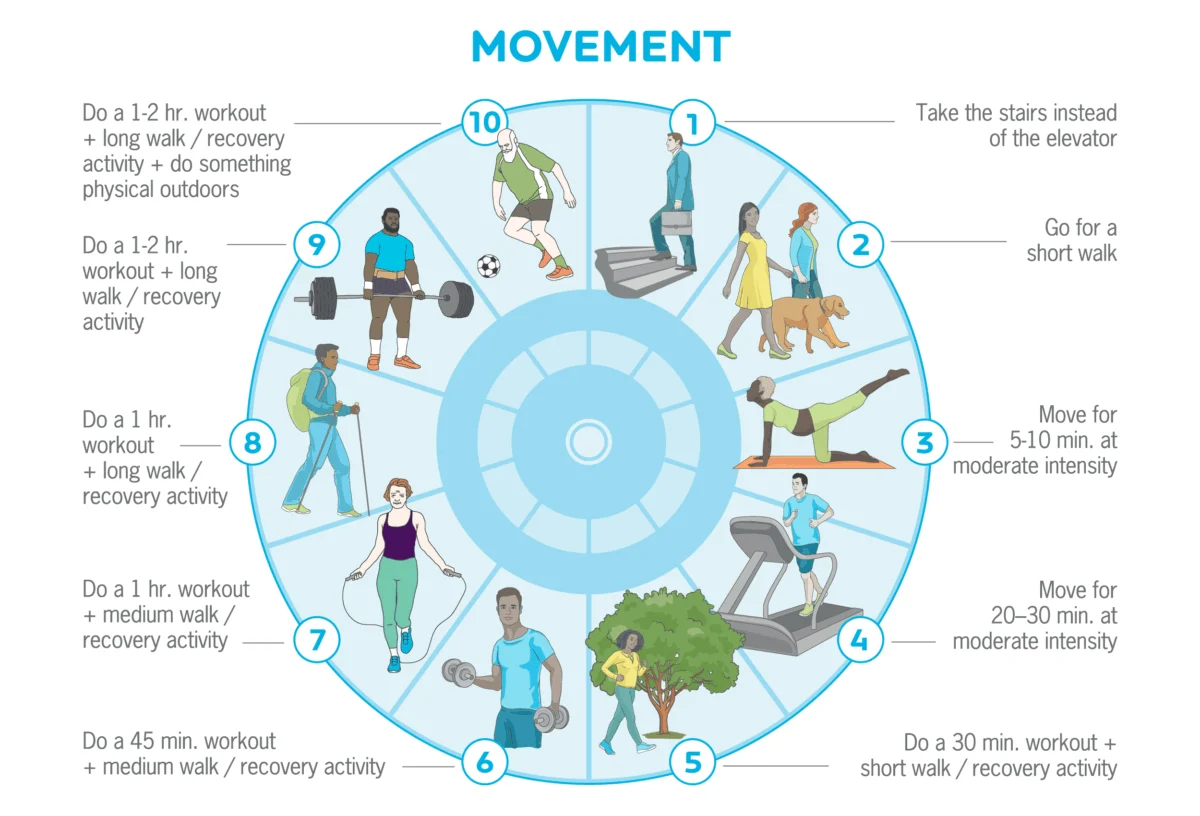
Consistency is paramount, but it must be adaptable. The concept of "pathetic goals," as advocated by coaches like Kate Solovieva, challenges clients to define the absolute minimum action they can commit to, even on their "worst day." This "floor" might be five minutes of walking, ten push-ups, or one extra serving of vegetables. This bare minimum is not a failure; it’s the non-negotiable threshold for staying engaged. Conversely, defining a "ceiling" – the maximum effort achievable on a "best day" (e.g., an hour-long intense gym session, two hours of meal prep) – creates a flexible range.
This "floor and ceiling" model transforms health habits from an "on/off" switch to a "dial." When life is smooth, the dial can be turned up; during periods of stress or challenge, it can be turned down to the minimum viable action. The crucial insight is that any action within this range "counts" as success. Doing the bare minimum is not failing; it is succeeding within the messy, unpredictable context of real life. This paradigm shift fosters resilience and prevents the all-or-nothing thinking that often leads to complete abandonment of habits.
4. Create an Ecosystem that Supports You:
The environment plays a profound role in shaping behavior. Health professionals often operate within ecosystems (e.g., gyms, active social circles) that naturally facilitate healthy habits. The challenge for many individuals is that their immediate environments often subtly undermine their intentions. The solution lies in consciously designing an "ecosystem that makes failing nearly impossible."
Reliance solely on willpower is a precarious strategy. Instead, individuals should leverage environmental psychology and "choice architecture" to make desired behaviors easier and undesired behaviors harder. A "kitchen makeover" is a classic example: placing prepped, healthy foods prominently in the fridge while relegating less healthy options to less accessible locations. Beyond the kitchen, this principle extends to:
- Removing obstacles: Having workout clothes ready, subscribing to a meal kit service.
- Adding prompts: Setting alarms for breaks, placing water bottles in visible locations.
- Modifying social circles: Engaging with supportive individuals, seeking accountability partners.
- Optimizing digital environments: Limiting screen time, curating positive social media feeds.
Investing effort upfront to build a supportive environment significantly reduces the cognitive load and willpower required daily, making desired actions the obvious, default choice.
Societal and Public Health Implications
The individual struggle with consistent basic health habits aggregates into significant societal challenges. The prevalence of preventable chronic diseases – heart disease, type 2 diabetes, certain cancers – places an immense burden on healthcare systems globally. Billions are spent annually treating conditions that could be mitigated, or even prevented, through consistent adherence to the fundamental behaviors outlined. Beyond financial costs, there are profound impacts on quality of life, productivity, and overall societal well-being. A population struggling with basic health principles is less productive, more prone to mental health issues, and faces diminished longevity. The proliferation of misinformation and the "magic bullet" narrative further exacerbate these issues, distracting individuals and public health efforts from the proven, cost-effective interventions that truly make a difference. Addressing this "94% gap" is not just an individual pursuit but a critical public health imperative.
Embrace C+ Effort.
For those accustomed to striving for perfection, the notion of "C+ effort" might feel jarring. However, this philosophy embodies the acceptance of human imperfection inherent in all sustainable change. It means adopting an attitude of compassion and working with one’s vulnerabilities, rather than constantly battling them. There will be periods of "A" grade performance, which are commendable. But crucially, when life dictates a "C+" day – or week, or season – it does not signify failure. It signifies adaptability and resilience.
Living a healthy, meaningful life is a continuous journey of striving for one’s best while simultaneously embracing flexibility, acknowledging mistakes, and navigating inevitable bad days. The long-term impact of consistent "good enough" action far surpasses the sporadic, unsustainable bursts of "perfect" effort.
References
Click here to view the information sources referenced in this article.
If you’re a coach, or you want to be…
You can help people build sustainable nutrition and lifestyle habits that will significantly improve their physical and mental health—while you make a great living doing what you love. We’ll show you how.
If you’d like to learn more, consider the PN Level 1 Nutrition Coaching Certification. (You can enroll now at a big discount.)