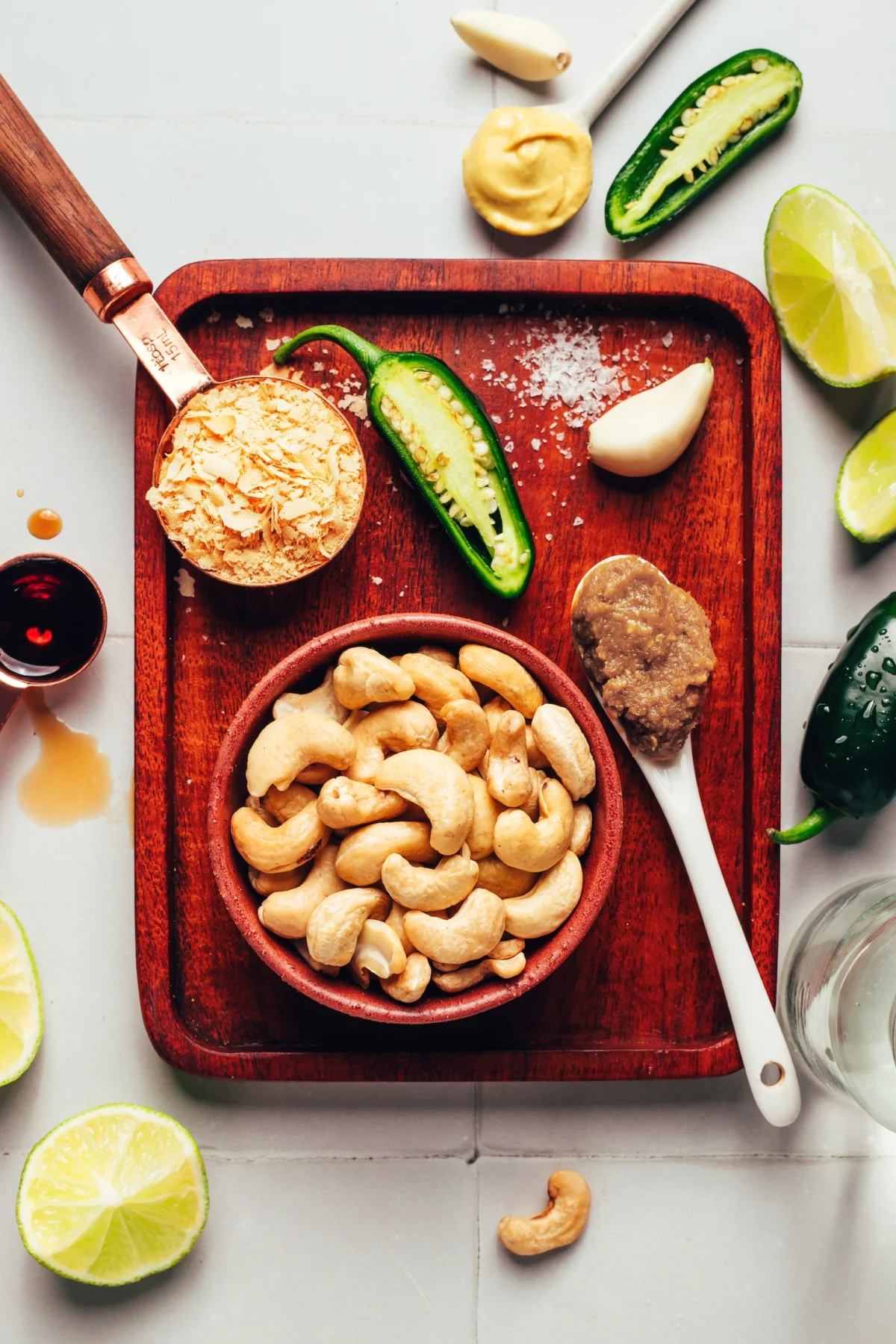

The culinary landscape of plant-based condiments has seen a significant shift toward whole-food ingredients, moving away from highly processed oils and artificial thickeners. A prominent example of this evolution is the emergence of the Cheesy Jalapeño Cashew Dressing, a versatile condiment that utilizes the natural fats and proteins of raw nuts to replicate the mouthfeel of traditional dairy-based dressings. This development reflects a broader consumer trend prioritizing clean labels, nutritional density, and home-based food preparation. By combining nine primary ingredients—raw cashews, water, lime juice, nutritional yeast, miso paste, Dijon mustard, maple syrup, sea salt, garlic, and fresh jalapeño—this recipe achieves a complex flavor profile that balances acidity, heat, and umami.
The Science of Plant-Based Emulsification
The foundational component of this dressing is the raw cashew. Unlike other nuts, cashews possess a unique chemical composition that makes them ideal for creating creamy emulsions. They contain a high percentage of starch (roughly 10% by weight), which helps in thickening sauces when blended with liquid. Furthermore, their neutral flavor profile allows for the absorption of bold seasonings without the bitter aftertaste often associated with walnuts or pecans.
When processed in a high-speed blender, the mechanical energy breaks down the cashew’s cellular structure, releasing fats and proteins that encapsulate water molecules. This creates a stable emulsion similar to heavy cream or mayonnaise. Food scientists note that the absence of soaking—while optional—is made possible by the power of modern blending technology, which can pulverize the nuts into a sub-micron particle size, ensuring a velvet-like texture.

Ingredient Profile and Flavor Synergies
The "cheesy" characteristic of the dressing is not derived from dairy but through a strategic combination of nutritional yeast and white miso paste. Nutritional yeast, a deactivated yeast known as Saccharomyces cerevisiae, is a staple in vegan cuisine due to its nutty, savory profile. When paired with miso paste—a fermented soybean product—the two ingredients work synergistically to provide a deep umami flavor. The fermentation process in miso produces glutamates, which are the chemical compounds responsible for the "savory" taste found in aged cheeses like Parmesan.
The inclusion of fresh jalapeño and lime juice introduces a bright, acidic counterpoint to the richness of the cashews. The heat from the jalapeño is primarily concentrated in the seeds and pith; by adjusting these components, the spice level can be modulated to suit different palates. Lime juice provides citric acid, which not only enhances the flavor but also acts as a natural preservative, maintaining the dressing’s freshness during refrigeration.
Nutritional Analysis and Comparative Health Data
From a nutritional standpoint, the Cheesy Jalapeño Cashew Dressing offers a distinct advantage over traditional oil-based or dairy-heavy dressings like Ranch or Blue Cheese. A standard 2-tablespoon serving contains approximately 70 calories, 2.8 grams of protein, and 4.9 grams of fat. Notably, the fats present are primarily monounsaturated and polyunsaturated, which are considered heart-healthy.
In comparison, a standard store-bought Ranch dressing often contains 140 calories and 14 grams of fat per serving, much of which is derived from soybean oil and saturated fats from buttermilk or egg yolks. Furthermore, the cashew-based alternative is naturally cholesterol-free and contains essential micronutrients, including Vitamin C (3.1 mg per serving) and iron (0.8 mg per serving). The use of maple syrup as a sweetener provides a low-glycemic alternative to the high-fructose corn syrup frequently found in commercial salad dressings.

Market Context and Consumer Trends
The rise of recipes like the Cheesy Jalapeño Cashew Dressing coincides with the rapid growth of the global vegan condiments market. According to industry reports, the plant-based sauce and dressing sector is projected to expand at a compound annual growth rate (CAGR) of over 7% through 2030. This growth is driven by "flexitarian" consumers—individuals who are not strictly vegan but seek to reduce their intake of animal products for health and environmental reasons.
Retailers have responded by stocking more nut-based dressings, but a significant segment of the market is shifting toward DIY (Do-It-Yourself) preparation. Consumers are increasingly wary of stabilizers like xanthan gum and phosphoric acid found in bottled products. The ability to produce a high-quality dressing in five minutes using a blender addresses the modern consumer’s need for both convenience and ingredient transparency.
Preparation Methodology and Troubleshooting
The preparation of the dressing is characterized by its simplicity, requiring only a single appliance and minimal prep time. The standard procedure involves placing all nine ingredients into a high-speed blender and processing for 60 to 120 seconds.
However, culinary experts suggest several troubleshooting steps for those without industrial-grade equipment. If the dressing fails to reach a perfectly smooth consistency, it is recommended to:

- Soak the Cashews: Immersing the nuts in hot water for 15 to 30 minutes softens the outer layers, making them easier to pulverize.
- Incremental Liquid Addition: Starting with less water and gradually adding more during the blending process can help create a thicker, more stable emulsion before thinning it to the desired dressing consistency.
- Strain the Mixture: For an ultra-refined sauce, the mixture can be passed through a fine-mesh sieve or nut milk bag.
Versatility in Culinary Application
While primarily marketed as a salad dressing, the flavor profile of the Cheesy Jalapeño Cashew Dressing lends itself to a wide array of culinary applications. Its thickness can be adjusted by varying the water content, allowing it to function as:
- A Dip: In its thicker form, it serves as a nutrient-dense accompaniment for raw vegetables, pita chips, or crackers.
- A Sandwich Spread: It provides a spicy, creamy layer for wraps, tacos, and sandwiches, such as chickpea shawarma or sweet potato tacos.
- A Sauce for Warm Proteins: The dressing can be drizzled over roasted cauliflower wings or grilled plant-based proteins to add richness and moisture.
The dressing’s stability under refrigeration is also a key factor for meal-prepping. It remains fresh and flavorful for five to seven days when stored in an airtight container, although it may thicken over time. A small amount of water or lime juice can be whisked in to restore its original consistency.
Environmental and Ethical Implications
The shift toward nut-based dressings also carries environmental implications. The production of dairy-based cream and cheese is resource-intensive, requiring significant land use and contributing to greenhouse gas emissions through livestock methane. While nut farming, particularly cashews, has its own environmental footprint regarding water usage, it generally remains lower than that of industrial dairy farming.
Furthermore, the DIY nature of this recipe reduces the reliance on single-use plastic bottles, which are a major source of waste in the condiment industry. By utilizing bulk-purchased cashews and fresh produce, consumers can significantly decrease their household’s plastic footprint.

Expert Reactions and Practical Insights
Nutritionists have praised the recipe for its focus on whole-food plant-based (WFPB) principles. "By moving away from isolated oils and focusing on the whole nut, you’re retaining the fiber and the full spectrum of nutrients that are often lost in processing," says one dietary consultant. "The inclusion of miso and garlic also adds probiotic and prebiotic benefits, which are essential for gut health."
From a culinary perspective, the balance of flavors is cited as its strongest asset. The maple syrup does not make the dressing sweet; rather, it acts as a "bridge" that rounds out the sharp acidity of the lime and the heat of the jalapeño. This balance is a hallmark of professional sauce-making, now made accessible to the home cook.
Conclusion
The Cheesy Jalapeño Cashew Dressing represents more than just a recipe; it is a manifestation of the current intersection between health consciousness, culinary technology, and environmental responsibility. As consumers continue to demand foods that are both functional and flavorful, the reliance on versatile, nut-based emulsions is expected to become a standard in the modern kitchen. With a preparation time of just five minutes and a nutritional profile that outperforms traditional alternatives, this dressing is positioned as a staple for the contemporary, health-oriented household.