
The modern quest for longevity has evolved from a quiet desire for healthy aging into a multi-billion-dollar industry defined by extreme optimization, complex protocols, and a relentless search for the "next big thing" in human performance. From cold plunges and intravenous vitamin infusions to sophisticated data-tracking wearables and experimental pharmacological regimens, the landscape of health optimization has become increasingly crowded and expensive. Yet, as influencers and biohackers push the boundaries of what is possible, a growing body of evidence suggests that the most significant gains in healthspan and lifespan are not found in the fringes of science, but in the disciplined application of fundamental, time-tested habits.

The current movement, popularized by figures such as Dr. Peter Attia, Dr. Andrew Huberman, and tech entrepreneur Bryan Johnson, focuses on "optimizing" human biology to delay the onset of chronic disease. While the appeal of controlling one’s biological destiny is undeniable, industry experts and health coaches argue that the complexity of these protocols often masks a critical reality: the average individual does not need to pursue perfection to achieve peak physiological outcomes. For the vast majority of the population, a consistent commitment to core health pillars—sleep, nutrition, exercise, and stress management—yields superior returns on investment compared to the high-cost, high-effort strategies championed by modern optimization culture.

The Myth of the "Optimal" Protocol
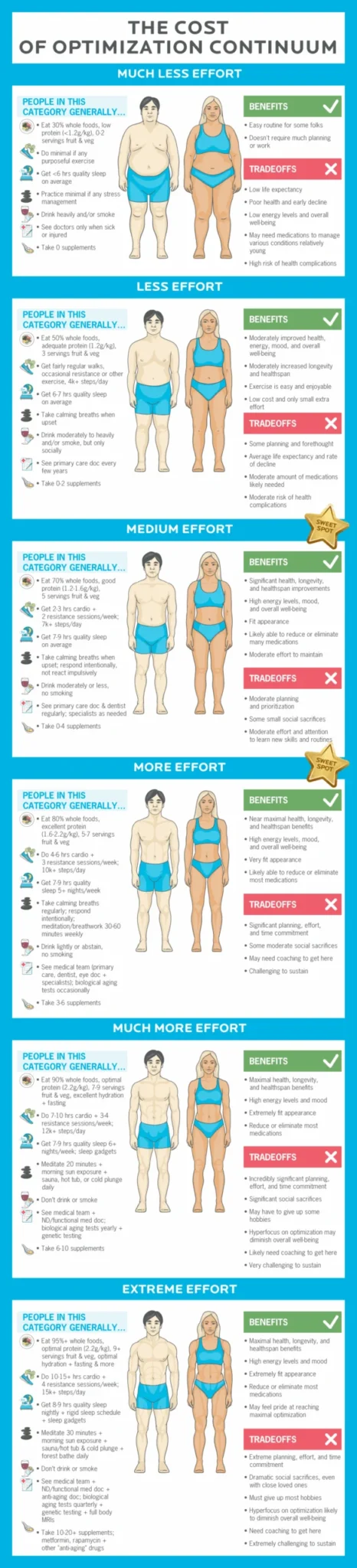
The prevailing narrative suggests that standard health advice is insufficient for those looking to surpass average life expectancy. However, data indicates that the "basics" are not merely adequate; they are transformative. Research consistently shows that when individuals adhere to a well-rounded set of foundational habits with 80 to 90 percent consistency, they reach a plateau of health optimization where the marginal benefits of "fringe" interventions become negligible.

The law of diminishing returns is a governing principle in physiology. Much like a plant that requires sunlight, water, and soil to thrive, the human body reaches its biological potential through consistent, basic inputs. Adding expensive supplements, exotic therapies, or extreme dietary restrictions often introduces unnecessary stress and financial burden without significantly moving the needle on long-term mortality risk. In many cases, these complex protocols may even be counterproductive, leading to burnout, increased psychological stress, or potential safety risks associated with unverified or poorly regulated health products.

Chronology of Health Trends: From Wellness to Biohacking
The evolution of health trends over the last several decades reveals a shift from communal wellness to individualistic optimization. In the late 20th century, health advice was largely focused on public health initiatives—smoking cessation, heart-healthy diets, and basic physical activity. By the early 2000s, the rise of the digital age and wearable technology allowed for the "quantified self," where individuals began tracking sleep cycles, heart rate variability, and blood glucose levels.

The last five years have seen the maturation of the "longevity industry." This era is characterized by the integration of clinical data into consumer products. While this has empowered many to take a more proactive role in their health, it has also created a barrier to entry. For many, the perceived requirement to adopt an "all-or-nothing" approach—such as running 90 minutes a day to optimize VO2 max or following rigid fasting schedules—has created an "optimization gap." When people feel they cannot meet these high standards, they often abandon healthy habits altogether, ignoring the reality that even modest, inconsistent efforts can result in significant improvements in body composition, cardiovascular health, and life expectancy.

Quantifying the Return on Investment
Statistical analysis of health interventions provides a clear roadmap for where to focus energy. For example, regarding physical activity, the greatest health benefits are realized in the transition from a sedentary lifestyle to moderate activity. Increasing daily steps by just 1,000 can result in a 12 percent reduction in mortality risk. Similarly, resistance training, which is often sidelined in favor of aerobic "biohacks," remains one of the most effective interventions for maintaining bone density, metabolic function, and muscle mass—all critical factors in preventing frailty and injury in later life.

Nutritional data tells a similar story. While the supplement industry promotes various anti-aging compounds, large-scale studies involving millions of participants confirm that the most consistent life-extending factor is the consumption of five servings of fruits and vegetables daily. Conversely, the proliferation of ultra-processed foods (UPFs) has been linked to a 32 percent increase in various health risks, including cardiovascular disease and all-cause mortality. The strategy for success is simple: prioritize whole foods and minimize ultra-processed intake. Achieving 70 to 80 percent compliance with this dietary pattern is sufficient to capture the vast majority of health benefits.

The Role of Preventive Care and Social Connection
Beyond individual biology, the most effective longevity strategy remains the consistent use of basic preventive health measures. This includes routine screenings, dental care, and vaccination, alongside behavioral safety measures like wearing seatbelts and helmets. These interventions, while rarely "trending" on social media, have a higher statistical impact on survival than almost any experimental supplement.

Furthermore, the Harvard Study of Adult Development—an 87-year-long longitudinal study—has identified social connection as the most potent predictor of both life satisfaction and longevity. The mortality risk associated with chronic loneliness is comparable to smoking 15 cigarettes per day. In this context, spending time with friends and fostering a sense of community is not just a recreational activity; it is a clinical health imperative.

Implications for the Future
The implications for the average person are clear: the democratization of health should focus on accessibility and consistency rather than exclusivity and complexity. The "optimization" culture, while well-intentioned, often diverts resources—both time and money—away from the pillars of deep health: social, existential, mental, and physical well-being.

For those looking to improve their longevity, the path forward involves three strategic steps:

- Clarify Personal Objectives: Determine what a "full life" looks like and how health goals support that vision, rather than letting health goals become the sole focus of life.
- Prioritize the Foundations: Ensure sleep, diet, exercise, and stress management are addressed consistently before considering any "fringe" or high-cost interventions.
- Audit the Costs: Recognize the opportunity cost of an "optimizer" lifestyle. The time and financial investment required for extreme protocols often exceed the marginal health benefits, potentially detracting from other essential aspects of a balanced, meaningful life.
Ultimately, great health is not hidden behind expensive blood panels or unproven supplements. It is found in the sustainable, repetitive, and often "boring" habits that have formed the bedrock of human health for generations. By tuning out the noise and focusing on these fundamental behaviors, individuals can secure a high quality of life and a robust healthspan without the need for an expensive or exhausting optimization regime.