The intersection of culinary arts and hard science has experienced a profound renaissance, driven by an expanding global appetite for understanding the molecular, chemical, and physical transformations that occur behind the kitchen door. After a notable hiatus from literary reviews on the specialized food science blog Khymos—which last offered comprehensive book recommendations in 2013—the platform has released a definitive compendium of essential culinary science texts published in 2020. This curated selection underscores a broader cultural shift: cooking is no longer viewed merely as an intuitive craft or artistic endeavor, but as a precise, empirical science accessible to home cooks, academic researchers, and professional chefs alike.
The 2020 publishing landscape for culinary science reflects a maturation of the genre, moving beyond general overviews to deeply specialized topics, including the neurology of olfaction, the mathematical physics of high-end gastronomy, and the rigorous chemical deconstruction of regional traditions such as Indian cuisine. This resurgence bridges the historically wide gap between laboratory research and domestic food preparation, empowering consumers to elevate their culinary techniques through empirical comprehension.
The Molecular Mechanics of Flavor and Olfaction
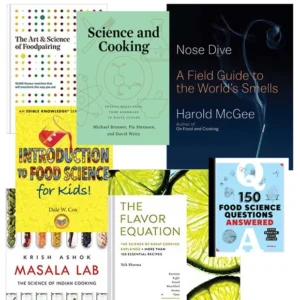
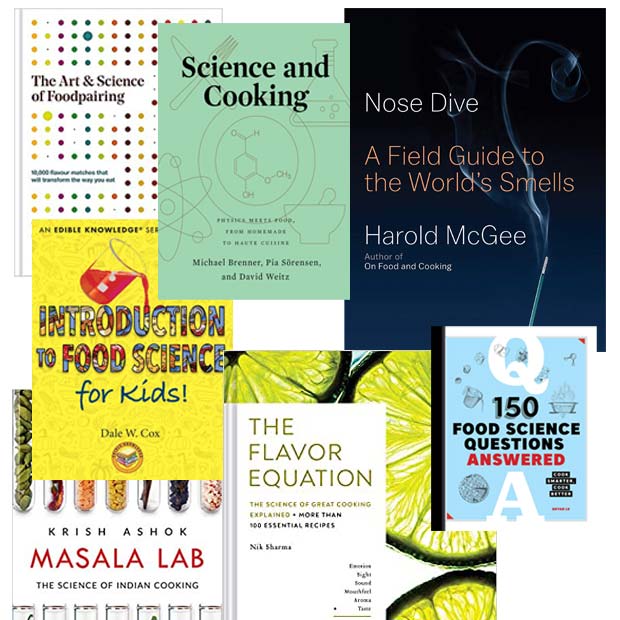
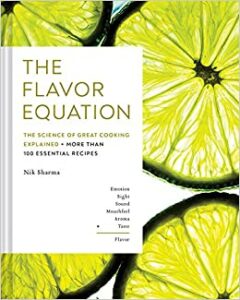
At the forefront of the 2020 literary offerings is Nik Sharma’s The Flavor Equation, a 352-page volume featuring approximately 100 meticulously developed recipes. Sharma successfully embeds complex scientific principles directly into practical cooking instructions via dedicated subheadings titled "The Flavor Approach." Rather than isolating the science into dry academic chapters, the text contextualizes chemical reactions alongside culinary execution, offering a distinct advantage for international bakers and cooks through its consistent integration of metric units. The final third of the book expands into a comprehensive exploration of flavor theory, examining the sensory mechanisms of taste and smell from multiple academic perspectives while maintaining an accessible tone for non-specialists.
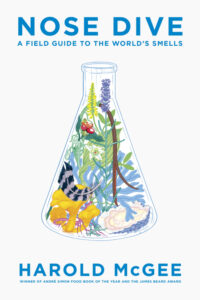
Complementing Sharma’s work on taste is Harold McGee’s monumental 688-page field guide, Nose Dive: A Field Guide to the World’s Smells. McGee occupies a revered position in culinary literature, having authored On Food and Cooking: The Science and Lore of the Kitchen—a seminal text that inspired a generation of food scientists and modernist chefs. In Nose Dive, McGee shifts his analytical lens away from the kitchen workspace to examine the universe of volatile chemical compounds responsible for scents found everywhere in nature and industry, not just in food. Although the text boldly introduces and identifies specific volatile molecules, industry experts note that the rigorous nomenclature should not deter amateur enthusiasts. The book stands as a monumental achievement in sensory science, arriving with distinct cover variants for the United Kingdom and United States markets.
Academic Rigor Meets Haute Cuisine
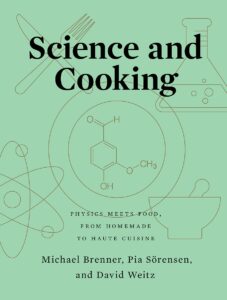
The translation of institutional research into public knowledge is powerfully demonstrated in Science and Cooking: Physics Meets Food, From Homemade to Haute Cuisine by Michael Brenner, Pia Sørensen, and David Weitz. Drawing from their decade-long experience teaching Harvard University’s immensely popular undergraduate general education course of the same name, the authors synthesize diverse academic backgrounds spanning applied mathematics, chemistry, and physics.
The Harvard lecture series, widely accessible via public video platforms, has historically featured world-renowned chefs, materials scientists, and food historians exploring the nexus of physics and gastronomy. The 2020 text successfully bridges these lectures with home-kitchen applications, coupling complex thermodynamic and material science principles directly with actionable recipes, complete with metric measurements. This academic framework illustrates how institutional pedagogy can effectively demystify both traditional home cooking and avant-garde haute cuisine.
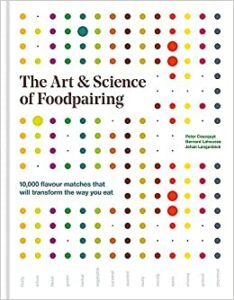
Similarly, the controversial and fascinating realm of molecular food pairing is comprehensively captured in The Art and Science of Foodpairing by Peter Coucquyt, Bernard Lahousse, and Johan Langenbick. Building upon pioneering work popularized by the culinary technology company Foodpairing and discussed extensively at international symposia such as the Flemish Primitives conferences, this 388-page volume maps out chemical flavor synergies. While flavor pairing has occasionally faced skepticism from culinary traditionalists who argue it relies too heavily on algorithmic data over cultural harmony, the book provides a definitive mapping of shared volatile compounds. Crucially, the authors acknowledge the boundary where empirical science concludes and artistic intuition must take over, ensuring practical kitchen inspiration regardless of a reader’s stance on algorithmic gastronomy.
Expanding Horizons: Regional Science and Consumer Accessibility
A significant milestone in the 2020 publishing cycle is the geographical and cultural diversification of culinary science literature. In Masala Lab, author Krish Ashok—an electronic and software engineer by trade—applies rigorous engineering principles and empirical testing to traditional Indian cooking. By examining the thermal dynamics of spice tempering (tadka), the starch gelatinization in rice preparations, and the protein denaturation in paneer and dairy, Ashok brings a systematic mindset to regional subcontinental cuisines. Initially distributed primarily through Amazon in India, the book represents a crucial movement toward democratizing food science across diverse culinary traditions that have historically been underrepresented in Western-centric molecular literature.
For readers seeking a more direct, entry-level engagement with kitchen chemistry, Bryan Le’s 150 Food Science Questions Answered: Cook Smarter, Cook Better offers a structured Q&A format across 198 pages. Organized logically into chapters addressing cooking fundamentals, flavor mechanics, ingredient categories, and a vital concluding section on food safety and preservation, Le’s work serves as an indispensable reference tool. Industry analysts point out that such accessible, question-driven formats are vital for lowering the barrier to entry for home cooks wishing to adopt a scientific mindset without wading through dense academic monographs.
Finally, the pedagogical value of kitchen-based science for younger demographics is championed in Dale W. Cox’s Introduction to Food Science for Kids!: A Kitchen-Based Workbook. Spanning 112 pages, the workbook capitalizes on the domestic kitchen as an ideal, controlled laboratory environment where children can safely observe chemical and physical transformations—such as yeast fermentation, protein coagulation, and emulsion stabilization—fostering early scientific literacy through experiential learning.
Implications and Future Outlook for Culinary Literature
The revitalization of curated literary recommendations by food science commentators highlights a permanent shift in modern culinary culture. As home cooking experiences a global resurgence driven by technological connectivity and access to specialized equipment, the demand for authoritative, science-backed literature has never been higher.
The 2020 publications collectively demonstrate that understanding the underlying physics and chemistry of food does not strip cooking of its romance or creativity; rather, it empowers practitioners to troubleshoot failures, innovate confidently, and appreciate the invisible molecular forces shaping every meal. As publishing houses continue to invest in interdisciplinary food titles—spanning engineering, sensory psychology, and pedagogical workbooks—the boundaries between the industrial laboratory, the university lecture hall, and the home kitchen will continue to dissolve, promising an even more integrated and scientifically literate culinary future.