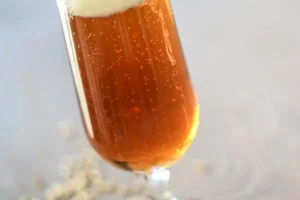
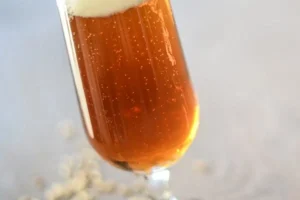
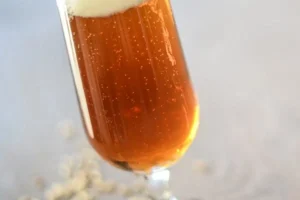
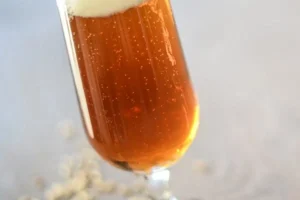
The global craft brewing community is in mourning following the passing of Alan Sprints, the visionary founder of Portland, Oregon’s legendary Hair of the Dog Brewing Co. Sprints lost his courageous battle with metastatic stage 4 bladder cancer, leaving behind an indelible legacy that reshaped the landscape of independent brewing in the United States. Known universally for his strong, four-letter-named ales and his uncompromising dedication to historical recreation and barrel-aging innovation, Sprints was a titan of the industry. His sudden departure marks the end of an era for the craft beer movement, prompting tributes from brewers, historians, and enthusiasts worldwide who remember him not only as a master of his craft, but as a profoundly generous educator and friend.
Main Facts: The Legacy of a Craft Icon
Alan Sprints cemented his legendary status by practically inventing the cult-favorite, limited-edition "white whale" beer category in the American craft beer market. Operating out of an industrial pocket of southeast Portland, Hair of the Dog Brewing Co. became synonymous with heavy, complex, long-aging ales that challenged conventional parameters of bitterness, alcohol-by-volume (ABV), and flavor profiles.
His most famous creation, "Adam," debuted in 1994 and drew direct inspiration from Adambier, a historical German strong ale famously documented by British beer writer Michael Jackson in his seminal work, The Beer Companion. Clocking in at a formidable 10% ABV with a robust 60 international bitterness units (IBUs), Adam possessed a remarkable capacity to age gracefully over decades, making it one of the most coveted collector’s items among beer connoisseurs.
Following Adam in 1997 was "Fred," named in honor of the late Portland-based beer historian and homebrewing pioneer Fred Eckhardt. Inspired by the Belgian Golden Strong Ale tradition, Fred poured a deep dark gold, matched Adam’s 10% ABV, and quickly achieved an even scarcer status among collectors. Sprints’ portfolio also included "Doggie Claws," a legendary barleywine, and "Dave," an ultra-rare, freeze-distilled barleywine that reached an astonishing 29% ABV, solidifying his reputation as a brewer who pushed the absolute physical and chemical limits of fermentation.
Chronology and Evolution: From Aerospace and Kitchens to Brewing Stardom
Sprints’ journey to becoming a cornerstone of the American craft beer movement was unconventional. Originally hailing from the Los Angeles area, his early professional pursuits were diverse, spanning the aerospace industry and the music world. However, a deep-seated passion for homebrewing eventually steered him toward the culinary arts.
Before turning his attention fully to professional brewing, Sprints worked as a professional chef for three years, a background that heavily influenced his sophisticated palate and intuitive understanding of flavor composition and ingredient pairing. Relocating to Portland, he embedded himself deeply in the local brewing culture, joining the Oregon Brew Crew and eventually rising to the position of club president.
- 1991: Sprints enters the professional brewing sphere, taking a job with the Widmer Brothers in Portland, Oregon.
- 1993: After gaining two years of commercial experience, Sprints opens Hair of the Dog Brewing Co. in an industrial warehouse district in southeast Portland.
- 1994: The brewery releases "Adam," pioneering the American craft market’s interest in historical German strong ales and cellar-worthy dark beers.
- 1997: The release of "Fred" honors beer historian Fred Eckhardt and introduces a Belgian-inspired strong ale to the Hair of the Dog lineup.
- Late 1990s–2010s: Hair of the Dog gains international acclaim, pioneering widespread adoption of barrel-aging techniques in craft beer and earning numerous accolades from prominent industry publications such as Beer Advocate and Whiskey Advocate.
- 2022: Hair of the Dog officially pours its final beers, closing its physical taproom and concluding nearly three decades of pioneering production.
- 2026: Alan Sprints passes away following a battle with metastatic stage 4 bladder cancer.
Supporting Data and Industry Impact
Long before barrel-aging stouts and barleywines in used whiskey and wine casks became an industry standard, Alan Sprints was already experimenting with wood-aging in the Pacific Northwest. Matt Simpson, founder of The Beer Sommelier, encapsulated Sprints’ technical prowess in a recent statement, noting that Sprints did not necessarily invent the barleywine style, but rather perfected it, curating and blending barrel-aged components in a way that no other brewer of his era could or would replicate.
Operating with equipment that reflected the scrappy, DIY ethos of early-era craft brewing—including a four-barrel steam-jacketed kettle originally utilized by Campbell’s Soup—Sprints produced beers of immense scale and complexity that routinely dwarfed the facility in which they were made. His technical innovations proved that American craft breweries could successfully resurrect obsolete, obscure European historical styles and elevate them through extended maturation and blending.
Official Responses and Remembrances
The outpouring of grief and admiration from across the brewing community reflects Sprints’ profound personal impact alongside his professional achievements. Colleagues and industry veterans have stepped forward to share memories of his boundless hospitality and infectious enthusiasm.
Amahl Turczyn, recalling his visits to the original Hair of the Dog taproom in the mid-1990s alongside luminaries like Fred Eckhardt and former Zymurgy editor Jim Parker, highlighted Sprints’ unmatched generosity. "Sprints wanted us to sample old bottles of everything, and he was always so generous with his pours—his enthusiasm for the craft was infectious," Turczyn wrote.
Drew Beechum, a founding board member of the American Homebrewers Association (AHA) and author, echoed these sentiments, emphasizing Sprints’ enduring roots in the homebrewing community. "He was a homebrewer at heart—always super generous with his time and enthusiasm (and his cellar)," Beechum remarked.
Beechum recounted a quintessential encounter with Sprints during a trip to the San Francisco Bay Area, where the Zymurgist-award-winning homebrew club, the California Homebrew Club of the Year, was celebrating. "Alan shows up and drops two magnums of Doggie Claws Barleywine as a ‘congratulations’ gift. But what made it epically funny is that every time we drained a bottle, Alan was suddenly back like a mischievously grinning Santa Claus with another pair of magnums."
Broader Impact and Implications for the Craft Beer Landscape
The passing of Alan Sprints represents the loss of a vital bridge to the formative years of modern American craft brewing. As the industry continues to evolve through commercial consolidation, shifting consumer preferences, and rapid market fluctuations, the legacy left by pioneers like Sprints serves as a reminder of the artistic, experimental, and community-driven foundations upon which the movement was built.
Sprints demonstrated that commercial viability did not require chasing mass-market appeal; rather, an uncompromising dedication to quality, historical education, and bold flavor profiles could carve out a permanent, revered space in culinary history. As friends, family, and former patrons reflect on his contributions, the consensus remains resolute: Alan Sprints fundamentally altered the DNA of American brewing, ensuring that his signature strong ales and generous spirit will live on in cellars, taps, and memories for generations to come.