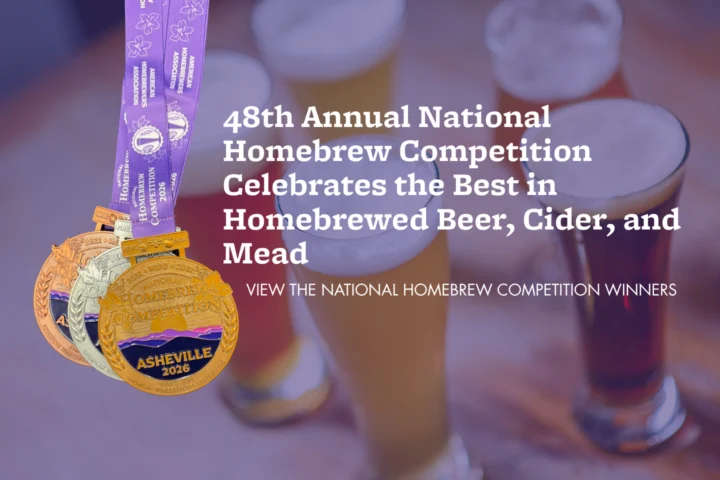

Thornton, Colorado resident Weston Wright, a dedicated member of the prominent local brewing collective Indian Peaks Alers, has achieved a monumental milestone in the amateur brewing community. Competing against a vast and exceptionally talented field of craft enthusiasts from across the globe, Wright captured the gold medal in Category 17: American IPA during the final round of the 2026 National Homebrew Competition. His winning submission triumphed over an impressive pool of 105 meticulously crafted entries in one of the competition’s most fiercely contested and popular categories.
The victory highlights not only Wright’s technical proficiency and dedication to the craft of fermentation but also underscores the burgeoning reputation of Colorado’s vibrant homebrewing scene. The American IPA category is historically known for demanding absolute precision, as even the slightest flaw in hop utilization, fermentation temperature, or water chemistry can derail a beer’s chances with the judges. By securing the top spot, Wright joins an elite tier of amateur brewers whose recipes are studied, replicated, and celebrated by enthusiasts worldwide.
The Anatomy of a Championship American IPA
Category 17: American India Pale Ale is widely regarded as the ultimate proving ground for modern craft brewers. Characterized by a prominent hop aroma, a clean and assertive bitterness, and a balanced malt profile, the style requires an expert touch to achieve harmony. Judges in the National Homebrew Competition evaluate entries based on strict adherence to the Beer Judge Certification Program (BJCP) style guidelines, scrutinizing everything from clarity and head retention to the nuanced interplay of citrus, pine, floral, or tropical fruit hop characteristics.
For Wright’s beer to rise above 104 competing interpretations of the style, it had to demonstrate exceptional balance, freshness, and technical execution. While the exact recipe of his gold-winning brew remains a closely guarded secret among members of the Indian Peaks Alers, success in this category typically relies on sourcing high-quality base malts, mastering advanced hopping techniques such as whirlpool additions and dry-hopping, and maintaining rigorous sanitation standards throughout the brewing process.
The Indian Peaks Alers, Wright’s homebrewing club, has long fostered a collaborative environment of shared knowledge, constructive criticism, and peer review. Local brewing clubs serve as essential incubators for talent, providing members with feedback infrastructure that mirrors professional quality-control laboratories. Wright’s triumph is a testament to the supportive ecosystem cultivated within these regional organizations, where amateurs routinely push each other toward professional-grade standards.
A Brief History and Background of the National Homebrew Competition
Organized annually by the American Homebrewers Association (AHA), the National Homebrew Competition is the largest amateur beer, mead, and cider competition in the world. Established decades ago to support and promote the hobby of homebrewing, the event has grown in tandem with the broader craft beer revolution. What began as a modest gathering of experimental hobbyists has evolved into a massive, highly structured international competition that evaluates thousands of entries each year.
The competition operates through a rigorous multi-tier judging process. Initially, regional first-round competitions are held across various locations in the United States. Only beers that earn first, second, or third place in their respective regional categories advance to the highly anticipated final round. This multi-tiered filtering ensures that only the finest amateur brews make it to the final judging tables, where they are evaluated by panels of the most experienced and certified judges in the industry.
Winning a medal at the National Homebrew Competition is considered the highest possible honor for an amateur brewer. Past winners have frequently used their success as a launching pad to transition into the commercial craft beer industry, founding award-winning microbreweries, taprooms, and regional production facilities. Even for those who choose to remain strictly amateur, the recognition brings immense prestige within the global homebrewing community.
The Chronology of the 2026 Competition Cycle
The path to the 2026 National Homebrew Competition Final Round is the culmination of nearly a year of planning, brewing, and judging. The timeline for the event typically follows a structured trajectory designed to accommodate seasonal brewing schedules and rigorous logistical coordination:

- Late Autumn: Registration opens for AHA members worldwide, allowing brewers to submit their recipe details and designate their entry categories.
- Early Spring: Regional first-round competitions take place across multiple designated zones. Certified judges evaluate thousands of entries, providing detailed scoresheets to every participant.
- Late Spring: Entries that medal at the regional level are carefully transported and consolidated for the final round judging panel.
- Summer: The National Homebrew Competition Final Round culminates with the announcement of gold, silver, and bronze medalists across dozens of distinct beer, mead, and cider categories.
Weston Wright’s journey followed this demanding timeline, beginning months prior in the regional circuit before his American IPA was selected to advance and ultimately conquer the final round field in Category 17.
Supporting Data and the Scale of Modern Homebrewing
To fully understand the magnitude of Wright’s accomplishment, one must examine the sheer scale of the competition and the demographics of modern homebrewing. The American Homebrewers Association estimates that over one million people in the United States alone actively participate in homebrewing. Despite the proliferation of commercial craft breweries—which now number over 9,000 in the U.S.—the passion for DIY fermentation continues to thrive.
In Category 17 alone, Wright competed against 105 distinct American IPA entries. Statistically, this means his beer had to outperform more than 99 percent of the submissions in his specific grouping. The judging panels utilize a 50-point scale based on aroma, appearance, flavor, mouthfeel, and overall impression. To secure a gold medal, an entry typically must score in the exceptional 43 to 50 range, demonstrating a flawless execution of the style with no significant off-flavors or technical defects.
Furthermore, the data surrounding medal-winning recipes indicates a high degree of experimentation among homebrewers. While traditional West Coast IPAs with piney and resinous hop profiles historically dominated the category, recent trends show an increasing prevalence of modern hop varieties, innovative yeast strains, and adjusted water profiles designed to accentuate mouthfeel and aroma. Wright’s ability to navigate these stylistic nuances points to a deep understanding of contemporary brewing science.
Reactions and Industry Perspectives
While individual hobbyists rarely command mainstream celebrity headlines, triumphs within the American Homebrewers Association network ripple deeply through the broader beverage industry. Professional craft brewers, many of whom started their careers as homebrewers, frequently monitor competition results to identify emerging talent and trending flavor profiles.
Representatives from regional brewing associations have noted that victories by amateur brewers in competitive states like Colorado reinforce the region’s status as a capital for fermentation innovation. Colorado has long been a crucible for craft beer culture, boasting a high concentration of both commercial operations and active hobbyist groups.
"Competitions like the National Homebrew Competition serve as the R&D lab for the entire brewing industry," noted an industry observer familiar with amateur circuit dynamics. "When a brewer like Weston Wright takes home gold in a massive category like American IPA out of 105 entries, it signals that the level of technical precision at the homebrew level is virtually indistinguishable from professional operations. Many commercial head brewers would be proud to submit that exact beer to the Great American Beer Festival."
Members of the Indian Peaks Alers expressed immense pride following the announcement of Wright’s victory. Local club meetings, which often double as sensory analysis workshops and recipe-sharing forums, immediately shifted into celebratory gatherings. Peers highlighted Wright’s meticulous note-taking, adherence to sanitation protocols, and relentless experimentation as key drivers of his success.
Broader Impact and Implications for the Craft
The success of Weston Wright at the 2026 National Homebrew Competition carries several broader implications for the future of amateur and professional brewing:
- Validation of Homebrewing Education: As brewing ingredients and equipment become increasingly sophisticated, access to professional-grade tools allows homebrewers to achieve commercial-level consistency. Wright’s win validates the educational resources provided by organizations like the AHA, proving that rigorous self-study and peer collaboration yield world-class results.
- Incentive for New Hobbyists: High-profile victories by local brewers inspire newcomers to enter the hobby, driving engagement with local supply shops, clubs, and educational seminars. This grassroots influx ensures a continuous pipeline of creative talent entering the broader fermentation economy.
- Trend Setting in Hop Utilization: Winning recipes from major national competitions frequently influence commercial brewing trends. As judges reward precise balance and innovative hop expression, commercial breweries often take cues from successful amateur formulations when developing seasonal or pilot batches.
As the craft beverage landscape continues to evolve, achievements like Weston Wright’s gold medal remind the industry of its roots. The passion, experimentation, and community-driven knowledge sharing that happen in basements, garages, and backyards across the country remain the beating heart of the American craft beer movement. With his name now etched into the roster of National Homebrew Competition champions, Wright stands as a shining example of excellence in the art and science of homebrewing.