
The competitive landscape of American homebrewing witnessed a masterclass in traditional European brewing techniques during the final round of the 2026 National Homebrew Competition. David Towles, representing the Amarillo High Plains Drafters (AHPD) homebrewing club based in Amarillo, Texas, secured the prestigious gold medal in Category 6: Amber European Beer. Towles triumphed over a highly competitive field of 125 entries, distinguishing his formulation through meticulous ingredient selection and a strict adherence to complex, labor-intensive historical brewing protocols.
The victory underscores the rising caliber of regional homebrewing organizations and highlights an ongoing consumer appreciation for authentic, heritage-style European lagers within the domestic craft beverage market.
Background and Context of the National Homebrew Competition
The National Homebrew Competition, organized annually by the American Homebrewers Association (AHA), stands as the world’s largest premier international amateur brewing competition. Every year, thousands of entries from across the globe undergo rigorous evaluation by certified judges certified through the Beer Judge Certification Program (BJCP). Beers are judged blindly against established style guidelines, evaluated on aroma, appearance, flavor, and mouthfeel.
Category 6, designated for Amber European Beers—which encompasses classic styles such as Märzen, Festbier, and Czech Amber Lager (Polotmavý)—requires a delicate balance between rich malt complexity and clean, crisp lager characteristics. Achieving a gold medal in this category demands absolute precision, as even minor fermentation flaws or structural imbalances are immediately apparent to the sensory panel. Towles’ entry successfully navigated these rigorous standards, standing out among a dense field of 125 meticulously crafted submissions.
Chronology of the Winning Brew
The creation of Towles’ award-winning Czech Amber Lager was far from a simple afternoon project; it required a commitment to traditional European brewing methodologies, most notably the double-decoction mash.

The brewing process began with a precisely calculated water profile containing Calcium (56 ppm), Sodium (8 ppm), Chloride (56 ppm), Sulfate (61 ppm), and Bicarbonate (16 ppm), providing a neutral, mineral-balanced foundation designed to accentuate soft malt flavors without aggressive bitterness. Towles initiated the mash-in phase at 145°F (63°C), holding for 30 minutes to allow primary enzymatic conversion.
Demonstrating dedication to historical authenticity, Towles executed a traditional double decoction. He pulled a first decoction comprising one-third of the main mash, boiled it for 20 minutes to promote Maillard reactions and caramelization, and returned it to the main vessel to elevate the overall temperature to 158°F (70°C). After a 15-minute rest, he performed a second decoction, again boiling one-third of the mash for 20 minutes before returning it to the main mash to achieve a 165°F (74°C) mashout held for 10 minutes. The resulting wort underwent an extended 90-minute boil to develop deep color and drive off undesirable DMS precursors.
Fermentation management played an equally critical role in the beer’s success. Pitching a robust 3-liter yeast starter of Wyeast 2278 Czech Pils, Towles fermented the 5.5-gallon batch at 50°F (10°C) under pressure. As gravity approached 1.020, he initiated a controlled temperature ramp, slowly elevating the environment to 64°F (18°C) to facilitate a thorough diacetyl rest and ensure complete attenuation. Following a final gravity stabilization, the beer underwent cold-conditioning and lagering for 14 days before being transferred to a keg and force-carbonated to 2.4 volumes of CO2.
Supporting Data and Technical Specifications
To provide insight into the chemistry and structural profile of the gold-medal-winning recipe, the technical specifications outline a well-attenuated, malt-forward amber lager designed for drinkability paired with depth of flavor:
- Yield: 5.5 U.S. gallons (20.8 liters)
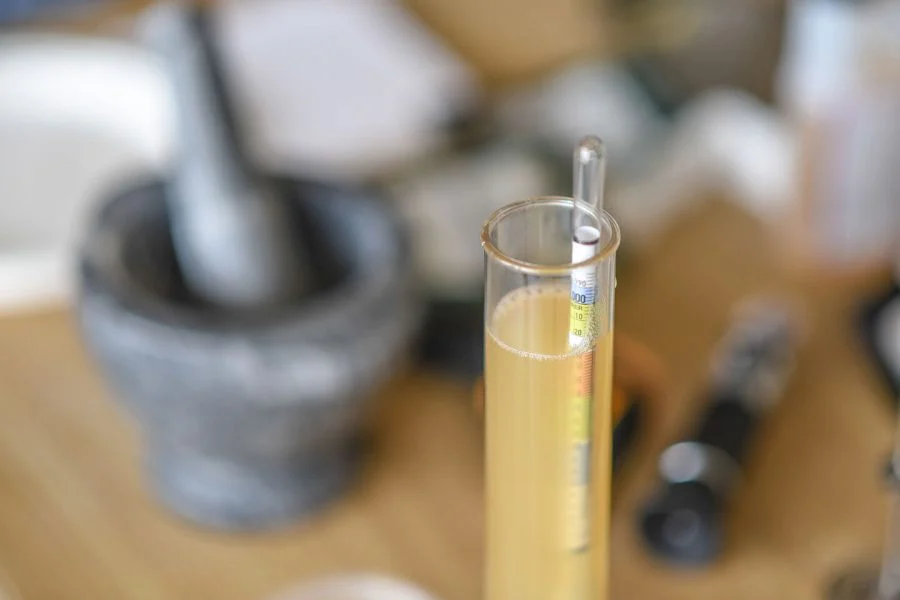
- Original Gravity (OG): 1.058 (14.2°P)
- Final Gravity (FG): 1.014 (3.5°P)
- Alcohol by Volume (ABV): 5.6%
- International Bitterness Units (IBU): 35
- Color (SRM): 14
- Brewhouse Efficiency: 68%
Complete Ingredient Breakdown
- Malts and Adjuncts:
- 6 lbs (2.72 kg) Weyermann Barke Pilsner Malt
- 3 lbs (1.36 kg) Vienna Malt
- 2 lbs (0.91 kg) Light Munich Malt
- 12 oz (340 g) Caramunich I
- 8 oz (227 g) Caramunich III
- 8 oz (227 g) Melanoidin Malt
- 1 oz (28 g) Weyermann Carafa Special II
- Hops:
- 1 oz (28 g) Saaz (2.6% alpha acids) added at 60 minutes
- 0.66 oz (19 g) Sterling (11% alpha acids) added at 60 minutes
- 1 oz (28 g) Saaz (2.6% alpha acids) added at 15 minutes
- 1 oz (28 g) Saaz (2.6% alpha acids) added at Flameout / 0 minutes
- Yeast:
- 3 L starter utilizing Wyeast 2278 Czech Pils
Industry Implications and Regional Recognition
The success of David Towles at the national level reflects positively on the Amarillo High Plains Drafters and reinforces Texas’s growing reputation as a hub for sophisticated amateur and professional brewing talent. While commercial craft breweries often lean toward high-alpha hop styles like hazy IPAs and pastry stouts, regional homebrewing clubs continue to preserve and refine historic, labor-intensive European styles.
Industry analysts note that victories in foundational styles like Amber European Beer often signal broader consumer shifts back toward balanced, malt-driven beers. As craft beer enthusiasts seek out beverage options that prioritize drinkability, technical execution, and culinary pairing potential, the meticulous formulas developed by homebrewers frequently serve as testing grounds for future commercial market trends. For Towles and the AHPD, the gold medal stands as validation of rigorous technical discipline, patient cellar management, and a deep respect for brewing traditions that span centuries.