

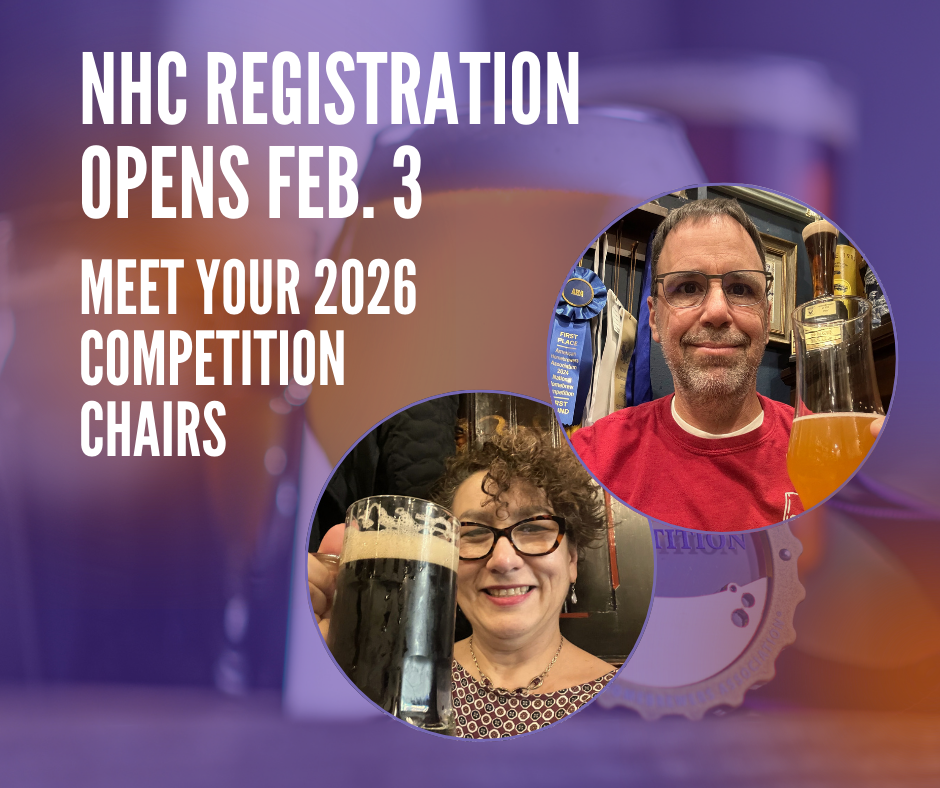
The American Homebrewers Association (AHA) has officially appointed Charlie Harr as the new Chair and Jen Pereira as the Deputy Chair of the National Homebrew Competition (NHC), signaling a strategic reinforcement of the organization’s leadership as it prepares for the 2026 competition cycle. This transition comes at a pivotal moment for the association, which remains the primary advocacy and educational body for the hobbyist brewing community in the United States and abroad. The NHC, recognized globally as the most prestigious and competitive arena for beer, mead, and cider, is set to open its entry window on February 3, 2026, marking another chapter in its storied history of elevating the standards of fermentation science and craft.
The selection of Harr and Pereira reflects the AHA’s commitment to a member-driven leadership model, utilizing individuals who possess not only deep technical expertise in brewing and sensory analysis but also extensive experience in large-scale event logistics. As the craft beverage landscape continues to evolve, the NHC serves as a critical benchmark for quality, often acting as a springboard for homebrewers who eventually transition into the commercial brewing industry.
Profiles in Leadership: Charlie Harr and Jen Pereira
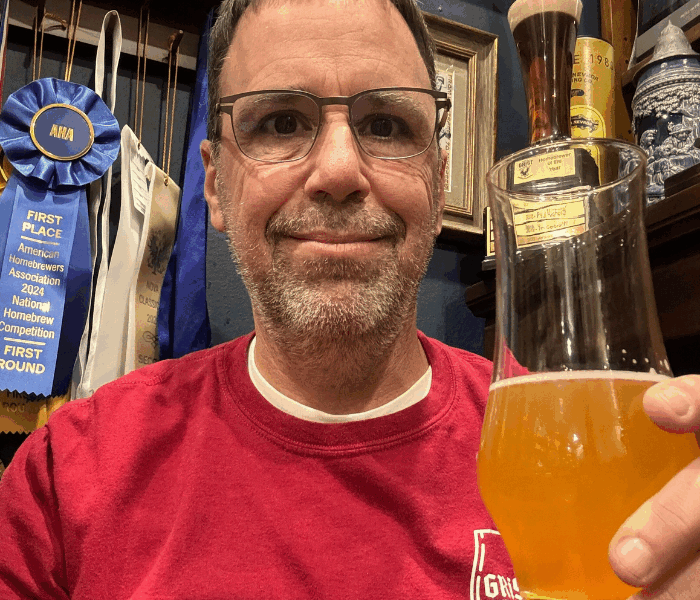
Charlie Harr, stepping into the role of NHC Chair, brings a formidable background in operations and event management spanning over two decades. His appointment is seen as a move to further professionalize the logistical framework of the world’s largest homebrew competition. Harr is currently the head judge for the Virginia Craft Brewers Guild, where he has honed his skills in managing complex, Beer Judge Certification Program (BJCP) sanctioned events. His responsibilities in Virginia have included the oversight of judge recruitment, the coordination of thousands of entries, and the management of volunteer teams—skills that are directly transferable to the massive scale of the NHC.
Harr is not merely an administrator; he is a practitioner of the craft. As an AHA member of many years and a previous entrant in the NHC, he understands the emotional and technical investment required to compete at a national level. Currently pursuing his BJCP National Judge certification, Harr represents the bridge between the volunteer spirit of the hobby and the rigorous standards of professional evaluation. In his official statement, Harr emphasized that his passion for advancing homebrewing education makes this role an ideal opportunity to support the community and the AHA’s broader mission.
Serving alongside Harr is Jen Pereira, the newly appointed Deputy Chair. Pereira’s resume is a testament to a life dedicated to beverage education and sensory excellence. With over 25 years of experience, her credentials include being a BJCP National Beer Judge, a Certified Cicerone®, and a holder of the WSET (Wine & Spirit Education Trust) Diploma. This trifecta of certifications is rare and positions her as one of the most qualified evaluators in the country.
Pereira’s influence extends into academia, where she has served as an associate professor at Johnson and Wales University for more than twenty years. Her contribution to the brewing community also includes founding the Ocean State Home Brew Competition and the Rhode Worthy Cup, both of which have become staples of the New England brewing scene. Pereira noted that this leadership role is a meaningful way to give back to a community that has provided her with decades of professional and personal fulfillment.
The Historical Evolution of the National Homebrew Competition
To understand the weight of these appointments, one must look at the trajectory of the National Homebrew Competition. Founded in 1979, the inaugural competition saw only 34 entries. At that time, homebrewing had only recently been legalized at the federal level in the United States, following the signing of H.R. 1337 by President Jimmy Carter in 1978. What began as a modest gathering of enthusiasts has transformed into a global phenomenon.
By the mid-2020s, the NHC had reached staggering milestones. According to AHA data, since the competition’s inception, nearly 170,000 entries have been evaluated. This cumulative total underscores the NHC’s role as the definitive proving ground for fermenters. The competition evaluates entries across dozens of categories, ranging from classic European lagers and British ales to modern American styles, as well as complex meads and traditional ciders.
The growth of the NHC has mirrored the "Craft Beer Revolution" in America. Many of the most famous names in the commercial brewing industry—including the founders of Sierra Nevada Brewing Co., Dogfish Head Craft Brewery, and Bell’s Brewery—trace their roots back to homebrewing and the AHA. The NHC provides the rigorous feedback necessary for brewers to move from "good" to "world-class," maintaining a standard of excellence that is respected by professional brewers and enthusiasts alike.
The 2026 Competition Timeline and Logistics
The 2026 NHC cycle is structured to ensure maximum participation while maintaining the integrity of the judging process. The AHA has announced that the entry window will open on February 3, 2026, and will remain open until February 25, 2026. This three-week window is the only opportunity for brewers to submit their best work for consideration in the preliminary rounds.
The competition is supported by a robust volunteer network, including the NHC Subcommittee, which is currently led by veteran AHA members Sandy Cockerham and Amanda Burkemper. This subcommittee handles the granular details of the competition, from category definitions to the shipping and receiving of fragile glass bottles and cans from across the globe.
For entrants, the NHC is more than just a contest; it is an educational experience. Every entry receives a detailed score sheet filled out by certified judges. These sheets provide specific feedback on aroma, appearance, flavor, mouthfeel, and overall impression, often including technical advice on how to troubleshoot off-flavors or improve recipe balance. This feedback loop is a cornerstone of the AHA’s mission to promote brewing excellence.
Official Responses and Organizational Impact
The appointment of Harr and Pereira has been met with enthusiasm from the AHA’s executive leadership. Julia Herz, the Executive Director of the American Homebrewers Association, highlighted the importance of volunteer leadership in sustaining the association’s goals. Herz noted that the AHA is "extremely fortunate" to have individuals of such high caliber stepping up to lead the collective of volunteer judges, organizers, and entrants.
The AHA itself, founded in 1978 by Charlie Papazian, operates with a vision of "a homebrewer in every neighborhood and a homebrew club in every community." With tens of thousands of members, the association provides a wealth of resources, including Zymurgy magazine, an extensive database of NHC-validated recipes, and advocacy for homebrewers’ rights at the state and federal levels. The NHC is the "crown jewel" of these offerings, serving as the annual celebration of the community’s achievements.
Analysis of Implications for the Brewing Community
The selection of a Chair with strong operations experience (Harr) and a Deputy Chair with deep academic and sensory credentials (Pereira) suggests a dual focus for the future of the NHC: logistical efficiency and judging precision. As the competition continues to handle thousands of entries annually, the complexity of cold-chain logistics, steward management, and digital scoring systems becomes increasingly demanding. Harr’s background is uniquely suited to address these challenges.
Simultaneously, Pereira’s presence ensures that the NHC remains at the cutting edge of sensory science. As new hop varieties, yeast strains, and brewing techniques emerge, the BJCP guidelines must be applied with a nuanced understanding of both tradition and innovation. Her academic background suggests a potential increase in educational initiatives surrounding the competition, perhaps offering more resources for judges to refine their palates.
Furthermore, this leadership change emphasizes the "member-driven" nature of the AHA. By elevating long-term members and experienced competitors to these roles, the association reinforces the idea that the NHC is a competition "for homebrewers, by homebrewers." This is vital for maintaining member engagement in an era where the hobby faces competition from other artisanal pursuits.
The Broader Economic and Cultural Context
Homebrewing remains a significant contributor to the broader fermentation industry. While the number of commercial craft breweries in the U.S. has surpassed 9,000, the homebrewing community remains the "R&D department" of the industry. Many experimental styles—such as the New England IPA or the pastry stout—found their footing in home kitchens and garages long before they reached commercial taprooms.
The NHC acts as a quality control mechanism for the entire hobby. By setting high standards for what constitutes a "Gold Medal" beer, the AHA ensures that homebrewing is viewed not just as a casual pastime, but as a sophisticated craft. The 2026 competition, under the guidance of Harr and Pereira, is poised to continue this tradition, challenging a new generation of brewers to push the boundaries of what is possible with malt, hops, water, and yeast.
As the February 3 entry date approaches, the AHA is encouraging its members to begin their brewing schedules immediately. Given the aging requirements for certain high-gravity beers, meads, and ciders, the preparation for the 2026 NHC begins months in advance. The association continues to monitor and share updates through its official website, ensuring that the global community of fermenters is prepared for the most iconic competition in the world of craft beverages.