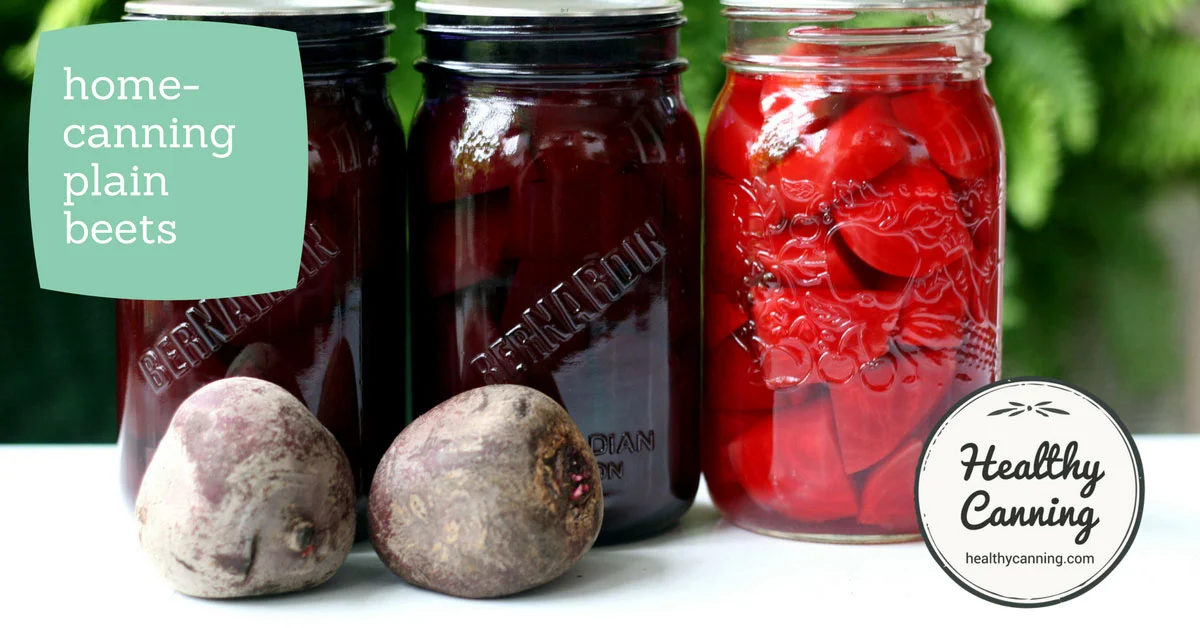

Preserving garden-fresh vegetables has long been a cornerstone of sustainable household management, but few crops offer the vibrant color and earthy sweetness of the common beet. Pulling a jar of home-canned beets off the pantry shelf on a brisk winter evening offers an effortless culinary shortcut. Whether they are quickly zapped in the microwave and served with a dollop of sour cream and fresh dill, or tossed in olive oil and duck fat for a rapid oven roast, home-canned beets provide convenience without sacrificing quality. However, achieving this level of culinary readiness requires strict adherence to scientific food preservation guidelines established by agricultural authorities.
Understanding the Non-Negotiable Safety Mandates of Low-Acid Canning
When processing plain, non-acidic vegetables like beetroot, safety protocols are paramount. According to official recommendations from the United States Department of Agriculture (USDA) and the National Center for Home Food Preservation (NCHFP), plain beets must always be processed using a pressure canner. Water-bath canning is entirely insufficient and dangerously unsafe for this root vegetable.

The historical record regarding botulism outbreaks tied to improperly canned low-acid vegetables is extensive. Between 1990 and 2012 alone, public health data in the United States recorded at least ten botulism cases stemming from beets that were incorrectly processed using boiling water baths rather than pressure. Clostridium botulinum spores thrive in low-acid, oxygen-deprived environments like home-canned jars. While the thought of botulism can induce panic, food safety experts emphasize that proper pressure canning neutralizes these risks entirely. Just as handling raw poultry requires proper cooking temperatures to eliminate pathogens without causing daily anxiety, utilizing a pressure canner according to precise specifications ensures a completely safe shelf-stable product.
It is vital to distinguish between different parts of the plant and different preparation methods. This USDA procedure applies exclusively to the root tuber—the beetroot itself. While beet greens (the tops) are entirely edible and can be home-canned, they require an entirely separate process and distinct processing times. Furthermore, pickling beets introduces sufficient acetic acid (vinegar) to alter the pH balance, allowing for water-bath processing, but plain, unpickled beets leave zero room for variance. There is no alternative to pressure canning when preserving plain beets.
Step-by-Step Production Quantities and Preparation Guidelines
Successful home canning begins well before jars are loaded into the canner. Sourcing the right amount of raw produce is the first logistical step. As a general guideline, home canners should anticipate needing approximately 1.25 kilograms (3 pounds) of raw beets to yield a single 1-litre (US quart) jar of finished product. For example, roughly 10 medium-sized raw beets—measuring about 9 centimeters (3 inches) in diameter with skins intact—will weigh approximately 2 kilograms (4.5 pounds).
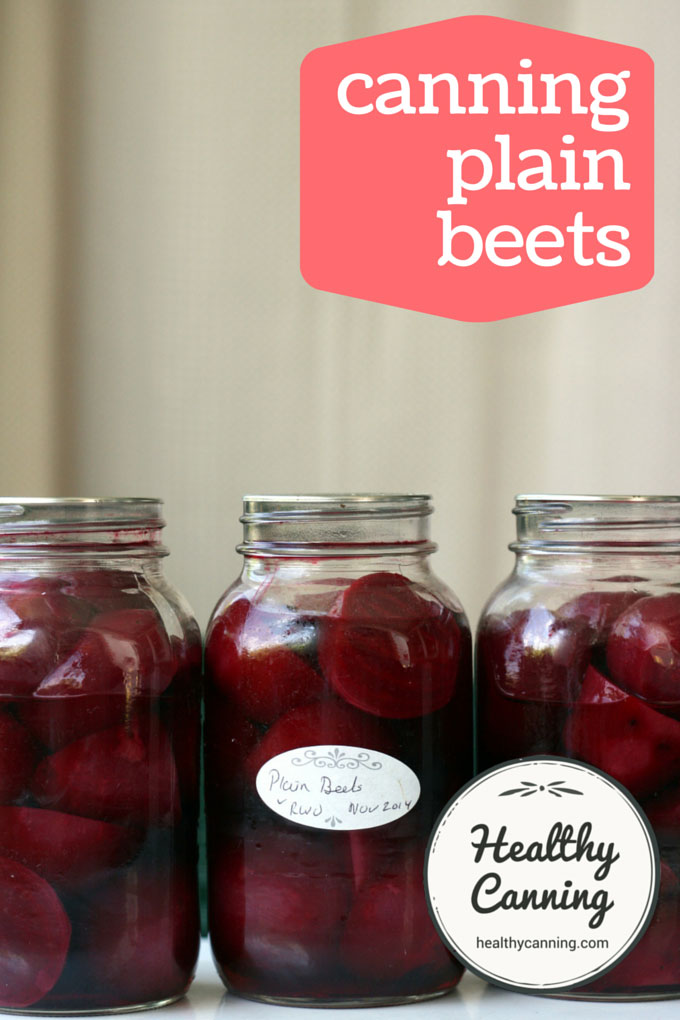
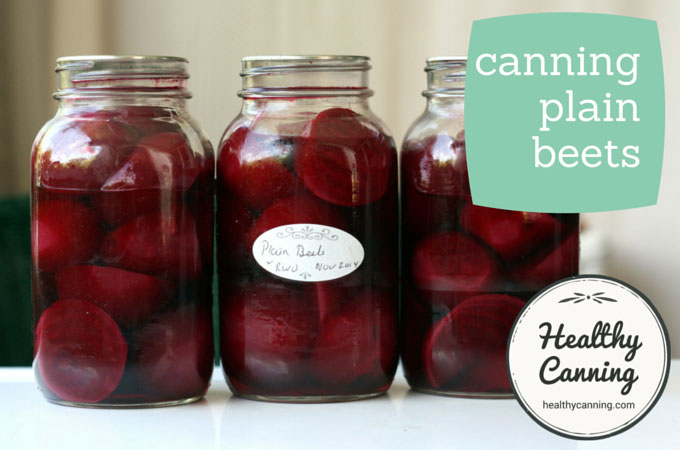
Preparation requires that beets be thoroughly washed and pre-cooked before they ever touch a canning jar. To minimize the loss of the water-soluble red pigments known as betalaines, food scientists recommend leaving about 2 to 5 centimeters (1 to 2 inches) of the taproot and stem attached during the initial boiling or steaming phase. Once the beets have softened sufficiently—meaning the skins slip off easily under running water—the roots and stems are trimmed away.
Crucially, plain beets must be peeled prior to canning. Peeling significantly reduces the initial bacterial load introduced into the jars, a factor that the scientifically validated processing times directly rely upon. Furthermore, home canners must ensure the peeled beets remain hot when packed into the jars. Dipping hot beets into ice water to make them comfortable to handle is counterproductive; if the beets cool down significantly during handling, they should be reheated—briefly warmed in a microwave, for instance—before packing. Cold vegetables packed into hot jars can compromise thermal penetration during the pressure-canning cycle.
Detailed Pressure Canning Parameters and Altitude Adjustments
Executing the canning process requires precise management of jar sizes, headspaces, pressures, and processing times. Home canners may utilize either half-litre (1 US pint) or 1-litre (1 US quart) jars, ensuring a clean 3-centimetre (1-inch) headspace at the top of each container. Salt may be added to individual jars for seasoning purposes at a rate of up to one teaspoon per quart, but salt plays no role as a safety preservative in this process.
Processing must be conducted using a properly calibrated pressure canner, adjusting for either weighted or dial gauges based on geographic elevation. At elevations from sea level up to 300 meters (1,000 feet), a weighted gauge requires 10 lbs of pressure, while a dial gauge requires 11 lbs. For elevations exceeding 300 meters, pressures must be increased to 15 lbs for both gauge types to compensate for lower atmospheric pressure.
Processing times are strictly time-tested:
- Half-litre (pint) jars require 30 minutes at the specified pressure.
- One-litre (quart) jars require 35 minutes at the specified pressure.
Once the processing time elapses, the canner must depressurize naturally before jars are removed, cooled, and tested for proper sealing.
The Phenomenon of Color Loss and Visual Quality Standards
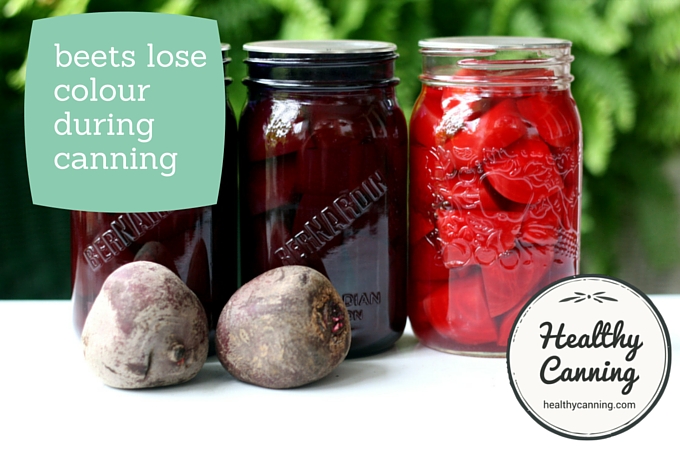
A common point of anxiety among novice canners is the sudden fading of color during the canning process. Betalaines, the natural red and purple pigments found in beets, are highly sensitive to high temperatures. During pressure canning, these pigments can temporarily transform into colorless compounds, leaving the beets inside the glass looking alarmingly pale or yellowish.
Agricultural extension services, including those at Penn State University, reassure home canners that this chemical reaction is frequently reversible. After a few days to several weeks of dark storage at room temperature, the natural red coloration often returns to a deeper hue. Selecting specific cultivars bred for color retention—such as the sturdy, round Detroit Dark Red or the elongated Formanova variety—can also mitigate color loss, though commercial availability of these specific roots may require home cultivation.
When evaluating the quality of home-canned beets according to NCHFP standards, judges and experienced preservers look for specific physical attributes. Beets under 5 centimeters (2 inches) in diameter should be canned whole, while larger specimens ought to be neatly sliced or cubed to ensure uniform size and shape. The resulting liquid should be sparkling clear and ruby-red, completely free of cloudiness, sediment, loose skins, stems, or fibrous textures, as roots exceeding 7 centimeters (3 inches) in diameter often develop an unappealingly woody consistency.
Historical Evolution of Canning Recommendations

Examining the historical trajectory of food preservation highlights why adherence to modern, science-backed protocols is vital. The USDA has championed pressure canning for non-acidic vegetables since at least 1926, explicitly warning against the botulism risks associated with water-bath processing for items like beets.
However, public health messaging has occasionally faltered during times of crisis. During the Second World War, metal rationing severely restricted the availability of pressure canners for civilian use. In an effort to help citizens preserve their garden harvests without specialized equipment, certain university extension bulletins issued misguided advice during the mid-1940s. These publications suggested boiling beets in water baths for extended periods after adding a tablespoon of vinegar per jar, operating under the false assumption that minor acidification would render plain beets safe from botulism.
Modern food safety authorities strongly caution against following these historical anomalies. Vinegar added in small, home-measured quantities to a low-acid vegetable does not reliably lower the internal pH enough to prevent spore germination during a standard boiling water bath. Contemporary standards rely on rigorous microbiological testing rather than wartime improvisation.
Culinary Applications and Versatility
Beyond their convenience as a standalone side dish, home-canned plain beets offer incredible versatility in everyday cooking. Because they are preserved without heavy pickling brines or complex spices, they serve as a blank canvas for numerous culinary traditions. Home canners frequently utilize their pantry stores to craft comforting bowls of traditional borscht, fold tender chunks into creamy coconut milk curries alongside carrots and spices, or roast them quickly with maple syrup and fresh herbs.
By following verified pressure-canning protocols, home cooks can safely secure a bountiful harvest, ensuring that farm-fresh nutrition and rich, earthy flavors remain accessible throughout the entire winter season.