
This seemingly innocuous statement, uttered by Anna, a highly competent law professional renowned for her critical thinking and ability to cut through superficial arguments, recently illuminated a pervasive and often-overlooked challenge in modern health and wellness. Anna, despite her sharp intellect, found herself navigating a common labyrinth of self-improvement, seeking niche solutions while fundamental habits remained elusive. Her pursuit of a 15-pound weight loss goal had led her down an avenue of exploring specialized products, rather than addressing the foundational elements of her lifestyle.
"Interesting. What inspired you to focus on that?" was the natural query, to which Anna responded, "Well, I’ve been reading about how microplastics in food containers can mess up our hormones and cause weight gain." This perspective emerged shortly after she had confided in her friend about her struggles with gym consistency, over-reliance on takeout meals, and the habitual sacrifice of restorative sleep for late-night "doom scrolling." When presented with the more direct solutions of consistent workouts and home-cooked meals, Anna’s response was telling: "Yeah, but I’ve tried that a thousand times. If it were that simple, it would have worked already."
Anna’s experience is not unique. It mirrors a widespread human tendency to bypass hard-but-worthwhile habit changes in favor of ultra-specific, often expensive, or seemingly "cutting-edge" interventions promising transformative results. This phenomenon sees individuals dedicating hours to researching the "ultimate" workout program instead of simply engaging in a basic, known routine, or perpetually waiting for a surge of inspiration, motivation, or a less busy period to begin. The allure of new gear, popular supplements, or consuming endless content about potential changes creates a false sense of progress, offering temporary psychological comfort and the illusion of action. However, genuine, sustainable change hinges on consistent, real-world application of foundational principles.
The Foundational Pillars of Health: Unsung Heroes
The core tenets of good health are remarkably straightforward and widely known. These include:
- Consistent Physical Activity: Aiming for at least 30 minutes of moderate-to-vigorous exercise daily, incorporating both aerobic and resistance training. This is crucial for cardiovascular health, muscle maintenance, bone density, and mood regulation.
- Nutrient-Dense Eating: Prioritizing whole, minimally-processed foods. Experts suggest that if 80 percent of one’s diet consists of such foods, significant health benefits can be achieved, allowing for flexibility and occasional indulgences like pizza. This approach focuses on overall dietary patterns rather than strict elimination.
- Adequate Protein Intake: Consuming sufficient protein (approximately 1.2 to 2.2 grams per kilogram of body weight) supports muscle mass, aids in satiety, and is vital for body recomposition goals. For most adults, this translates to about 4-6 palm-sized portions of lean protein daily.
- Prioritizing Quality Sleep: Aiming for seven to eight hours of quality sleep per night. While complete control over sleep quality can be elusive, establishing consistent wake-up times and a calming wind-down routine significantly contributes to restorative sleep, which is critical for hormonal balance, cognitive function, and physical recovery.
- Moderating or Avoiding Harmful Substances: Reducing or eliminating excessive consumption of alcohol, recreational drugs, and tobacco products. These substances are known contributors to a wide array of health issues, from chronic diseases to impaired organ function.
Beyond these core five, other vital, though often overlooked, factors include nurturing positive social relationships and effective stress management. Despite the apparent simplicity and universal understanding of these practices, only a striking six percent of Americans consistently perform all five basic health behaviors, according to various public health surveys. This statistic underscores a profound disconnect: nearly 94 percent of the population struggles with these fundamental actions, even though they are unequivocally linked to achieving healthy weight, improving athletic performance, and extending lifespan.
So, why do so many individuals, like Anna, struggle to integrate these basics into their lives? Behavioral science points to several common barriers.
Barrier 1: The Peril of Ambition Overload and the Planning Fallacy
One significant hurdle is the tendency towards "ambition overload." Faced with dissatisfaction, individuals often declare radical overhauls: an hour of exercise daily, perfectly "clean" eating, and eight hours of sleep, all starting "next Monday." This grand planning, while offering temporary psychological relief, often fails to account for existing life complexities. Cognitive biases, such as the planning fallacy, lead us to underestimate the time, energy, and resources required for future tasks, while simultaneously overestimating our future capacity and motivation. The immediate comfort derived from creating an idealistic future plan can blind us to its impracticality.
Large, complex plans rarely integrate seamlessly into already busy lives. The hidden smaller tasks within these ambitious goals are often overlooked. When these grand schemes inevitably falter, individuals tend to blame personal traits like "lack of willpower" or "discipline," creating a self-fulfilling prophecy of inconsistency. This cycle leads to frustration and a reinforced belief that healthy living is "impossible."
Barrier 2: The Allure of Novelty and the "Secret" Solution Syndrome
Another powerful barrier is the belief that only "hardcore," "industry-secret," or "cutting-edge" strategies can yield results. This stems from a common misconception: "If getting healthy just took eating, sleeping, and exercising moderately well, then everyone would be healthy." This ignores the staggering statistic that only a small fraction of the population actually does these basics consistently.
The simple truth is that these fundamental behaviors do work. Their efficacy is extensively documented. The challenge lies not in their complexity, but in their consistent and simultaneous application, which remains rare. Moreover, these simple behaviors can appear "boring" in a world saturated with novel diets, exotic supplements, and intricate fitness gadgets. The appeal of something new is the promise of a "new outcome," a "new us," which is incredibly enticing. However, most "hardcore," "secret," or "cutting-edge" tools are often unsustainable, inaccessible, unproven, or outright ineffective. They drain effort, time, and money without providing a worthwhile return, serving primarily as distractions from the proven path.
Barrier 3: The Myth of Perfectionism in Health
The health and fitness industry often perpetuates an illusion of perfection: an ideal state achievable only through organic salads, marathon running, and a rigorous 5 AM meditation routine. This "perfect" self is a dangerous construct. In reality, perfection is not required for optimal health. While this truth can be a relief, it can also be a disappointment for those who believe their "optimal" self is just one "right plan" away.

"Perfect" health is an illusion. Humans, regardless of their health status, experience illness, digestive issues, slumps, and bad days. Accepting this vulnerability is often uncomfortable; it’s easier to believe a specific supplement or routine can grant immunity from human experience. The irony is that to achieve a realistic "best self," one must accommodate the "worst self" – the part that craves immediate gratification or succumbs to life’s inevitable stressors. Life is unpredictable, filled with busy work periods, family demands, and seasonal indulgences. These competing demands make sustained perfection impossible. Releasing the illusion of a perpetually energetic, disciplined "perfect self" allows for a more compassionate and effective approach to health, one that supports our real needs and desires.
Navigating Change: The Role of Ambivalence and Resistance
It is crucial to acknowledge that the journey toward change is rarely linear or purely rational. The push-and-pull sensation experienced when contemplating new habits – such as earlier mornings or reduced screen time – is known as ambivalence. This inherent conflict, the simultaneous desire for a goal (e.g., healthier eating) and for opposing behaviors (e.g., unrestrained indulgence), is a normal part of the process. Similarly, resistance – the desire for change coupled with an aversion to its implications (e.g., wanting to stop mindless phone use but dreading the anxiety of introspection) – is also fundamental.
These contradictory emotions are not signs of illogical thinking or a wrong path. Instead, they often signal that the change matters deeply to the individual. High stakes naturally elicit stronger emotional responses, including pushback and angst. Recognizing ambivalence and resistance as inherent components of personal transformation, rather than obstacles to be eliminated, allows for a more compassionate and effective engagement with the change process. It confirms that the endeavor holds personal significance.
Four Steps to Effective and Realistic Action
Understanding these barriers paves the way for actionable strategies. Here are four steps to move from stagnation to sustainable progress:
Step 1: Explore the "Why" Before the "How"
Before embarking on any change, a deep dive into one’s motivations is essential. This introspection can be facilitated by questions such as: "What truly matters to me about this change?" "What are the long-term consequences of not taking action?" A powerful tool for this is The 5 Whys exercise, which progressively uncovers deeper motivations. When the fundamental "why" is clear, and the consequences of inaction are fully grasped, a more enduring and resilient drive emerges, sustaining effort even when challenges arise. This intrinsic motivation is far more potent than superficial desires.
Step 2: Prioritize the Most Effective Actions
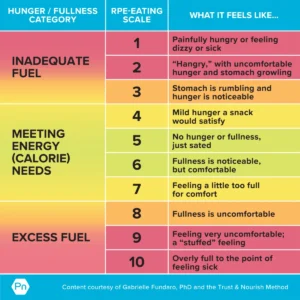
The human capacity for simultaneous, drastic change is limited. Effective change requires realistic goal-setting, focusing on what can be consistently executed, measured, and adapted. This means identifying the essential actions relevant to one’s goals, which invariably include movement, nutrition, and recovery practices. Resources like the "Skills, Practices, and Daily Actions Cheat Sheet" can guide this prioritization. By selecting a specific domain (e.g., "Nutrition"), a skill within that domain (e.g., "Eat well intuitively"), a practice (e.g., "Eat to satisfied"), and a concrete daily action (e.g., "Record hunger and fullness levels at the start and end of meals"), individuals can pinpoint high-impact behaviors. This structured approach ensures efforts are directed towards habits with the greatest potential for positive change, avoiding the overwhelm of trying to do "all the things" at once.
Step 3: Make Action Feasible, Even on Your Worst Day
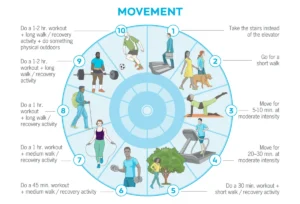
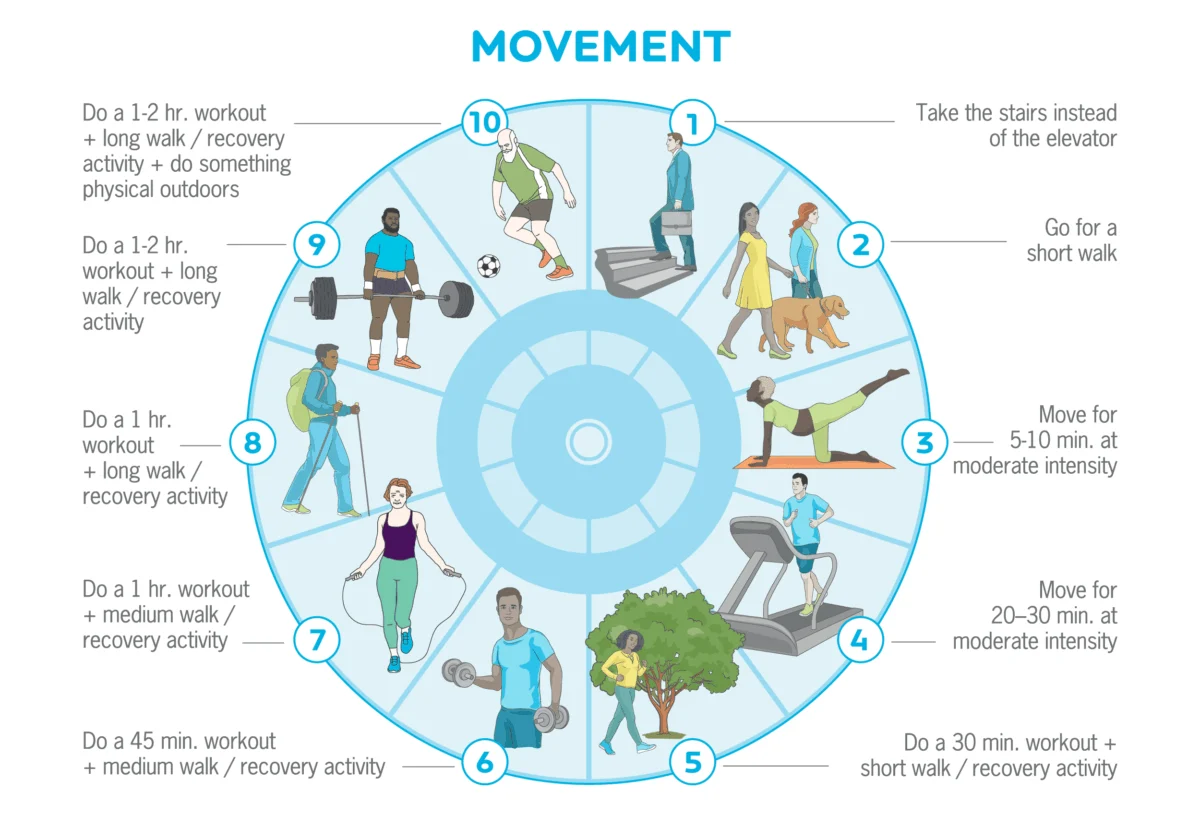
To combat inconsistency, the concept of a "pathetic goal" is surprisingly effective. As coached by experts like Kate Solovieva, the aim is to establish a "floor" – the absolute minimum action that can be performed even on the most challenging day. This might be five minutes of walking, ten push-ups, or one extra serving of vegetables. This "floor" is crucial because it ensures continuity; something is always better than nothing. Conversely, defining a "ceiling" – the maximum effort one can realistically exert on an ideal day (e.g., an hour-long intense gym session, extensive meal prep) – creates a flexible range.
This framework encourages a paradigm shift: health habits are not an "on" or "off" switch but a dial. When life is smooth, the dial can be turned up. When stress or obstacles emerge, it can be turned down to the "floor" level. The critical insight is that any action within this range "counts." Performing the bare minimum is not failure; it is a strategic success in the context of a dynamic, unpredictable life. This flexibility fosters resilience and prevents the all-or-nothing mindset that often leads to complete abandonment of goals.
Step 4: Create an Ecosystem of Support
Many health professionals, often living lives already conducive to healthy habits, can overlook the environmental factors influencing behavior. For the general population, willpower alone is insufficient; a supportive ecosystem is paramount. Behavioral science confirms that access is a primary determinant of behavior. Individuals living near affordable grocers tend to eat healthier, just as those far from a gym are less likely to exercise.
While changing neighborhoods may not be feasible, individuals possess significant control over their immediate environments. Implementing strategies like a "kitchen makeover" – making healthy foods easily accessible and less healthy options harder to reach – leverages environmental design. This principle extends to other areas: setting out workout clothes the night before, placing water bottles in visible locations, or creating a dedicated, clutter-free space for mindful activities. The goal is to design an environment where desired actions become the obvious and easiest choice, making failure nearly impossible. This proactive investment in environmental shaping reduces reliance on finite willpower and increases the likelihood of sustained behavioral change.
Embracing C+ Effort for Lifelong Health
The notion of embracing "C+ effort" can be jarring for perfectionists, yet it is a cornerstone of sustainable health. This approach acknowledges and works with inherent human imperfection, rather than against it. Expecting perfection inevitably leads to cycles of intense effort followed by burnout and failure. Adopting an attitude of compassion and acceptance towards one’s human vulnerabilities, and integrating them into the health journey, is far more effective.
There will be periods of "A" grade performance, and those are to be celebrated. However, the objective is not to aim for C+, but to recognize that when life necessitates dialing down effort, doing so is not a failure. It is a smart, adaptive strategy. A healthy, meaningful life involves continuously striving for one’s best while allowing for flexibility, mistakes, and challenging periods. The profound truth is that "good enough" consistently applied far surpasses the impact of sporadic, perfect efforts. In the long run, consistent, albeit imperfect, action is the most powerful catalyst for enduring health and well-being.