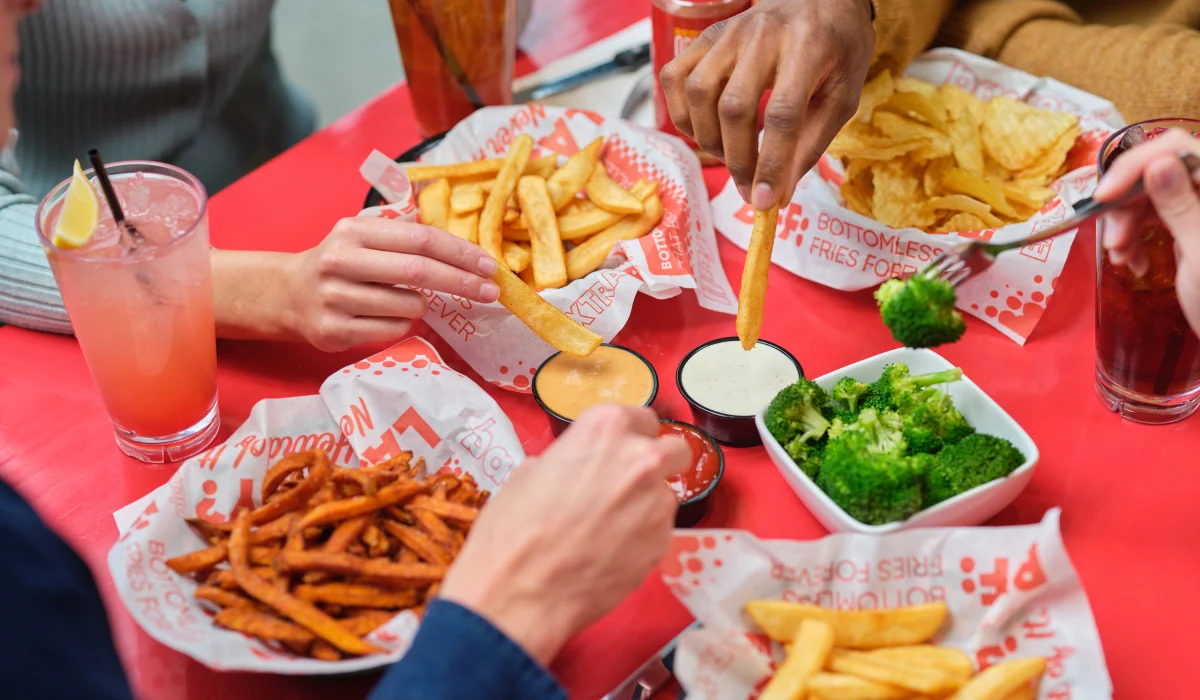

Red Robin Gourmet Burgers, Inc. is signaling a strategic pivot as it navigates the complex landscape of the casual-dining sector, reporting first-quarter results that suggest a stabilization of its foundational operations despite a slight dip in same-store sales. The company, long associated with its "Bottomless Fries" and family-friendly atmosphere, is currently in the midst of an aggressive multi-year turnaround plan dubbed "First Choice." While the headline figure of a 0.6 percent decline in same-store sales might suggest a brand in stasis, executives argue that the underlying metrics—including traffic trends, restaurant-level operating margins, and guest engagement—point toward a significant recovery. The first quarter of 2024 has become a litmus test for the brand’s ability to balance value-driven consumer demand with the need for sustainable profitability in an inflationary environment.
A Chronology of Recovery and Strategic Realignment
The current trajectory of Red Robin cannot be understood without looking at the operational inconsistencies that plagued the brand in the years following the pandemic. For several years, the chain struggled with high turnover, inconsistent service standards, and a menu that many analysts felt had lost its competitive edge against fast-casual and premium burger competitors. When David Pace assumed the role of CEO, the "First Choice" strategy was implemented to restore the brand’s status as a top-of-mind destination for families and burger enthusiasts.
The strategy was rolled out in phases, beginning with a refocus on core menu quality and kitchen execution. By late 2023, the company began to see a sequential improvement in traffic, narrowing the gap between its performance and the broader casual-dining industry. The first quarter of 2024 represents the culmination of these early efforts, marking the strongest traffic performance the chain has seen since early 2023. This timeline of improvement suggests that the "First Choice" initiatives are not merely short-term fixes but are part of a deeper cultural and operational shift within the organization.
Analyzing the First Quarter Financial Performance
In the first quarter, Red Robin reported a same-store sales decline of 0.6 percent. This figure was composed of a 1 percent increase in the average guest check, which was subsequently offset by a 1.6 percent decrease in guest traffic. While negative traffic is rarely a cause for celebration in the restaurant industry, the context provided by management suggests a "glass half full" scenario. The 1.6 percent decrease is a marked improvement over previous quarters and indicates that Red Robin is successfully clawing back market share in a period where many consumers are pulling back on discretionary dining.
The most notable financial achievement of the quarter was the improvement in restaurant-level operating margins. The margin climbed 50 basis points to reach 14.8 percent. This represents the highest first-quarter margin the company has achieved in half a decade. This profitability was driven largely by labor efficiency, which saw a 130-basis-point year-over-year saving. Labor as a percentage of sales fell to 35.7 percent, a three-year low for the company’s first quarter. These gains were achieved through a combination of tighter operational discipline, better scheduling through technology, and increased accountability for managing partners at the local level.
The Barbell Menu Strategy and the Big Yummm Platform
Central to Red Robin’s recent success is its "barbell" menu strategy, which seeks to appeal to both value-conscious diners and those looking for a premium experience. The centerpiece of this effort is the "Big Yummm" value platform. In an era where "fast-food fatigue" is setting in due to rising prices at quick-service restaurants, Red Robin is positioning itself as a high-value alternative that offers a full-service experience for a comparable price.
The Big Yummm platform features six meal options with price points ranging from $9.99 to $16.99. These options include a variety of burgers, wraps, chicken sandwiches, and even Donatos pizza, all paired with the brand’s signature bottomless sides. According to the company, the platform is currently mixing at over 13 percent of total orders, meeting internal targets for guest adoption.
CEO David Pace emphasized that the goal is to drive traffic without entering a "race to the bottom" through excessive discounting. By balancing these $9.99 entry points with premium innovations like the "Towering Sliders," which have seen record-setting satisfaction scores, Red Robin is able to protect its brand equity. The 1 percent increase in average check was the result of a 3.1 percent price increase, partially offset by a 2.1 percent decrease in mix and discounts, a direct reflection of the popularity of the Big Yummm deals.
Technological Integration and the Role of AI
A significant portion of Red Robin’s operational turnaround is rooted in the adoption of modern technology. The company has moved beyond traditional restaurant management systems to embrace artificial intelligence. Last fall, Red Robin introduced an enterprise-grade version of ChatGPT tools across its corporate and restaurant leadership levels.
Managing partners are now utilizing these AI tools to handle complex tasks such as labor scheduling and food cost management. By automating the analytical side of restaurant management, the company is allowing its leaders to spend more time on the floor with guests and staff—a concept Pace calls the "gift of time."
Furthermore, the chain is in the process of upgrading its physical technology. This includes the rollout of new handheld server devices designed to improve order accuracy and speed of service. Later this year, Red Robin plans to introduce upgraded Ziosk tabletop devices. These systems are expected to streamline the payment process and provide guests with more control over their dining experience, further reducing the friction that often leads to negative guest reviews in the casual-dining space.
Real Estate Strategy and the "Fix Restaurants" Initiative
Red Robin is also taking a hard look at its physical footprint and balance sheet. The company has embarked on a "Fix Restaurants" initiative, which involves "light-touch" refreshes of existing locations. Rather than committing to the massive capital expenditures required for full-scale remodels, Red Robin is focusing on high-impact, customer-facing elements like lighting, seating, and decor. The first markets to complete these refreshes are expected by the end of June 2024.
Simultaneously, the company is optimizing its portfolio through strategic closures and refranchising. During the first quarter, Red Robin closed six underperforming restaurants, with a total of approximately 20 closures planned for the full year. These closures are expected to be profit-neutral while removing roughly $40 million in lower-margin annualized sales volume.
The refranchising effort is another key pillar of the company’s financial stabilization. Red Robin is currently in advanced talks with several sophisticated franchise groups to acquire company-owned locations. The proceeds from these transactions will be used primarily to pay down debt and improve liquidity. The company ended the quarter with $24 million in cash and $17 million in available credit, a position they hope to strengthen as they shift toward a more asset-light model.
Broader Industry Implications and Economic Outlook
Red Robin’s performance is occurring against a backdrop of significant economic headwinds for the restaurant industry. Commodity inflation, particularly in beef and dairy—two staples of the Red Robin menu—remains a persistent challenge. Additionally, the broader casual-dining sector is facing intense competition from both upscale fast-casual brands and a revitalized quick-service sector that is also leaning heavily into value messaging.
Despite these challenges, Red Robin has maintained its full-year guidance, projecting same-store sales growth between 0.5 percent and 1.5 percent and adjusted EBITDA between $70 million and $73 million. This suggests a level of confidence in the "First Choice" strategy’s ability to withstand macro-economic volatility.
Industry analysts note that Red Robin’s success in narrowing the traffic gap relative to industry benchmarks (as tracked by Black Box Intelligence) is a positive sign for the brand’s relevance. By utilizing localized marketing rather than broad, national "spray and pray" campaigns, the company is reaching consumers more effectively. This "First Choice" marketing approach uses data-driven insights to tailor messages to specific trade areas, increasing marketing efficiency and driving frequency among local loyalists.
Conclusion and Future Outlook
As David Pace nears his one-year mark as the leader of Red Robin, the internal culture of the company appears to be shifting from a defensive posture to one of growth and ownership. The focus on "managing partner accountability" and "guest-first" execution is creating a more stable foundation than the brand has seen in years.
The coming months will be critical as the company rolls out its upgraded technology and completes its initial restaurant refreshes. If Red Robin can continue to balance its "Big Yummm" value offerings with premium product innovation, it may well serve as a blueprint for how legacy casual-dining brands can reinvent themselves in a digital-first, value-conscious economy. While the road to full recovery remains long, the first quarter of 2024 has provided the necessary evidence that Red Robin is no longer just a brand in decline, but a brand in the midst of a disciplined, data-driven resurgence.