
The preservation of root vegetables through home canning remains a cornerstone of self-sufficiency and seasonal eating, yet few crops demand as much technical rigour as the common beet (Beta vulgaris). While home-canned beets offer a convenient and nutritious addition to winter meals—easily transitioning from the pantry shelf to the dinner table with a simple reheat—the process is governed by strict safety protocols. According to the United States Department of Agriculture (USDA) and the National Center for Home Food Preservation (NCHFP), plain beets must be processed exclusively using a pressure canner. This requirement is not a matter of culinary preference but a critical public health necessity driven by the biological characteristics of low-acid vegetables and the persistent threat of foodborne illness.

The Science of Safety: Why Pressure Canning is Mandatory
The primary concern in home canning is the prevention of botulism, a rare but potentially fatal paralytic illness caused by toxins produced by the bacterium Clostridium botulinum. These bacteria thrive in the anaerobic (oxygen-free), moist, and low-acid environment found inside a sealed canning jar. Because beets typically possess a pH level ranging from 5.3 to 6.6, they are classified as a low-acid food.
In a boiling water bath, temperatures cannot exceed 100°C (212°F). While this is sufficient to kill many molds and yeasts, it is inadequate for destroying C. botulinum spores, which require temperatures of at least 116°C (240°F) to be neutralized. Only a pressure canner can achieve these elevated temperatures. Historical data from 1990 to 2012 indicates that at least 10 individuals in the United States contracted botulism specifically from beets that were improperly processed using a water bath rather than a pressure canner. Consequently, food safety experts maintain a zero-tolerance policy regarding the method: plain beets must be pressure canned, or they must be preserved through alternative means such as freezing or pickling in a high-acid vinegar solution.
Chronology of Canning Standards and Historical Context
The evolution of canning safety reflects a century of advancing microbiological understanding. As early as 1926, the USDA issued Farmers’ Bulletin No. 1471, which explicitly recommended the steam-pressure method for non-acid vegetables, including "baby beets," to mitigate the risk of botulism. Despite this early clarity, the mid-20th century saw a temporary regression in safety standards, often driven by wartime resource scarcity.
During World War II, metal for pressure canners was rationed for the war effort, leading some university extension services to publish "Acid Method" workarounds. A 1944 bulletin from the Virginia Agricultural Extension Service suggested adding a small amount of vinegar to beets to allow for water bath processing. However, modern testing has debunked these methods, proving that the amount of acid added was insufficient to ensure safety. This historical "grey area" continues to fuel misinformation in some modern homesteading circles, making it imperative for contemporary canners to adhere strictly to the 2015 USDA Complete Guide to Home Canning, which remains the gold standard for the practice.

Technical Specifications and Preparation Requirements
Successful canning begins with the selection and preparation of the raw product. On average, a home canner should expect to use approximately 1.25 kilograms (3 pounds) of beets per one-litre (US quart) jar. For those canning in smaller batches, 10 medium beets (approximately 9 cm or 3 inches in diameter) typically weigh about 2 kilograms (4.5 pounds).
The USDA procedure emphasizes several non-negotiable preparation steps:
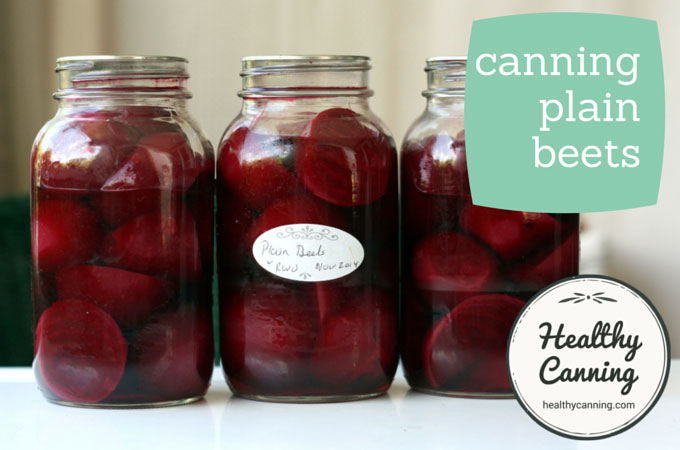
- Partial Pre-cooking: Beets must be boiled or steamed until the skins slip off easily. This serves a dual purpose: it facilitates peeling and ensures the product is hot when it enters the jar.
- The Peeling Mandate: Beets must be canned peeled. This is a safety requirement, as peeling significantly reduces the bacterial load—specifically the soil-borne spores—that enters the jar.
- Temperature Maintenance: The procedure is designed for a "hot pack." If the beets cool significantly during the peeling and slicing process, they must be reheated before being placed in the jars to ensure the processing times remain valid.
- Headspace and Pressure: A headspace of 3 cm (1 inch) must be maintained at the top of the jar to allow for expansion during the high-pressure cycle.
Processing times vary by jar size. For half-litre (pint) jars, the time is 30 minutes; for one-litre (quart) jars, it is 35 minutes. These times must be adjusted based on altitude, as lower atmospheric pressure at higher elevations requires an increase in the pounds per square inch (PSI) to maintain the necessary internal temperature.
Quantitative Data: Nutritional Profile and Yields
Beyond safety, the nutritional value of home-canned beets makes them a valuable dietary staple. A 250-gram serving of cooked, sliced beets provides approximately 124 calories, 4 grams of protein, and nearly 30 grams of carbohydrates. They are an excellent source of dietary fiber and contain essential minerals, though they remain naturally low in sodium (approximately 2 mg per serving) unless salt is added during the canning process. It is important to note that in home canning, salt is used strictly for seasoning and does not contribute to the preservation or safety of the product.

Aesthetic Challenges: The Chemistry of Color Loss
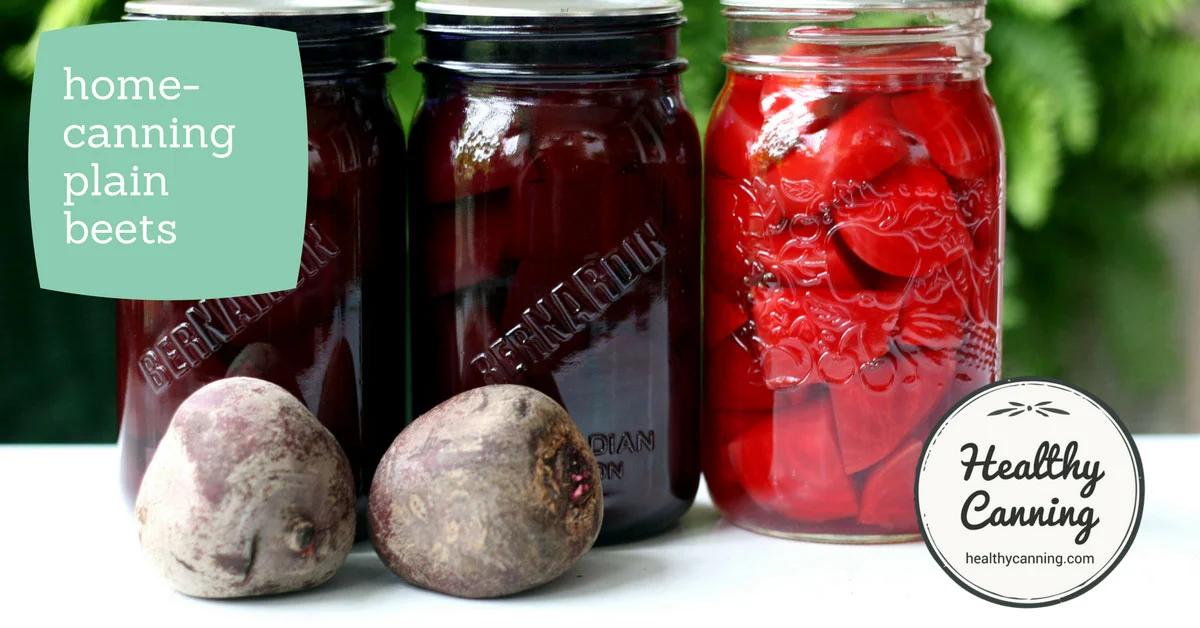
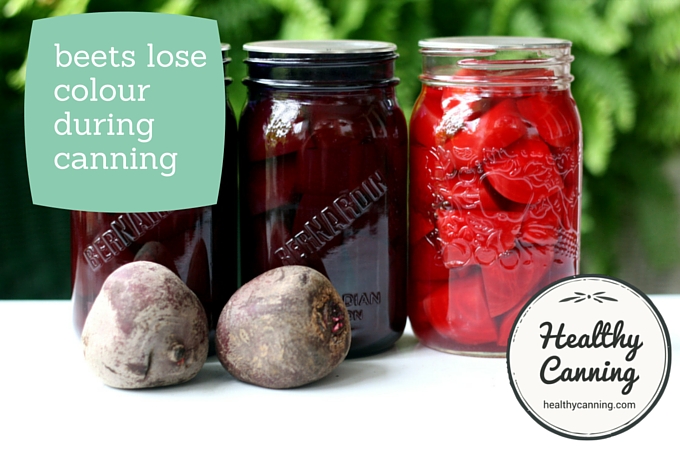
One of the most common concerns among home canners is the loss of the beet’s vibrant red hue during the high-heat processing of a pressure canner. The red pigments in beets, known as betalaines, are thermally sensitive and can turn into colorless compounds when exposed to extreme heat.
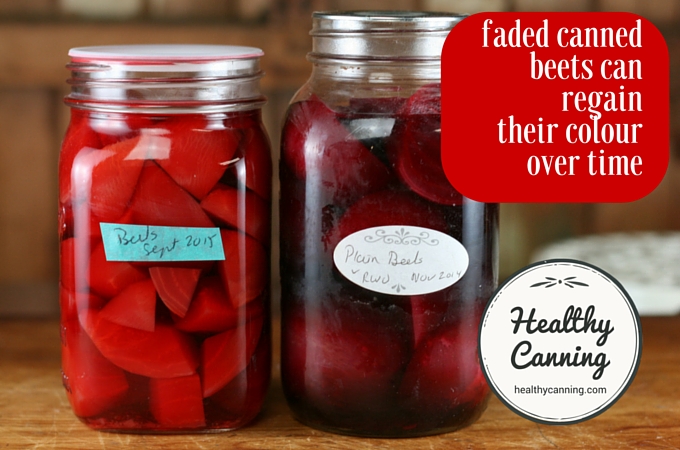
However, research from the Penn State Extension indicates that this reaction is often reversible. After several days of storage at room temperature, the pigments frequently stabilize, and the deep red color returns to the canned product. To minimize initial color loss, experts recommend leaving at least two inches of the stem and the entire taproot intact during the initial pre-cooking boil. This prevents the beet from "bleeding" its juices into the cooking water. Additionally, selecting specific varieties known for their heat stability—such as ‘Detroit Dark Red’ or the cylindrical ‘Formanova’—can yield more visually appealing results.
Professional Judging Criteria and Quality Control
For those participating in agricultural fairs or seeking the highest quality for home use, the NCHFP provides specific judging criteria for canned beets. A high-quality product should feature:
- Uniformity: Slices or cubes should be of consistent size and shape. Beets larger than 5 cm (2 inches) in diameter should be sliced rather than canned whole to ensure heat penetration.
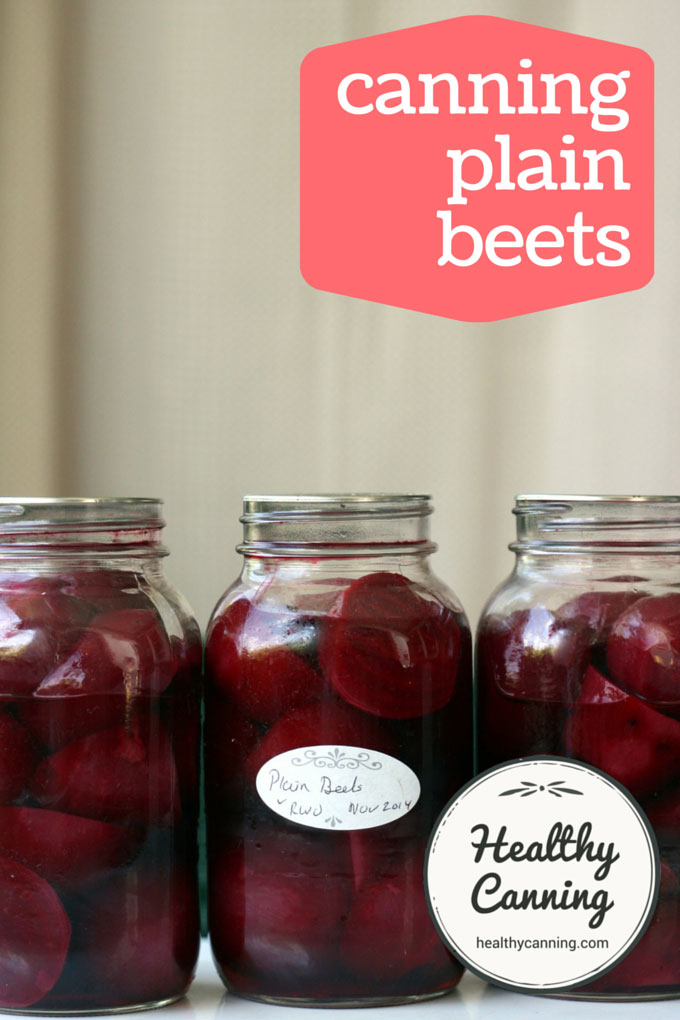
- Clarity of Liquid: The liquid in the jar should be a clear, sparkling red, free from cloudiness, sediment, or traces of skin and roots.
- Texture: Beets must be free from a fibrous or "woody" appearance, which is common in over-mature roots larger than 7 cm (3 inches) in diameter.
Broader Implications for Public Health and Culinary Use
The rigorous standards applied to beet canning reflect a broader commitment to public health within the domestic sphere. By adhering to validated science, home canners contribute to a culture of food safety that prevents the resurgence of preventable illnesses. Once safely preserved, home-canned beets serve as a versatile ingredient in various global cuisines. From the traditional Eastern European Borscht to contemporary salads and roasted side dishes, the convenience of a shelf-stable, pre-cooked root vegetable allows for nutrient-dense meal preparation even in time-constrained environments.
The modern home canner acts as both a technician and a provider. By understanding the historical errors of the past and the microbiological imperatives of the present, individuals can successfully harness the nutritional benefits of the beet harvest. The USDA-recommended pressure canning method remains the only verified path to ensuring that these vibrant vegetables remain a safe and delicious resource throughout the winter months. Any deviation from these established protocols not only compromises the quality of the food but poses a documented risk to human life, reinforcing the mantra of the canning community: "When in doubt, throw it out—and always follow the tested recipe."