
The pursuit of reversing the aging process, or at least significantly slowing it down, has captured public imagination, largely fueled by figures like tech entrepreneur Bryan Johnson. The subject of the Netflix documentary Don’t Die, Johnson has openly embarked on an ambitious and costly quest to achieve the lowest possible “biological age,” a metric often referred to simply as bio age. This endeavor, dubbed "Project Blueprint," involves an extraordinary annual investment of millions of dollars into a highly regimented regimen of anti-aging treatments. These include a meticulously curated diet, dozens of daily supplements, weekly acid peels for his skin, injections to boost collagen production, hyperbaric oxygen therapy, and perhaps most controversially, plasma infusions extracted from his 17-year-old son’s body.
To meticulously track the efficacy of these interventions, Johnson undergoes an array of sophisticated tests designed to assess his biological age. He frequently shares updates, claiming these tests indicate his bio age is now 5.1 years younger than when he commenced his anti-aging journey, effectively suggesting he is aging in reverse. However, this narrative has not gone unchallenged. A New York Times exposé, for instance, presented a starkly different picture, claiming Johnson’s biological age had, in fact, increased by 10 years during his efforts. This discrepancy highlights the complexity and often contradictory nature of bio age assessment, yet Johnson’s “don’t die” crusade continues to gain significant traction, propelling the concept of bio age testing into mainstream discourse.
The increasing visibility of bio age testing is undeniable. It’s a frequent topic on popular health and wellness podcasts hosted by influential figures such as Peter Attia, Joe Rogan, and Andrew Huberman. A simple online search for “bio age testing” reveals dozens of advertisements for mail-order blood or urine testing kits promising to reveal one’s biological age, pace of aging, and more. With prices for some of these tests becoming increasingly affordable, it is natural for individuals to wonder: should I or my clients consider bio age testing? If so, which test offers the most reliable insights, and critically, what practical actions should be taken based on the information derived?
Decoding Biological Age: More Than Just Candles on a Cake
Your biological age, or bio age, fundamentally refers to the functional health and efficiency of your cells and organ systems. It stands in contrast to your chronological age, which is merely the number of years you have been alive. While chronological age is an immutable marker, biological age is dynamic, reflecting the cumulative impact of genetics, lifestyle choices, and environmental exposures on your body’s physiological state. It is, in essence, a more accurate gauge of your body’s "wear and tear" than your birth certificate.
Consider two 50-year-old men, Chang and Jabari. Chang maintains a sedentary desk job, spends his evenings watching television, resides in a highly polluted urban environment, consumes processed foods regularly, and smokes. Jabari, on the other hand, engages in regular physical activity, lives in a cleaner, less polluted area, abstains from smoking, prioritizes a nutrient-dense diet rich in vegetables, practices meditation, and spends considerable time outdoors in his garden. While both share the same chronological age, it is a prudent wager that Jabari’s biological age is significantly younger than Chang’s, owing to his health-promoting habits. This illustrative example underscores why biological age is considered a more pertinent indicator of health and longevity than chronological age. It offers a snapshot of how well your body is actually functioning at a cellular level, reflecting your susceptibility to age-related diseases and your overall vitality.
The Burgeoning Market of Bio Age Testing
The rapid growth of the biological age testing market is a testament to the public’s increasing interest in personal health data and longevity. This sector, encompassing everything from advanced laboratory tests to at-home kits, is projected to expand significantly, driven by technological advancements and declining costs. Direct-to-consumer companies are capitalizing on this demand, offering a range of services that promise deep insights into one’s aging process. These platforms often leverage sophisticated scientific methodologies that were once confined to research laboratories, making them accessible to the average consumer.
However, the proliferation of these tests also raises important questions about their scientific validity, accuracy, and the potential for misinterpretation. Many tests are based on emerging science, and while promising, the clinical utility for individual health management is still under investigation. There is currently a lack of comprehensive regulatory oversight in many regions for these direct-to-consumer health products, which means consumers must exercise caution and critical judgment. The allure of "reversing" one’s age can lead to the purchase of unproven tests or proprietary supplements that may offer minimal benefit, or worse, provide misleading information that can cause undue anxiety or false reassurance. Reputable scientific and medical organizations generally advise that while these tests can be interesting, they should not replace conventional medical advice or validated diagnostic procedures.
Foundational Insights: Accessible and Free Biomarker Assessments
You don’t need a billionaire’s budget to gain valuable insights into your biological age and overall health. Before the advent of high-tech, blood-based bio age tests, researchers relied on a suite of simple, scientifically validated, and often free assessments to calculate the pace of aging in study participants. These tests, while basic, offer powerful proxies for various aspects of physical fitness and systemic health, which are intimately linked to longevity.
Physical Prowess: The Sitting-Rising Test (SRT)
Physical fitness and strength are strongly correlated with a longer, healthier life. Muscles are not merely agents of movement; they are metabolically active organs that secrete anti-inflammatory substances, aid in blood sugar regulation, slow cellular aging, and protect arterial linings. These functions collectively mitigate the risk of age-related diseases such as type 2 diabetes, hypertension, and heart disease. Beyond strength, balance is a critical component of healthy aging. A study of 1,700 individuals found that middle-aged or older adults unable to stand on one foot for at least 10 seconds faced double the risk of mortality within the next seven years.
The Sitting-Rising Test (SRT) simultaneously assesses both strength and balance. A 12-year study involving 4,200 adults aged 46 to 75 revealed that individuals with low SRT scores had a higher risk of dying from cardiovascular disease.
- How to Measure It: Begin standing. Lower yourself to the floor into a comfortable crisscross-legged position. From this position, stand back up, keeping your legs crisscrossed. Note if you needed to use any part of your body (hand, shin, knee) as leverage.
- Scoring: Start with 10 points. Deduct one point for each body part used for support. Subtract half a point if you became unsteady or lost your balance. A higher score indicates better balance, flexibility, and muscle strength. A low score serves as an indicator that your balance, coordination, muscle strength, power, and mobility may warrant attention.
The Power of Your Grip: Assessing Overall Strength
Similar to the SRT, your grip strength provides a valuable window into your overall physical fitness. Weakness in the muscles of your hands often correlates with systemic muscle weakness throughout the body. Furthermore, poor grip strength can be a predictive marker for future muscle decline. One study observed that individuals with a weak grip were more likely, 25 years later, to exhibit slow walking speeds, difficulty rising from a chair, inability to perform rigorous housework, or climb a flight of stairs. Low grip strength has also been associated with an increased risk of all-cause mortality, cardiovascular disease, stroke, and certain cancers. Remarkably, one study suggested grip strength was a more potent indicator of longevity than blood pressure.
- How to Measure It: Take a standard tennis ball and squeeze it as hard as you can, maintaining the contraction for as long as possible.
- Scoring: A duration of 15 to 30 seconds before fatigue sets in is considered good. Holding for 90 seconds places you well above average, typically in the upper-third percentile. If you are below 15 seconds, remember this is just one indicator. While squeezing balls can improve local grip strength, comprehensive body training is essential for overall health. More precise measurements can be obtained using a hand-held dynamometer, available at many physical therapy clinics and some gyms.
Mastering Balance: The One-Foot Stand Test
The ability to balance on one foot for an extended period is a critical factor in reducing the risk of falls, which are a leading cause of injury-related death among older adults. Maintaining balance is a complex physiological feat, requiring the coordinated effort of multiple bodily systems, including the visual system, inner ear (vestibular system), skeletal muscles, and the brain. Impairments in balance can often signal underlying health conditions such as diabetes, heart disease, or cancer. Consequently, an inability to perform this simple test can serve as an early warning sign for eroding health and fitness.
- How to Measure It: Stand near a wall or sturdy chair for safety. Keep your eyes open and hands on your hips. Lift your dominant leg and begin timing. Stop the clock when your foot touches the ground. Repeat the test with your non-dominant leg.
- Scoring: Compare your times to age-matched averages. For instance, a Duke University study provided these benchmarks:
- 30-39 years: Males ~59 seconds, Females ~56 seconds
- 40-49 years: Males ~56 seconds, Females ~55 seconds
- 50-59 years: Males ~42 seconds, Females ~48 seconds
- 60-69 years: Males ~40 seconds, Females ~38 seconds
- 70-79 years: Males ~27 seconds, Females ~25 seconds
- 80+ years: Males ~13 seconds, Females ~11 seconds
Listening to Your Body: The Fatigue Factor
Occasional tiredness, such as after a late night, is normal and resolves with rest. However, fatigue is a persistent, debilitating exhaustion that worsens over time and significantly interferes with daily life. Beyond physical weariness, fatigue often presents with mental dullness and emotional exhaustion. It serves as an important early warning sign that something within the body is amiss, especially when its cause is not immediately apparent.
If common culprits like excessive caffeine, dehydration, alcohol intake, medication side effects, chronic stress, or inappropriate exercise levels have been ruled out, persistent fatigue may indicate a developing health problem. This could range from sleep disorders to more serious conditions like anemia, obesity, depression, cancer, or diabetes. For individuals aged 60 or older, fatiguability—the degree of exhaustion experienced after an activity—is a significant predictor of longevity. Research from the University of Pittsburgh Medical Center indicates a direct correlation between higher fatiguability scores and an increased risk of future mortality. Other studies have linked high fatiguability to declines in gait speed, walking ability, and other measures of physical fitness.
- How to Measure It: Utilize the Pittsburgh Fatigability Scale. On a scale of 0 (no fatigue) to 5 (extreme fatigue), rate how fatigued you anticipate feeling after completing a list of specific activities (e.g., 30 minutes of leisurely walking, 1 hour of brisk walking, 2 hours of watching television, 30 minutes of moderate-to-high intensity strength training). Sum your scores.
- Scoring: A total score below 15 is considered good. Scores between 15 and 24 are a warning sign, suggesting an elevated level of fatiguability. A score of 25 or above is classified as severe and warrants discussion with a healthcare professional.
Beyond the Scale: Body Composition Insights
Contrary to popular belief, both insufficient and excessive body fat can negatively impact health. While often demonized, a healthy amount of body fat is essential for hormone production, insulation, and nutrient storage. However, excessive body fat, particularly visceral fat around organs, significantly raises the risk for a host of chronic diseases including heart disease, high blood pressure, certain cancers, fatty liver disease, insulin resistance, type 2 diabetes, and inflammation.
Equally critical is muscle mass. A healthy proportion of muscle mass is vital for metabolic health, strength, balance, and overall longevity. Low muscle mass (sarcopenia) is associated with increased risk for heart disease, high blood pressure, cancer, stroke, insulin resistance, accelerated cellular aging, inflammation, depression, anxiety, falls, and loss of balance. Therefore, an individual’s body composition (the ratio of fat to muscle) is a far more important health indicator than their total body weight.
While gold-standard methods for estimating body composition, such as underwater weighing, air displacement (Bod Pod), and dual-energy X-ray absorptiometry (DEXA) are not free, a recent study demonstrated that a simple and inexpensive tape measure can provide a comparably accurate estimate.
- How to Measure It: Use a tape measure to record the circumference of your waist (at the navel), hips (at the widest part), and neck (just below the larynx). Ensure the tape is snug but not constricting. Input these measurements, along with your age, sex, height, and weight, into a free online body fat calculator (e.g., Precision Nutrition’s Body Fat Calculator) to obtain an estimate of your body fat percentage.
Doctor-Approved Diagnostics: Essential Health Markers
Beyond self-assessments, routine medical check-ups with doctor-approved biomarker tests are paramount for proactive health management. Depending on your location and insurance coverage, these tests are often covered as part of preventative care, making them highly accessible.
Comprehensive Blood Panels: A Window into Metabolic Health
Annual blood work, as recommended by primary care physicians, is a cornerstone of preventative health. By tracking a panel of key blood markers, healthcare providers can identify trends toward common chronic diseases like type 2 diabetes and heart disease, both leading causes of premature mortality. Many blood markers are also responsive to lifestyle changes, supplements, or medications within a relatively short timeframe (6-12 weeks), making them invaluable tools for monitoring the effectiveness of health interventions.
- How to Measure It: Discuss annual blood testing with your healthcare professional. Key markers to monitor include:
- Total Cholesterol: < 200 mg/dL
- LDL (Low-Density Lipoprotein): < 100 mg/dL (general), < 70 mg/dL (history of heart attack/stroke)
- HDL (High-Density Lipoprotein): > 60 mg/dL
- Triglycerides: < 150 mg/dL
- Apolipoprotein B (Apo B): < 133 mg/dL (males), < 117 mg/dL (females) – a more precise measure of atherogenic particles.
- Lipoprotein (a) [Lp(a)]: < 30 mg/dL – a genetic risk factor for cardiovascular disease.
- C-reactive protein (CRP): < 2.0 mg/L – an inflammatory marker, elevated levels linked to cardiovascular risk.
- Fasting Glucose: < 100 mg/dL
- Hemoglobin A1C (HbA1C): < 5.7% – average blood sugar levels over 2-3 months.
Your healthcare provider will interpret these numbers in the context of your overall health and may use them to calculate your cardiovascular disease risk score.
The Strength Within: Bone Density Assessment (DEXA)
Research on "healthy super-agers" (individuals aged 90 and older with exceptional health) frequently identifies strong bones as a defining characteristic. Bones are not inert structures; they are living organs that contribute to overall health and longevity by secreting substances like osteocalcin. This hormone, crucial for bone remodeling, is thought to play diverse roles in the body, from facilitating ATP production in muscles to regulating brain neurotransmitters. The theory posits that as bone density declines, osteocalcin levels drop, potentially contributing to various age-related health problems, including diabetes, sarcopenia, and cognitive impairment (though much of this research is still in animal models).
Beyond these systemic effects, loss of bone density, leading to osteopenia and osteoporosis, significantly increases the risk of fractures. Fractures, particularly hip fractures in older adults, are associated with a substantially increased risk of mortality for up to 10 years post-injury, alongside a significant decline in quality of life and independence. Monitoring bone health is especially crucial for individuals in high-risk categories, including those with a family history of osteoporosis, a history of fractures, low body weight, chronic steroid use, or a history of smoking or excessive alcohol consumption.
- How to Measure It: Dual-energy X-ray absorptiometry (DEXA) scans are the gold standard for measuring bone mineral density (BMD). These X-rays quantify the amount of bone mineral content per square centimeter of bone.
- Scoring: DEXA results provide a T-score, comparing your BMD to that of a healthy young adult with peak bone mass. A T-score between +1.0 and -1.0 indicates normal BMD. Scores below -1.0 suggest osteopenia (low bone mineral density), while scores below -2.5 indicate osteoporosis (porous bones highly prone to fracture). Insurance coverage for DEXA scans often begins around age 65, or earlier if documented risk factors for osteoporosis are present. Out-of-pocket costs average around $300.
Advanced Commercial Tests: A Deeper Dive into Cellular Aging
For those willing to invest financially, a range of more advanced commercial tests can provide deeper insights into specific molecular aspects of aging. However, it’s crucial to approach these tests with a critical perspective, understanding their current limitations and caveats.
Firstly, biological age can vary significantly over time and across different organ systems. An individual might experience a period of accelerated aging due to intense stress or illness, only to see their aging rate slow down with focused recovery. Furthermore, different organs can age at different rates; for example, a person with heart disease may have a "relatively older" heart compared to their kidneys. While some advanced tests are beginning to offer organ-specific age estimates, many provide a single, generalized biological age.
Secondly, commercial tests may not always accurately reflect the tangible health changes you are making. The science of biological aging is rapidly evolving, and the reliability and clinical utility of many commercial tests for individual diagnosis or tracking are still being established. It’s more prudent to prioritize consistent healthy behaviors—such as eating a balanced diet, exercising regularly, managing stress, and getting adequate sleep—rather than solely relying on isolated test results. If you are consistently implementing these known health-improving strategies, don’t let a fluctuating test result undermine your efforts.
Finally, be wary of companies that pair test results with a hard sell for proprietary and expensive supplement protocols. It is always advisable to discuss any test results with a trusted, independent healthcare professional who can provide unbiased interpretation and guidance, rather than taking health advice from a profit-seeking entity.
Epigenetic Clocks: DNA Methylation Analysis
DNA methylation is a fundamental biological process involving the chemical alteration of DNA molecules, typically by adding a methyl group. This process plays a crucial role in gene expression, effectively turning genes "on" or "off" without changing the underlying DNA sequence. The rate and patterns of DNA methylation are known to change with age, making it a powerful biomarker for estimating biological age and even predicting life expectancy, as shown in numerous research studies.
The Horvath Clock and DunedinPACE are two prominent examples of "epigenetic clocks" that measure specific methylation patterns to estimate biological age and the pace of aging, respectively. These clocks were primarily developed by scientists for research purposes—to study how various lifestyle factors, environmental exposures, and medical interventions impact the aging process at a population level. They were not originally designed as diagnostic tools for the average person to pinpoint their precise biological age. Despite this, companies have begun offering DNA methylation testing kits to the public, typically costing around $300.
It is important to understand that if you opt for one of these tests, your results will likely be based on DNA methylation patterns in a blood sample. This provides insight into the aging of your blood cells, but it does not offer a complete picture of your entire body’s health and longevity. Aging often occurs at varying rates across different tissues and organs. Therefore, a DNA methylation test, while scientifically intriguing, is not a substitute for comprehensive annual wellness check-ups or standard blood work that assesses the functional health of your major organ systems.
Telomere Length: Cellular Lifespan Indicator
Telomeres are protective caps found at the ends of chromosomes. They play a critical role in maintaining genomic stability during cell division. With each cell division, telomeres naturally shorten. When they become critically short, cells can no longer divide and enter a state of cellular senescence or apoptosis (programmed cell death). This shortening is considered a hallmark of cellular aging.
Abnormally short telomeres are definitively associated with several rare genetic diseases. For these specific diagnostic purposes, physicians may order a specialized telomere test called the flow-FISH test, which accurately measures telomere length in all cells within a blood sample. However, the utility of telomere tests in predicting aging and disease risk in otherwise healthy individuals is far more debatable within the scientific community.
The telomere test most commonly marketed to the public is the qPCR telomere test, which is less precise than flow-FISH and not widely used in clinical medicine or academic research for assessing biological age. These tests typically cost around $100. While they might satisfy curiosity, health and fitness decisions should not be based solely on qPCR telomere test results due to their questionable predictive value and reproducibility in healthy populations.
VO2 Max: The Gold Standard for Cardiorespiratory Fitness
For many years, VO2 max, which represents the maximum amount of oxygen your body can utilize during intense exercise, was primarily a metric of interest for elite athletes. However, in recent times, its significance has expanded, with many experts now advocating for VO2 max as a robust measure for both athletes and non-athletes to track the rate of physiological aging.
Individuals with a high VO2 max generally exhibit superior physical fitness and a significantly lower likelihood of developing chronic diseases such as heart disease, diabetes, cancer, or stroke. An observational study tracking 5,107 Danish men over 46 years revealed that those with an above-average VO2 max during middle age lived, on average, five years longer than their counterparts with below-average VO2 max. Critically, each unit increase in VO2 max was associated with a 45-day increase in longevity. Researchers in this study even suggested that VO2 max might more accurately predict all-cause mortality than traditional risk factors like high cholesterol, obesity, high blood pressure, and insulin resistance. This makes VO2 max a powerful "canary in the coal mine" for assessing the health and aging trajectory of your body.
As the body ages, several physiological changes contribute to a decline in VO2 max, which typically decreases by about 10 percent per decade starting around age 30. These changes include increased rigidity of the chest wall, weakening of the respiratory muscles, calcification and reduced elasticity of oxygen-carrying blood vessels, decreased cardiac pumping force, a lower maximal heart rate, and a decline in muscle mass, strength, and mitochondrial efficiency within cells.
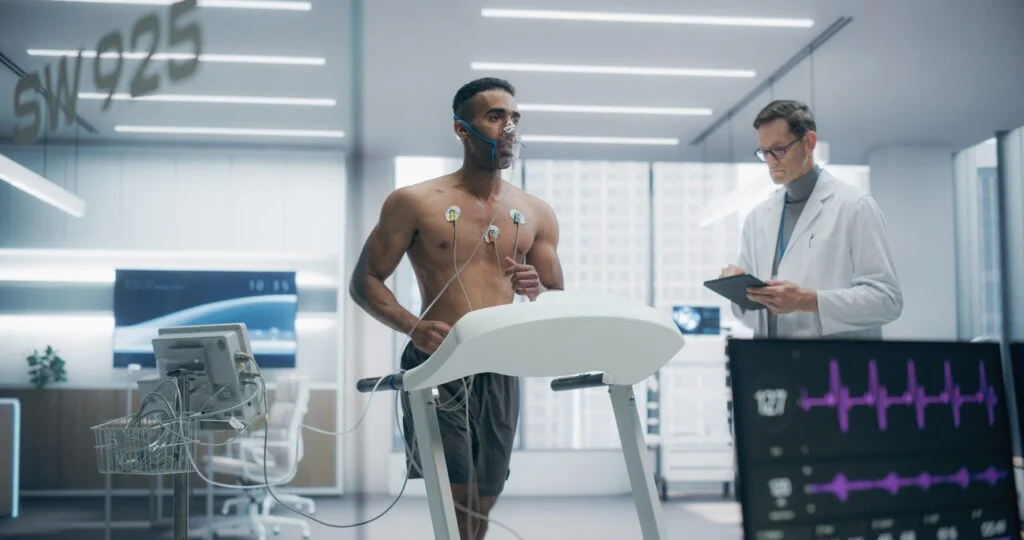
Historically, the most reliable method to measure VO2 max involved laboratory-based testing, where an individual would wear a metabolic mask and heart monitor while running or cycling to exhaustion. The mask collects expired gases to precisely measure oxygen consumption and carbon dioxide production. This method remains the most accurate for determining VO2 max and other key fitness metrics such as lactate threshold and caloric expenditure at different intensities. Lab-based testing for VO2 max can cost around $150.
However, several less accurate but more accessible options exist:
- The 1-Mile Walk Test: This involves walking one mile on a flat surface (e.g., treadmill or track) while wearing a heart rate monitor. Upon completion, record your heart rate and walk time, then plug these values into a specific formula or an online calculator to estimate your VO2 max.
- The Smartwatch Test: Many modern smartwatches estimate VO2 max based on workout data, sex, and age. While convenient, these estimates can over- or underestimate actual VO2 max, particularly in individuals who are extremely deconditioned or highly fit. They are best used for tracking personal trends rather than definitive health assessments.