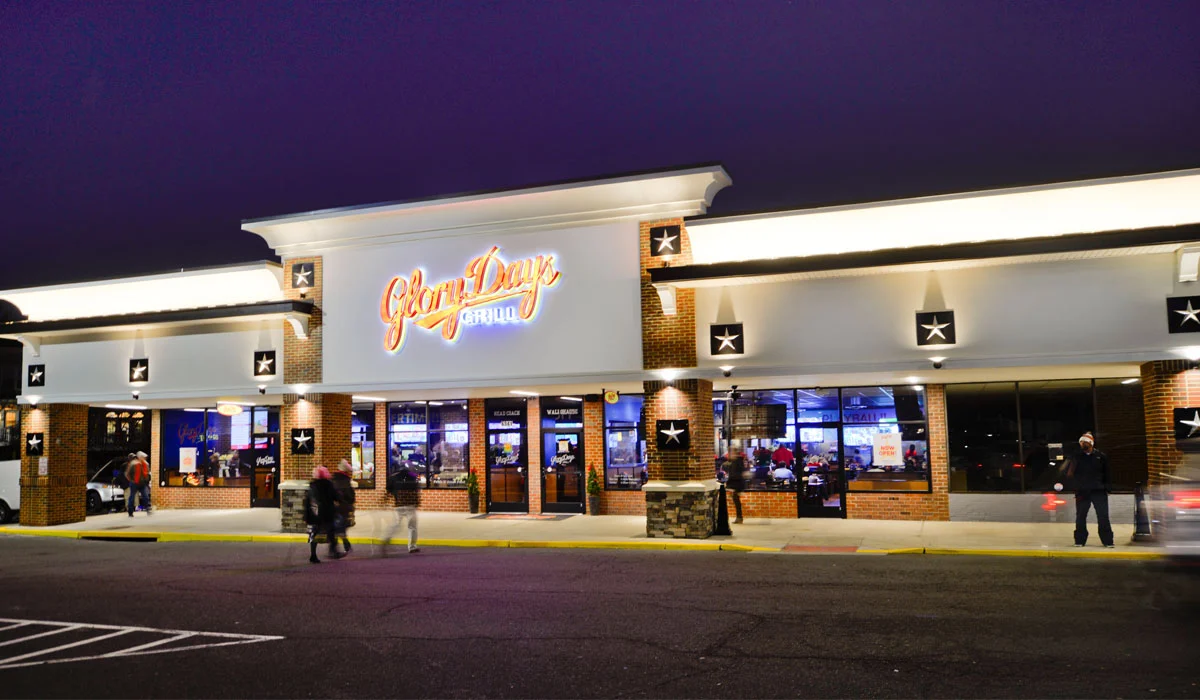

The landscape of American casual dining has been shaped by a select group of visionaries whose influence spans decades, and few names carry as much weight as Bob Basham. As the co-founder of Outback Steakhouse, Basham helped redefine the steakhouse experience for the masses. Today, however, his focus has returned to a more personal venture, alongside his brother, Richard Danker. The duo is now steering the course for Glory Days Grill, a sports-themed casual dining brand that recently celebrated its 30th anniversary. This partnership represents a full-circle moment for the brothers, whose shared history in the hospitality sector dates back to the early 1970s.
The current leadership structure of Glory Days Grill was solidified in the summer of 2022, a pivotal moment that saw the retirement of the brand’s other original founders, Bob Garner and Jeff Newman. Recognizing an opportunity to consolidate the brand and drive a unified vision, Basham’s company, Play Ball USA, acquired the 22-unit corporate footprint across Virginia and Maryland. This acquisition merged those locations with Basham’s existing 15-unit franchise portfolio in Florida and Georgia, effectively bringing the brand under a single strategic umbrella for the first time in years.
A Foundation Built on the Brinker Legacy
To understand the trajectory of Glory Days Grill, one must look back to the foundational years of the modern casual dining industry. In 1973, Bob Basham joined Steak and Ale in Virginia, where he began working under the legendary Norman Brinker. Brinker is widely regarded as the "father of casual dining," having mentored a generation of restaurateurs who would go on to found some of the most successful chains in the world. It was during this period that Basham met Jeff Newman, whom he eventually introduced to his brother Richard Danker and colleague Bob Garner.
While Basham would go on to achieve global fame by co-founding Outback Steakhouse in 1988 alongside Chris Sullivan, Trudy Cooper, and Tim Gannon, the seeds for Glory Days Grill were being sown simultaneously. In April 1996, Danker, Newman, and Garner opened the first Glory Days Grill in Burke, Virginia. The concept was designed to be a neighborhood gathering place that combined a love for sports with high-quality, made-to-order food—a departure from the "frozen-to-fryer" mentality that plagued many sports bars of that era.
Throughout the 1990s and 2000s, Basham remained a titan in the industry, helping launch the Tampa-based fast-casual brand PDQ in 2011 and managing various other hospitality investments. However, his formal involvement with Glory Days Grill deepened in 2013. At the time, Basham was looking to rebrand Lee Roy Selmon’s, a Florida-based chain named after the Pro Football Hall-of-Famer. Following Selmon’s passing and the family’s desire to exit the business, Basham saw Glory Days Grill as the perfect vehicle for expansion in the Southeast. Alongside Carrabba’s veteran Jesse McPherson, Basham developed the franchise model that would eventually lead to the 2022 consolidation.
Navigating the Challenges of a Global Pandemic
The resilience of Glory Days Grill was put to the ultimate test during the COVID-19 pandemic. Like many full-service operators, the brand faced an immediate and total disruption of its business model. However, a fortunate technological upgrade just months prior proved to be a lifesaver. The company had transitioned its digital infrastructure to Olo, a leading open SaaS platform for restaurants. This allowed Glory Days to pivot from a business where off-premises sales accounted for 10–15% of revenue to a 100% off-premises model almost overnight.
The human cost of the pandemic was significant. In Maryland and Virginia alone, the company was forced to lay off approximately 1,500 employees. Managers who had previously focused on front-of-house operations were retrained as line cooks and delivery coordinators to keep the doors open. This period of hardship also spurred a new level of industry advocacy; Glory Days played a central role in forming the Maryland Restaurant Coalition, a group dedicated to addressing the pressing mandates and economic pressures facing the sector.
As the industry emerged from the pandemic, Basham and Danker focused on "synergizing" the brand. The 2022 acquisition was described by Basham as "building 22 restaurants in a year" due to the complexities of integrating different corporate cultures, menu variations, and operational processes. Today, the brand operates 36 restaurants with a unified menu and a streamlined supply chain, positioning it for its next phase of growth.
The 30th Anniversary and Menu Innovation
In April 2024, Glory Days Grill celebrated three decades of operation, a milestone that fewer than 10% of independent or regional restaurant brands ever reach. To mark the occasion, the brand leaned heavily into its "value-plus-quality" proposition. The anniversary celebration featured a specialized menu including a "30 wings for $30" bucket, Korean BBQ wings, and a 10-ounce pork chop, alongside 96-cent wings on the actual anniversary date (referencing the 1996 founding year).

The celebration was more than just a marketing exercise; it served as a showcase for the brand’s culinary philosophy. Basham has been vocal about the importance of maintaining high standards even in the face of inflationary pressures. Unlike many of its competitors, Glory Days Grill has eschewed the use of seed oils, opting for higher-quality cooking mediums. The menu emphasizes made-to-order items, including fresh fish fries and seasonal offerings, ensuring that the brand does not lose the "veto vote" among health-conscious families or diners with specific dietary needs.
Strategic Analysis: Growth in an Inflationary Economy
As Glory Days Grill looks toward the future, the leadership team is navigating a complex economic environment. Inflation has not only impacted the cost of goods—meat, dairy, and produce—but has also significantly altered the return on investment (ROI) for new construction. Basham has indicated that the brand’s future growth will be "disciplined" and "deliberate."
One key strategy involves the adaptation of the restaurant’s physical footprint. The traditional Glory Days model typically spans 6,000 square feet. However, moving forward, the company is exploring more efficient designs ranging from 5,000 to 5,500 square feet. Furthermore, Basham is prioritizing "second-generation" spaces—locations that previously housed other restaurants—to reduce the initial capital expenditure required for build-outs.
The broader casual dining sector is currently experiencing a shift in consumer behavior. Basham describes the modern diner as "particular." With less discretionary income, guests are less willing to tolerate mediocre service or degraded food quality. "They want a great value, but they also want great hospitality," Basham noted. This sentiment is backed by industry data suggesting that while fast-casual dining grew rapidly over the last decade, there is a renewed demand for the "experience" of full-service dining, provided the operator can execute the basics: clean environments, hot food served hot, and cold food served cold.
Technology and the Human Element
The integration of technology remains a cornerstone of the Glory Days strategy, though Basham remains a traditionalist regarding the guest experience. The company currently uses advanced data analytics to track the performance of Limited Time Offerings (LTOs) in real-time, allowing them to see how specific items affect the Per Person Average (PPA) and guest counts. This agility allows the brand to pivot much faster than it could in previous decades.
However, Basham is quick to dismiss the idea that artificial intelligence or automation will replace the core of the hospitality business. "The human element in restaurants is never going to be replaced," he asserts. For Basham, the excitement of the business still comes from mentoring young employees and watching them rise through the ranks to run their own stores. He views the restaurant as a "nuanced orchestra" where accountability and entrepreneurship must coexist.
Broader Implications for the Casual Dining Industry
The story of Glory Days Grill is emblematic of a larger trend in the American restaurant industry: the "flight to quality" among regional brands. As national chains like Chili’s and Applebee’s engage in aggressive value wars, regional players like Glory Days are carving out a niche by doubling down on local community ties and superior ingredient profiles.
The reunion of Bob Basham and Richard Danker serves as a testament to the enduring nature of the "Brinker School" of management. By focusing on the "timeless" aspects of hospitality—quality food, fair value, and a welcoming atmosphere—Glory Days Grill is positioning itself not just as a survivor of the pandemic era, but as a leader in the next generation of casual dining. As the brand plots its course for the next 30 years, its success will likely depend on its ability to balance this old-school commitment to service with the high-tech demands of the modern consumer.
With 36 locations currently in operation and a consolidated corporate structure, Glory Days Grill stands as a robust example of how veteran leadership can revitalize a legacy brand. For Basham, who has been in the industry since the Nixon administration, the work is far from over. "You can only play so much golf," he jokes, suggesting that for the founders of the casual dining revolution, the true "glory days" are always the ones yet to come.