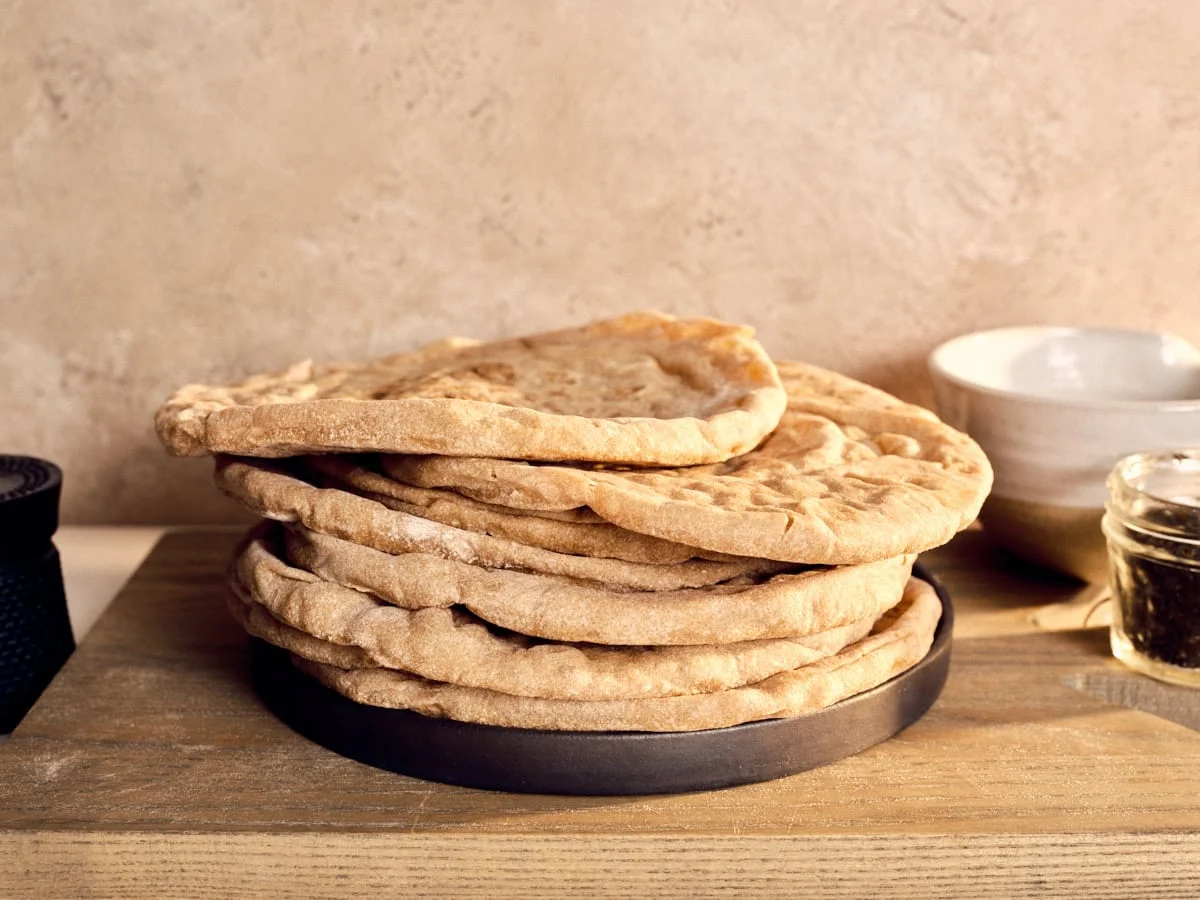

The artisanal baking community has long grappled with the inherent contradictions of working with 100% whole-grain flour. While nutritionists and traditional millers consistently champion the superior fiber content, complex mineral profiles, and rich flavor complexity of freshly milled grains, commercial and home bakers alike frequently encounter structural obstacles. Whole grains are notoriously dense; their sharp bran and germ particles can sever delicate gluten networks, resulting in heavy flatbreads that stubbornly refuse to puff in the oven. However, a recent masterclass hosted at the Chimacum Valley Grainery in Washington State has demonstrated that rigorous dough formulation and precise sourdough fermentation can successfully overcome these structural hurdles, yielding a hearty, resilient whole-wheat pita that balances nutritional density with ethereal softness.
Background and Context of the Chimacum Valley Masterclass
The culinary foundation for this recent development was laid during a collaborative teaching workshop organized by prominent sourdough educator Maurizio Leo and fellow artisan baker Graison Gill. Held at the Chimacum Valley Grainery—a distinctive regional farm and mill operating in the Pacific Northwest—the masterclass was designed to immerse members of "The Baker’s Corner" community in the practical applications of regional, freshly milled grains.
During the instructional sessions, Gill formulated a standout whole-grain sourdough pita utilizing locally sourced barley. The bread captivated participants due to its unexpected softness, structural integrity, and the distinct natural sweetness characteristic of freshly milled grain. Inspired by the rainy Pacific Northwest weekend and the collaborative ethos of the mill, Leo later returned to his kitchen to adapt the concept, transitioning the formulation toward a 100% whole-wheat iteration while maintaining the soft crumb and reliable oven-spring achieved during the workshop.
Evolution of Sourdough Pita Formulation
Developing a reliable whole-wheat pita represents a significant departure from standard commercial flatbread production, which typically relies on refined white flour, chemical leavening agents, and industrial dough conditioners. Leo’s previous baking iterations included a lighter, more ethereal white-flour pita featured in his published cookbook, alongside experimental variations incorporating commercial sweeteners and ancient grains.
The primary challenge in moving to a 100% whole-grain formula lies in maintaining hydration and extensibility. Whole-grain flour absorbs significantly more water than refined flour, yet its fibrous components demand careful handling to prevent premature tearing of the dough membrane. By integrating a meticulously managed sourdough fermentation schedule rather than commercial yeast, the recipe harnesses organic acid development to naturally relax the gluten matrix, enhancing extensibility without sacrificing structural strength. Furthermore, prolonged fermentation partially breaks down complex proteins and starches, improving both digestibility and flavor depth while mitigating the excessive sourness that often plagues high-percentage whole-grain breads.
Chronology and Baking Schedule
To bridge the gap between traditional artisanal baking—which often requires multi-day commitments—and the practical demands of a modern workweek, the masterclass-inspired recipe utilizes a streamlined yet nourishing timeline. The structured chronology is designed to optimize fermentation while minimizing active labor.
The standard baking schedule begins at 9:00 p.m. on the eve of production with the preparation of the levain. Bakers combine 66 grams of whole-grain flour, 66 grams of water, and 7 grams of a ripe 100% hydration sourdough starter, leaving the mixture to ripen overnight at a controlled ambient temperature of 74°F to 76°F (23°C to 24°C). Alternatively, bakers may bypass the overnight levain by utilizing an equivalent amount of mature sourdough starter directly during the morning mixing phase.
The primary mixing phase commences at 9:00 a.m. the following morning. The formula calls for a total dough weight of 1,320 grams, utilizing 699 grams of whole-wheat bread flour (such as products from Chimacum Valley Grainery), 14 grams of extra-virgin olive oil, 587 grams of total water divided into two additions, 14 grams of fine sea salt, and 139 grams of the ripe levain. Whether utilizing a mechanical spiral mixer or hand-kneading techniques such as the slap-and-fold method, the gradual incorporation of water ensures that the thirsty whole-grain flour fully hydrates without compromising the cohesive dough structure.
Bulk fermentation spans three hours, from 9:30 a.m. to 12:30 p.m., during which the dough undergoes two sets of strategic stretches and folds at 30-minute intervals to build internal gas retention and gluten alignment. At the conclusion of bulk fermentation, the dough is divided into ten uniform 120-gram pieces, pre-shaped into tight spherical balls to establish surface tension, and allowed a brief one-hour proofing period on a floured baking sheet.
Technical Analysis: Achieving the Optimal Oven-Spring
The defining characteristic of an authentic pita is its ability to balloon in the oven, creating a hollow pocket ideal for stuffing. Achieving this reliable puff relies heavily on precise thermodynamic and mechanical factors during the final stages of production.
Prior to baking, the oven and an internal baking steel or stone must be preheated to 550°F (290°C)—or the maximum capability of the domestic appliance—for a full hour. The proofed dough balls are gently rolled out to an exact thickness of approximately 1/8 inch and a diameter of 7 inches. Empirical observations from testing indicate that deviations from this thickness threshold lead directly to structural failure: rolling the dough too thick prevents the internal moisture from rapidly converting to steam, while rolling it too thin results in premature tearing of the gluten skin.
When transferred onto the blazing-hot baking steel, the sudden thermal shock vaporizes the internal moisture within seconds. Because the exterior surfaces set rapidly while the internal steam expands, the top and bottom layers of the flatbread separate, inflating the pita into a sphere. A brief one-to-two-minute bake on the initial side, followed by a one-minute finish after a careful flip with a fish spatula, completes the cooking process without drying out the crumb.
Nutritional Implications and Industry Impact
The revival of regional grain economies, exemplified by collaborations between independent millers and artisanal bakers, points toward a broader shift in consumer preferences toward localized, nutrient-dense food systems. From a nutritional standpoint, utilizing 100% whole-grain flour preserves the nutrient-rich germ and high-fiber aleurone layer, offering sustained energy release and improved glycemic control compared to refined-grain alternatives.
Furthermore, the adaptation of commercial formulas to accommodate regional whole grains demonstrates that home and professional bakers do not need to sacrifice textural quality in pursuit of health benefits. By respecting the functional limitations of whole-grain flour through thoughtful hydration, temperature control, and gentle mechanical handling, the baking community continues to validate the viability of traditional grains in modern culinary applications.