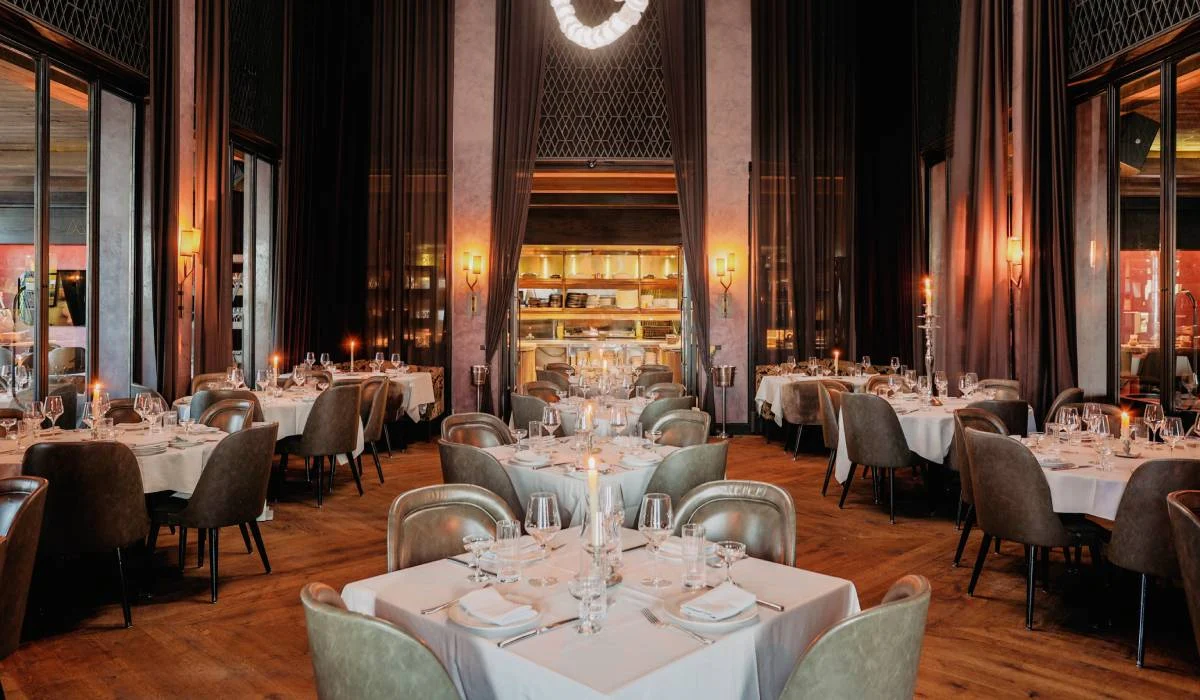

When culinary entrepreneur and two-Michelin-star chef Danny Grant first began conceptualizing Maple & Ash in Chicago back in 2015, the initial response from skeptics and industry peers alike was one of predictable hesitation. The local dining scene was already heavily saturated with traditional steakhouses, prompting a prevailing question across the market: why does the city need another one?
Rather than viewing the crowded landscape as a deterrent, Grant identified an invisible gap in the commercial culinary market. During the early 2010s, the high-end steakhouse sector was defined by an overwhelmingly homogenous, traditional, and distinctly masculine atmosphere. These establishments relied heavily on dark wood, clubby environments, and predictable menus geared toward corporate dining. Grant and his leadership team at Maple Hospitality Group recognized an opportunity to completely flip this tired narrative on its head.
From the embers of traditional steakhouses past, Maple & Ash was born. The concept was intentionally designed to appeal to modern foodies by introducing a refined, sensory-driven, feminine, and undeniably sexy energy to the fine-dining arena. By combining top-tier culinary pedigree with high-octane hospitality and progressive design, Grant laid the groundwork for what would eventually evolve into one of the most lucrative independent restaurant concepts in the United States.
A Meteoric Rise and Financial Dominance
The strategy to disrupt the status quo paid off exponentially. Over the years, Maple & Ash has solidified its reputation as a powerhouse in the American hospitality industry, anchored by its flagship location in the Gold Coast neighborhood of Chicago.
By 2024, the Chicago property achieved a monumental financial milestone, generating more than $35 million in annual sales and officially claiming the title of the city’s highest-grossing independent restaurant. With an average guest check hovering around $160, the concept proved that affluent diners were more than willing to pay a premium for an experience that felt distinctive, indulgent, and vibrant.
Following its massive success in the Midwest, the Maple Hospitality Group began a calculated expansion strategy. The brand successfully introduced locations in major U.S. luxury markets, including Scottsdale, Arizona, and Miami, Florida. Most recently, the brand made its highly anticipated debut in Boston in April of this year, marking its official entry into the competitive Northeast corridor. With Boston now fully integrated into the fold, the company is preparing for its next major strategic play: a flagship location in Midtown Manhattan.
Culinary Craftsmanship Meets Maximalist Luxury
The appeal of Maple & Ash extends far beyond its financial metrics; it is rooted in a meticulous approach to food, beverage, and interior design. Every location is conceived as an immersive theatrical space, featuring moody aesthetics developed by Studio K. The interiors blend mid-century modern architecture with chic, textured mirrored glass walls clad in custom Benheim glass, creating an atmosphere that feels both exclusive and electric.
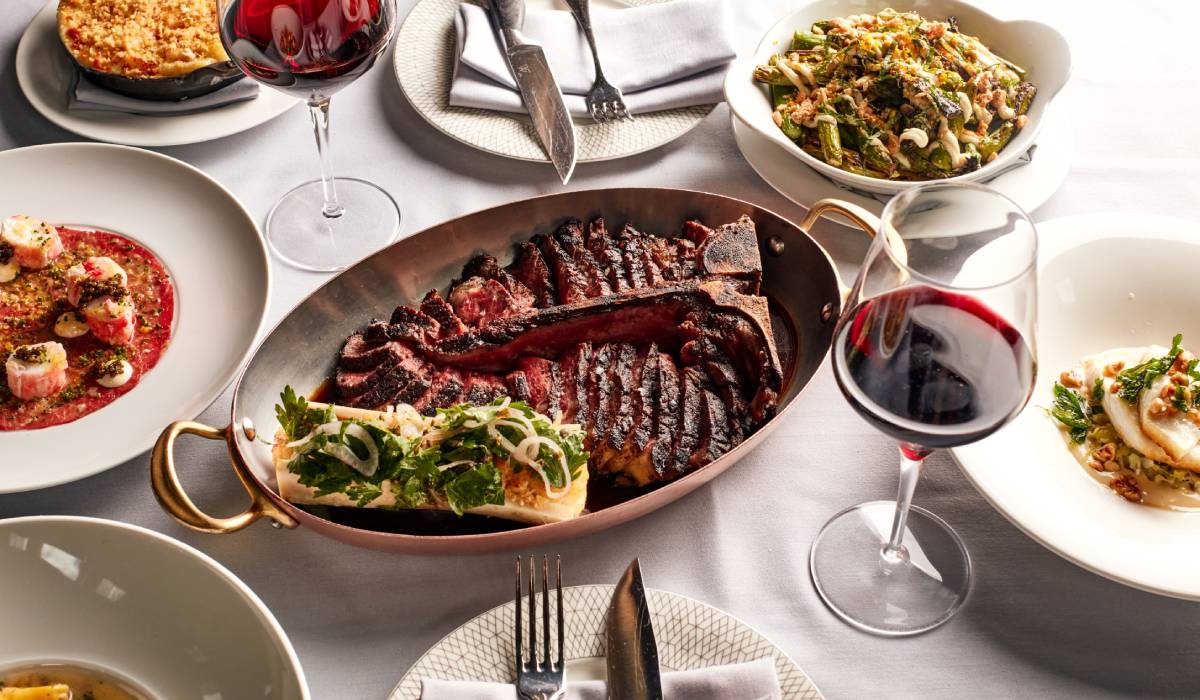
The dinner menu reflects a similar commitment to maximalism and culinary precision. Diners are treated to an array of dry-aged steaks, high-grade Wagyu beef, fire-roasted seafood towers, and premium caviar. Alongside traditional steakhouse cuts, the kitchen highlights innovative creations like "Pillows of Love"—a signature, hand-folded ricotta agnolotti pasta dish bathed in rich brown butter and garnished with shaved winter truffle.
Leaning into playful nomenclature, the menu features a dedicated section dubbed "Arm Candy," offering luxury steak toppers and extravagant sauces such as Alaskan King Crab Oscar, roasted bone marrow, and decadent, beefed-up butter enhancements. For guests seeking the ultimate culinary journey, Maple & Ash offers a multi-course chef’s tasting experience with a provocative name: "I Don’t Give a F*ck." Priced at approximately $225 per person depending on the market, the tasting menu showcases the kitchen’s most extravagant items, ranging from fire-roasted shellfish and boutique farm-raised steaks to seasonal delicacies.
The beverage program mirrors the food menu’s lavish philosophy. Signature cocktails feature bold, cheeky monikers like Reckless Jorge, Good Trouble, Shady Lady, and Unnecessary Attention. Classics are given upscale elevations, such as the Maple & Ash Old Fashioned, crafted from the restaurant’s private Blanton’s barrel selection, Amaro Montenegro, sherry, Japanese maple sugar, and house-made bitters.
Furthermore, the establishment has proactively catered to the evolving drinking habits of modern consumers. A dedicated "No F*@king Alcohol" menu offers zero-proof cocktails formulated with sophisticated botanicals, Seedlip, Pathfinder, fresh fruits, and warm spices, ensuring that sober-curious guests can fully participate in the high-energy bar culture.
The Foundation of Expansion: Earning Consumer Trust
Scaling a luxury restaurant concept requires a delicate balance between maintaining brand identity and adapting to local culinary preferences. According to Danny Grant, the bedrock of successful expansion is not merely financial capital or menu execution, but the establishment of deep, authentic trust with the local clientele.
"First and foremost, get people to trust you. Gaining the trust of our guests is one of the most important and critical things of opening a new restaurant and running an existing restaurant," Grant explains.
This philosophy directly informs how the culinary team enters new geographic markets. Grant notes that while his established flagships in Chicago and Miami afford him the creative freedom to push boundaries and take bold risks with programming, entering a brand-new city requires a more measured approach.
"I go into some markets and I bring a ton of dry-aged steaks. I go into others, I bring hardly any because it’s just not what they like, so that’s up for us to understand," Grant says. "When we’re going into a new market, we’ll show off a little bit, but it’s really important to be able to get the guest and the team speaking our language, learning who we are, and understanding us—and us understanding the new market—because every market is different."
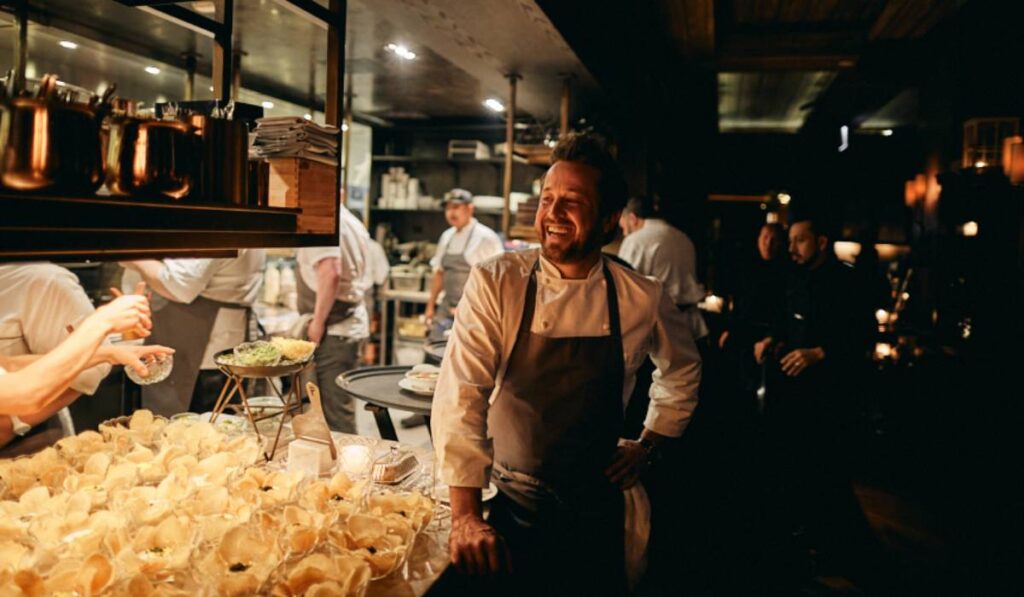
A Pedigreed Path to Culinary Leadership
Grant’s journey to becoming one of the country’s most successful restaurateurs is rooted in a lifelong dedication to the culinary arts. A native of Long Island, New York, Grant began cooking professionally at a young age alongside family members before relocating to Chicago in his early twenties.
During his formative years in Chicago, he spent five rigorous years cooking under chef Bruce Sherman at North Pond. Seeking to further sharpen his technical repertoire, Grant traveled abroad to apprentice in professional kitchens in Paris and Italy, simultaneously completing studies at the French Pastry School. Upon returning to the United States, he served as a sous chef at NoMI before achieving a major career breakthrough in 2009 as the executive chef for Ria and Balsan at Chicago’s former Elysian Hotel.
His French bistro-inspired menus at Ria earned critical acclaim, culminating in Food & Wine magazine naming him one of the "Best New Chefs" in 2012. Concurrently, Grant achieved international culinary prestige by earning two Michelin stars in consecutive years (2011 and 2012), making him the youngest chef in the United States at the time to receive the dual-star distinction.
Following his tenure at Ria, Grant helmed the kitchen at 1826 in Miami, which was crowned "Best New Restaurant in South Beach" by the Miami New Times in 2013. He ultimately returned to Chicago in 2015 to join the precursor to the Maple Hospitality Group, leveraging his operational expertise and creative vision to build a thriving portfolio of award-winning concepts, including Maple & Ash, Monarch, and Kessaku.
The Future Landscape of Maple Hospitality Group
While the ambition to scale Maple & Ash was present from the brand’s inception, Grant maintains a pragmatic and disciplined view regarding corporate growth. He is quick to emphasize that expansion is only viable if the foundational concept is executed to absolute perfection.
"This was one that I always thought had the ability to scale and had the legs to be able to go on the road," Grant reflects. "But anytime I’m looking to scale, if you can’t do the first one right and make the first one amazing, then there’s no sense to even talk about location two, three, four down the road. We plan to be successful. We don’t plan to fail. But it was always important that we needed to get home base done first, and then we just kind of see how it evolves."
Despite the immense market demand for the steakhouse concept, Grant has no intention of pursuing endless, unchecked expansion. Following the impending launch of the Midtown Manhattan location, Grant projects that the brand will selectively enter perhaps two additional U.S. markets before halting domestic development.
"We’re probably reaching our domestic cap of where Maple should be expanding to," Grant concludes, signaling that strategic exclusivity and operational excellence will continue to take precedence over sheer ubiquity as the brand shapes the future of modern American dining.